
 Worksheets
Plants 3
Total questions: 25
Worksheet time: 19mins
Name
Class
Date
1.
A plant that cross-pollinates...
a)
reproduces with itself
b)
reproduces with one other plant
c)
reproduces with more than one other plant
2.
What does pollination mean?
a)
fertilization
b)
growing
c)
seed dispersal
d)
absorbing sunlight
3.
If a bee does not come in contact with a flower's pollen...
a)
the plant is not likely to reproduce
b)
the plant is more likely to reproduce
4.

Seed production, sexual or asexual?
a)
sexual
b)
asexual
c)
neither
d)
both
5.

What does an ovule become when it is pollinated?
a)
a seed
b)
a sprout
c)
a fruit
d)
it stays an ovule
6.
True/False: Pollination can occur within the same flower.
a)
True
b)
False
7.

True/False: Pollination can occur between flowers of the different plants of the same species.
a)
True
b)
False
8.
I have large petals and are usually brightly colored. How am I pollinated?
a)
By animals
b)
By birds
c)
By insects
d)
All of the above
9.
I am a flower that produces nectar. What is the function of the nectar?
a)
To provide food for the flower
b)
To attract pollinators
c)
To attract animals to disperse the fruits
d)
To produce perfumes for Man
10.
Pollination is the process by which the pollen grains are transferred from the ________ to the _________.
a)
anther... ovary
b)
anther ... stigma
c)
stigma ... ovary
d)
stigma ... filament
11.
Which of the following is/are types of pollination?
A) wind pollination
B) Insect pollination
C) explosive pollination
A) wind pollination
B) Insect pollination
C) explosive pollination
a)
B only
b)
A and B only
c)
All of the above
12.
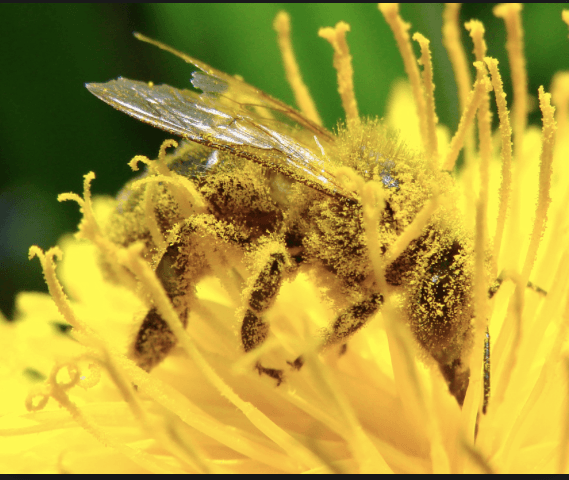
Pollination is the process by which pollen
a)
causes people to sneeze
b)
is formed inside a plant
c)
moves from stamen to pistil
13.
Why do bees go to flowers?
a)
to collect nectar and pollen
b)
to keep warm during the winter
c)
to find other bees
d)
to work together
14.
Other animals besides bees can pollinate flowers. These animals include:
a)
dogs, cats, birds, and bunnies
b)
bats, hummingbirds, butterflies, and flies
c)
horses, cows, pugs, and sheep
d)
elephants, giraffes, lions, and tigers
15.
What is the male part of the flower called?
a)
pistil
b)
petal
c)
stamen
d)
leaf
16.
What is the female part of the flower called?
a)
pistil
b)
stamen
c)
leaf
d)
petal
17.
What is pollination?
a)
how plants have fun
b)
how pollen is made
c)
how plants reproduce
d)
how animals reproduce
18.
What is pollen?
a)
a thick substance
b)
a watery substance
c)
a fine powdery substance
19.
A plant can have both male and female parts.
a)
True
b)
False
20.
Did you enjoy learning about pollination?
a)
yes
b)
no
21.

What is #8 pointing to?
a)
petal
b)
stamen
c)
pistil
d)
ovary
22.

What is #1 pointing to?
a)
ovary
b)
petal
c)
stigma
d)
stamen
23.
When a pollen grain moves from the anther of one flower to the stigma on a different flower on the same plant it is considered cross pollination.
a)
True
b)
False
24.
Male structures in flowering plants include all EXCEPT ...
a)
Stamen
b)
Anther
c)
Stigma
d)
Filament
25.
Which part of the flower contains the egg cells?
a)
Ovules/Ovary
b)
Stamen
c)
Penduncle
d)
Sepal
100 %

