
 Worksheets
Chemical Bonds
Total questions: 136
Worksheet time: 3hrs 7mins
El proceso más favorable es aquel que
Minimize energia
Incremente su energia de enlace
Sea neutro en λ
Escoge la que le corresponde a : Energía de ionización
Na (g) + 496 kJ = Na+(g) + e-
Na (g) + e- = Na-(g) + 53 kJ
Na(s)=Na(l)
Los Procesos endotérmicos son:
AE alta, proceso es fácil.
EI alta, proceso es difícil.
AE alta y EI baja, proceso neutro
Elementos no metales son:
más propenso a aceptar electrones
más propenso a donar electrones
Terminan compartiendo electrones
Elemento no-metal + elemento no-metal tendencia de
pueden atraer o aceptar electrones.
permanecer unidos por la atracción de los núcleos hacia pares de electrones localizados en medio de los núcleos
El enlace ocurre por fuerzas de atracción Coulómbicas.
La energía del enlace iónico se conoce como:
“lattice energy”
Bonding energy
La energía de red es proporcional al producto de las cargas de los iones. Mientras mayor sea la carga de los iones, mayor será la energía de red.
True
False
Considera todos los pares de electrones alrededor del átomo central
Geometría electrónica
Geometría molecular
Dominios
Indica la geometría molecular y electrónica de CO2
Linear,Linear
Tetrahedral,Linear
Octahedral,Linear
Indica la geometría molecular y electrónica de AsF4^-.
Trigonal Bipiramidal, Seesaw
Tetrahedral,Linear
Linear,Linear


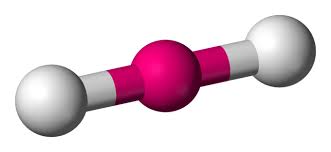
What is the hybridization of a linear molecule?
sp
sp2
sp3
sp3d
Which of the following images represents a Trigonal Planar molecular geometry?


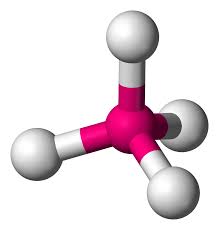
What is the hybridization of this molecule shown above
sp
sp2
sp3
sp4

What is the bond angle for the CH4 molecule?
120°
107°
109.5°
90°

What is the hybridization of the central atom of a bent molecule? (AB2E2)
sp
sp2
sp3
sp3d


H, N, O or F?


non-polar
bent
bent
linear
linear

I. BeH2: bent
II. NH3: trigonal pyramidal
III. CF4: tetrahedral
IV. NH4+: tetrahedral


Which of the following has two bonding pairs and two unshared pairs of electrons around the central atom?
CH4
H2O
NH3
HF


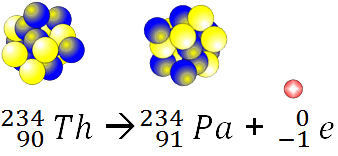


salt
What is the correct name for Cu2O3 ?

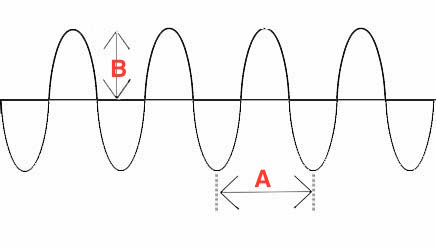
What property of this wave is represented by the letter "A"
amplitude
crest
trough
wavelength
1. Are the atoms more stable when they are bonded together or when they are apart?
Bonded Together
Apart
2. Ionic Bonding involves:
The transfer of protons
The transfer of neutrons
The transfer of electrons
None Of the above
3. What do atoms that form positive ions tend to do?
Tend to lose electrons
Tend to lose protons
Tend to gain electrons
Tend to gain protons
4. What usually forms the positive ion?
Metal
Nonmetals
None
5. What happens when the sodium atom loses an electron?
It become negatively charged
It become positively charged
none
6. What usually forms the negative ion?
Nonmetals
Metal
None
7. Covalent compounds:
Share electrons
Transfer electrons
Neither
10. What charges attract?
Opposite
Same
11. What charges repel?
Same
Opposite
13. What elements generally make a covalent bond?
metal and nonmetal
2 or more nonmetals
metal
none of the above
14. How would I know if an element was a metal or nonmetal?
Periodic Table
Internet
Ask Teacher
all of the above
16. What is the number of valence electrons for Calcium (Group 2)?
1
2
3
4
17. What is the number of valence electrons for Carbon (Group 14)?
1
2
3
4
18. What is the number of valence electrons for Neon and the other Noble Gases?
5
6
7
8
19. If an atom transfers an electron to another atom, those atoms form which bond?
Ionic Bond, which is stronger than a covalent bonds
Covalent Bond, which is stronger than ionic bonds
20. If I was trying to determine if two atoms will bond, what would be helpful to know:
Valence electrons, found by group number
Whether the elements are metals or nonmetals
The electronegativity of the atoms
All of the above, all of which can be found on the Periodic Table
2Al(s) + 3Cl2(g) ---> 2AlCl3(s)
from the following data:
2Al(s) + 6HCl(aq) ---> 2AlCl3(aq) + 3H2 (g)ΔH° = -1049 kJ
HCl(g) ---> HCl(aq)ΔH° = -74.8 kJ
H2(g) + Cl2(g) ---> 2HCl (g)ΔH° = -185 kJ
AlCl3(s) ---> AlCl3(aq)ΔH° = -323 kJ
C3H6O(ℓ) + 4O2(g) ---> 3CO2(g) + 3H2O(ℓ); ΔH°comb, acetone = -1790 kJ
Using this information together with the data below (values in kJ/mol), calculate the enthalpy of formation of acetone.
ΔH°f, CO2: -393.5
ΔH°f, H2O: -285.83
Is this reaction endothermic or exothermic?
1. The temperature increases when calcium chloride dissolves in water.
2. Steam condenses to liquid water
3. Water boils
4. Dry ice sublimates
Is this reaction endothermic or exothermic?
ΔH○f [Fe2O3(s)] = –820 kJ mol–1
Select the expression which gives the enthalpy change, in kJ mol–1, for the reaction:
2FeO(s) + 1⁄2O2(g) → Fe2O3(s)
Born-Haber CaCl2

Do not know


