
 Worksheets
Earth's History Test Review
Total questions: 69
Worksheet time: 1hrs 1mins
Name
Class
Date
1.
The process by which water, ice, wind or gravity moves weathered rock and soil from one place to another.
a)
weathering
b)
erosion
c)
deposition
d)
dumptruck
2.
This type of weathering occurs when rock is physically broken down into smaller pieces of rock.
a)
mechanical weathering
b)
chemical weathering
c)
erosion weathering
d)
deposition
3.
This type of weathering occurs when rocks weaken then break down due to chemical changes in the composition of the rock.
a)
mechanical weathering
b)
chemical weathering
c)
erosion weathering
d)
deposition
4.
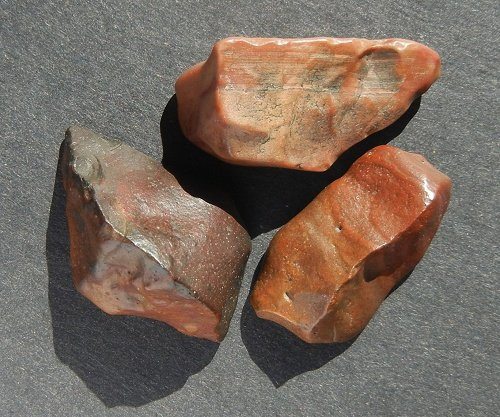
These rocks were made smooth by wind blowing smaller rock particles across their surface. This is an example of:
a)
ice wedging
b)
chemical weathering
c)
acid rain
d)
abrasion
5.

These rocks were broken apart from the continuous freeze/thaw of water in the cracks of the rocks. This is an example of:
a)
ice wedging
b)
acid rain
c)
permeability
d)
abrasion
6.
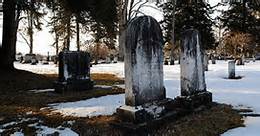
These gravestones have slowly broken down and turned a blackish color due to the action of:
a)
ice wedging
b)
abrasion
c)
acid rain
d)
mechanical weathering
7.
How is mechanical weathering different from chemical weathering?
a)
Chemical weathering happens over much shorter time frame than mechanical weathering.
b)
Chemical weathering changes the chemical composition of rocks; mechanical weathering does not.
c)
Chemical weathering occurs only in tropical climates; mechanical weathering occurs only in cool climates.
d)
Chemical weathering occurs only in the mountains; mechanical weathering occurs only on flat land.
8.
Weeds growing into the cracks in a sidewalk and the sidewalk begins to crumble is an example of:
a)
mechanical weathering
b)
chemical weathering
9.
Potholes forming in the road after a cold winter is an example of:
a)
mechanical weathering
b)
chemical weathering
10.
A metal statue slowly turning green after years of being outside is an example of:
a)
mechanical weathering
b)
chemical weathering
11.
Rocks along a riverbed that are smoothed from continuously moving water and sediment rubbing against them is an example of:
a)
mechanical weathering
b)
chemical weathering
12.
A piece of sandstone changing color (from brown to rusty red) from exposure to water and air is an example of:
a)
mechanical weathering
b)
chemical weathering
13.
The formation of large cracks in the face of a mountain from ice wedging is an example of:
a)
mechanical weathering
b)
chemical weathering
14.
Acid rain wearing away the face of a marble gravestone or statue is an example of?
a)
mechanical weathering
b)
chemical weathering
15.
Exposure to rain and oxygen causes the metal minerals in rocks to rust and fall apart. This is an example of:
a)
mechanical weathering
b)
chemical weathering
16.
Lichens (small green plants) growing on a large boulder release enzymes and other acids that slowly break the rock apart. This is an example of:
a)
mechanical weathering
b)
chemical weathering
17.
What is the movement of soil from one place to another?
a)
weathering
b)
deposition
c)
discharge
d)
erosion
18.
The process when soil or rock are left or placed in a new location.
a)
Erosion
b)
Weathering
c)
Mass movement
d)
Deposition
19.
At the beach which agent of erosion affects the coast?
a)
Wind
b)
Water
c)
Animals
d)
Gravity
20.
What do waves make when they break rock into smaller pieces?
a)
sand
b)
rocks
c)
shells
d)
boulders
21.

The diagrams show a natural process that weathers rock.
Which statement best explains why this process results in weathering?
Which statement best explains why this process results in weathering?
a)
water boils and pushes against the rocks
b)
water expands when it freezes
c)
the mass of water increases when it freezes
d)
water dissolves most types of rock
22.
What happens when weathering and erosion work together?
a)
new mountains are created
b)
the weather changes
c)
metal objects become rusty
d)
they change the Earth's surface
23.
Which of these is an example of erosion
a)
light shining on a mountain
b)
rain breaking down rock
c)
wind blowing away sediment
d)
All of the above
24.
What is sediment?
a)
the process of rocks being broken down and carried away
b)
bits of rock, sand, and silt caused by the weathering of rocks
c)
the top layer of the soil
d)
decaying plant or animal material
25.

How do plants weather rocks?
a)
during photosynthesis
b)
when roots grow into cracks of rocks and expand the rock
c)
when the plant moves water from the roots to the leaves
d)
plants don't weather rocks
26.
What is the term that describes what happens when rocks containing iron become discolored?
a)
weathering
b)
abrasion
c)
oxidation
d)
erosion
27.
Dropping off and Building new from pieces of rocks is
a)
weathering
b)
erosion
c)
deposition
28.
Weathering and erosion are the same thing.
a)
True (yes)
b)
False (no)
29.

Which fossil is a replica of the original shape of the organism?
a)
cast
b)
mold
c)
trace
d)
preserved remains
30.

Which fossil is an impression left by the original organism?
a)
cast
b)
mold
c)
trace
d)
preserved remains
31.
Relative dating of rock layers tells us that the deeper we dig, _______.
a)
the younger the rocks get
b)
the smellier the rocks get
c)
the harder the rocks get
d)
the older the rocks get
32.
The Geologic Time Scale is a record of what?
a)
old geologists
b)
sweet geology music
c)
the known history of rocks and fossils
d)
a list of every living thing ever
33.
How old do Paleontologists believe the Earth is?
a)
2015 years old
b)
3.6 billion years old
c)
4.6 billion years old
d)
4.6 million years old
34.

A bug stuck in amber is an example of what type of fossil?
a)
cast
b)
mold
c)
trace
d)
preserved remains
35.
What type of rock do fossils form in?
a)
Igneous
b)
Sedimentary
c)
Metamorphic
d)
Classic
36.
Why is the fossil record incomplete?
a)
fossils get eroded away over time
b)
most organisms never became fossils
c)
scavengers and decomposers eat them too quickly
d)
all of the above
37.

According to the law of superposition, which layer is the youngest?
a)
A
b)
B
c)
C
38.
Paleozoic, Mesozoic & Cenozoic are all
a)
Epochs
b)
Eras
c)
Periods
d)
Eons
39.
Which is the most recent era of time- the one that we are currently in?
a)
Mesozoic
b)
Paleozoic
c)
Cenozoic
d)
Precambrian
40.
Fossils in which minerals replace all, or a part, of an organism is what kind of fossil?
a)
Petrified Fossil
b)
Preserved
c)
Fault
d)
Intrusion
41.
Footprints, nests, burrows and fossilized poop are examples of what kind of fossils?
a)
Trace Fossils
b)
preserved remains
c)
Erosion
d)
sedimentary rock
42.
Identify the Era in which each of the events occurred:
Jurassic period
Jurassic period
a)
Mesozoic
b)
Paleozoic
c)
Cenozoic
d)
Precambrian
43.
Identify the Era:
called the "Age of Mammals"
called the "Age of Mammals"
a)
Precambrian
b)
Paleozoic
c)
Mesozoic
d)
Cenozoic
44.
Identify the Era:
that was the longest of all eras
that was the longest of all eras
a)
Precambrian
b)
Paleozoic
c)
Mesozoic
d)
Cenozoic
45.
Identify the Era:
where dinosaurs thrived
where dinosaurs thrived
a)
Precambrian
b)
Paleozoic
c)
Mesozoic
d)
Cenozoic
46.
Identify the Era:
This era contains the Triassic, Jurassic, and Cretaceous Periods
This era contains the Triassic, Jurassic, and Cretaceous Periods
a)
Precambrian
b)
Paleozoic
c)
Mesozoic
d)
Cenozoic
47.
What is a fossil?
a)
any dead organism
b)
the preserved remains or traces of an organism
c)
a perfect copy of a rock
d)
an unusual type of rock
48.
How do most fossils form?
a)
Living things die and their remains are covered by sediment
b)
The hard parts of an organism dry out in the air
c)
The soft parts of an organism change to stone
d)
Freezing preserves the remains of an organism
49.
What is absolute dating
a)
The age when the rock was formed
b)
dinner and movie with a rock
c)
A range of rock compared to other rocks
d)
Relative dating
50.
What type of scientists study fossils?
a)
Astronomists
b)
Archaelogists
c)
idoentnoeigists
d)
Paleontologists
51.
The Earth is constantly changing.
a)
True
b)
False
52.
Which is the most recent time frame?
a)
Mesozoic
b)
Precambrian
c)
Holocene
d)
Cretaceous
53.
Put this in order of smallest to largest time frame.
a)
Eon, Era, Periods, Epoch
b)
Periods, Epoch, Eon, Era,
c)
Epochs, Periods, Eras, Eons
d)
Eras, Periods, Epochs, Eons
54.

What principle proves Layer 1 is younger than 2.
a)
superposition
b)
crosscutting
c)
inclusions
d)
horizonality
55.
Produced when sediments fill in a cavity made when an object decayed
a)
cast
b)
mold
c)
original remains
56.
Cavity in a rock made when an organism decayed
a)
cast
b)
mold
c)
original remains
57.
Principle that Earth's processes occurring today are similar to those that occurred in the past
a)
unconformities
b)
uniformitariansim
c)
superposition
58.
Process that uses the properties of atoms in rocks and other objects to determine their ages
a)
relative dating
b)
radioactive decay
c)
absolute dating
59.
Principle that states in a sequence of undisturbed rocks, the oldest rocks are on the bottom and the rocks become progressively younger toward the top
a)
superposition
b)
uniformitarianism
c)
half-life
60.
Method by which a geologist can calculate the absolute age of the rock by knowing the half-life of an isotope
a)
radiometric dating
b)
relative dating
c)
absolute dating
61.
Time it takes for half of an isotopes atoms to decay
a)
relative age
b)
absolute age
c)
half-life
62.
Fossil of thin layer of carbon atoms and molecules
a)
original remains
b)
carbon film
c)
trace fossil
63.
Formed when original material in skeletal remains are replaced by minerals
a)
original remains
b)
fossil
c)
permineralized remains
64.
Method by which order of events or age of rocks is determined by examining the position of rocks in a layer
a)
relative dating
b)
absolute dating
c)
radiometric dating
65.
Remains, imprints or traces of once-living organisms
a)
water
b)
superposition
c)
fossils
66.
Fossils of species that existed for short periods and were widespread
a)
trace fossils
b)
index fossils
c)
original remains
67.

Correctly sequence the layers of rocks oldest to youngest
a)
A,B,C,D
b)
D,C,B,A
68.

Correctly sequence the layers of rocks oldest to youngest
a)
C,E,D,A,B
b)
C,E,D,A,B
c)
C,E, D,B,A
69.

Correctly sequence the layers of rocks oldest to youngest
a)
A,D, C, B, E
b)
E, B,C D, A
c)
B,E,C, D, A
100 %

