
 Worksheets
Brewer 8th GSR- David Laughlin
Total questions: 60
Worksheet time: 45mins
Name
Class
Date
1.
The natural chemical or physical processes that breaks down rock on Earth's surface.
a)
weathering
b)
erosion
c)
deposition
d)
jackhammering
2.

These rocks were broken apart from the continuous freeze/thaw of water in the cracks of the rocks. This is an example of:
a)
ice wedging
b)
acid rain
c)
permeability
d)
abrasion
3.

This rock may chemically weather easily because is has many spaces or holes in it that allow water to seep through it, meaning it is:
a)
permeable
b)
abrasive
c)
erosion
d)
unchangable
4.
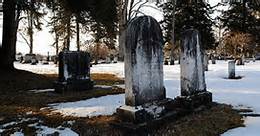
These gravestones have slowly broken down and turned a blackish color due to the action of:
a)
ice wedging
b)
abrasion
c)
acid rain
d)
mechanical weathering
5.

A cliff formed near the ocean. Which statement best describes how this cliff formed?
a)
Warm air melted the rock.
b)
Sun rays evaporated the rock.
c)
Ocean waves washed away rock.
d)
Plant roots pushed away the rock.
6.
Which type of climate will have faster chemical weathering?
a)
Hot and Wet
b)
Cold and Dry
c)
Hot and Cold
d)
Cold and Wet
7.
Lichens (small green plants) growing on a large boulder release enzymes and other acids that slowly break the rock apart. This is an example of:
a)
mechanical weathering
b)
chemical weathering
8.
Rocks along a riverbed that are smoothed from continuously moving water and sediment rubbing against them is an example of:
a)
mechanical weathering
b)
chemical weathering
9.

The statue of liberty is made of copper. It was originally brown but has since turned green. This is probably due to _______.
a)
Oxygen
b)
Acid Rain
c)
Carbon Dioxide
d)
Humans
10.

The diagrams shows a natural process that weathers rock.
Which statement best explains why this process results in weathering?
Which statement best explains why this process results in weathering?
a)
frozen water acts as a solute
b)
water expands when it freezes
c)
the mass of water increases when it freezes
d)
frozen water dissolves most types of rock
11.

What type of rock is formed due to pressure and heat within the earth?
a)
igneous
b)
sedimentary
c)
metamorphic
12.

What are the 3 main types of rocks?
a)
metamorphic, sedimentary, lava
b)
metamorphic, igneous, sedimentary
c)
metamorphic, magma, sedimentary
13.

What type of rock is formed when magma from a volcano cools and hardens on the earth's surface?
a)
sedimentary
b)
metamorphic
c)
igneous
d)
lava
14.

Which type of rock is formed when smaller parts of older rocks become cemented together?
a)
igneous
b)
sedimentary
c)
pebbles
d)
metamorphic
15.

Rocks are classified by how:
a)
they look
b)
are formed
c)
they feel
16.

What type of rock are fossils often found in?
a)
igneous
b)
metamorphic
c)
sedimentary
d)
magma
17.

The earth's outer layer is formed mostly of this type of rock.
a)
igneous
b)
metamorphic
c)
sediments
d)
sedimentary
18.

_________________ is the breaking down of rock into smaller pieces of rock.
a)
erosion
b)
weathering
c)
deposition
19.

What is the molten rock that rises and explodes from within a volcano?
a)
igneous rocks
b)
sediments
c)
magma
d)
steam
20.
Which type of rock forms from extreme heat and pressure?
a)
Igneous
b)
Sedimentary
c)
Organic
d)
Metamorphic
21.
Rocks are made up of two or more minerals.
a)
True
b)
False
22.
Which property would be used to identify a mineral?
a)
color and luster
b)
hardness
c)
streak and transparency
d)
All of these choices
23.
What type of rock has fossils in it?
a)
Igneous
b)
Sedimentary
c)
Metamorphic
24.
After an animal dies, the skin is the first thing to decay, and the bones are left to become fossils.
a)
True
b)
False
25.
Which type of rock is formed when molten rock has cooled?
a)
Sedimentary
b)
Metamorphic
c)
Igneous
26.
What type of rock can be formed at very high temperatures and pressures?
a)
Igneous
b)
Sedimentary
c)
Metamorphic
27.
Metamorphic rocks form from weathering and erosion.
a)
True
b)
False
28.
When studying the layers of fossils, which fossils would be the oldest?
a)
Fossils at the top of the layers
b)
Fossils in the middle of the layers
c)
Fossils at the bottom of the layers
29.
What part of the animal makes a fossil?
a)
Skin
b)
Muscles
c)
Bones
30.
Which type of rock forms from weathering and erosion?
a)
Igneous
b)
Sedimentary
c)
Metamorphic
31.
Earth's entire history is divided into units of time called the
a)
Earth Time Scale
b)
Geologic Time Scale
c)
Geologic History Scale
d)
Earth History Scale
32.
Which unit of the Geologic Time Scale is the longest amount of time?
a)
Era
b)
Period
c)
Eon
d)
Epoch
33.
Eons are divided into
a)
Periods
b)
Eras
c)
Epochs
34.
The shortest units of time on the Geologic Time Scale are
a)
Periods
b)
Eons
c)
Eras
d)
Epochs
35.
Eras are divided into smaller units called
a)
Eons
b)
Eras
c)
Periods
d)
Epochs
36.
The earliest time period in Earth's history is called
a)
Cambrian Period
b)
Phanerozoic Eon
c)
Holocene Epoch
d)
Pre-Cambrian
37.
True or False: Geologic Time has ended.
a)
True
b)
False
38.
Present day Earth is in the ____ epoch?
a)
Holocene
b)
Pleistocene
c)
Miocene
d)
Paleocene
39.
Present day Earth is in the ____ era.
a)
Cenozoic
b)
Mesozoic
c)
Paleozoic
40.
The _____ period is important because a variety of living things evolved during this time.
a)
Cambrian
b)
Cretacious
c)
Jurassic
d)
Quaternary
41.
How many planets are in the solar system?
a)
10
b)
8
c)
9
d)
7
42.
Which planets have rings?
a)
Earth, Mercury, Jupiter, and Saturn
b)
Pluto, Venus, Neptune, and Mars
c)
Saturn, Uranus, Jupiter, and Neptune
d)
Mars, Earth, Uranus, and Venus
43.
Which planet has the most moons?
a)
Jupiter
b)
Earth
c)
Saturn
d)
Mars
44.
Which planets are the gaseous planets?
a)
Mercury, Mars, Neptune, and Uranus
b)
Earth, Venus, Jupiter, and Neptune
c)
Neptune, Saturn, Jupiter, and Earth
d)
Jupiter, Saturn, Uranus, and Neptune
45.
The Roman god of water is the inspiration for which planet?
a)
Jupiter
b)
Neptune
c)
Venus
d)
Mars
46.
How many planets have water on them?
a)
6
b)
3
c)
4
d)
1
47.
Which planet is home to the Great Red Spot?
a)
Jupiter
b)
Mars
c)
Saturn
d)
Venus
48.
Which planets have zero moons?
a)
Uranus and Mercury
b)
Neptune and Mars
c)
Venus and Earth
d)
Mercury and Venus
49.
Which planet is now classified as a dwarf planet?
a)
Mercury
b)
Mars
c)
Pluto
d)
Jupiter
50.
If the Earth is an example of a hard-boiled egg, the shell would be similar to the ________ of the Earth.
a)
inner core
b)
crust
c)
mantle
d)
outer core
51.
The Earth has a THICK crust.
a)
True
b)
False
52.
We live on the Earth's crust.
a)
True
b)
False
53.
The core of the Earth is made of solid...
a)
chocolate
b)
copper
c)
carbon dioxide
d)
iron
54.
The outer shell of the earth is divided into several plates that glide over the mantle. This is called...
a)
friction
b)
plate tectonics
c)
crusty plates
d)
platters
55.
The shifting or movement of the tectonic plates on the Earth causes???
a)
Tornadoes
b)
Hurricanes
c)
Tsunamis
d)
Earthquakes
56.
Name the two types of crust
a)
Continental and Mantle
b)
Convection Currents
c)
Continental and Oceanic
d)
Crust and Core
57.
Name the two types of crust
a)
Continental and Mantle
b)
Convection Currents
c)
Continental and Oceanic
d)
Crust and Core
58.
The crust+the upper mantle make up the ______________
a)
Crust
b)
Mantle
c)
Core
d)
Lithosphere
59.
Where do convection currnts take place?
a)
The Crust
b)
The asthenosphere which is in the mantle
c)
Outer Core
d)
Inner Core
60.
What layer is the thickest?
a)
Crust
b)
Mantle
c)
Outer Core
d)
Inner Core
100 %

