
 Worksheets
Unit 1&2 Midterm Practice
Total questions: 58
Worksheet time: 2hrs 30mins
Name
Class
Date
1.
Which of the following sentences is an example of direct characterization?
a)
Eva said to her cousin, "My mother thinks that you are talented."
b)
Loretta was an ambitious person who set high goals for herself.
c)
Carlos talked for two hours straight.
d)
Kevin wears a grungy old jacket wherever he goes.
2.
The main character in a story is also called--
a)
the protagonist
b)
a dynamic character
c)
a static character
d)
the antagonist
3.
A writer has successfully conveyed a character's motivation when--
a)
the character is completely predictable
b)
the reader can identify with the character
c)
the reader understands why the character does something
d)
the character is respected by the other characters in a story
4.
What is a 'static character'?
a)
A character who changes
b)
A character with 1 or 2 personality traits
c)
A character who doesn't change
d)
A stereotype
5.

What type of character are these?
a)
Dynamic
b)
Static
c)
Flat
d)
Stock
6.

What type of character is this?
a)
Protagonist
b)
Minor
c)
Antagonist
d)
Dynamic
7.
What is the end of a story called?
a)
Exposition
b)
Climax
c)
Resolution
d)
Falling Action
8.

A fuel cell is a kind of battery. It makes electricity. One side of the cell is filled with hydrogen. The other is filled with oxygen that comes from the air. The hydrogen separates into electrons and protons. The electrons supply the power for the motor. The protons mix with the oxygen to make water. The water passes out of the cell.
a)
problem /solution
b)
cause and effect
c)
question & answer
d)
description
9.
Choose the clue words that indicate chronological order.
a)
first, next, finally, 8:30, after
b)
cause, effect, as a result of, because
c)
problem, solution, promise, struggle
d)
compare, contrast, similar, different
10.
Choose the clue words that indicate compare and contrast.
a)
therefore, cause, effect, consequently
b)
later, then, next, Monday
c)
similar, different, common, on the other hand
d)
possibility, struggle, hope, problem
11.
No one knows exactly what causes tornados, but some scientists believe that when warm air meets cold air, a tornado may form. The reason for this is that the warm air is lighter than the cold air, so it rises up fast and meets different winds moving different directions. Under the right conditions, this can cause a tornado. Though there is still much mystery surrounding tornados, many people believe that when warm moist air meets cool dry air, tornados can result.
a)
problem & solution
b)
cause & effect
c)
compare & contrast
d)
chronological
12.

This morning was crazy. My alarm clock was set for PM instead of AM, so I woke up really late. I just threw on some clothes and ran out the door. I rode my bike as fast as I could and thought that I was going to be late for sure, but when I got there everyone was outside and there were firetrucks all lined up in front of school. I guess somebody pulled the fire alarm before class started. It worked out though, because nobody really noticed or minded that I was tardy.
a)
Chronological
b)
Cause and Effect
c)
Problem and Solution
d)
Compare and Contrast
13.

How to Make Cookies. First, get your materials. Then, make your dough. Lastly, cook your dough at 400 degrees for 10 minutes.
a)
Sequence
b)
Cause and Effect
c)
Problem & Solution
d)
Compare and Contrast
14.
Connotation is the emotional response to a word.
a)
True
b)
False
15.
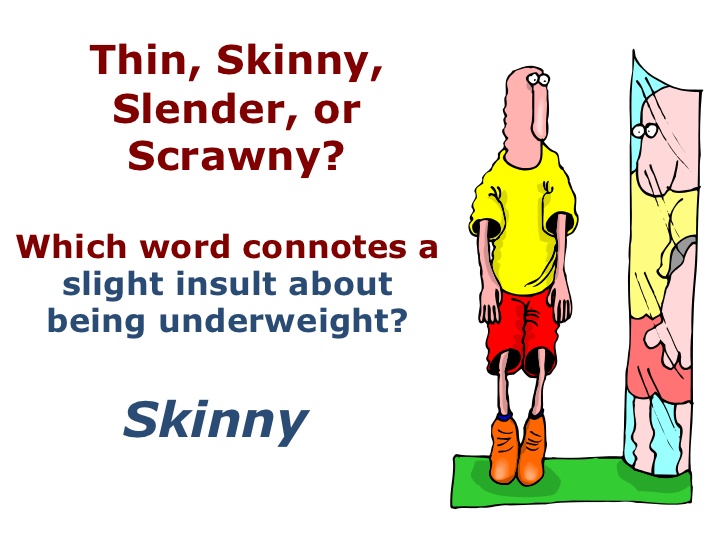
What is connotation?
a)
Connotation implies or suggests a meaning of a word.
b)
Dictionary meaning of a word.
c)
I don't know!
d)
Unknown meaning
16.
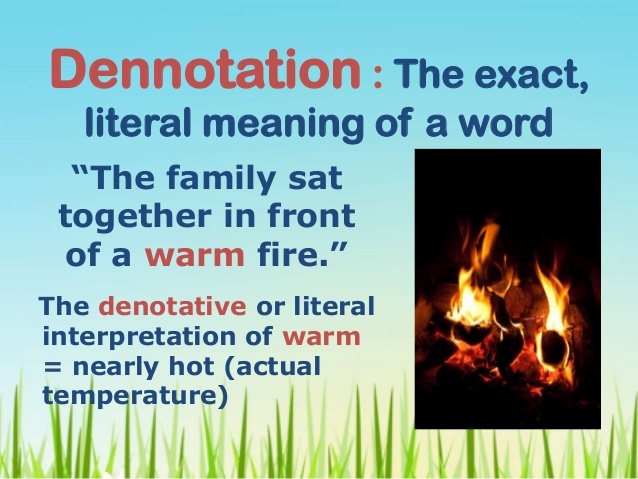
What is denotation?
a)
Direct meaning of a word or dictionary meaning.
b)
It means down.
c)
Let me ask my friend
d)
It means to note the word.
17.
Which connotation is MORE negative?
I didn't like the ______ on the jester's face.
I didn't like the ______ on the jester's face.
a)
grin
b)
smirk
18.
Which connotation is MORE positive?
Some of the monkeys made ______ faces.
Some of the monkeys made ______ faces.
a)
amusing
b)
hilarious
19.
Which connotation is MORE negative?
It made me feel _______.
It made me feel _______.
a)
uneasy
b)
frightened
20.
Which connotation is MORE positive?
Everyone had a _____ on his or her face on the way home.
Everyone had a _____ on his or her face on the way home.
a)
smile
b)
smirk
21.
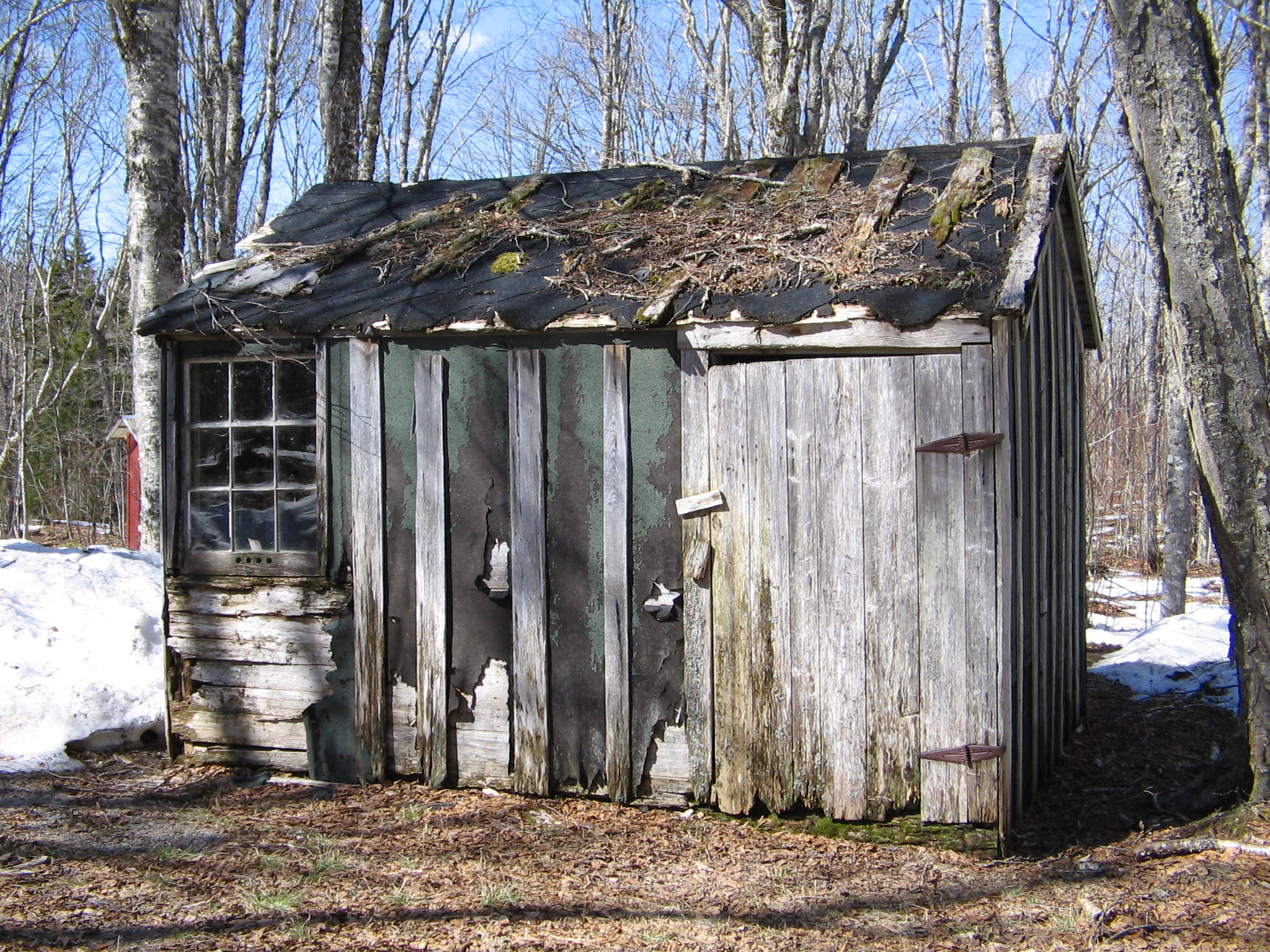
Referring to someone's house as a "shack" would have a __________ connotation.
a)
positive
b)
negative
22.
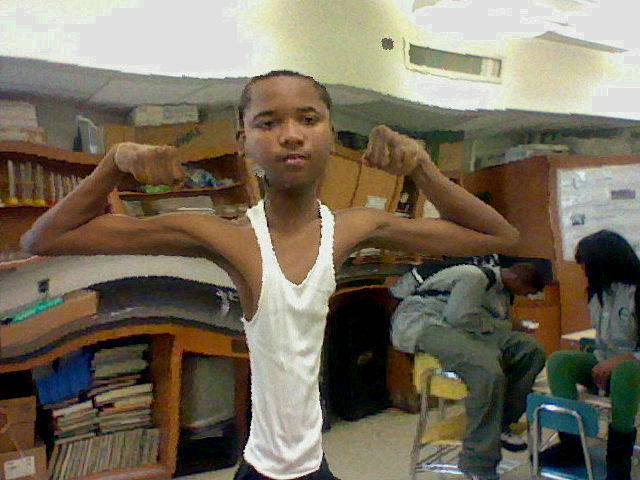
The word scrawny, as in "Jason appeared scrawny," has a _________ connotation.
a)
positive
b)
negative
23.

"We have some important news for you Mr. President. We have discovered a terrorist plot against the United States" said the CIA agent. The President closed the book, set it on the desk, and leaned forward, his eyes fixed straight ahead. "Tell me everything you know."
What is the tone of the dialogue?
What is the tone of the dialogue?
a)
Informal
b)
Happy
c)
Serious
d)
Optimistic
24.

Just when I thought things could not get more ridiculous, Rebecca's little terrier, all dressed up in its knitted blue winter outfit, poked its head out of the pink polka dot doggy tote! The outfit was an odd sweater-and-hood combination. Perhaps Rebecca thought it flattered Fluffy's eyes. Fluffy looked around blankly, as if to ask what was so amusing.
What word would you use to describe the tone of this passage?
What word would you use to describe the tone of this passage?
a)
Bitter
b)
Respectful
c)
Objective
d)
Humorous
25.

No sooner had she said it than there he was, "Mister Irresistible" himself. Throwing big, cheesy winks at everyone in the room, walking with a swagger like a cartoon baseball player. He slithered his way over to their side of the room.
What word would you use to describe the tone of this passage?
What word would you use to describe the tone of this passage?
a)
Enthusiastic
b)
Serious
c)
Mocking
d)
Sorrowful
26.
What is the definition of diction?
a)
A different type of dictionary
b)
choice of words by a speaker or writer
c)
Choice of language you use
d)
Choice of the tone you speak in
27.
She's a very nosy person. She won't stop asking me questions.
a)
Positive connotation
b)
Negative connotation
28.
She's a very nosy person. She won't stop asking me questions.
a)
Critical tone
b)
Aggressive tone
c)
Amused tone
d)
Confused tone
29.
She's a very curious person. She won't stop asking me questions.
a)
Critical tone
b)
Aggressive tone
c)
Amused tone
d)
Confused tone
30.
He spoke passionately about the Civil Rights Movement.
a)
Postive connotation
b)
Negative connotation
31.
"Their sister Alexandra was the Finch who remained at the Landing; she married a taciturn man who spent most of his time lying in a hammock by the river wondering if his trot-lines were full."
In this quote from chapter 1, taciturn most likely means:
In this quote from chapter 1, taciturn most likely means:
a)
Quiet and reserved
b)
loud and obnoxious
c)
greedy and miserly
d)
miserable and unhappy
32.

"I knew nothing except what I gathered from Time magazine and reading everything I could get my hands on at home, but as I inched sluggishly along the treadmill of the Maycomb County School system, I could not help receiving the impression that I was being cheated out of something."
In the previous sentence, Scout's tone about school is one of....
In the previous sentence, Scout's tone about school is one of....
a)
boredom
b)
regret
c)
frustration
d)
all of the above
33.

"Haven't you ever walked along a lonesome road at night and passed by a hot place?" Jem asked Dill. "A Hot Steam's somebody who can't get to heaven, just wallows around lonesome roads an' if you walk through him, when you die you'll be one too, an' you'll go around at night suckin' people's breath--"
In the previous passage, Jem's tone towards Hot Steams is...
In the previous passage, Jem's tone towards Hot Steams is...
a)
Frightening
b)
Teasing
c)
Both scary and teasing
d)
None of these
34.

What are the elements of plot in chronological order?
a)
beginning, middle, end
b)
exposition, rising action, climax, falling action, resolution
c)
Resolution, introduction, climax, rising action, falling action
d)
Climax, conflict, resolution
35.
According to the lesson, what are the six key qualities of a personal narrative?
a)
purpose, chronological order, engaging introduction, transitions, descriptive details, meaningful conclusion
b)
setting, characters, dialogue
c)
5 paragraph essay, characters, setting, dialogue
36.
Identify the thesis statement in this introduction:
Learning something new can be a scary experience. One of the hardest things I've had to do was learn how to swim. I was always afraid of the water, but I decided that swimming was an important skill that I should learn. I also thought it would be a good exercise and help me to become physically stronger. What I didn't realize was that learning to swim would also make me a more confident person.
Learning something new can be a scary experience. One of the hardest things I've had to do was learn how to swim. I was always afraid of the water, but I decided that swimming was an important skill that I should learn. I also thought it would be a good exercise and help me to become physically stronger. What I didn't realize was that learning to swim would also make me a more confident person.
a)
I also thought it would be a good exercise and help me to become physically stronger.
b)
was always afraid of the water, but I decided that swimming was an important skill that I should learn.
c)
What I didn't realize was that learning to swim would also make me a more confident person.
37.
In narratives, characterization includes all of the following EXCEPT:
a)
Personality
b)
Theme
c)
Interactions with other characters
d)
Inner Thoughts and Feelings
38.
A series of events of increasing interest and power to the climax. Involving some complications which hinder the main character.
a)
Rising Action
b)
Falling Action
c)
Exposition
d)
Climax
39.
Moment of highest intensity and interest in the story. Also, called crisis or turning point.
a)
Climax
b)
Rising Action
c)
Falling Action
d)
Resolution
40.
all-knowing narrator, can see hear, know, everything, can get into mind of any character
a)
Third Person-limited
b)
First Person
c)
Third Person-Omniscient
d)
Narrator
41.
A scene in a story, set in a time earlier than the main story.
a)
Flashback
b)
Foreshadow
c)
Setting
d)
Exposition
42.
Time, place and physical characteristics of where a story takes place.
a)
Characterization
b)
Plot
c)
Conflict
d)
Setting
43.
What is a metaphor?
a)
A comparison using like or as
b)
a comparison that says one thing is another
c)
words that sound like the objects or actions they refer to
d)
using the same words or phrases over and over
44.
Repetition is
a)
a figure of speech in which objects are given human qualities
b)
words that have the same ending sounds
c)
using the same words or phrases over and over
45.
"The stars looked like broken glass shattered across the sky." is an example of
a)
alliteration
b)
simile
c)
metaphor
46.
Betty Botter bought some butter, but she said "this butter's bitter!"
is an example of
is an example of
a)
alliteration
b)
rhyme
c)
onomatopoeia
47.
Words that have the same ending sound...
a)
rhythm
b)
rhyme
c)
alliteration
48.
What is personification?
a)
The use of words to imitate sounds.
b)
A comparison of two unlike subjects using the words "like" or "as".
c)
A group of words whose meaning is different from the ordinary or literal meaning.
d)
Giving an animal, idea, or object human or "person-like" characteristics.
49.
What is Imagery?
a)
The use of words to imitate sounds.
b)
A figure of speech in which an animal, idea, or object is given human or "person-like" characteristics.
c)
Language that creates mental pictures by using sensory language.
d)
A big exaggeration in order to make a point.
50.
What is an idiom?
a)
A big exaggeration in order to make a point.
b)
The repetition of consonant sounds at the beginning of several words in the same phrase.
c)
a group of words whose meaning is different from the ordinary or literal meaning.
d)
a comparison of two unlike objects using the words "is" or "was".
51.
What is a hyperbole?
a)
The repetition of consonant sounds at the beginning of several words in teh same phrase.
b)
A group of words whose meaning is different from the ordinary or literal meaning.
c)
A big exaggeration in order to make a point.
d)
The use of words that imitate sounds.
52.
"You ain’t nothin’ but a hound dog
Quit snoopin’ ’round my door
You can wag your tail
But I ain’t gonna feed you no more"
Quit snoopin’ ’round my door
You can wag your tail
But I ain’t gonna feed you no more"
a)
Onopatopoeia
b)
Personification
c)
Metaphor
d)
Simile
53.
"You try to scream but terror takes the sound before you make it
You start to freeze as horror looks you right between the eyes
You’re paralyzed
‘Cause this is thriller, thriller night
And no one’s gonna save you from the beast about to strike."
You start to freeze as horror looks you right between the eyes
You’re paralyzed
‘Cause this is thriller, thriller night
And no one’s gonna save you from the beast about to strike."
a)
Imagery
b)
Personification
c)
Idiom
d)
Alliteration
54.
"I took a walk around the world toEase my troubled mindI left my body laying somewhereIn the sands of timeI watched the world float to the darkSide of the moonI feel there is nothing I can do"
a)
Imagery
b)
Simile
c)
Hyperbole
d)
Idiom
55.
What is Figurative language
a)
When you use a word or phrase that does not have its normal everyday, literal meaning.
b)
A joke
c)
Word play
d)
When you are so ready for summer that you think you will go crazy
56.
What is verbal irony?
a)
When what is said is different than what is meant
b)
When what happens is the opposite of what is expected
c)
When the audience knows something a character doesn't know.
57.
In the fable "The Boy Who Cried Wolf," a shepherd boy repeatedly tricks people in his village by falsely claiming that a wolf is coming to eat his flock. When a wolf actually comes and the boy cries for help, nobody believes him or comes to his aid.
What is the meaning of the allusion in the sentence below?
Lucy warned her youngest son not to cry wolf while wrestling with his older brother.
What is the meaning of the allusion in the sentence below?
Lucy warned her youngest son not to cry wolf while wrestling with his older brother.
a)
to raise a false alarm
b)
to make howling sounds
c)
to physically become a wolf
d)
none of the above
58.
In 1815, French emperor Napoleon suffered a devastating defeat in the Battle of Waterloo, which would prove to be his final battle before he abdicated the throne.
What is the meaning of the allusion in the sentence below?
Last night's playoff in the semifinals proved to be the team's Waterloo.
What is the meaning of the allusion in the sentence below?
Last night's playoff in the semifinals proved to be the team's Waterloo.
a)
A final defeat
b)
A surprise win
c)
A final win
d)
All of the above
100 %

