wayground logo

Free Printable Worksheets

NEW

Font size

S
M
L
XL
Worksheets

Bronco Civics EOC Review 1

Total questions: 50

Worksheet time: 33mins

Name
Class
Date
1.

The diagram below shows the impact of Baron Montesquieu’s writings

on the Founding Fathers.

a)

Representative Government

b)

Separation of Powers

c)

Social Contract

d)

Trial by Jury

2.

The diagram below shows the influence of the ideas of John Locke on

the Founding Fathers. Which phrase completes the diagram?

a)

Trial by Jury

b)

Separation of Powers

c)

Monarchical Government

d)

Government by Consent of the Governed

3.

What was impact of John Locke’s views on natural law on the Founding

Fathers?

a)

It encouraged them to create a government based on a separation of

powers.

b)

It encouraged them to compromise with the British Parliament.

c)

It encouraged them to preserve the system of trial by jury.

d)

It encouraged them to challenge British laws.

4.

The passage below is from the Declaration of Independence (1776). Which earlier thinker influenced the reasoning of this passage?

a)

John Locke

b)

King George III

c)

George Washington

d)

Baron Montesquieu

5.

The passage below is from the writings of John Locke. How did the ideas in this passage influence the Founding Fathers?

a)

They chose to remain loyal to the King of England.

b)

They decided to rebel against the British government.

c)

They decided to create a system of checks and balances.

d)

They decided to separate the powers of government among three

branches.

6.

The passage below is from the writings of John Locke. Based on this passage, what did Locke mean by the “law of nature”?

a)

what a ruler tells us

b)

what written laws tell us

c)

what our own reason tells us

d)

what the majority of people tell us

7.

What impact did the writings of Baron Montesquieu have on the Founding Fathers of the American political system?

a)

They kept a monarchical system of government.

b)

They created a representative system of government.

c)

They guaranteed each citizen the right to a trial by jury.

d)

They separated the powers of government into three branches.

8.

The passage below was published by Baron de Montesquieu in 1748. How did these ideas influence the Founding Fathers of the United States?

a)

They decided to establish a constitutional monarchy.

b)

They decided to establish a representative form of government.

c)

They decided to separate the powers of government into three

branches.

d)

They decided each branch of government should be able to check the other branches.

9.

Which belief did the colonists hold based on rights granted by Magna Carta?

a)

All human beings are entitled to certain natural rights.

b)

The king only rules over his subjects by their consent.

c)

New taxes cannot be imposed on subjects without their approval.

d)

All criminals must be tried in England rather than in the colonies.

10.

The diagram below shows the influence of a historic document. Which phrase completes the diagram?

a)

All human beings possess certain natural rights.

b)

Natural law is based on the exercise of human reason.

c)

New taxes should be approved by the people’s representatives.

d)

The best governments separate their powers into three branches.

11.

The sentence below is from Clause 12 of Magna Carta (1215). How did this clause influence colonial views of government?

a)

Colonists believed the will of Parliament was supreme.

b)

Colonists believed they were so heavily taxed that no new taxes could be justified.

c)

Colonists believed every person was entitled to life, liberty and

property based on natural law.

d)

Colonists believed Parliament could not impose new taxes on them

without their approval.

12.

Which right was guaranteed to English subjects by the English Bill of Rights in 1689?

a)

the right to bear arms

b)

freedom of the press

c)

the right to assemble

d)

freedom of religion

13.

The information below summarizes provisions of a historic document. Which document had these provisions?

a)

Magna Carta

b)

English Bill of Rights

c)

Mayflower Compact

d)

Declaration of Independence

14.

The chart below describes three historic documents that influenced colonists’ views of government. Which phrase completes the chart?

a)

The colonists declared their independence from English rule.

b)

The colonists declared their alliance with Parliament against the

king.

c)

The king agreed not to collect new taxes without the approval of

Parliament.

d)

A group of early colonists agreed to form their own community

and to obey their own laws.

15.

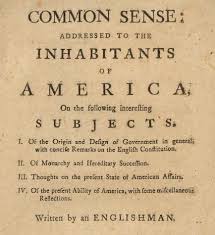
What influence did Thomas Paine’s Common Sense (1776) have on the colonists?

a)

It reconciled them with King George III of England.

b)

It established the framework for their later system of government.

c)

It persuaded them to declare their independence from Great Britain.

d)

It divided Northern and Southern colonists by calling for an end to

slavery.

16.

The passage below is from Thomas Paine’s 1776 pamphlet, Common Sense. How did Paine’s reasoning in this passage influence the colonists’ views of government?

a)

They invited King George III to visit the colonies.

b)

They invited George Washington to become king.

c)

They rejected the monarchical form of government.

d)

They decided to seek a reconciliation with Great Britain.

17.
The Enlightenment is
a)
a time of rebirth
b)
a time when science ruled
c)
a time with people used reason and logic to explain the world
d)
a time when technology ruled
18.
Enlightenment philosopher who did not agree with censorship.
a)
Voltaire
b)
Denis Diderot
c)
Mary Wollstonecraft
d)
Adam Smith
19.
Enlightenment philosopher who believed men and women should be equal
a)
Voltaire
b)
Denis Diderot
c)
Mary Wollstonecraft
d)
Adam Smith
20.
Enlightenment philosopher who edited the Encyclopedia to help educate the public.
a)
Voltaire
b)
Denis Diderot
c)
Mary Wollstonecraft
d)
Adam Smith
21.
Enlightenment philosopher who believed people had natural rights of life, liberty, and property.
a)
John Locke
b)
Montesquieu
c)
Rousseau
d)
Voltaire
22.
Enlightenment philosopher who believed to limit government, that it should be divided into separate branches that shared power.
a)
John Locke
b)
Montesquieu
c)
Rousseau
d)
Voltaire
23.
Enlightenment philosopher who believed people were born good, but society corrupted them.  
a)
John Locke
b)
Montesquieu
c)
Rousseau
d)
Voltaire
24.
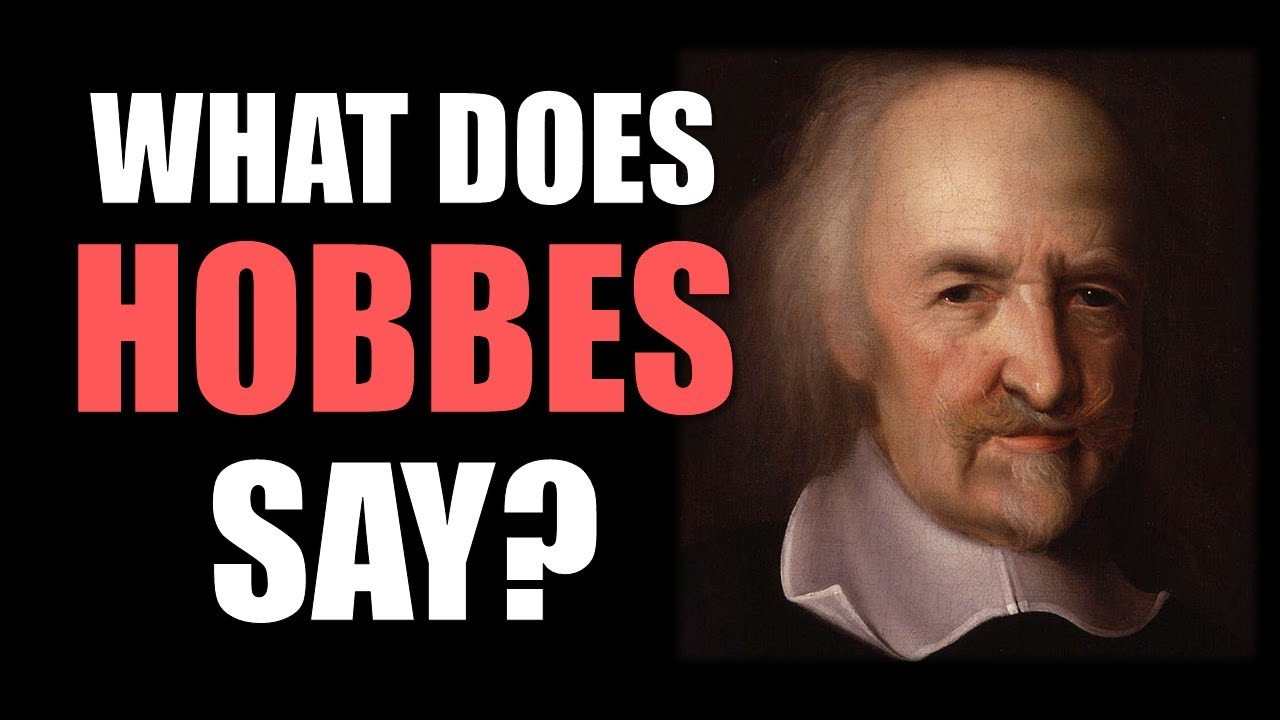
How did Hobbes view human nature?
a)
We are inquisitive and industrious.
b)
We are naturally selfish and quick to fight.
c)
We are naturally altruistic and usually willing to compromise.
d)
We are born a 'blank slate', and we develop differently according to our life's experiences..
25.
What is another name for the Enlightenment?
a)
The Age of Reason
b)
The Age of Great Philosophers
c)
The Age of Religion
d)
The Age of Revolution
26.
According to John Locke, why are governments created?
a)
God gives monarchs a divine right to rule over their people
b)
People are naturally selfish and need a strong ruler to create order
c)
People set up governments to protect their lives and property
d)
Civil government must be established to offset the power of the church
27.
Which idea describes the Magna Carta of 1215?
a)
to increase the power of the monarchy
b)
to end taxation in England
c)
to force the monarchy to give up power
d)
to weaken the power of nobles
28.
This painting shows King John signing a document in 1215.  Which groups of people are forcing the King to sign this document?
a)
knights 
b)
nobles
c)
peasants
d)
serfs
29.
Why is the Magna Carta an important document in British history?
a)
It was the first document to place limits on the king's power
b)
It outlawed feudalism and gave voting rights to all citizens
c)
It established Parliament as the nation's legislative body.
d)
It determined England's physical boundaries
30.
How did the signing of the Magna Carta impact the feudal system?
a)
It strengthened the feudal system by making people more dependent on the king.
b)
It reinforced the feudal system by setting strict roles for each level of the social hierarchy.
c)
It weakened the feudal system and broke down the strict social hierarchy that was part of it.
d)
It had little effect on the feudal system since the king kept absolute power over the peasants.
31.
Who was the main author of the Declaration of Independence?
a)
Benjamin Franklin
b)
Samuel Adams
c)
Thomas Jefferson
d)
Paul Revere
32.
To Great Britain, the signing of the Declaration of Independence was
a)
an act of loyalty.
b)
an act of treason.
c)
an act of bravery.
d)
an act of insanity.
33.
According to the Declaration of Independence, what truth was "self-evident"?
a)
All men are created equal
b)
Rights are given by good kings
c)
Government exists to protect us from ourselves
d)
Only a democracy can protect our rights
34.
Why was the Declaration of Independence written?
a)
To stop taxes from the British Empire.
b)
To make a United States army.
c)
To gain independence from the British Empire
d)
To install their own king in America
35.
The List of Grievances were the part of the Declaration that
a)
detailed the colonists' complaints with King George.
b)
listed a man's natural rights.
c)
introduced the Declaration.
d)
concluded the Declaration, declaring America a free country.
36.
What are our natural rights according to Jefferson?  (He got the idea from John Locke, but he changed the last right.)
a)
Freedom of speech, religion, and press
b)
Life, liberty, and property
c)
Life, liberty, and the pursuit of happiness
d)
Voting, rebelling, and health
37.
Why is July 4, 1776 an important date in U.S. history?
a)
Common Sense was published.
b)
The Olive Branch Petition sent to King George III.
c)
The American Revolution ends.
d)
The Declaration of Independence is signed.
38.
Who wrote a pamphlet called "Common Sense"?
a)
George Washington
b)
Thomas Paine
c)
Thomas Jefferson
d)
Patrick Henry
39.
How do natural rights, as described in the Declaration of Independence, differ from other rights?
a)
People are born with natural rights.
b)
People can vote to choose natural rights
c)
Natural rights are given only to citizens.
d)
Natural rights come from the government.
40.
What was the Declaration of Independence all about?
a)
For America and Britain to become allies
b)
For Britain to become part of Germany
c)
To proclaim that America's 13 Colonies were no longer part of the British Empire
d)
For America to take over Britain
41.
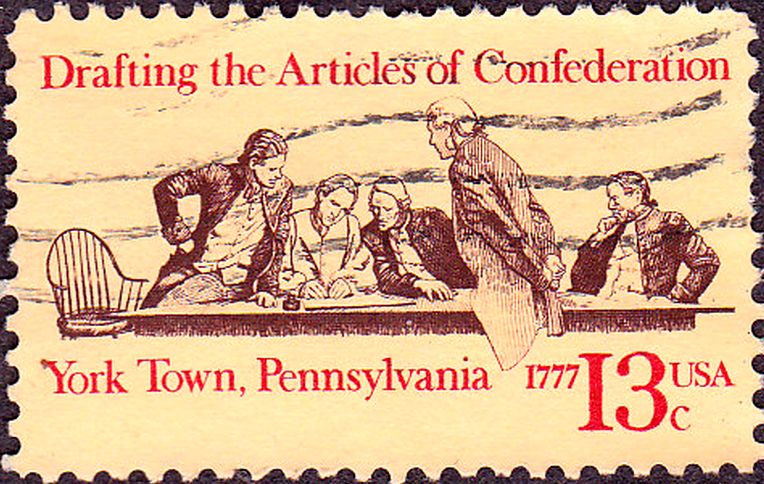
Under the Articles of Confederation, how many votes did each state get when voting on a new law?
a)
Zero
b)
One
c)
Two 
d)
Three
42.
How many branches of government were there under the Articles of Confederation?
a)
One
b)
Zero
c)
Two
d)
Three
43.
Which is a weakness of the Articles of Confederation?
a)
Congress couldn't collect taxes
b)
Weak central government
c)
Provided for no common currency
d)
All of the these
44.
Under the Articles of Confederation, most of the power was where?
a)
Legislative branch
b)
the president
c)
the states
d)
national government
45.
What is the introduction to the Constitution called? 
a)
Articles of Confederation
b)
Declaration of Independence
c)
Bill of Rights
d)
Preamble
46.
In the Preamble, what does it mean when it says, "We the people..."?
a)
The constitution was written for all the people of the United States.
b)
The constitution was only written for the delegates at the Constitutional Convention.
c)
Referring to "the people" who authored the constitution.
d)
The people of Massachusetts.
47.
Which of the following phrases from the Preamble is best described by saying: "We have FREEDOM, and it can't be taken away!"
a)
liberty
b)
common defense
c)
domestic tranquility
d)
general welfare
48.
The Articles of Conderation created a ______central government. 
a)
Weak
b)
Strong
c)
Stable
d)
Big
49.
What does the word tranquility mean?
a)
Calm
b)
Sleepy
c)
Crazy
d)
All of the above
50.
In the Preamble, what does it mean when it says, "We the people..."?
a)
The constitution was written for all the people of the United States.
b)
The constitution was only written for the delegates at the Constitutional Convention.
c)
The constitution was written for all people in North America
d)
The constitution was written for everyone in the world