
 Worksheets
Benchmark #3 Review
Total questions: 100
Worksheet time: 1hrs 24mins
Name
Class
Date
1.
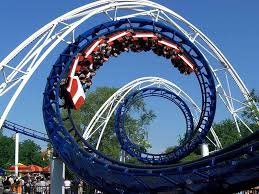
A roller coasters accelerates from an initial velocity of of 6.0 m/s to a final velocity of 70 m/s over 4 seconds. What's the acceleration?
a)
24 m/s2
b)
18 m/s2
c)
16 m/s2
d)
16 m/s
2.
A dog runs with an initial speed of 7.5 m/s on a waxed floor. It slides to a stop in 15 seconds. What is the acceleration?
a)
-7.5 m/s
b)
-7.5 m/s2
c)
-0.5 m/s2
d)
7.5 mi//hr
3.
A car starts from rest at a stop light and reaches 20 m/s in 3.5 s. Determine the acceleration of the car.
a)
2.2m/s2
b)
7.0m/s2
c)
5.7m/s2
d)
70m/s2
4.

The picture of the position vs. time graph shows an object that is...
a)
accelerating/speeding up
b)
moving at a constant speed
c)
not moving
d)
accelerating/slowing down.
5.
Acceleration is defined as the CHANGE in
a)
time it takes for one place to move to another place.
b)
velocity of an object.
c)
distance divided by the time interval
d)
velocity divided by the time interval
6.
Why does a car accelerate as it round a corner at a constant speed?
a)
Its direction changes
b)
It doesn't
c)
It slows down
d)
Its speeds up
7.
Acceleration only takes place when things speed up.
a)
True
b)
False
8.
In each of the following cases, determine where the car has no acceleration ?
a)
A car shortly after a stoplight turns green.
b)
A car approaching a red light
c)
A car with the cruise control set at 80 km/h
d)
A car turning a curve at a constant speed
9.

A roller coasters accelerates from an initial velocity of of 6.0 m/s to a final velocity of 70 m/s over 4 seconds. What's the acceleration?
a)
24 m/s2
b)
18 m/s2
c)
16 m/s2
d)
16 m/s
10.

Which graph shows the object standing still?
a)
A
b)
B
c)
C
d)
D
11.
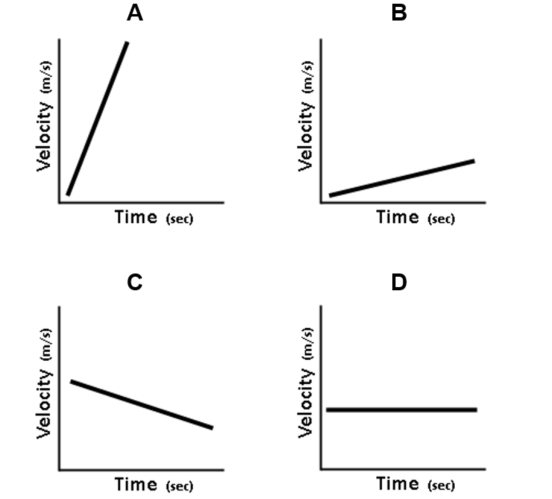
Which graph represents the greatest acceleration?
a)
A
b)
B
c)
C
d)
D
12.
The positive particles of an atom are
a)
electrons
b)
positrons
c)
neutrons
d)
protons
13.
Particles in an atom that are neutral and have no charge are
a)
negatrons
b)
electrons
c)
neutrons
d)
protons
14.
The smallest particle of any particular type of matter is known by which of the following terms?
a)
Compound
b)
Atom
c)
Chemical
d)
Element
15.
If an atom has 3 electrons, how many protons does it have?
a)
1
b)
2
c)
4
d)
3
16.
The subatomic particle with a negative charge is the
a)
electron
b)
proton
c)
neutron
d)
nucleus
17.
What is the atomic number?
a)
the number of protons
b)
the number of protons and neutrons
c)
the number of neutrons
d)
the number of protons and electrons
18.
What is the mass number?
a)
the number of protons
b)
the number of protons and neutrons
c)
the number of neutrons
d)
the number of protons and electrons
19.

What is the net force?
a)
20 N
b)
0 N
c)
400 N
d)
40 N
20.
What is the unit to MEASURE force?
a)
Kilogram
b)
Meter
c)
Pascal
d)
Newton
21.

A ____________ is a push or a pull on an object.
a)
friction
b)
force
c)
magnet
d)
gravity
22.

What is the net force?
a)
30 N
b)
25 N
c)
5 N
d)
55 N
23.

What is the net force?
a)
10 N
b)
0 N
c)
25 N
d)
1 N
24.

Balanced or unbalanced?
a)
balanced
b)
unbalanced
25.

Forces that have a net force of zero
a)
Balanced force
b)
Unbalanced force
26.
The sum of all forces acting on an object.
a)
Contact Force
b)
Balanced Force
c)
Unbalanced Force
d)
Net Force
27.
What will cause an object to move?
a)
Applied forces
b)
Balanced forces
c)
Unbalanced forces
28.

Balanced or Unbalanced?
a)
Balanced
b)
Unbalanced
29.

If an object is not moving the forces acting upon it are _____________
a)
unbalanced
b)
weak
c)
balanced
d)
Hulk Smash!
30.
A push or pull that causes a change in motion
a)
Friction
b)
Gravity
c)
Force
d)
Mass
31.
Examples of forces that make something move are...
a)
pushes
b)
pulls
c)
both pushes and pulls
32.
When forces are _________ the object DOES NOT move.
a)
unbalanced
b)
balanced
c)
heavy
d)
light
33.
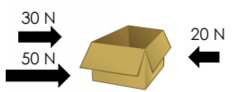
Calculate the Net Force.
a)
60N, Left
b)
40N, Right
c)
0N
d)
60N, Right
34.

"For every action, there is an equal and opposite reaction."
a)
Newton's 1st Law
b)
Newton's 2nd Law
c)
Newton's 3rd Law
d)
Newton's 4th Law
35.

Force = Mass x Acceleration
a)
Newton's 1st Law
b)
Newton's 2nd Law
c)
Newton's 3rd Law
d)
Newton's 4th Law
36.

"An object in motion (or at rest) will to stay in motion (or at rest) until an outside force acts upon it."
a)
Newton's 1st Law
b)
Newton's 2nd Law
c)
Newton's 3rd Law
d)
Newton's 4th Law
37.

The tendency of an object to resist changes in its motion is...
a)
inertia
b)
force
c)
acceleration
d)
velocity
38.

Any push or pull on an object.
a)
force
b)
velocity
c)
inertia
d)
momentum
39.

The force that opposes motion between two surfaces in contact with each other.
a)
inertia
b)
friction
c)
momentum
d)
gravity
40.

The force of attraction between all matter.
a)
inertia
b)
friction
c)
net force
d)
gravity
41.

Which of the following is the units for acceleration?
a)
kg*m/sec/sec
b)
kg*m/sec
c)
m/sec/sec
d)
m/sec
42.
A Newton is a unit of...
a)
force
b)
inertia
c)
acceleration
d)
velocity
43.

In the picture, the blocks are flying out of the truck based on which of Newton's laws?
a)
Newton's 1st Law
b)
Newton's 2nd Law
c)
Newton's 3rd Law
d)
Newton's 6th Law
44.

In the picture, the vehicle will move because of...
a)
Newton's 1st Law
b)
Newton's 2nd Law
c)
Newton's 3rd Law
d)
Newton's 9th Law
45.
Freezing
a)
Solid to gas
b)
Liquid to solid
c)
Gas to solid
d)
Liquid to gas
46.
Boiling
a)
liquid to gas
b)
gas to solid
c)
gas to liquid
d)
solid to liquid
47.
Boiling
a)
liquid to gas
b)
gas to solid
c)
gas to liquid
d)
solid to liquid
48.
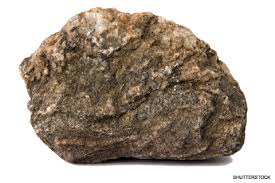
Which state of matter has tightly packed molecules?
a)
solid
b)
liquid
c)
gas
49.
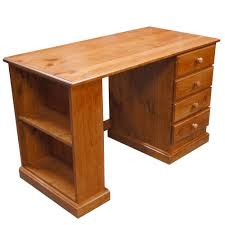
Which state of matter has a definite shape?
a)
solid
b)
liquid
c)
gas
50.
What is happening when my ice cream changes from a solid to a liquid?
a)
freezing
b)
melting
c)
burning
d)
evaporation
51.
Define a liquid.
a)
Indefinite shape, indefinite volume
b)
Definite shape, definite volume
c)
Found in stars
d)
Definite volume, indefinite shape
52.
The state of matter that has no definite size or shape is
a)
Solid
b)
Liquid
c)
Gas
53.
Particles (molecules) in a ______________________ have more energy than the other states of matter.
a)
gas
b)
solid
c)
liquid
54.
Particles of a liquid
a)
are tightly packed together and stay in a fixed position.
b)
have no viscosity.
c)
decrease in volume with increasing temperature.
d)
are free to move around one another but still touch.
55.
What term describes a solid changing to a gas?
a)
Deposition
b)
Sublimation
c)
Evaporation
d)
Freezing
56.
Particles (molecules) in a ______________________ have more energy than the other states of matter.
a)
gas
b)
solid
c)
liquid
57.
What is condensation?
a)
gas to solid
b)
gas to liquid
c)
liquid to solid
d)
solid to liquid
58.
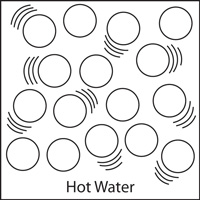
The speed of the molecules determines the _____.
a)
volume
b)
density
c)
pressure
d)
temperature
59.
Which has a greater distance between particles?
a)
Solid
b)
Liquid
60.
The slower the particles in a substance move,
a)
the colder it is.
b)
the warmer it is.
c)
the more energy it has.
d)
the less energy it has.
61.
Thermal energy is...
a)
heat energy.
b)
the energy of motion
c)
energy of nuclear processes.
d)
an indication of physical change.
62.

Which state of matter do the particles in this picture represent?
a)
solid
b)
liquid
c)
gas
d)
plasma
63.

The following illustration is in what state of matter?
a)
Solid
b)
Liquid
c)
Gas
d)
Plasma
64.

The following illustration is in what state of matter?
a)
Solid
b)
Liquid
c)
Gas
d)
Plasma
65.

The following illustration is in what state of matter?
a)
Solid
b)
Liquid
c)
Gas
d)
Plasma
66.
Friction is a force that acts in an ___________ direction of movement.
a)
similar
b)
opposite
c)
parallel
d)
west
67.

Wheels on a skateboard most likely experiences-
a)
Rolling Friction
b)
Sliding Friction
c)
Fluid Friction
d)
Static Friction
68.

Sally experiences-
a)
Rolling Friction
b)
Sliding Friction
c)
Fluid Friction
d)
Static Friction
69.

Wheels of a shopping cart experience-
a)
Rolling Friction
b)
Sliding Friction
c)
Fluid Friction
d)
Static Friction
70.

Swimming fish experience-
a)
Rolling Friction
b)
Sliding Friction
c)
Fluid Friction
d)
Static Friction
71.

Objects balanced on Timmy's head experiences-
a)
Rolling Friction
b)
Sliding Friction
c)
Fluid Friction
d)
Static Friction
72.

Oil between machine parts would be an example of which type of friction?
a)
static
b)
sliding
c)
fluid
d)
rolling
73.
The rougher the surface, the faster an object will travel over the surface.
a)
True
b)
False
74.
Objects with greater _________ also have greater inertia.
a)
speed
b)
mass
c)
temperature
d)
friction
75.
Inertia is the tendency of an object to resist a change in its ___________.
a)
temperature
b)
shape
c)
size
d)
motion
76.
Because of inertia, a resting object will remain at ________.
a)
rest
b)
a constant speed
c)
school
d)
inertia
77.
Because of inertia, a moving object will keep ________.
a)
at rest
b)
moving
c)
in one spot
d)
inertia
78.
What kind(s) of objects have inertia?
a)
all objects with mass
b)
only objects at rest
c)
only objects in motion
d)
only objects whose motion is being changed
79.

What is the formula to calculate speed?
a)
S = t/d
b)
S = d/t
c)
S = d x t
d)
S = t x d
80.

A runner races in the 100 meter dash. It takes her 10 seconds to finish. What is her average speed?
a)
10 m/s
b)
1000 m/s
c)
100 seconds
d)
10 seconds
81.
Dave runs a 400 m race with a speed of 4 m/s. What time will it take him to finish the race?
a)
400 minutes
b)
100 minutes
c)
100 seconds
d)
.25 seconds
82.
Which of the following is a unit of time?
a)
sec
b)
mi
c)
m/s
d)
km
83.
Which of the following is a unit of speed ?
a)
sec
b)
mi
c)
m/s
d)
min
84.
Which of the following is a unit of distance ?
a)
miles/hr
b)
mi
c)
s
d)
min
85.
Which of the following is a unit of distance ?
a)
miles/hr
b)
hr
c)
km
d)
min
86.
Which of the following is a unit of time?
a)
km/hr
b)
hr
c)
km
d)
mi
87.
Which of the following is a unit of speed?
a)
km/hr
b)
hr
c)
km
d)
s
88.
A train travels 25 km in .5 hrs. How fast is the train going?
a)
25 miles/hr
b)
5 miles/hr
c)
125 km/hr
d)
50 km/hr
89.
Velocity is both ____ and _____.
a)
speed , direction
b)
direction, mass
c)
volume, density
d)
direction, magnitude
90.
10 miles per hour is an example of an objects what?
a)
Velocity
b)
Speed
c)
Acceleration
d)
Inertia
91.
Speed is different from velocity because
a)
Velocity has a direction
b)
Speed uses Distance /Time
c)
Velocity doesn't include time
d)
Velocity doesn't include distance
92.
Acceleration: is the rate of change in ___________.
a)
speed
b)
distance
c)
velocity
d)
displacement
93.
The SI unit for acceleration is
a)
mph
b)
ft/sec2
c)
m/s2
94.
Which of the following terms identifies the change from a liquid to gas?
a)
Vaporization
b)
Condensation
c)
Deposition
d)
Sublimation
95.
When the temperature of matter increases the particles...
a)
speed up and move closer
b)
speed up and move farther apart
c)
slow down and move closer together
d)
slow down and move farther apart
96.
5. What is it called when a solid turns directly into a gas?
a)
Sublimation
b)
Condensation
c)
Liquid
97.
Change from Gas to Solid is called........
a)
Sublimation
b)
Deposition
c)
Fusion
d)
condensation
98.

What is happening at "D" on the graph?
a)
Water is boiling
b)
water is evaporating
c)
water is melting
d)
the sublimation of water
99.

Why does the graph have two flat lines at "b" and "d"?
a)
Those are times when we took the water off the hot plate
b)
Those are phase changes where temperature doesn't change while adding heat
c)
The line is flat because the water is all in the solid or gas phase
d)
The line is flat because temperature increases the most at those locations
100.
Two factors effecting the magnitude of the force of gravity between 2 objects are...
a)
mass and distance
b)
mass and matter
c)
distance and weight
d)
weight and mass
100 %

