
NEW
Font size
S
M
L
XL
 Worksheets
Circulatory System Quiz
Total questions: 28
Worksheet time: 18mins
Name
Class
Date
1.
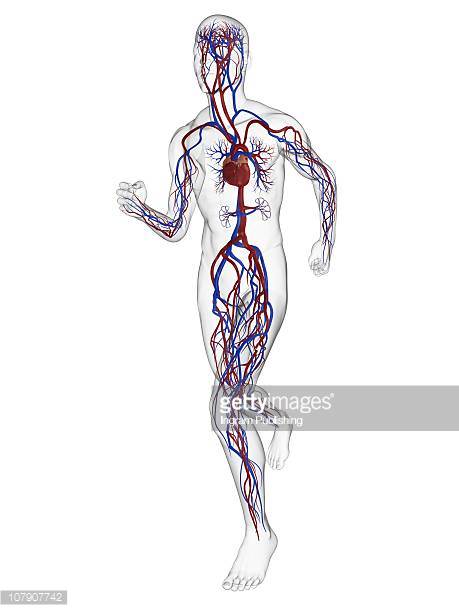
What is the main organ of the circulatory system?
a)
small intestine
b)
bone
c)
lungs
d)
heart
2.
How many types of blood vessels are in our body?
a)
1
b)
2
c)
3
d)
4
3.
Arteries carry oxygen rich blood away from the heart.
a)
True
b)
False
4.
Veins carry oxygen poor blood back to the heart.
a)
False
b)
True
5.
The job of the heart is to . . .
a)
pump blood around the body.
b)
send food to the small intestines.
c)
break down food.
d)
give energy to the body.
6.
The heart is about the size and shape of your . . .
a)
head
b)
fist
c)
hand
d)
foot
7.
How does the heart work?
a)
It pumps blood first to the lungs, back to the heart and then around the rest of the body.
b)
It pumps blood first to the rest of the body, back to the lungs and then to the heart.
c)
It pumps blood around the rest of the body, back to the heart and then to the lungs,
8.
______________ are the smallest blood vessels.
a)
Arteries
b)
Veins
c)
Capillaries
9.
______________ are the second largest blood vessel.
a)
Arteries
b)
Veins
c)
Capillaries
10.
The circulatory system works with the ___________ system to provide our body with oxygen.
a)
respiratory
b)
digestive
c)
muscular
d)
skeletal
11.
The circulatory system works with the __________ system to obtain energy from nutrients that we eat.
a)
respiratory
b)
digestive
c)
skeletal
d)
nervous
12.
The heart has ___ chambers.
a)
1
b)
2
c)
3
d)
4
13.
This chamber of the heart RECEIVES blood returning from the body
a)
Right Atrium
b)
Right Ventricle
c)
Left Atrium
d)
Left Ventricle
14.
Which chambers of the heart are the thickest and strongest?
a)
Atria
b)
Ventricles
c)
Valves
d)
Aorta
15.
The aorta is the largest artery in the body. The blood leaving the aorta is full of?
a)
Oxygen
b)
Carbon Dioxide
c)
White blood Cells
d)
Potassium
16.
Thin-walled vessels that allow for the exchange of O2 , CO2, nutrients and wastes between blood cells or air sacs in the lungs
a)
Arteries
b)
Veins
c)
Capillaries
17.

What does Deoxygenated mean?
a)
Oxygen-rich
b)
Blood flow
c)
Oxygen-poor
d)
Water Flow
18.

A flap of tissue that prevents blood from flowing backward
a)
Aorta
b)
Atrium
c)
Septum
d)
Valve
19.
Carry blood away from heart; mostly oxygen-rich
a)
Arteries
b)
Veins
c)
Capillaries
20.
Which type of blood vessel has the thickest layer of smooth muscle in its walls?
a)
Arteries
b)
Veins
c)
Capillaries
d)
Ventricles
21.
What is pulmonary circulation?
a)
Blood travelling to and from the lungs
b)
Blood travelling to and from the body
c)
A blood clot in the lungs
d)
The vessel that brings blood to the lungs
22.
Blood circulation from the heart to the rest of the body is called
a)
Full body
b)
Systemic
c)
pulmonary
d)
heart to lung
23.
Which is the correct definition of the Circulatory system?
a)
The system fights disease so the body stays healthy.
b)
The system that circulates blood and oxygen through the body, consisting of the heart,blood vessels,and blood.
c)
Breaks down food into smaller pieces and absorbs those nutrients into the body.
d)
Provides shape and structure for the body.
24.
Structure(s) that keep the blood flowing in one direction.
a)
Valve(s)
b)
Septum(s)
c)
Neuron(s)
d)
Bronchiole(s)
25.
arteries, veins, and capillaries are three types of __________
a)
heart valves
b)
blood vessels
c)
cells
d)
veins
26.
What is an upper, thin-walled chamber through which blood is pumped to the ventricles?
a)
Valves
b)
Veins
c)
Ventricles
d)
Atrium
27.

What do Red-Blood cells do?
a)
Carry oxygen from the lungs to the body cells and transport carbon dioxide from the cells back to the lungs
b)
keeps blood flowing in one direction to the heart and prevent blood from flowing backwards
c)
Collects blood from the capillaries and drain it into the veins
d)
Bring nutriients to the cells and carries away waste materials.
28.

What does blood do?
a)
Carries Water to cells
b)
Carries Oxygen to cells
c)
Carries Food to cells
d)
All of the above
Reset

