wayground logo

Free Printable Worksheets

Font size

S
M
L
XL
Worksheets

Year 10 PASS Body Systems Revision

Total questions: 97

Worksheet time: 57mins

Name
Class
Date
1.
What is responsible for delivering oxygen and removing carbon dioxide from the body?
a)
cell nucleus
b)
excretory system
c)
nervous tissue
d)
respiratory system
2.
The __________ is the main organ of the nervous system.
a)
heart
b)
lungs
c)
brain
d)
skin
3.
The circulatory system uses _________ to deliver oxygen to the rest of the body.
a)
blood cells
b)
lungs and nose
c)
blood vessels
d)
brain and spinal cord
4.
Which of the following body systems work together for support, protection, and movement?
a)
respiratory and cardiovascular
b)
skeletal and muscular
c)
skeletal and integumentary
d)
digestive and respiratory
5.
This system protects the body's organs, provides support for the body.
a)
Nervous System
b)
Skeletal System
c)
Respiratory System
6.
What body system makes your body move? 
a)
Circulatory
b)
Respiratory
c)
Skeletal
d)
Muscular
7.
How many bones make up a human adult?
a)
205
b)
206
c)
207
d)
208
8.
My spinal cord helps _________ travel between my brain and the nerves in my body. 
a)
Memories
b)
Blood
c)
Waste
d)
Messages
9.
My body needs ______ from the air to live. 
a)
Oxygen
b)
Cardon Dioxide
c)
Carbon Monoxide
d)
Hydrogen Peroxide
10.
I breathe out s gas called ___________ that my body does not need. 
a)
Oxygen
b)
Carbon Monoxide
c)
Carbon Dioxide
d)
Hydrogen Peroxide
11.
Which body system transports oxygen and nutrients through out the body?
a)
Muscular System
b)
Nervous System
c)
Digestive System
d)
Circulatory System
12.
Smooth and Cardiac muscles are both 
a)
voluntary
b)
involuntary
13.
Where do two or more bones meet?
a)
tendons
b)
ligaments
c)
joints
14.
When you breathe, your lungs take in ___ and remove ___. 
a)
air/oxygen
b)
oxygen/carbon dioxide 
c)
carbon dioxide/waste 
d)
waste/air 
15.
What is function of the dome-shaped diaphragm?
a)
This is where gas exchange happens.
b)
Air passes through the diaphragm on the way to the lungs.
c)
It attaches to the lungs to help in breathing.
d)
It is under the lungs and keeps them from falling down to your stomach.
16.
Name the organ label # 6. 
a)
alveoli 
b)
bronchi 
c)
trachea 
d)
lungs 
17.
Name the structure labeled 8 
a)
lungs 
b)
trachea 
c)
diaphragm 
d)
alveoli 
18.
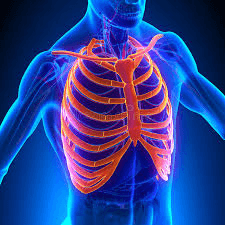
What is the main bone structure that protects the lungs
a)
Vertebrae
b)
Rib cage
c)
Skull
d)
Pelvis
19.
Carbon dioxide is considered a _________________
a)
food
b)
waste
c)
energy
d)
fun party favor
20.
Arteries carry oxygen rich blood away from the heart.
a)
True
b)
False
21.
Veins carry oxygen poor blood back to the heart.
a)
False
b)
True
22.
This system includes the trachea, lungs, air sacs, diapram
a)
Respiratory System
b)
Skeletal System
c)
Nervous System
23.
Arteries carry blood ______ from the heart.
a)
Away
b)
To
c)
Across
d)
Around
24.
Veins carry blood ______ the heart. 
a)
Around
b)
Away
c)
To
d)
Across
25.
What is another name for the throat?
a)
esophagus
b)
larynx
c)
pharynx
d)
trachea
26.
Oxygen and carbon dioxide move in and out of blood through the walls of the __________
a)
arteries
b)
capillaries
c)
veins
d)
vessels
27.
Given the following structures:
1. larynx
2. nasal cavity
3. pharynx
4. trachea
Which of the following is the correct order that air would flow during inhalation. 
a)
1,2,3,4
b)
2,3,1,4
c)
2,1,3,4
d)
4,2,3,1 
28.
Flap of skin that covers the opening to the windpipe during swallowing
a)
Stomach
b)
Trachea
c)
Pancreas
d)
Epiglottis
29.
Given the following structures:
1. alveoli
2. bronchi
3. bronchioles
Which of the following is the correct order in which air would flow after inhalation? 
a)
1,2,3
b)
2,1,3
c)
2,3,1
d)
3,2,1
30.
When the diaphragm contracts...
a)
the volume of the thoracic cavity increases and the pressure decreases, causing air to rush into the lungs.
b)
the volume of the thoracic cavity decreases and the pressure increases causing air to rush out of the lungs. 
31.
When the diaphragm relaxes...
a)
the volume of the thoracic cavity increases and the pressure decreases, causing air to rush into the lungs.
b)
the volume of the thoracic cavity decreases and the pressure increases causing air to rush out of the lungs. 
32.
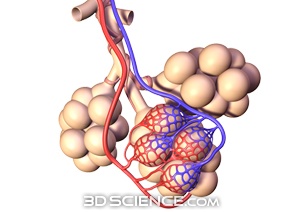
The air sacs that are covered with capillaries where gas exchange takes place
a)
bronchi
b)
lungs
c)
oxygen
d)
alveoli
33.
Thin, moist slippery membrane that covers lungs - they allow for smooth movement of lungs 
a)
pleura
b)
surfactant
c)
mediastinum
d)
diaphragm
34.
The knee joint is
a)
Hinge
b)
Gliding
c)
Ball and socket
d)
Pivot
35.
Which of the following movements could occur at the hip joint?  
a)
Abduction and adduction 
b)
Rotation 
c)
Flexion and extension 
d)
All of the above 
36.
The shoulder joint is
a)
Hinge
b)
Gliding
c)
Ball and socket
d)
Pivot
37.
What type of tissue is bone?
a)
Nerve
b)
Muscle
c)
Epithelium
d)
Connective
38.
Connects bone to bone
a)
Ligament
b)
Tendon
c)
Cartilidge
39.
The elbows, knees and phalanges are examples of this type of joint
a)
ball and socket
b)
condyloid
c)
gliding
d)
hinge
40.
Name this joint
a)
gliding
b)
saddle
c)
ball and socket
d)
condyloid
41.
Synovial fluid
a)
provides cushioning
b)
provides structure
c)
lubricates the joint
d)
provides support
42.
Name this joint
a)
pivot
b)
saddle
c)
gliding
d)
hinge
43.
The skull is an example of what type of joint?
a)
Cartilaginous
b)
Synovial
c)
Fibrous
44.
What are joints
a)
A place where one bone meets 
b)
A place where  two  bones meet 
c)
Bones don't meet 
d)
A place where three bones meet 
45.
The main purpose of the ____________ system is to break food particles into pieces that can be used.
a)
circulatory
b)
respiratory
c)
digestive
d)
skeletal
46.
a)

latissimus dorsi

b)

deltoid

c)

triceps

d)

trapezius

47.
a)

triceps

b)

biceps

c)

latissimus dorsi

d)

deltoid

48.
a)

deltoid

b)

trapezius

c)

latissimus dorsi

d)

triceps

49.
a)

gluteus maximus

b)

hamstrings

c)

quadriceps

d)

soleus

50.
a)

adductors

b)

soleus

c)

quadriceps

d)

hamstrings

51.
a)

achilles

b)

gastrocnemius

c)

soleus

d)

patella

52.
a)

achilles

b)

soleus

c)

patella

d)

gastrocnemius

53.
a)

soleus

b)

deltoid

c)

achilles

d)

patella

54.
a)

latissimus dorsi

b)

hamstrings

c)

quadriceps

d)

soleus

55.
a)

adductors

b)

abductors

c)

soleus

d)

patella

56.
a)

triceps

b)

external obliques

c)

deltoid

d)

biceps

57.
a)

biceps

b)

triceps

c)

external obliques

d)

pectoralis major

58.
a)

triceps

b)

deltoid

c)

biceps

d)

pectoralis major

59.
a)

temporalis

b)

frontalis

c)

masseter

d)

deltoid

60.
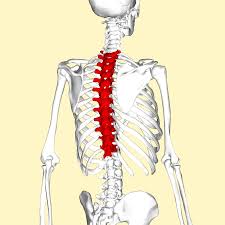
The bones in your back are made up of what?
a)
fingers
b)
phalanges
c)
vertebrate
d)
toes
61.
What is the name for the connector that attaches muscle to bone?
a)
ligament
b)
tendon
c)
patella
d)
string
62.
Ligaments connect:
a)
Bone to bone
b)
Muscle to bone
c)
Joint to joint
d)
Bone to joint
63.
The skeletal system is composed of what as well as bones?
a)
Joints, ligaments, and tendons
b)
Joints, ligaments, and cartilage
c)
Cartilage, ligaments, and tendons
d)
Ligaments and joints
64.
Which type of joint give you the largest range of motion?
a)
pivot
b)
ball-and-socket
c)
hinge
d)
gliding
65.
long, short, irregular are all ? 
a)
types of bone
b)
functions of the bone
c)
bones
d)
types of bone tissue 
66.

What bone is highlighted?

a)

Skull (Cranium)

b)

Mandible

c)

Clavicle

d)

Scapula

67.

What bone is highlighted?

a)

Skull (Cranium)

b)

Mandible

c)

Scapula

d)

Clavicle

68.

What bone is highlighted?

a)

Skull (Cranium)

b)

Scapula

c)

Clavicle

d)

Mandible

69.

What bone is highlighted?

a)

Skull (Mandible)

b)

Clavicle

c)

Mandible

d)

Scapula

70.

What bone is highlighted?

a)

Ribs

b)

Vertebrae

c)

Clavicle

d)

Femur

71.

What bone is highlighted?

a)

Radius

b)

Ulna

c)

Humerus

d)

Carpals

72.

What bone is highlighted?

a)

Vertebrae

b)

Radius

c)

Pelvis

d)

Ribs

73.

What bone is highlighted?

a)

Radius

b)

Ulna

c)

Humerus

d)

Carpals

74.

What bone is highlighted?

a)

Radius

b)

Ulna

c)

Humerus

d)

Carpals

75.

What bone is highlighted?

a)

Femur

b)

Tibia

c)

Fibula

d)

Humerus

76.

What bone is highlighted?

a)

Patella

b)

Pelvis

c)

Clavicle

d)

Femur

77.

What bone is highlighted?

a)

Tibia

b)

Fibula

c)

Femur

d)

Humerus

78.

What bone is highlighted?

a)

Tibia

b)

Fibula

c)

Radius

d)

Ulna

79.

From wrist to fingertip, what is the order of bones?

a)

Carpals, metacarpals, phalanges

b)

Phalanges, metacarpals, carpals

c)

Carpals, phalanges, metacarpals

d)

Metacarpals, carpals, phalanges

80.

From ankle to toe, what is the order of bones?

a)

Tarsals, metatarsals, phalanges

b)

Phalanges, metatarsals, tarsals

c)

Metatarsals, phalanges, tarsals

d)

Tarsals, phalanges, metatarsals

81.
Gas exchange occurs in the ___________.
a)
cilia
b)
alveoli
c)
bronchi
d)
trachea
82.
The upper chambers of the heart that receive blood.
a)
Atria
b)
Arteries
c)
Ventricles
d)
Veins
83.
Structure in the heart that keeps blood flowing in the correct direction.
a)
Valves
b)
Arteries
c)
Ventricles
d)
Atria
84.
The _______________ prevents food from entering the trachea, or windpipe.
a)
Esophagus
b)
Epiglottis
c)
Eustachian tubes
d)
Alveoli
85.
ATP stands for?
a)
adenosine thephate
b)
adenosine triphosphate
c)
alright triphosphate
d)
phosphocreatine
86.
What energy system will this athlete use predominately?
a)
Lactic acid system
b)
ATP-PC
c)
Aerobic
d)
ATP stores
87.
What energy system will this athlete use?
a)
ATP-PC System
b)
Lactic Acid System
c)
Aerobic System
d)
All three
88.

How long does the Energy released from the ATP-PC system last for?

a)

3-5 seconds

b)

1 minute

c)

10-12 seconds

d)

3 minutes +

89.

The ATP-PC Energy System does not use Oxygen.

a)

True

b)

False

90.

The ATP-PC system provides energy for what intensity of exercise?

a)

Low-Medium

b)

High

c)

Maximal

91.

How long does the Energy released from the Lactic Acid System last for?

a)

3 minutes +

b)

Up to 2.5 minutes

c)

3-5 seconds

d)

10-15 seconds

92.

The Lactic Acid System uses Oxygen to create energy?

a)

True

b)

False

93.

Which track athletics event listed below is most likely to use the Lactic Acid system as its predominant energy system?

a)

400m Sprint

b)

110m Hurdles

c)

1500 metres

d)

5000 metres

94.

The Aerobic Energy System uses Oxygen to produce Energy.

a)

True

b)

False

95.

What sporting activity would predominantly use the Aerobic Energy System?

a)

Surfing

b)

Rugby

c)

Athletics - 800 metres

d)

Marathon

96.

Why do the alveoli have thin walls

a)

To help gasses pass through

b)

To help blood pass through

c)

To filter carbon dioxide

d)

To help oxygen flow

97.

The mandible is a bone in your arm

a)

True

b)

False