wayground logo

Free Printable Worksheets

Font size

S
M
L
XL
Worksheets

SO- Forensics

Total questions: 186

Worksheet time: 3hrs 58mins

Name
Class
Date
1.

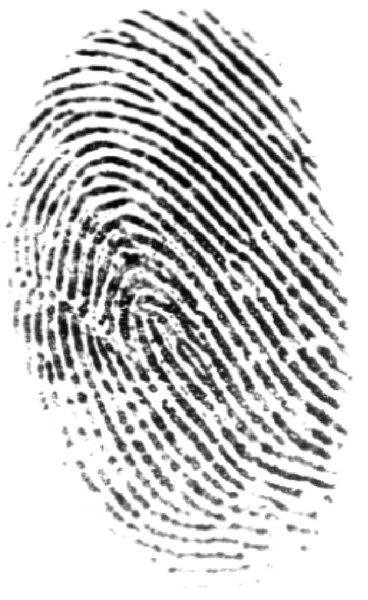
What type of fingerprint is shown in the diagram below?

a)

Arch

b)

Whorl

c)

Loop

2.
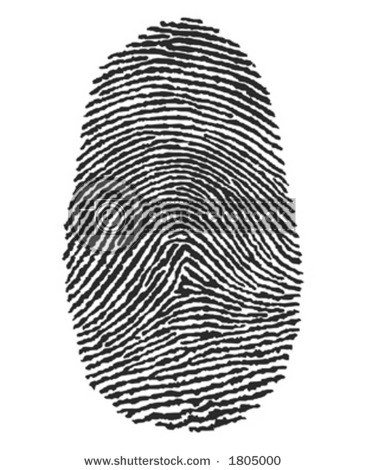
What pattern is this?
a)
Loop
b)
Arch
c)
Whorl
3.
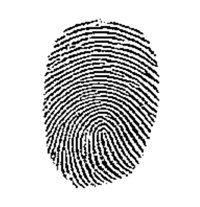
What pattern is this?
a)
Loop
b)
Arch
c)
Whorl
4.
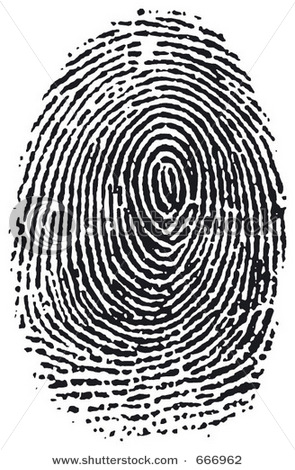
What pattern is this?
a)
Loop
b)
Arch
c)
Whorl
5.
What pattern is this?
a)
Loop
b)
Arch
c)
Whorl
6.

What pattern is this?

a)

Arch

b)

Whorl

c)

Loop

7.
What pattern is this?
a)
Loop
b)
Arch
c)
Whorl
8.

What pattern is this?

a)

Loop

b)

Arch

c)

Whorl

9.
What kind of fingerprint is this? 
a)
Arch
b)
Whorl
c)
Loop
10.
What is this Fingerprint?
a)
Whorl
b)
Arch
c)
Loop
11.
Identify this fingerprint
a)
Arch
b)
Loop
c)
Whorl
d)
Swirl
12.
Identify the fingerprint
a)
Arch
b)
Loop 
c)
Whorl
d)
Swirl
13.
Identify the fingerprint
a)
Arch
b)
Loop
c)
Whorl
d)
Swirl
14.

Which institution enables federal, state, & local crime labs to electronically exchange & compare DNA profiles?

a)

CODIS

b)

IAFIS

c)

NIBIN

d)

PDQ

15.

Which is a national fingerprint & criminal history system maintained by the FBI?

a)

CODIS

b)

IAFIS

c)

NIBIN

d)

PDQ

16.
What is the name of a lie detector test?
a)
Polygraph
b)
Fingerprints
c)
Latent prints
d)
Trace Evidence
17.
What might a forensic scientist be asked to do in a murder trial?
a)
Identify whose blood is on the murder weapon
b)
Testify to the mental state of the accused
c)
Talk about the illegal accounting practices of the victim
d)
Explain what the victim was doing the day before the crime
18.
A young girl is missing, and investigators find a stained article of clothing where she was last seen. Testing the stain can tell investigators if the stain was:
a)
Twenty days old
b)
Animal blood
c)
An accidental spill.
d)
Caused by the killer.
19.
What is forensic science?
a)
When scientists improve plants by using DNA
b)
The use of science in growing trees
c)
Any legal action that requires a police investigation
d)
When science is used for the purposes of the law
20.
When a forensic scientist provides information in a criminal trial, the facts he or she presents are based on:
a)
Eyewitness accounts.
b)
Educated guesses.
c)
Circumstantial evidence.
d)
Scientific investigation.
21.
Mrs. Woodley is missing and police want her DN The best place for them to find it is in Mrs. Woodley�s:
a)
Tennis shoes.
b)
Dishes.
c)
Hair brush.
d)
Bank account statements.
22.
What expert would be called upon to examine the skeletal remains that police found in the woods?
a)
Ballistics expert
b)
Forensic anthropologist
c)
Judge
d)
Forensic profiler
23.
A house burned to the ground with one victim inside. What is the BEST way for forensic scientists to identify the victim?
a)
Eyewitness account
b)
Blood analysis
c)
Teeth
d)
Personal documents
24.
A skeleton is found buried at a campsite. What can examination of the skeleton tell investigators about the victim?
a)
Race and gender
b)
Occupation and income
c)
Height and weight at the time of death
d)
Ethnicity and religion
25.
What is done by a medical examiner to determine the cause of death?
a)
Biopsy
b)
Autopsy
c)
Forgery
d)
Sonogram
26.
When comparing a known object to one that needs to be identified, analysts will break down photos of each into small portions, and compare the respective similarities  within those portions. This process is referred to as? 
a)
Criminology
b)
Tracing evidence 
c)
Ridge Characteristics 
d)
Point-by-point Analysis 
27.
An investigator takes a general survey of the crime scene, hypothesizing, who might have committed the crime based on the evidence present, and testing the evidence that they find to see if it implicates a suspect. The process is continued until a theory can be proved with evidence. This is an example of what? 
a)
DNA profiling 
b)
Forensic Science 
c)
The scientific method 
d)
Point-by-point analysis 
28.
The internal diameter or bore of a gun barrel usually expressed in hundredths of an inch or in millimeters is referred to as?
a)
Caliber 
b)
Bullet size 
c)
Gun size 
d)
Trajectory 
29.
Which of the following would NOT be considered types of evidence an investigator might look for?
a)
Shoe prints 
b)
footprints
c)
blood spatters
d)
a suspect
30.
Gas Chromatography (GC) is?
a)
The same thing as Liquid Chromatography (LC)
b)
A tool used to identify DNA 
c)
A tool used to identify the chemical makeup of substances
d)
None of the above 
31.
The path of a projectile is referred to as?
a)
Track 
b)
Trail 
c)
Motion 
d)
Trajectory 
32.
The internal and external examination of a body after death. 
a)
Autotomy
b)
Autotypy
c)
Biopsy 
d)
Autopsy
33.
The study of the motion of bullets and their examination for distinctive characteristics after being fired. 
a)
Caliber 
b)
Ballistics 
c)
Bullet track 
d)
Composite 
34.
Blood spatter can help determine...
a)
Size and type of wound 
b)
direction and speed with which the perpetrator or victim was moving 
c)
the type of weapon used to create the blood spill
d)
All of the above 
35.
A chemical that is capable of detecting bloodstains diluted up to 10,000 times. 
a)
Hemoglobin 
b)
Serum 
c)
Luminol 
d)
Lithium 
36.
Fingerprints usually not visible to the human eye are considered?
a)
Latent fingerprints 
b)
Normal fingerprints 
c)
Invisible fingerprints
d)
Late fingerprints 
37.
The study of poisons and drugs and their effect on human and animal populations is defined as?
a)
Forensic science 
b)
Toxicology
c)
Autopsy 
d)
Serology 
38.
The process of testing to identify DNA patterns or type is?
a)
DNA Electrophoresis 
b)
DNA Profiling 
c)
Serology 
d)
DNA typing 
39.
The difference between evidence and trace evidence is best described by...
a)
Trace evidence refers to the outlines of evidence left at a crime scene 
b)
Trace evidence is material deposited at a crime or accident scene that can only be detected through a deliberate processing procedure
c)
Trace evidence is evidence that is found away from the crime or accident scene 
d)
None of the above 
40.

This kind of Trauma was most likely caused by a bullet..

a)

blunt force trauma

b)

sharp force trauma

c)

projectile trauma

d)

miscellaneous trauma

41.

If some one was hit with a baseball bat.. they have experienced...

a)

blunt force trauma

b)

sharp force trauma

c)

projectile trauma

d)

miscellaneous trauma

42.

If some one has incurred injury due to extreme heat, they have experienced..

a)

blunt force trauma

b)

sharp force trauma

c)

projectile trauma

d)

miscellaneous trauma

43.

This describes trauma that has occurred during or around the time of death..

a)

postmortem

b)

antemortem

c)

perimortem

d)

exmortem

44.

Forensic Anthropologists notice a callous on a bone they found indicating a healed fracture. This is an example of..

a)

postmortem trauma

b)

antemortem trauma

c)

perimortem trauma

d)

nomortem trauma

45.

A skull is found with white patches where pieces have chipped off. This is an example of....

a)

postmortem trauma

b)

antemortem trauma

c)

perimortem trauma

d)

fettymortem trauma

46.

Forensic investigators find a blood stain that is elongated and suspect it was caused by a forceful blow or gunshot. This is an example of a ..

a)

passive blood stain

b)

projected blood stain

c)

angular blood stain

d)

circular blood stain

47.

This kind of blood pattern may indicate an accident or self inflicted injury..

a)

passive blood stain

b)

projected blood stain

c)

angular blood stain

d)

circular blood stain

48.

An attack with a blunt object would most likely produce..

a)

low velocity blood spatter

b)

medium velocity blood spatter

c)

high velocity blood spatter

d)

no velocity blood spatter

49.

What feature of a skull may indicate a female...

a)

rounded jaw

b)

larger size

c)

large mastoid process

d)

prominent brow ridge

50.

Which feature of a skull may indicate a male....

a)

small mastoid process

b)

square jaw

c)

smaller size

d)

big teeth

51.

Which pelvic feature indicates a male...

a)

a large rounded opening

b)

wide set hip bones

c)

small muscle attachment points

d)

a narrow heart shaped opening

52.

What pelvic feature may indicate a female

a)

a large rounded opening

b)

large muscle attachment points

c)

closely set hip bones

d)

a narrow opening

53.

Who stated that there is always evidence left behind and taken away from a crime scene?

a)

My dad

b)

Locard

c)

Darwin

d)

J Edgar Hoover

54.

Who was the FBI director that started a database for fingerprints?

a)

Locard

b)

J Edgar Hoover

c)

Jim Morrison

d)

Dexter Morgan

55.
Type of evidence that can be traced back to one person
a)
Testimonial 
b)
class
c)
logical
d)
individual
56.
Type of evidence that can be traced back to many people
a)
testimonial
b)
class
c)
logical
d)
individual
57.
Blood type that has only b antigens on the RBC's
a)
Type A
b)
Type B
c)
Type AB
d)
Type O
58.
Type of blood that has both A and B antibodies in the plasma
a)
Type A
b)
Type B
c)
Type AB
d)
Type O
59.
Proteins that are located on the surface of RBC's
a)
Antigens
b)
Antibodies
c)
Antibiotics
d)
Viruses
60.
Type of fingerprint where the ridges enter in one side of the finger, exit from the opposite side
a)
loop
b)
whorl
c)
arch
d)
ulnar loop
61.
Type of fingerprint in which the ridges enter and exit from the same side of the finger
a)
loop
b)
arch
c)
whorl
d)
radial arch
62.
Type of fingerprint that would be found on a soft surface such as putty holding in a window pane
a)
plastic
b)
pliable
c)
visible
d)
latent
63.
Type of fingerprint that is not visible unless "developed"
a)
plastic
b)
visible
c)
pliable
d)
latent
64.
A method of developing invisible fingerprints on paper
a)
superglue fuming
b)
iodine fumining
c)
dusting and lifting
d)
mold  and casting
65.
A method of developing invisible fingerprints on a hard surface like a pop can
a)
iodine fuming
b)
superglue fuming
c)
minhydrin
d)
silver nitrate
66.
A type of fiber that is made of amino acids
a)
nylon
b)
wool
c)
polyester
d)
cotton
67.
A type of fiber that is made of many sugar units
a)
wool
b)
silk
c)
nylon
d)
cotton
68.
When making a DNA fingerprint, the job of restriction enzymes is to
a)
copy the DNA
b)
Help made the bands
c)
allow electricity to travel
d)
cut the DNA
69.
If DNA is negatively charged it will get pulled toward
a)
the positive pole
b)
the negative pole
c)
some bands travel to the positive, others to the negative
d)
out of the agar
70.
the purpose of the agarose gel is to
a)
cut the DNA
b)
allow the electricity to flow
c)
separate the DNA fragments
d)
stain the DNA
71.
The most common print is the loop and the least common is the whorl.
a)
True
b)
False
72.
A core is the area found near all arches.
a)
True
b)
False
73.
A minutiae pattern that looks like a 2 pronged fork is a bifurcation.
a)
True
b)
False
74.
A fingerprint left by a finger that has touched blood, paint, ink, or the like is called what?
a)
Latent print
b)
Trace print
c)
Plastic print
d)
Visible print
75.
A latent print is  a print is left by perspiration of body oils and is invisible to the naked eye.
a)
True
b)
False
76.
Which of the following is a fingerprint pattern with 2 deltas and 1 core?
a)
Whorl
b)
Arch
c)
Loop
d)
None of these
77.
A fingerprint pattern where the ridge lines enter on one side and, curve, and exit on the same side is an arch.
a)
True
b)
False
78.
What are the shapes the ridge characteristics developed referred to as?
a)
dactyloscopy
b)
anthropometry
c)
latent
d)
minutiae
79.
What is the least common type of print where the ridge lines come in on one side and exit the opposite side?
a)
loop
b)
arch
c)
whorl
d)
none of these
80.
a national fingerprint & criminal history system maintained by the FBI
a)
CODIS
b)
IAFIS
c)
NIBIN
d)
PDQ
81.
enables federal, state, & local crime labs to electronically exchange & compare DNA profiles
a)
CODIS
b)
IAFIS
c)
NIBIN
d)
PDQ
82.
allows firearm analysts to acquire, digitize, and compare markings made by a firearm on bullets and cartridge casings.
a)
CODIS
b)
SICAR
c)
NIBIN
d)
PDQ
83.
is a shoeprint database
a)
CODIS
b)
SICAR
c)
NIBIN
d)
PDQ
84.
database contains chemical and color information pertaining to original automotive paints
a)
CODIS
b)
IAFIS
c)
NIBIN
d)
PDQ
85.
What type of analysis is this?
a)
Comparison
b)
Visual
c)
Microscopic
d)
Chemical
86.
What type of analysis is this?
a)
Comparison
b)
Visual
c)
Microscopic
d)
Chemical
87.
What type of analysis is this?
a)
Comparison
b)
Visual
c)
Microscopic
d)
Chemical
88.
What type of analysis is this?
a)
Comparison
b)
Visual
c)
Microscopic
d)
Chemical
89.
What type of analysis is this?
a)
Comparison
b)
Visual
c)
Microscopic
d)
Chemical
90.
What type of analysis is this?
a)
Comparison
b)
Visual
c)
Microscopic
d)
Chemical
91.
What type of analysis is this?
a)
Comparison
b)
Visual
c)
Microscopic
d)
Chemical
92.
What type of analysis is this?
a)
Comparison
b)
Visual
c)
Microscopic
d)
Chemical
93.
Using the photos on the screen, which Pelvis belongs to a male?
a)
1
b)
2
94.
Which Suspect matches the prints from the crime scene?
a)
Suspect 1
b)
Suspect 2
c)
Suspect 3
d)
None
95.
What is the most likely sex of this individual?
a)
Male
b)
Female
96.
What is the most likely sex of this individual?
a)
Male
b)
Female
97.
A single-layer paint chip normally can be expected to have ________ characteristics
a)
Normal
b)
Class
c)
Individual
d)
Direct
98.
Indicate whether the item is likely to possess class or individual:
skin and hair scrapings
a)
Class
b)
Individual
99.
Indicate whether the item is likely to possess class or individual:
an impression from a new automobile tire
a)
Class
b)
Individual
100.
The purpose of PCR
a)
cutting DNA
b)
creating RFLPs
c)
amplifying/copy DNA
d)
reversing the charge of DNA
101.
Which two bear species are most closely related?
a)
Bear 1 and Bear 2
b)
Bear 1 and Bear 3
c)
Bear 2 and Bear 3
d)
There’s no way to tell
102.
Based on these results whose blood was found in the blood stain at the crime scene?
a)
Bob
b)
Sue
c)
John
d)
Lisa
103.
the tough clear outside covering of a hair shaft is
a)
cuticle
b)
cortex
c)
medulla
d)
polymer
104.
the middle layer of a hair shaft that provides its strength is
a)
the cortex
b)
the medulla
c)
the cuticle
d)
the polymer
105.
the spongy interior of a hair that gives it its flexibility
a)
cortex
b)
polymer
c)
medulla
d)
cuticle
106.
hair always contains DNA
a)
true
b)
false
107.
How much does hair grow every month on average?
a)
1 cm
b)
1 mm
c)
1 "
d)
1dm
108.
How many hairs are estimated to be shed per day?
a)
100
b)
10
c)
1000
d)
3
109.
The study of hair form and structure is...
a)
Anthropology
b)
Morphology
c)
Polymer
d)
Cortex
110.
This is the beginning phase of hair growth... 
a)
Anagen Phase
b)
Catagen Phase
c)
Telogen Phase
111.
This is the intermediate phase...
a)
Catagen Phase
b)
Telogen Phase
c)
Anagen Phase
112.
Final phase of hair growth...
a)
Telogen Phase
b)
Anagen Phase
c)
Catagen Phase
113.
What type of evidence is hair considered?
a)
Individual
b)
Class
114.
Human or nonhuman hair?
a)
human 
b)
nonhuman
115.

Animal hair and human hair have several differences including:

a)

the pattern of pigmentation

b)

the medullary index

c)

the cuticle type

d)

All of these choices

116.
The medullary index of a hair is 0.29.  Human or non-human?
a)
human
b)
non-human
c)
cannot be determined
117.
Diameter of the medulla is 0.2 and diameter of the hair is 0.4.  What is the medullary index?
a)
2.5
b)
0.5
c)
0.1
d)
cannot be determined
118.
A suspect sat on a couch and picked up dog hair from a friend's house.  He then attacked his victim and one of the dog hair fibers was  transferred during the attack.  What type of transfer is on the victim?
a)
primary
b)
secondary
c)
tertiary
119.
When Tom Lange placed a hospital blanket over Nicole Simpson's body to hide it from the media, one of the blanket fibers was transferred to her body.  What type of transfer is this?
a)
primary
b)
secondary
c)
tertiary
120.
Hair is this type of evidence
a)
circumstantial
b)
trace
c)
class
d)
all of these
121.
The protein that makes up hair is called _____
a)
ninhydrin
b)
pigments 
c)
medulla
d)
keratin
122.
What blood spatter pattern is seen in the picture?
a)
Flow Pattern
b)
Low Velocity Impact Spatter
c)
Pool
d)
Drip Pattern
123.
What blood spatter pattern is seen in the photo?
a)
Flow Pattern
b)
Arterial Spurt
c)
Low Velocity Impact Spatter
d)
Pool
124.
What blood spatter pattern is created when a source of blood remains stationary over a surface causing an accumulation of blood?
a)
Saturation
b)
Flow
c)
Pool
d)
Drip Pattern
125.
What blood spatter pattern is created when a volume of blood has been absorbed by an object?
a)
Pool
b)
Saturation
c)
Flow Pattern
d)
Medium Velocity Impact Spatter
126.
What blood spatter pattern is seen in the picture?
a)
Transfer/Contact
b)
Swipe
c)
Wipe
d)
Saturation
127.
What blood spatter pattern is seen in the photo?
a)
Wipe
b)
Swipe
c)
Walking Drip
d)
Flow
128.
What bloodstain pattern is created when an object moves through an existing stain, removing or altering its appearance?
a)
Swipe
b)
Walking Drip
c)
Wipe
d)
Contact
129.
What blood spatter pattern is seen in the picture?
a)
Low Velocity
b)
Cast-Off
c)
Arterial Spurting
d)
Medium Velocity
130.
What bloodstain pattern is created when blood is released or thrown from a blood-bearing object?
a)
Cast-Off
b)
Walking Drip
c)
Medium Velocity
d)
Void
131.
What blood spatter pattern is seen in the picture?
a)
Medium Velocity
b)
Expirated Blood
c)
Low Velocity
d)
Arterial Spurt
132.
What blood spatter pattern is seen in the photo?
a)
Low Velocity
b)
Expirated Blood
c)
High Velocity
d)
Medium Velocity
133.
What type of blood spatter is typically created from a gunshot?
a)
Medium Velocity
b)
High Velocity
c)
Cast-Off
d)
Void
134.
What blood spatter pattern is seen in the picture?
a)
Cast Off
b)
Medium Velocity
c)
Void
d)
High Velocity
135.
What is a bloodstain consisting of a darkened peripheral rim where the center of the stain is no longer intact?
a)
Walking Drip
b)
Wipe
c)
Swipe
d)
Skeletonized
136.
A blood droplet has a width of 5 mm and a length of 6 mm.  What is the angle of impact?
a)
90 degrees
b)
56 degrees
c)
65 degrees
d)
46 degrees
137.
From what angle was this blood most likely dropped?
a)
90°
b)
70°
c)
30°
d)
10°
138.
From what height was this blood dropped? 
a)
really high
b)
medium height
c)
low height
d)
an angle
139.
Which one of these was dropped from the biggest angle?
a)
1 (top left)
b)
4 (top right)
c)
7 (bottom left)
d)
9 (bottom right)
140.
What pattern of blood spatter is this?
a)
arterial gushes
b)
splash
c)
smear
d)
pool
141.
What pattern of blood spatter is this?
a)
arterial gushes
b)
splash
c)
smear
d)
pool
142.
How does the velocity of impact change the blood stain pattern?
a)
Higher velocity, larger diameter
b)
higher velocity, smaller diameter
c)
lower velocity, smaller diameter
d)
Medium velocity, small diameter
143.
The following drops can tell you:
a)
direction 
b)
low impact angle
c)
tails
d)
all of these
144.
The following indicates:
a)
cast off
b)
walking drip
c)
splash
d)
medium velocity impact 
145.
The following pattern indicates a:
a)
swipe
b)
drag
c)
splash
d)
wipe
146.
Which letter best shows the convergence point (origin point)?
a)
A
b)
B
c)
C
d)
D
147.

What does PMI stand for?

a)

pre mortem interval

b)

post memory interval

c)

post murder interval

d)

post mortem interval

148.

How does temperature have an effect on insect evidence?

a)

temp. does not effect insect evidence

b)

high temp. speeds up insect's life cycle

c)

low temp. speeds up insect's life cycle

149.

In general, the older the insects around the dead body are....

a)

the longer the body has been dead

b)

the less time the body has been dead

c)

the more blood the body lost

d)

the hotter the temp. around the body is

150.

The entomologist must be able to identify the ________ of blow fly because each ________ develops at a different rate.

a)

family

b)

genus

c)

order

d)

species

151.

Estimations of the postmortem interval (PMI) using entomological evidence must take into account ______________________.

a)

the species of insect present

b)

weather conditions

c)

geographical locations of the decedent's body

d)

all of these

152.

The two insect orders most commonly found on a corpse are... (choose 2)

a)

Arthropods

b)

Diptera

c)

Crustaceans

d)

Coleoptera

153.

The ADD of the complete life cycle of Sarcophaga bullata has been observed to be 37 days at 27*C. What is it at 18*C?

a)

55.5

b)

999

c)

666

d)

37

154.

What are the stages of metamorphosis in a fly's life cycle? (in order)

a)

Egg, pupa, larva, maggot, adult

b)

Larva, pupa, egg, adult

c)

Egg, larva, maggot, pupa, adult

d)

Egg, larva, pupa, adult

155.

Which of these families of beetle arrive during the dry stage?

a)

Stphylinidae

b)

Silphidae

c)

Cleridae

d)

Scarabidae

156.

Which of these is a Sarcophagidae fly?

a)
b)
c)
d)
157.

Which of these suspects are most likely guilty?

a)

1

b)

2

c)

3

d)

Crime Scene

158.

What is the likelihood that two african american individuals would have the same STR pattern at the VWA loci? (VWA loci value is 0.074)

a)

.011

b)

13.5

c)

7.4

d)

12.8

159.
How many of these restriction enzymes produce sticky ends?
a)
2
b)
4
c)
5
d)
3
160.
Hair medulla pattern?
a)
lattice
b)
vacuolated
c)
uniserial
d)
multiserial
161.
Human or nonhuman hair?
a)
human 
b)
nonhuman
162.
The medullary index of a hair is 0.29.  Human or non-human?
a)
human
b)
non-human
c)
cannot be determined
163.
Name the medulla structure:
a)
vacuolated
b)
uniserial
c)
multiserial
d)
lattice
164.
Diameter of the medulla is 0.2 and diameter of the hair is 0.4.  What is the medullary index?
a)
2.5
b)
0.5
c)
0.1
d)
cannot be determined
165.
Which medulla structure and identify if human or nonhuman:
a)
lattice, nonhuman
b)
multiserial, nonhuman
c)
lattice, human
d)
lattice, nonhuman
166.
Medulla structure?
a)
multiserial
b)
vacuolated
c)
lattice
d)
solid
167.
What must be present in a hair sample to obtain nuclear DNA?
a)
keratin
b)
drop of blood 
c)
healthy cuticle
d)
follicular tag
168.
Hair can be used for drug testing because:
a)
the shaft contains living cells
b)
there is a blood supply to the follicle
c)
there is a blood supply to the cortex
d)
Hair cannot be used for drug testing
169.
Classify the following print from the left hand of a suspect.
a)
Radial Loop
b)
Ulnar Loop
c)
Whorl
d)
Arch
170.
Classify the following print from the right hand of a suspect.
a)
whorl
b)
arch
c)
radial loop
d)
ulnar loop
171.
Classify the following print taken from the right hand of a suspect.
a)
arch
b)
ulnar loop
c)
radial loop
d)
tented arch
172.
Tonia looked closely at her blood typing plate and sees no aggulation in any of the wells.  Her blood type is O-.
a)
True
b)
False
173.
What is this weave pattern?
a)
Satin
b)
Basket
c)
Leno
d)
Plain
174.
Flame colour for calcium ions
a)
Blue
b)
Brick Red
c)
Green
d)
Yellow
175.
Flame colour for sodium ions
a)
Blue
b)
Red
c)
Green
d)
Yellow
176.
Flame colour for lithium ions
a)
Blue
b)
Crimson
c)
Green
d)
Yellow
177.
What is the difference between an entry and exit wound?
a)
entry wounds are smaller than exit wounds
b)
exit wounds are smaller than entry wounds
c)
exit wounds pull fibers into the body, entry wounds do not
d)
an exit wound can have an abrasion ring
178.
Which type of fracture is shown by letter B?
a)
radial
b)
concentric
c)
birefrigent
d)
none of these
179.
A crack in glass that moves outward from the point of impact like spokes on a wheel is called a:
a)
compound fracture
b)
concentric fracture
c)
spoke fracture
d)
radial fracture
180.
The bright halo that appears near the border of a glass particle that is immersed in a liquid of a different refractive index is called the:
a)
border line
b)
refractive line
c)
Becke line
d)
immersion line
181.
Some species will get to the body first because they feed on the fresh corpse while others are attracted to one that has been dead for weeks 
a)
true
b)
false 
182.
Diptera are 
a)
flies 
b)
beetles 
c)
bees 
d)
birds 
183.
what are coleoptera 
a)
beetles 
b)
flies 
184.
which one of the following would be on a dead body in the early stage of decomposition 
a)
blow flies 
b)
house flies 
c)
cheese  skippers
185.
Which of the following would be on a body during the late stages of decomp
a)
skin beetles 
b)
clown beetles 
c)
carrion beetles 
186.
_________________can be used to teest a corpse for the presence of poisons or drugs 
a)
maggots
b)
dragonflies 
c)
entomologists 
d)
moths