
 Worksheets
DNA & Cell Division
Total questions: 35
Worksheet time: 26mins
Name
Class
Date
1.
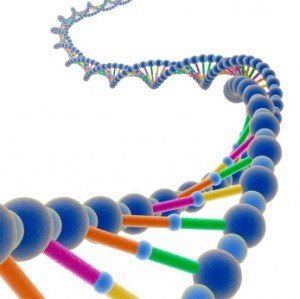
Which of the following best describes a DNA molecule?
a)
double helix
b)
contains ribose
c)
made of amino acids
d)
contains Uracil
2.
Which of the following units are repeatedly joined together to form a strand of DNA?
a)
amino acids
b)
nucleotides
c)
fatty acids
d)
polysaccharides
3.
Adenine bonds with ______________.
a)
Guanine
b)
Thymine
c)
Cytosine
d)
Adenine
4.
Why is DNA important?
a)
it is very small and very complicated
b)
it's in everything
c)
it serves as the blueprint for traits of all living things
d)
because we eat it every day for energy
5.

Replicate the following strand of DNA:
AATCATGGA
AATCATGGA
a)
AATCATGGA
b)
TTAGTACCT
c)
UUAGUACCU
d)
GGATAUCUA
6.
Why is DNA important?
a)
it is very small and very complicated
b)
it's in everything
c)
it serves as the blueprint for traits of all living things
d)
because we eat it every day for energy
7.
Which of the following is a base that is NOT contained in DNA?
a)
Adenine
b)
Thymine
c)
Uracil
d)
Guanine
8.
DNA is copied during
a)
Translation
b)
Transcription
c)
Reproduction
d)
Replication
9.
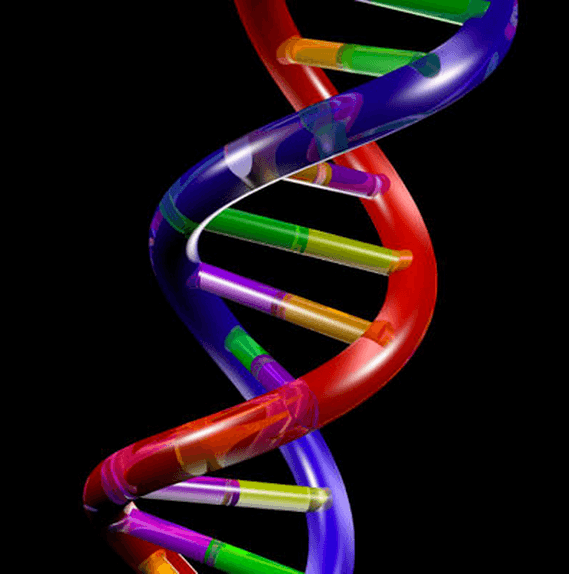
What determines the code, or information, of a DNA molecule?
a)
the shape (structure) of the nitrogen bases
b)
the order (sequence) of the nitrogen bases
c)
the color of the nitrogen bases
d)
the frequency (number) of nitrogen bases
10.
What does DNA stand for?
a)
Deoxyribonucleic acid
b)
Denitrogenous acid
c)
Deribonucleic acid
d)
Diribonucleic acid
11.
Where does protein synthesis take place?
a)
Ligase
b)
Ribosomes
c)
Codon
d)
Endoplasmic Reticulum
12.
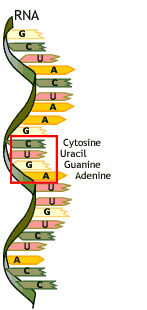
In RNA, Uracil pairs with ______.
a)
cytosine
b)
adenine
c)
guanine
d)
thymine
13.
DNA holds the code for
a)
lipids
b)
carbohydrates
c)
protein
d)
sugar
14.
What type of mutation occurs, when a base is subtracted from the sequence?
a)
Deletion
b)
Insertion
c)
Substitution
15.
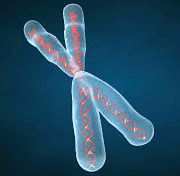
The diploid number of human chromosomes is
a)
23
b)
46
c)
92
16.

The haploid number of human chromosomes is
a)
11
b)
12
c)
23
d)
46
17.
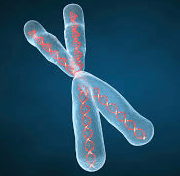
Each identical side of a chromosome is the
a)
centromere
b)
chromatin
c)
centriole
d)
chromatid
18.

The structure that holds two chromosomes together until they separate for cell division is the
a)
chromatid
b)
chromatin
c)
centromere
d)
cytoplasm
19.
When a cell is not actively dividing, it is in what phase?
a)
interphase
b)
anaphase
c)
prophase
d)
telophase
20.
What portion of the cell cycle involves the actual dividing?
a)
interphase
b)
mitosis
c)
Gap 1
d)
Gap 2
21.
When a cell divides, what do we call the 2 new cells?
a)
mother cells
b)
father cells
c)
daughter cells
d)
son cells
22.
After meiosis is complete how many cells will there be?
a)
1
b)
2
c)
3
d)
4
23.
Another name for a sex cell is a:
a)
gamete
b)
embryo
c)
bone cell
d)
muscle cell
24.

A is:
B is:
C is:
B is:
C is:
a)
A: chromatid
B: centromere
C: chromosome
B: centromere
C: chromosome
b)
A: chromosome
B: chromatid
C: centromere
B: chromatid
C: centromere
c)
A: chromosome
B: centromere
C: chromatid
B: centromere
C: chromatid
d)
A: centromere
B: chromosome
C: chromatid
B: chromosome
C: chromatid
25.

Name the phase:
a)
Prophase
b)
Metaphase
c)
Anaphase
d)
Telophase
26.

Name the phase:
a)
Prophase
b)
Metaphase
c)
Anaphase
d)
Telophase
27.
What are chromosomes?
a)
different versions of genes
b)
condensed DNA
c)
uncoiled DNA
28.
Most of the cells in the human body are produced by
a)
mitosis
b)
meiosis
29.
type of reproduction of meiosis
a)
sexual
b)
asexual
30.
Eukaryotic cells are complex.
a)
true
b)
false
31.
Prokaryotic cells include bacteria.
a)
True
b)
False
32.
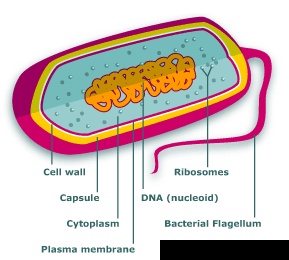
Which type of cell?
a)
Prokaryote
b)
Eukaryote
33.
Has membrane bound organelles
a)
Prokaryote
b)
Eukaryote
c)
both
34.
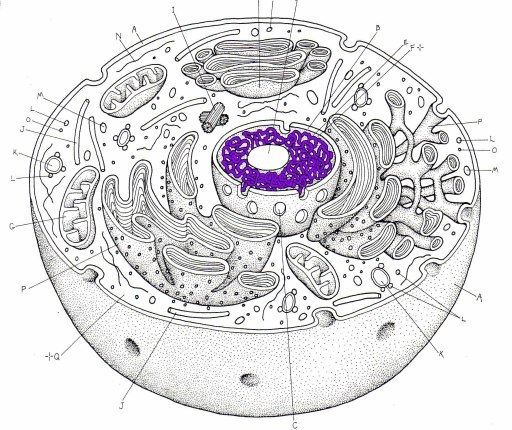
What kind of cell is this?
a)
Eukaryotic
b)
Prokaryotic
35.
Cells can only be seen with the help of a...
a)
hand lens
b)
magnifying glass
c)
3D glasses
d)
microscope
100 %

