
NEW
Font size
S
M
L
XL
 Worksheets
Year 8 Biology Revision
Total questions: 22
Worksheet time: 16mins
Name
Class
Date
1.
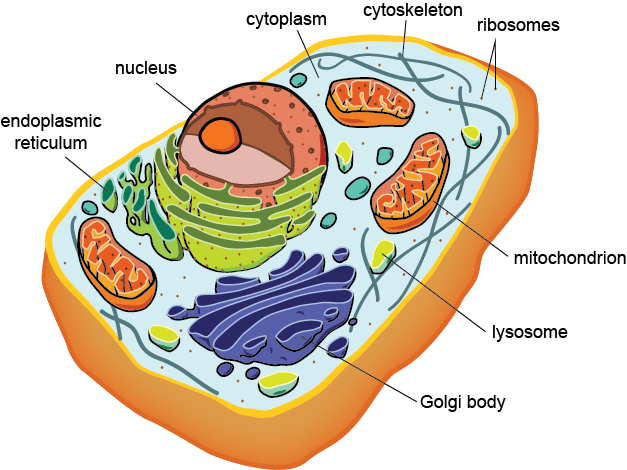
Which of the following statements is not part of the cell theory?
a)
Cells are the basic unit of structure and function in all living things.
b)
All cells are produced from other cells.
c)
Only animal cells are composed of cells.
d)
All living things are composed of cells.
2.

The invention of the microscope made it possible for people to discover and learn about
a)
Plants
b)
Skin
c)
Animals
d)
Cells
3.
What is a difference between red blood cells and white blood cells?
a)
Red blood cells contain hemoglobin, but white blood cells do not.
b)
Red blood cells can move on their own, but white blood cells cannot.
c)
Red blood cells contain a nucleus, but white blood cells do not.
d)
Red blood cells fight foreign bacteria, but white blood cells do not.
4.
What carries oxygen around the body?
a)
Plasma
b)
Red Blood Cells
c)
Platelets
d)
White Blood Cells
5.
When many organ systems work together it can form...
a)
organ
b)
cells
c)
organ system
d)
organism
6.
Which is an example of an organism?
a)
a beetle
b)
a lake
c)
a rock
d)
a shell
7.
The cell is the building block of all living things.
a)
True
b)
False
8.
The cells produced via meiosis are called:
a)
sex cells
b)
somatic cells
c)
body cells
d)
skin cells
9.

Meiosis makes sperm and egg cells. In humans, sperm and egg cells each have _____ chromosomes. Therefore a fertilized human egg cell (sperm and egg cell combined) would create a cell with _____ chromosomes.
a)
23, 46
b)
46, 23
c)
2, 4
d)
50, 100
10.
Unlike mitosis, meiosis in male mammals results in the formation of
a)
one haploid gamete
b)
three diploid gametes
c)
four diploid gametes
d)
four haploid gametes
11.

Where does blood go after the right atrium?
a)
left atrium
b)
left ventricle
c)
right ventricle
d)
aorta
12.

7?
a)
Left Atrium
b)
Left Ventricle
c)
Aortic Valve
13.

Receives blood from the body that is low in oxygen and high in carbon dioxide
a)
Right Atrium
b)
Right Ventricle
c)
Left Atrium
d)
Left Ventricle
14.

Nutrients from digested food are absorbed in which digestive organ?
a)
Small Intestine
b)
Stomach
c)
Large Intestine
d)
Gallbladder
15.

Which secondary organ makes digestive juices like insulin to help absorb food in the small intestine?
a)
Large intestine
b)
Pancreas
c)
Liver
d)
Gallbladder
16.
WHAT IS AFTER THE SMALL INTESTINE?
a)
Large intestine
b)
nothing
c)
liver
d)
pancreas
17.
After the large intestine, what comes next?
a)
Rectum
b)
Toilet
c)
none
d)
accessory organs
18.

The part of the digestive system which is highlighted represents:
a)
Oesophagus
b)
Small intestine
c)
Stomach
d)
Trachea
19.
1.What cells have fine hairs?
a)
Ciliated cells
b)
Root cells
c)
mouth cells
d)
red blood cells
20.
What cells have NO nucleus?
a)
Leaf cells
b)
Animal cells
c)
Red blood cells
d)
egg cells
21.
The role of these specialised cells is to help fight off infection and foreign bodies.
a)
Palisade Cells
b)
Nerve Cells
c)
White Blood Cells
d)
Red Blood Cells
22.

This cell can swim to find the female egg cell
a)
sperm
b)
ciliated cell
c)
red blood cell
d)
nerve cell
Reset

