
 Worksheets
S1 Reviewer
Total questions: 112
Worksheet time: 56mins
What does biodiversity stand for?
various organisms living in a habitat
animals and plants living in a habitat
bacteria, animals and plants living in a habitat
None of the above
Who is the Father of Taxonomy?
Linnaeus
Newton
Darwin
Mendel
What language is used in creating scientific names?
Latin
Spanish
What is the scientific name of PEA?
Pisum sativam
Pisum sativum
What is the scientific name of ONION?
Allium cepa
Allium copa
What branch of science deals with the naming, describing and classifying of organisms of the world?
Taxonomy
Genetics
Biology
Botany
Tick all the eukaryotes in the list below.
Monera
Animalia
Plantae
Fungi
Protista
All the statements hold true about the kingdom Monera except:
single-celled
very tiny
have chloroplasts
may or may not move
Which organism creates their own food?
Autotrophs
Heterotrophs
What is the scientific name of DOG?
Canis familiaris
Canis lupus
What is the scientific name of PAPAYA?
Carica papaya
Corico papaya
What is the scientific name of ONION?
Allium cepa
Allium copa
What is the scientific name of PEA?
Pisum sativam
Pisum sativum
All the statements hold true about the kingdom Monera except:
single-celled
very tiny
have chloroplasts
may or may not move
Which statements are TRUE about FUNGI?
No mechanism for locomotion
Acquire nutrients by absorption
Get nutrients from decaying matter
Cannot make their own food
Which statements are TRUE about PLANTS?
needs light to survive
has chlorophyll
are autotrophs
can be flowering or non-flowering
Bacteria have no nucleus or membrane bound organelles.
TRUE
FALSE
Which of the following are shapes of bacteria?
coccus
bacillus
spirillum


arachnids and insects?
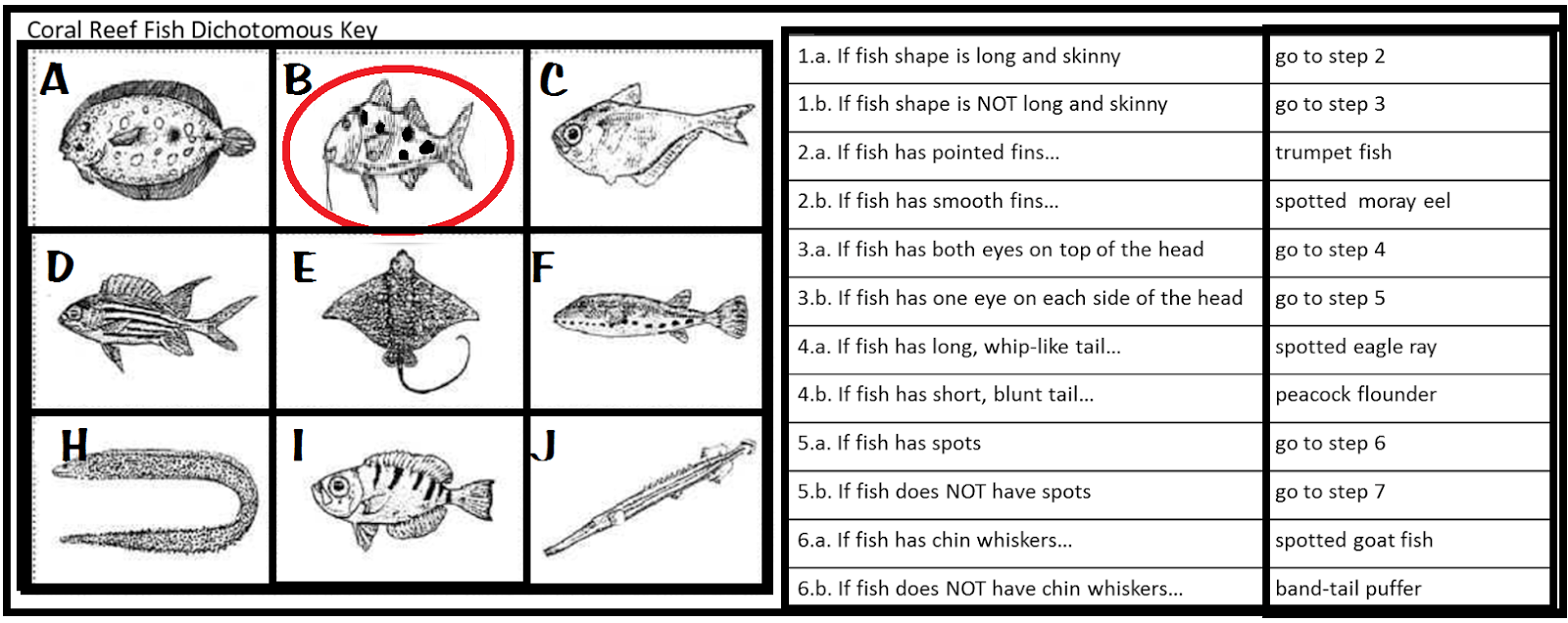
Tool used by a taxonomist to identify an unknown organism is a:
dichotomous key
binomial nomenclature
scientific name
binomial key


Tick which statements are TRUE about cells.
Basic building blocks of life
Smallest parts of an organism
All cells have similar tasks
Two general classifications of cells.
Prokaryote
Eukaryote
Heterotrophs
Autotrophs
Tick the organisms that belong to prokaryotes.
Escherichia coli
Euglena
Staphylococcus aureus
Paramecium
T/F: Prokaryotes do not have nucleus and membrane bound organelles.
True
False
Which statements are TRUE about eukaryotes?
Has a nucleus
Has membrane bound organelles
Most eukaryotes need to group together to perform a function
He used bacteria, yeast, blood cells and saw many tiny animals swimming in a drop of water.
Anton van Leeuwenhoek
Robert Hooke
Carl Linnaeus
He was the first to use the basic three-lens configuration that is still used in microscopes today.
Anton van Leeuwenhoek
Robert Hooke
Carl Linnaeus


A semi-permeable barrier that allows only a few molecules to move across it
Cell membrane
Cell wall
Maintains the pressure of the cell, ensures the cell doesn't shrink or burst.
Cytoplasm
Amniotic fluid
Houses most of the cells genetic material
Nucleus
Ribosomes
What does DNA stand for?
Deoxyribonucleic acid
Deoxyribonucleus acid
What do you call the membrane that surrounds the nucleus?
Nuclear membrane
Nucleus membrane
Controls the activity of the cell
Nucleus
Mitochondria
The site for protein synthesis where translation of the RNA takes place
ribosomes
cytoplasm
The digestive system of the cell
lysosome
ribosome
Known as the microtubule organising centre of the cell. This aids in cel division by moving the chromosomes to the opposite sides of the cell.
centrosome
lysosome
An organelle bound by a single membrane and is used for storage.
vacuole
mitochondria
The packaging centre of the cell.
golgi bodies
centrosomes
The main energy source of the cell
Mitochondria
Peroxisome
The powerhouse of the cell
Mitochondria
Peroxisome
A network of microtubules and microfilament fibres that gives structural support and maintain the shape of the animal cell
cytoskeleton
cell wall
Organelles used for movement
cilia
flagella
Provides plant cells rigidity and structural support and cell to cell interaction
cell wall
cell membrane
Aids in carrying out photosynthesis and contains chlorophyll
chloroplasts
chloroform
What is the correct order of the cellular organisation in multicellular organisms?
cell-tissue-organism-system-organ
cell-organ-tissue-system-organism
cell-tissue-organ-system-organism
cell-tissue-system-organ-organism
What do you call the substance found in the filter paper after filtration?
distillate
substrate
residue
filtrate
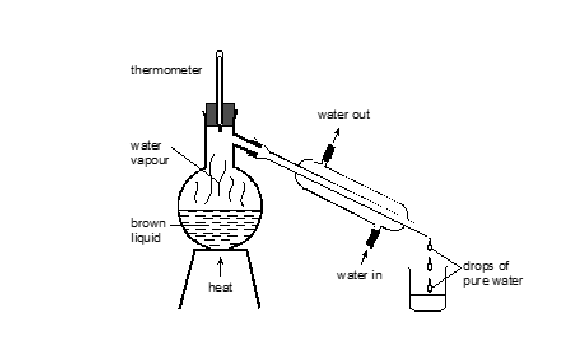
What 2 phase changes occur during distillation?
condensation
sublimation
evaporation
crystallization
A technique used to separate magnetic materials from non magnetic materials.
magnetic repulsion
magnetic attraction
magnetic simulation
magnetic institution
What is filtration?
A process where soluble solids are separated from insoluble solids in a liquid-solid mixture
A process where insoluble solids are separated from soluble solids in a liquid-solid mixture
A process where soluble solids are separated from insoluble solids in a liquid-liquid mixture
A process where insoluble solids are separated from soluble solids in a liquid-liquid mixture
Which two substances are found at the end of the filtration process?
residue
filtrate
distillate
crystals
All of the following are uses of filtration except:
Coffee making
Vacuum cleaners
Water treatment plants
Collecting salt from sea
Which technique is used to separate dissolved solids from a solution?
evaporation
filtration
distillation
none of the above
Which 2 body parts use physical filtration?
nose
stomach
brain
kidney
Which technique is used to separate dissolved solids from a solution?
evaporation
filtration
distillation
none of the above
What do you call the process of solid crystals formation from a homogenous solution?
solidification
homogenization
crystallization
evaporation
What substance is added to the solution during the process of distillation to help in spreading the heat evenly?
boiling tubes
boiling chips
boiling water
boiling liquid
The separation technique used to separate a pure liquid from a solid-liquid or liquid-liquid mixture.
magnetic attraction
filtration
evaporation
distillation
The pure liquid collected from distillation
distillate
filtrate
residue
What technique is used to separate mixtures of coloured substances such as ink and dyes?
chromatography
fractional distillation
colour filtration
Choose the 4 national taps of Singapore.
Desalinated water
NAWASA
Water from Johor
NEWater
Local Catchments
Which branch of science deals with the study of plants?
Botany
Zoology
Genetics
Chemistry
Which branch of science deals with the study of the universe beyond the Earth's atmosphere?
Physics
Chemistry
Biology
Astronomy
Which branch of science deals with the study of heredity?
Botany
Zoology
Genetics
Chemistry
Which branch of science deals with the study of origin, history, and structure of the Earth and the physical, chemical and biological changes that it has experienced or is experiencing?
Geology
Oceanography
Palaeontology
Meteorology
Attitude of a Scientist:
"I am wrong. My experiment should be repeated. "
Being humble
Being imaginative
Attitude of a Scientist:
"I am going to find out things and explore the world!"
Being curious
Being open-minded
Physical property:
A measure of how easily electricity passes through it.
Electrical conductivity
Heat conductivity
Physical property:
Ability to bend without breaking and return to its original shape.
Flexibility
Hardness
Physical property:
Ability to support a heavy load without breaking
Strength
Hardness
Physical property:
The temperature at which it changes state from a solid to a liquid.
Melting point
Boiling point
Physical property:
Refers to the shininess of a material
Lustre
Hardness
Tick the statements that are TRUE for elements.
Basic building blocks of matter
Consists of only one kind of atom
a pure substance
cannot be broken down
What are needed to create a solution?
solute
solvent
water


Tick the 4 major organelles of an animal cell
cell membrane
vacuole
cytoplasm
nucleus
lysosome
Tick the major organelles of a plant cell
cell membrane
vacuole
chloroplast
nucleus
cell wall
BONUS QUESTION:
What was the last video T. Tashi watched?
None of the above
Excerpt of a dance show
Excerpt of a cartoon
Excerpt of a cooking demo
BONUS QUESTION:
First: Click on the word Grapes.
Second: Shout the word "GRAPES" as a group.
Grapes
Please follow instructions!
I said shout first!
Smile! :D
BONUS QUESTION:
What is baby Andre's favorite junk food?
Pringles
Lays
Chocolates
biscuits

