wayground logo

Free Printable Worksheets

Font size

S
M
L
XL
Worksheets

Jackson Review

Total questions: 75

Worksheet time: 1hrs 28mins

Name
Class
Date
1.

What type of economy has minimal government intrusion in business transactions?

a)

free enterprise

b)

mercantilism

c)

tariffs

d)

salutary neglect

2.
How did the Northwest Ordinance of 1787 provide for the orderly expansion of the United States?
a)
It provided the president with the power to sign treaties with foreign powers to buy additional territory
b)
It provided a review process for laws in new territories and states.
c)
It provided procedures for establishing territories and creating states.
3.

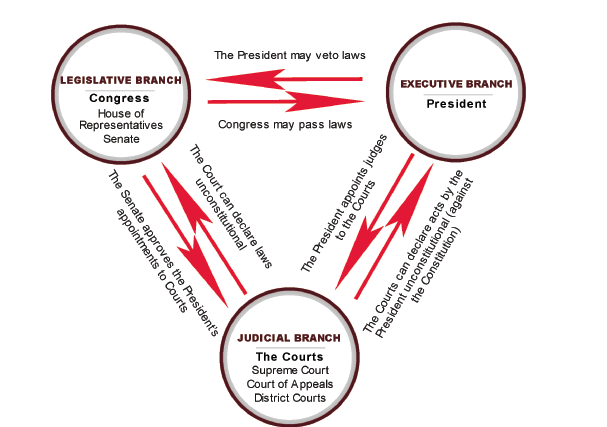
Which principle of U.S. government is illustrated above?

a)

Checks and Balances

b)

Federalism

c)

Popular Sovereignty

d)

Separation of Powers

4.
Which Indian group had to walk the Trail of Tears?
a)
Seminoles
b)
Creek
c)
Cherokee
d)
Sioux
5.
6.  Jacksonian Democracy is the idea that the common man should be able to _________.
a)
sing Mexican folk songs
b)
get a good job
c)
vote
d)
buy a car
6.

Conflicting interpretations of the Tenth Amendment to the US Constitution played a major role in the

a)

Bank War

b)

Nullification Crisis

c)

Corrupt Bargain

d)

XYZ Affair

7.
Equality in the Political process for the adult white male was called?
a)
Abolitionists
b)
Age of "Common Man"
8.
A sectional crisis during the presidency of Andrew Jackson created by the Ordinance of Nullification, an attempt by the state of South Carolina to nullify a federal law - the tariff of 1828 - passed by the United States Congress.
a)
Elizabeth C. Stanton
b)
Compromise Tariff
c)
Age of "Common Man"
d)
Nullification Crisis
9.
The marches in which Cherokee people were forcibly removed from Georgia to the Indian Territory in 1838-1840, with thousands of the Cherokee dying on the way was called the Trail of Tears.
a)
True
b)
False
10.
Which statement is true about the concept of Federalism?
a)
Americans must only obey state laws.
b)
Federalism was designed to give the president more power.
c)
It does not put a limit on the government.
d)
The power is shared by the state and national governments.
11.
What power was given to the Supreme Court in the court case Marbury v. Madison?
a)
Judicial Review
b)
Make Laws
c)
Supremacy Clause
d)
Execute Laws
12.
This case established JUDICIAL REVIEW
a)
US v. Nixon
b)
Miranda v. Arizona
c)
Gideon v. Wainwright
d)
Marbury v. Madison 
13.
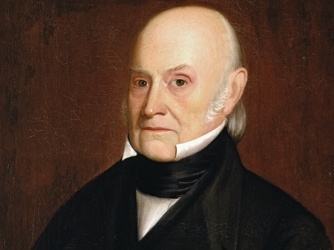
Who became president in the election of 1824?
a)
John Quincy Adams
b)
Henry Clay
c)
John C. Calhoun
d)
Andrew Jackson
14.
What is Jacksonian Democracy?
a)
the idea that the common people should control their government
b)
the political party that supported Jackson in the election of 1828
c)
the notion that the rich and upper class should have the most power
d)
the nickname Andrew Jackson earned in the War of 1812
15.
How was President Jackson different from other Presidents?
a)
He served more than two terms
b)
He owned slaves
c)
He came from a poor family
d)
He was a military general
16.
Jackson's election as president was a victory for - 
a)
ordinary working Americans.
b)
American Indians.
c)
upper class Americans.
d)
Republicans.
17.
The spoils system gave jobs to who?
a)
The most qualified people
b)
Jackson's Friends
c)
Republicans
d)
Native Americans
18.
Jackson wanted to  open up jobs in _______to average citizens.
a)
government
b)
Banks
c)
Judgeships
d)
corporate America
19.
Passed in 1830, this authorized the removal of Native Americans who lived east of the Mississippi River to lands in the West.
a)
Indian Removal Act
b)
Worcester v. Georgia
c)
Bureau of Indian Affairs
d)
Trail of Tears
20.
Which of the following would most likely be a Jackson supporter?
a)
a Republican
b)
a wealthy banker
c)
a rich property owner
d)
a western farmer
21.
What is a tariff a tax on?
a)
Income
b)
Slaves
c)
Imported Goods
d)
Crops
22.

Why did Jackson oppose the National Bank?

a)

He thought it only helped the wealthy

b)

He thought it only helped the poor

c)

He thought it only helped South Carolina

d)

The courts deemed it unconstitutional

23.
How did Jackson get rid of the National Bank?
a)
He signed a law
b)
He created a new bank
c)
He vetoed its charter
d)
He nullified it
24.
The Nullification Crisis was triggered by strong opposition to the -
a)
Force Bill.
b)
Indian Removal Act.
c)
Tariff of Abominations.
d)
Bank of the United States.
25.
Which state threatened to secede during the Nullification Crisis?
a)
South Carolina
b)
Texas
c)
Rhode Island
d)
Georgia
26.
Why was Jackson called 'King Jackson I'? 
a)
He wore a crown to all the meetings
b)
He used his force and authority without regard for Constitution
c)
He wanted to be called emperor instead of president
d)
He was from England 
27.
What is the main criticism of the spoils system?
a)
It rewards political loyalty
b)
It is based on merit
c)
It often leads to unqualified people getting jobs
d)
It promotes diversity
28.
This map shows the results of the - 
a)
Indian Removal Act
b)
Tariff of Abominations
c)
Election of 1824
d)
War of 1812
29.
Native Americans were forced to relocate to what present day state?
a)
Missouri
b)
Iowa
c)
Texas
d)
Oklahoma
30.
One limitation to democracy during the Jackson era was that - 
a)
there were only two political parties.
b)
the number of voters was decreasing.
c)
Native Americans could not appeal to the Supreme Court.
d)
women, Native Americans, and most African Americans could not vote.
31.

Which phrase would most use to describe President Jackson?

a)

An Elite Man

b)

The Man of the People

c)

The Man of DC

d)

The Man of Big Business

32.

What made the 1824 election unique?

a)

Jackson won the popular vote but lost the electoral vote

b)

Jackson won the presidency, but lost the electoral vote

c)

Jackson lost the election even though he won the popular and electoral vote

d)

Jackson lost the election fair and square

33.

What is the spoils system?

a)

When Jackson kicked everyone out of government he did not like.

b)

When one's supporters are given jobs and prizes after a victory.

c)

When Jackson imprisoned those who did not support him.

d)

The relocation of all Native Americans.

34.

Which of the following is often referred to as the "corrupt bargain?"

a)

The Election of 1828

b)

The Bank War

c)

The Election of 1832

d)

The Election of 1824

35.

Which of the following best describes Jackson's Inauguration Day?

a)

Friendly

b)

Calm

c)

Chaotic

d)

Compassionate

36.

What is nullification?

a)

To leave or withdraw from a country

b)

To declare something illegal

c)

To choose to ignore something someone says

d)

To declare something void, invalid, or null

37.

When someone or something secedes, what do they do?

a)

Withdraw from an organization, country, or club

b)

To threaten to leave a country

c)

To join a club, country, or organization

d)

To ignore a national law

38.

Describe the state's rights theory.

a)

States are important, but not as important as the country.

b)

States have more rights than the national government.

c)

State's should have more power than the national government and shouldn't have to follow their laws.

d)

The national government should have more rights than states.

39.

Who led the charge for South Carolina to secede from the United States?

a)

Andrew Jackson

b)

Nicholas Biddle

c)

John C. Calhoun

d)

Black Hawk

40.

How did most Southerners feel about the Tariff of 1816, which increased the costs of foreign goods?

a)

they liked it; it made thei pricing of their manufactured products competative

b)

they weren't so thrilled; they didn't want to make imported European goods more expensive

c)

they wanted government intervention

d)

they had no opinion, since it didn't affect them

41.

How did Jackson "kill" the 2nd Bank of the United States?

a)

he declared it unconstitutional

b)

he vetoed the bank recharter and moved deposits to state banks

c)

he closed all the banks

d)

he destroyed it with artillery

42.

Supreme court case stated that natives could not be removed or forced out of their lands.

a)

Worcester v. Georgia

b)

Marbury v. Madison

c)

Dred Scott Case

d)

Board v. Brown

43.

In the 1824 election, Andrew Jackson won the most votes, but lost the election to John Quincy Adams in what he believes to be a corrupt bargain. In the 1828 election,

a)

property qualifications for voting strengthened

b)

poll taxes were reduced

c)

votes were cast by secret ballot

d)

voter participation increased

44.

South Carolinas conflicting interpretations of the 10th amendment played a major role in the

a)

Bank War

b)

Corrupt Bargain

c)

Nullification Crisis

d)

XYZ Affair

45.

In 1832 the Supreme Court ruled that Georgia did not have legal authority over Cherokees living in the state. Andrew Jackson

a)

filed another petition against the Cherokees

b)

ordered state officials to negotiate with the Cherokee Nation

c)

ignored the ruling and allowed Georgia to evict the Cherokee Nation

d)

asked Congress to pay raparations to the Cherokee Nation

46.

When gold was discovered on Cherokee Land, the government annexed their land, and forced them to move. In order to resolve this issue without violence, the Cherokee Nation

a)

seeked negotiation with president Jackson

b)

bribed government officials with riches

c)

challanged Georgia's anti-Cherokee laws before the U.S. Supreme Court

d)

offered to buy land from the Geogian government

47.

Which two men were accused by Democrats of making the "corrupt bargain" when deciding the Election of 1824?

a)

John Quincy Adams and Henry Clay

b)

Andrew Jackson and Henry Clay

c)

William Crawford and John Quincy Adams

d)

Andrew Jackson and John Quincy Adams

48.

Which new political party was led by Jackson for the Election of 1828?

a)

Democrats

b)

Democratic-Republicans

c)

National Republicans

d)

Federalists

49.

Voting rights were extended to which group of people before the Election of 1828?

a)

white men who owned land

b)

white men who did not own land

c)

white women who owned land

d)

slaves who had been freed from slavery

50.
The practice of rewarding supporters with government jobs.
a)
Muckraking
b)
The Spoils System
c)
The Civil Service
d)
Idealism
51.
To nullify a law means …
a)
to agree to the law
b)
to secede.
c)
to void or cancel the law.
d)
to vote on the law.
52.
Tariffs caused the price of ____ to go up.
a)
foreign goods
b)
american made goods
c)
ice cream
d)
slaves
53.
What was the Tariff of 1828 referred to by the Southerners?
a)
Tariff of Nullification
b)
Tariff of the South
c)
Tariff of Abominations
54.

In the Election of 1828 what two parties emerged?

a)

National Republicans and Democrats

b)

Democratic Republicans and Federalists

c)

Republicans and Democrats

d)

Federalists and Antifederalists

55.

This piece of legislation passed in 1830 required the Five Civilized tribes to move west of the Mississippi.

a)

The Indian Removal Act

b)

The Trail of Tears

c)

Cherokee Nation v. Georgia

d)

Specie Circular

56.

The Indians found support in which group

a)

The Executive Branch

b)

Andrew Jackson

c)

The Legislative Branch

d)

The Supreme Court

57.
In this case, the Supreme Court ruled that the national bank was constitutional.
a)
McCulloch v. Maryland
b)
Worcester v. Georgia
c)
Marbury v. Madison
d)
Gibbons v. Ogden
58.
This was an informal group of trusted advisers to President Jackson.
a)
Kitchen Cabinet
b)
Whig Party
c)
Supreme Court
d)
Congress
59.
to break away or quit being a part of
a)
secede
b)
mudslinging
c)
nullfiy
d)
bargain
60.

Jackson was able to make it from the frontier to the White House because.....

a)

his victory in the Battle of New Orleans made him war hero

b)

he wanted to give the government back to the people

c)

he was very kind and he loved everyone he met

d)

he was well-born and said he would help the rich

61.
Election of 1824
a)
Jackson wins in corrupt bargain with Clay
b)
Adams wins in corrupt bargain with Clay
c)
Jackson won with a majority in the Electoral College
d)
Adams won with a majority in the Electoral College
62.
What was the name of the journey made by Cherokee Indians after they were removed from their land?
a)
Indian Removal Act
b)
Trail of Sorrows
c)
Trail of Tears
d)
Nullification Act
63.
Which debate was over nullification/states rights?
a)
Jackson-Adams Debate
b)
Missouri Statehood Debate
c)
Webster-Hayne Debate
d)
Clay-Jackson Debate
64.
By 1828 the tariff had become a major sectional issue.  High tariffs harmed which section the MOST?
a)
the West
b)
the middle states
c)
the South
d)
the North
65.
when a country gives up its territory to another 
a)
annex
b)
cede
c)
secede
d)
purchase
66.
To leave or withdraw
a)
annex
b)
cede
c)
secede
d)
purchase
67.
What is the term for the extension of political power to the common people?
a)
Jacksonian Democracy
b)
Jeffersonian Democracy
c)
Spoils System
d)
Webster-Hayne Debates
68.

Voting rights

a)

secession

b)

suffrage

c)

spoils

d)

senators

69.

When someone does not win over half (a majority) of the Electoral College votes, who determines the winner (as in the Election of 1824)?

a)

the President

b)

the House of Representatives

c)

the Senate

d)

the Supreme Court

70.

amend means...

a)

change

b)

cancel

c)

approve

71.

ratify means...

a)

change

b)

cancel

c)

approve

72.

Jackson used military action against South Carolina because Congress passed the..

a)

Indian Removal Act

b)

Force Bill

c)

Worcester v. Georgia

d)

Tariff of Abominations

73.

Tensions between the North and the South are called...

a)

confederacy

b)

sectionalism

c)

nationalism

d)

radicalism

74.

Nullification, States' Rights, Federalism


Which amendment goes with the list above?

a)

1st Amendment

b)

8th Amendment

c)

9th Amendment

d)

10th Amendment

75.

What geographic feature did Jackson want all Indians to get west of?

a)

Appalachian Mountains

b)

Rocky Mountains

c)

Mississippi River

d)

Atlantic Ocean