wayground logo

Free Printable Worksheets

NEW

Font size

S
M
L
XL
Worksheets

Founding Documents

Total questions: 75

Worksheet time: 49mins

Name
Class
Date
1.
Who was the main author of the Declaration of Independence?
a)
Benjamin Franklin
b)
Samuel Adams
c)
Thomas Jefferson
d)
Paul Revere
2.

Why was the Declaration of Independence written?

a)

The Native Americans wanted their land back

b)

The colonists didn't want to pay taxes on tea

c)

The colonists wanted to break free from British control

d)

Both A and B

3.
Why is July 4th a significant date to the Declaration of Independence?
a)
The Continental Congress approved the document
b)
It was when they started writing the document
c)
It was Jefferson's birthday
d)
It was the day they sent it to the King
4.
What are our natural rights according to Jefferson?  (He got the idea from John Locke, but he changed the last right.)
a)
Freedom of speech, religion, and press
b)
Life, liberty, and property
c)
Life, liberty, and the pursuit of happiness
d)
Voting, rebelling, and health
5.
The U.S. Constitution organized our government fairly by creating: 
a)
Fair laws
b)
3 separate branches
c)
Splitting Congress into 2 houses
d)
Federal taxes
6.
What year was the Constitutional Convention held?
a)
1776
b)
1787
c)
1803
d)
1845
7.
Why did federalists demand that a Bill of Rights be added to the Constitution?
a)
To stregnthen the authority of the federal government
b)
to improve the organization of the judiciary
c)
to give each state an equal amount of power
d)
to protect individual freedoms from the federal government
8.

What was the name given to the men who signed the U.S. Constitution?

a)

Colonist

b)

Cabinet

c)

Framers of the Constitution

d)

Government

9.

What is the name of the introduction of the U.S. Constitution?

a)

Preamble

b)

Judicial

c)

Amendment

d)

Article

10.

What is the Bill of Rights?

a)

A set of rules the country must follow.

b)

A statement informing the country how much money they owe.

c)

A list of rights that the government cannot take away.

d)

A set of rules the President makes the country follow.

11.

Which of these is NOT a branch of the U.S. government?

a)

Loyalists

b)

Legislative

c)

Executive

d)

Judicial

12.
The List of Grievances were the part of the Declaration that
a)
detailed the colonists' complaints with King George.
b)
listed a man's natural rights.
c)
introduced the Declaration.
d)
concluded the Declaration, declaring America a free country.
13.
What is the connection between natural rights and government? 
a)
government is meant to provide services 
b)
people have the right to alter government 
c)
people have certain unalienable rights
d)
government is meant to protect rights
14.

What are unalienable rights?

a)

Rights that government cannot take away

b)

Rights that government takes away

c)

rights for aliens

d)

Government is needed to promote equality

15.
How could the British have prevented the American Revolution? 
a)
By forcing King George III to give up the throne  
b)
By overruling the decisions of the colonial legislatures 
c)
By increasing taxes on the colonists 
d)
By allowing colonists to elect representatives to Parliament
16.

The Declaration of Independence is most like a what?

a)

Love Letter

b)

Treaty

c)

Break-up letter

d)

Constitution

17.
A system of checks and balances was built into the Constitution to prevent...
a)
states from passing laws that duplicate federal laws
b)
individual states from deciding to leave the Union.
c)
any one branch of government from becoming too powerful.
d)
the federal government from spending more money than it collects in taxes.
18.
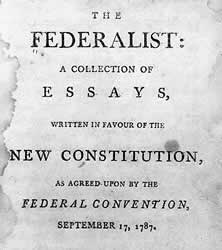
What was the main purpose of the Federalist papers?
a)
to encourage the federal government to grant rights to the people
b)
to persuade people to support a strong federal government
c)
to describe the roles of different branches of the federal government
d)
to defend the federal government against accusations of corruption
19.
Shays' Rebellion helped point out weaknesses in which of the following documents?
a)
the Constitution
b)
the Federalist Papers
c)
the Articles of Confederation
d)
the Declaration of Independence
20.
The term separation of powers in the U.S. government refers to separate powers given to
a)
the president and the Cabinet.
b)
the Senate and the House of Representatives
c)
the federal, state, and local levels.
d)
the executive, legislative, and judicial branches
21.
What was a MAJOR difference between the Articles of Confederation and the Constitution?
a)
The power of individual states was greater under the Constitution.
b)
The powers of the federal government were increased under the Articles of Confederation.
c)
More freedoms were given to women, blacks, and Native Americans under the Constitution.
d)
The powers of the federal government were increased under the Constitution.
22.
Under the Articles of Confederation, the government consisted of _______________ branch of government.
a)
3
b)
2
c)
1
d)
4
23.
Under the Articles of Confederation Congress could only pass a law if ____________ out 13 states agreed. 
a)
13
b)
8
c)
9
d)
10
24.
One weakness of the Articles of the Confederation was ____________. 
a)
The ability of Congress to tax.
b)
The inability of Congress to tax.
c)
The ability of Congress to declare war.
d)
The ability of Congress to create courts.
25.
In order to change (amend) the Articles of Confederation,  __________ out of 13 states had to agree. 
a)
9
b)
10
c)
13
d)
15
26.
Under the Articles of Confederation, America used a national currency (money)
a)
True
b)
False
27.
The Articles of Confederation created a _________________ type of government.
a)
strong
b)
average
c)
weak
d)
federal
28.
True or False?  The Articles of Confederation had a strong central government.
a)
True
b)
False
29.
In the Articles of Confederation, where was most of the government power placed?
a)
The States
b)
The National Government
c)
The Continental Congress
d)
The Legislative Branch
30.

Shays' Rebellion represented...

a)

a success of the Articles of Confederation

b)

a failure of the Articles of Confederation

31.

The main cause for many of the rules in the Articles of Confederation was that the delegates at the Continental Congress...

a)

did not want to give the states too much power because they'd proven they were willing to rebel against a government.

b)

wanted to create a government that was identical to England's government.

c)

were concerned about giving the central government too much power because the King had used his power unfairly.

d)

wanted to unify the states together, which included creating one army and one type of currency.

32.

Who was the president under the articles?

a)

George Washington

b)

Each governor voted on a president

c)

The most senior Senator

d)

There wasn't one

33.
Americans were afraid that a __?__ would lead to tyranny, or oppressive rule.
a)
strong state government
b)
weak government
c)
strong central government
d)
legslature
34.
Which branch of government existed when the Articles of Confederation was created?
a)
Legislative (congress)
b)
Judicial (Supreme court)
c)
Executive (President)
d)
Legislative, Executive, and Judicial
35.
What did Shays' Rebellion help Americans realize they needed?
a)
A strong national government
b)
A stronger militia
c)
A common currency
d)
The ability to sign peace treaties
36.

Ultimately, the weaknesses of the Articles of Confederation lead to the creation of -

a)

the Treaty of Paris

b)

the Affordable Care Act

c)

the U.S. Constitution

d)

the Declaration of Independence

37.
What is the name of the first written plan of government in America?
a)
Constitution
b)
Treaty of Paris
c)
Declaration of Independence
d)
Articles of Confederation
38.
Under the Articles of Confederation, how many votes did each state get when voting on a new law?
a)
Zero
b)
One
c)
Two 
d)
Three
39.
What two groups of people were not included in the Declaration of Independence?
a)
Men and Women
b)
Women and Slaves
c)
Indentured Servants and Slaves
40.
According to the Declaration of Independence, the main purpose of a government is to-
a)
ensure the stability of the economy
b)
protect the rights of the individual
c)
provide strong military leadership
d)
protect a nation from foreign invasions
41.
According to the Declaration of Independence, from where does government get the power to achieve its purpose?
a)
it is endowed by nature
b)
from the permission of the king
c)
from the authority of parliament
d)
from the consent of the governed
42.
The principles of government that Thomas Jefferson included in the Declaration of Independence were most influenced by which of the following people?
a)
John Locke
b)
Ben Franklin
c)
King George III
d)
Charles de Montesquieu
43.
According to the Declaration of Independence, when government becomes oppressive of the people's rights, the people have the right to...
a)
ignore laws that people don't like or agree with
b)
meet in secret congresses to discuss solutions
c)
call for elections to choose new rulers
d)
alter or abolish it and institute a new government
44.
Which monarch ruled when the colonies declared their independence?
a)
George III
b)
Elizabeth I
c)
Henry VIII
d)
James VI
45.

Who is known as the "Father of the Constitution"?

a)

George Washington

b)

Alexander Hamilton

c)

James Madison

d)

Benjamin Franklin

46.

Who is known as the leader of the Federalists?

a)

Alexander Hamilton

b)

John Adams

c)

Patrick Henry

d)

Benjamin Franklin

47.

The ___________ are for the ratification (approval) of the U.S Constitution.

a)

Federalists

b)

Anti-Federalists

c)

Whiggs

d)

Representatives

48.

The ___________ are NOT for the ratification (approval) of the U.S Constitution.

a)

Anti-Federalists.

b)

Federalists.

c)

Whiggs.

d)

Supreme Court Justices.

49.

The "Federalist Papers" were written to:

a)

Explain and convince the people into supporting the new U.S Constitution.

b)

spark a new revolution among the American people against their government.

c)

oppose a strong centralized government.

d)

create a new monarchy.

50.

Anti-Federalists were in favor of:

a)

States Rights and the protection of individual rights.

b)

A strong Central Government.

c)

A Monarchy (King & Queen) to rule over the country.

d)

a powerful National Government

51.

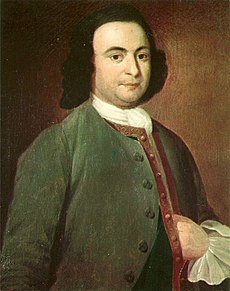
Who was the leader of the Anti-Federalists?

a)

George Mason

b)

George Washington

c)

George Bush

d)

Patrick Henry

52.

How did the Federalists and Anti-Federalists "compromise" to ratify (approve) the U.S Constitution?

a)

The added the Bill of Rights (First 10 Amendments)

b)

They outlawed cruel and unusual punishment.

c)

Ensured due process of the law.

d)

The Federalists threatened the Anti-Federalists to war.
53.

The Anti-Federalists wanted to:

a)

ratify the new constitution and establish a powerful central government.

b)

fix the Articles of Confederation.

c)

Replace the Articles of Confederation.

d)

get rid of strong State governments.

54.

What does "Bicameral" mean?

a)

1 house

b)

2 houses

c)

3 houses

d)

4 houses

55.

What does "Bicameral" mean?

a)

1 house

b)

2 houses

c)

3 houses

d)

4 houses

56.

What does "Unicameral" mean?

a)

1 house

b)

2 houses

c)

3 houses

d)

4 houses

57.

The Virginia Plan wanted representation based on _______.

a)

population of each state.

b)

number of state delegates.

c)

one state, one vote

d)

delegates appointed by the president.

58.

The New Jersey Plan wanted representation based on _______.

a)

population of each state.

b)

number of state delegates.

c)

one state, one vote

d)

delegates appointed by the president.

59.

The Virginia Plan wanted what type of legislature?

a)

Unicameral

b)

Bicameral

60.

The New Jersey Plan wanted what type of legislature?

a)

Unicameral

b)

Bicameral

61.

This plan called for a weak Executive Branch.

a)

Virginia Plan

b)

New Jersey Plan

62.

This plan called for a strong Executive Branch.

a)

Virginia Plan

b)

New Jersey Plan

63.

This plan called for a strong Judiciary Court.

a)

Virginia Plan

b)

New Jersey Plan

64.

Who developed the Virginia Plan?

a)

James Madison

b)

Thomas Jefferson

c)

William Patterson

d)

Roger Sherman

65.

Who developed the New Jersey Plan?

a)

James Madison

b)

Thomas Jefferson

c)

William Patterson

d)

Roger Sherman

66.

In the Virginia Plan representation in congress was based on population. Which states favored this plan?

a)

Northern States

b)

Southern States

c)

Large States

d)

Small States

67.

Which compromise combined aspects of the Virginia and New Jersey plans to make small and large states satisfied?

a)

the Commerce Compromise

b)

the Three-Fifths Compromise

c)

the Just Compromise

d)

the Great Compromise

68.

The Senate will have equal representation for each state. The House of Representatives will be based on ... ?

a)

Money

b)

Slaves

c)

Population

d)

It will also be equal

69.

A major weakness under the Articles of Confederation was-

a)

Congress could not negotiate treaties

b)

Congress could print money

c)

Congress did not have the power to raise money or enforce laws

d)

Congress established the Northwest Ordinance

70.

In the New Jersey Plan, states received equal representation in congress. Which states favored this plan?

a)

Small States

b)

Large States

c)

Northern States

d)

Southern States

71.

The division of power between a central government and state governments is called

a)

The United States

b)

the Supremacy Clause

c)

the Necessary and Proper Clause

d)

federalism

72.

Set up a bicameral legislature, one house would have representation based on population and the other would have equal state representation

a)

Virginia Plan

b)

New Jersey Plan

c)

Great Compromise

d)

Three-Fifths Compromise

73.

Determined how slaves would count as a part of each state's population, each slave would count 3/5ths of a person

a)

Virginia Plan

b)

New Jersey Plan

c)

Great Compromise

d)

Three-Fifths Compromise

74.

Group who argued for a stronger national government who could be powerful in foreign affairs and establishing better trade relations, in favor of ratification of the Constitution

a)

Federalist

b)

Anti-Federalist

c)

Torie

d)

Patriot

75.

Group who opposed a stronger national government because the elite would have too much power, opposed to the ratification of the Constitution

a)

Federalist

b)

Anti-Federalist

c)

Torie

d)

Patriot