wayground logo

Free Printable Worksheets

NEW

Font size

S
M
L
XL
Worksheets

8.5 Electronegativity and Polarity

Total questions: 16

Worksheet time: 16mins

Name
Class
Date
1.

Large differences in electronegativity result in __________ bonding between atoms.

a)

Covalent

b)

Mettalic

c)

Ionic

d)

Hydrogen

2.

Which compound consists of nonpolar molecules?

a)

H2S

b)

PH3

c)

AsH3

d)

SiH4

3.

Hydrogen has an electronegativity of 2.20, fluorine an electronegativity of 3.98. What sort of bond do they form?

a)

mostly ionic

b)

polar covalent

c)

mostly covalent

d)

nonpolar covalent

4.

Which of these molecules is polar?

a)

a only

b)

b only

c)

a and b

d)

a and c

5.

Which of the following properties does not refer to covalent network solids, like quartz and diamond?

a)

brittle

b)

hard

c)

good conductors of heat

d)

non-conductors of electricity

6.
In this Lewis structure, the symbol above F means...
a)
electrons are being transferred to Fluorine
b)
electrons are less attracted to F than H
c)
electrons are more attracted to F than H
d)
Fluorine has formed a cation
7.
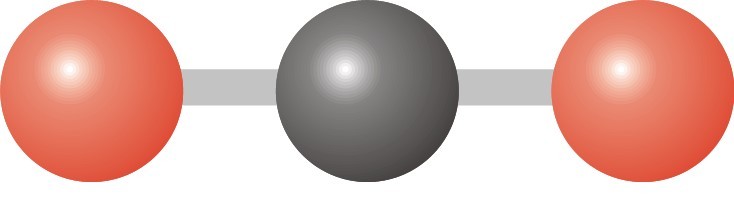
The molecule shown in the diagram can best be classified as a
a)
polar covalent molecule
b)
nonpolar covalent molecule
c)
ionic compound
d)
nonpolar ionic compound
8.
Which of the molecules contains polar covalent bonds but is NOT itself a polar molecule?
a)
I
b)
II
c)
III
d)
¯\_(ツ)_/¯
9.

what causes a partial charge on a molecule with 2 atoms? (dipoles)

a)

unequal sharing of electrons

b)

an electronegativity difference between 0.4 and <1.7

c)

electron spends more time around one of the atoms

d)

all of the above

10.
Which of the following shapes has unshared pairs of electrons on the central atom? 
a)
Bipyramidal
b)
Bent
c)
Trigonal Planar
d)
Tetrahedral
11.
Which molecule would have this shape?
a)
BF3
b)
CH4
c)
PCl5
d)
CO2
12.
How many electrons are shared in a triple bond?
a)
6
b)
3
c)
6 pairs
d)
5
13.

Calculating the difference in electronegativity can always help determine_________?

a)

the # of valence electrons

b)

the polarity of a molecule

c)

the type of bond

d)

the geometry of a molecule

14.
This molecule has______bond and is a _________molecule.
a)
non-polar; non-polar
b)
polar, polar
c)
polar,
non-polar
d)
non-polar; polar
15.
What kind of bond do you have: Li and Cl
a)
Non-polar covalent
b)
Polar covalent
c)
ionic
d)
James Bond
16.
What kind of bond do you have: F and Cl
a)
Non-polar covalent
b)
Polar covalent
c)
ionic
d)
James Bond