
 Worksheets
Sun-Earth-Moon Review
Total questions: 62
Worksheet time: 39mins
The Earth completes one of these every 365.25 days?
rotation
revolution
This is the reason we experience day and night?
rotation
revolution
The motion of one object around another object is a _?_.
rotation
revolution
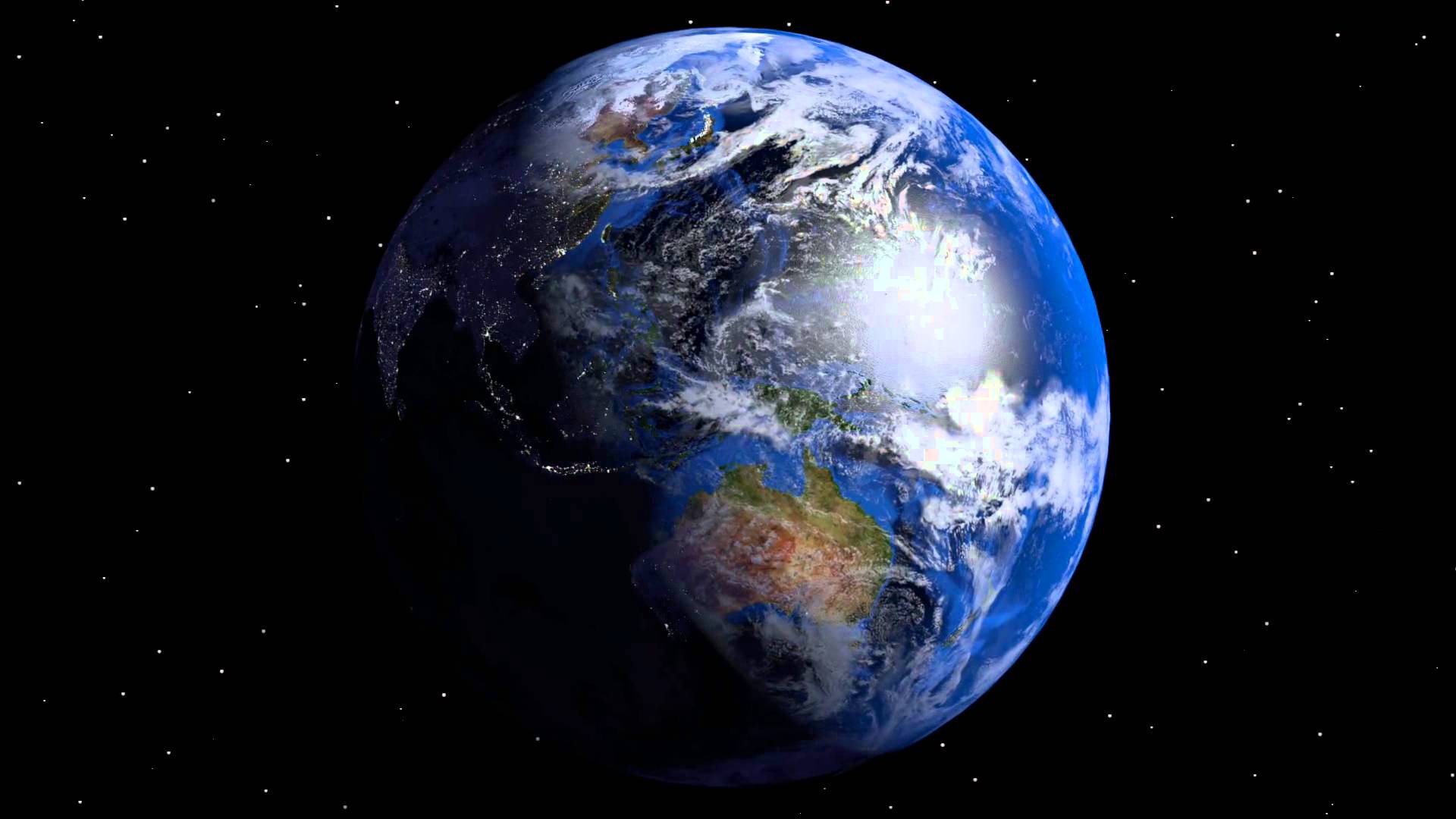
Spinning of the Earth on its axis is called is called a(n) _?_.
rotation
revolution
orbit
double axis
Rotation of the Earth takes _?_.
one day
one year
one season
The Earth's _?_ is an imaginary line that goes from the North Pole to the South Pole.
vernal equinox
axis
solar eclipse
solar flare
All objects are attracted to each other by the force of _?_.
gravity
inertia
orbital speed
terminal velocity
The strength of the force of gravity depends on _?_.
the masses of the objects and their speeds.
the masses of the objects and the distance between them.
the weight of the objects and their speeds.
the masses of the objects and their weights.
Which planet in our solar system will have the fastest orbital speed?
Neptune
Earth
Saturn
Mercury
According to Kepler’s discoveries, planets orbit around the Sun _?_.
in an oval shape.
in perfect circles.
in an ellipse.
in an eclipse.
As mass increases, gravity _?_.
increases
decreases
stays the same
As distance decreases, gravity _?_.
increases
decreases
stays the same
What would happen to your mass if you traveled to a planet that was more massive than Earth?
Your mass would stay the same.
Your mass would increase.
Your mass would decrease.
What would happen to your weight if you traveled to a planet that was more massive than Earth?
Your weight would stay the same.
Your weight would increase.
Your weight would decrease.
Suppose the Moon were closer to Earth. How would the force of gravity between Earth and the Moon be different?
There would be no difference.
There would be a weaker force of gravity between them.
There would be a stronger force of gravity.

What causes the seasons to change?
the warming and cooling of Earth's core
the distance from the Sun
Earth's tilt on its axis in relation to the Sun
Earth's rotation on its axis


Why does the area around the equator stay the same temperature all year?
The equator rotates slower than the poles.
The equator remains the same distance from the Sun.
The equator always receives direct sunlight.
The equator has 18 hour days.

Which season is taking place in the Southern Hemisphere in Position 1?
winter
spring
summer
fall

Which season is taking place in the Northern Hemisphere in Position 2?
winter
spring
summer
fall

Which season is taking place in the Northern Hemisphere in Position 3?
winter
spring
summer
fall

Which season is taking place in the Southern Hemisphere in Position 4?
winter
spring
summer
fall
The Northern Hemisphere gets _?_ sunlight in the winter, which leads to _?_ temperatures.
less direct, hotter
less direct, colder
more direct, hotter
more direct, colder
A[n] _?_ tide occurs when the Sun is at right angles to the line between Earth and the Moon.
high
neap
low
spring
Differences in the Moon's and Sun's pull on different sides of the Earth cause _?_.
gravity
lunar phases
tides
dabbing
A[n] _?_ tide occurs when the Sun, Earth, and the Moon are nearly in a line.
spring
high
low
neap
The bulge of water on the side of the Earth closest to the Moon produces _?_.
high tide
low tide
neap tide
spring tide
Water flows toward the high tides, halfway between them causing _?_.
neap tide
high tide
spring tide
low tides
Tides are the cycle of rising and falling ocean water that repeats automatically every _?_.
24 hours
12.5 hours
25 hours
6.25 hours
A neap tide is a tide with the greatest difference between low and high tides.
true
false
A neap tide occurs during which two lunar phases?
full moon and new moon
waxing crescent and waning crescent
waxing gibbous and waning gibbous
1st quarter and 3rd quarter
A spring tide occurs during which two lunar phases?
new moon and full moon
waxing crescent and waning crescent
waxing gibbous and waning gibbous
1st quarter and 3rd quarter

What type of tides would this arrangement of Earth - Moon - Sun create?
neap tide
spring tide
new moon tide
full moon tide

What type of tide would this arrangement of Earth - Moon - Sun create?
full moon tide
new moon tide
neap tide
spring tide

When the visible (lit) portion of the Moon is increasing, the moon phase is _?_.
waning
full
waxing
new

Approximately how much time passes between the new moon and full moon?
one month
two weeks
3 days
one week
What causes the Moon's phases?
Where you are standing on Earth.
The amount of sunlight reflected onto the Moon from the Sun.
the tilt of Earth on its axis
clouds blocking the Moon's light

Name the moon phase.
waxing gibbous
waxing crescent
waning crescent
waning gibbous

Name the moon phase.
waning crescent
waxing crescent
waning gibbous
waxing gibbous
The 1st quarter moon is lit on the _?_.
left side
right side
Define waning.
Moon appears to be gradually increasing in size.
Moon is completely illuminated.
Moon's illumination appears to be gradually decreasing in size.
More than half illuminated.
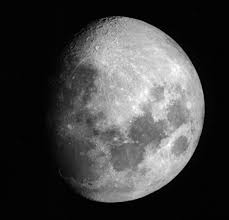
Name the moon phase.
waning crescent
waxing crescent
waning gibbous
waxing gibbous
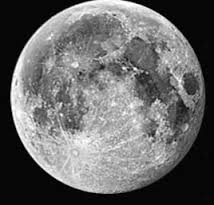
Name the moon phase.
first quarter
last quarter
new moon
full moon
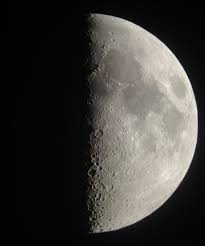
Name the moon phase.
first quarter
last quarter
new moon
full moon
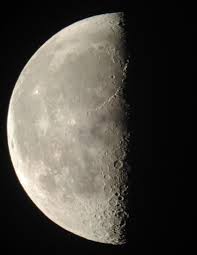
Name the moon phase.
first quarter
last quarter
new moon
full moon

What phase is this?
waning gibbous moon
waxing gibbous moon
waning crescent moon
waxing crescent moon

What phase is this?
first quarter moon
last quarter moon
waxing gibbous moon
waning gibbous moon

What phase is this?
full moon
first quarter moon
last quarter moon
new moon

What would be the result if the Earth's axis was not tilted but straight up and down?
Nothing would change.
Seasons would occur by latitude.
Days would get longer.
The equator would burn up and the poles would freeze.

Name the phase of the moon for letter a
first quarter moon
last quarter moon
waxing gibbous moon
waning gibbous moon

Name the phase of the moon for letter f
waning gibbous moon
waxing gibbous moon
waning crescent mooon
waxing crescent moon
A solar eclipse only happens during a _?_ moon.
new
crescent
gibbous
full
A lunar eclipse only happens during a _?_ moon.
new
crescent
gibbous
full
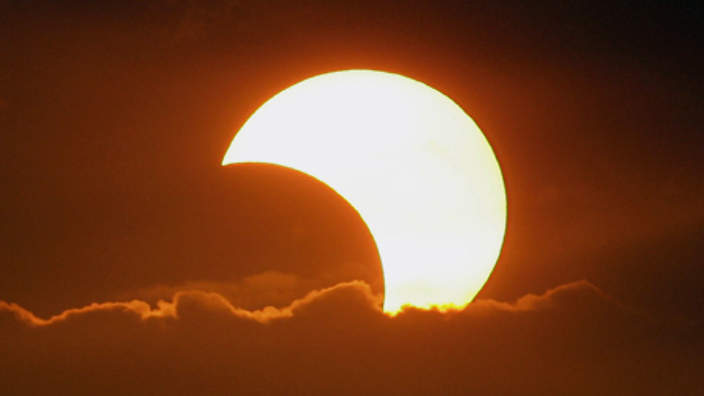
This image is an example of
lunar eclipse
full moon
new moon
solar eclipse
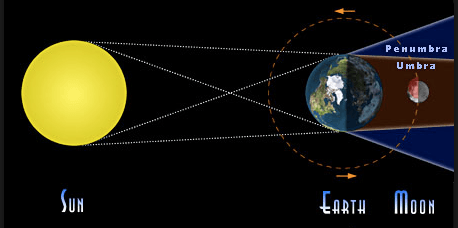
Which type of eclipse is shown in the diagram?
solar eclipse
lunar eclipse
total eclipse
partial eclipse
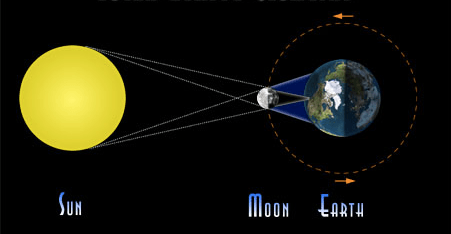
Which type of eclipse is shown in this picture?
solar eclipse
orbit
lunar eclipse
total eclipse

