
NEW
Font size
S
M
L
XL
 Worksheets
CFA 3 Review
Total questions: 53
Worksheet time: 47mins
Name
Class
Date
1.
A __________ includes all living and non-living things in an environment.
a)
population
b)
niche
c)
abitotic
d)
ecosystem
2.
_______ are consumers that eat only meat.
a)
Herbivore
b)
Omnivore
c)
Carnivore
3.
________ are consumers that eat plants and meat.
a)
Herbivore
b)
Omnivore
c)
Carnivore
4.
Which group do fungi, bacteria, and termites belong to?
a)
decomposers
b)
producers
c)
herbivores
d)
omnivores
5.
Which organism make their own food through the process of photosynthesis?
a)
decomposer
b)
consumer
c)
herbivore
d)
producer
6.
If the population of prey increases, the population of predators will ________because of the availability of food.
a)
decrease
b)
stay the same
c)
increase
7.
What are interconnected food chains called?
a)
consumers
b)
predators
c)
food web
8.
What would most likely happen if an ecosystem no longer received sunlight?
a)
The number of herbivores would increase
b)
The number of plants would increase
c)
all organisms would adapt
d)
All living organisms would eventually die
9.
All food chains_____________________
a)
have more consumers than producers
b)
produce and use same amount of energy
c)
begin with a producer
d)
are unhealthy
10.
What is the main function of the respiratory system?
a)
take in oxygen and exhale waste like carbon dioxide
b)
move nutrients throughout the body
c)
take in carbon dioxide and exhale oxygen
11.
What is the main function of the respiratory system?
a)
take in oxygen and exhale waste like carbon dioxide
b)
move nutrients throughout the body
c)
take in carbon dioxide and exhale oxygen
12.
One of the main fuctions of the nervous system is to receive stimuli from inside and outside the body
a)
True
b)
False
13.
The smallest units or parts of living things; the body's building blocks.
a)
cells
b)
organs
c)
tissues
d)
system
14.
Which best describes the main job of most cells in multicellular organisms?
a)
Cells work to keep themselves alive.
b)
Cells work to keep the organism alive.
c)
Cells work to release needed materials.
d)
Cells work to store unneeded materials.
15.
Which organism performs all life processes in one cell?
a)
grass
b)
bacteria
c)
mushroom
d)
butterfly
16.
Molly is reading a book in science class. She reads one sentence that says, “This organism is capable of surviving as a single cell.” Which organism is she most likely reading about?
a)
amoeba
b)
flower
c)
mushroom
d)
insect
17.
Which best describes a multi-celled organism?
a)
basic
b)
simple
c)
uniform
d)
complex
18.
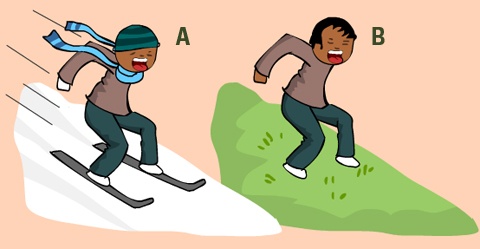
Why is it harder for the boy in Image B to get down the hill?
a)
Motion
b)
Friction
c)
Work
d)
Displacement
19.
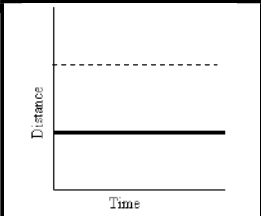
What does this graph represent?
a)
Constant speed
b)
Acceleration
c)
Not moving
20.

What is this graph showing?
a)
Constant Speed
b)
Acceleration (speeding up)
c)
Deceleration (slowing down)
d)
No motion
21.
The force that causes a ball to fall to the ground is ____________________________
a)
gravity
b)
lubricant
c)
friction
d)
motion
22.
A ball is rolled on four different types of materials. Which material will cause the least amount of friction between it and the ball?
a)
Tile Floor
b)
Carpet
c)
Grass
d)
Cement Sidewalk
23.
Wind pushes a toy sailboat across a pond. The boat moves in a straight path. Which of these changes?
a)
The boat's direction
b)
The boat's mass
c)
The boat's force
d)
The boat's position
24.
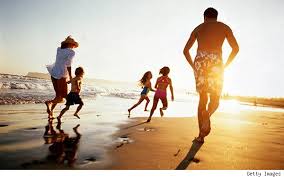
The sun shines down on this family as the play on the beach.
a)
conduction
b)
convection
c)
radiation
25.
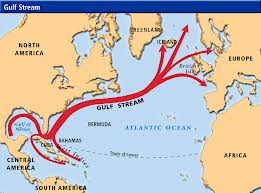
The Gulf Stream is a current that brings warm ocean water from the south to the north.
a)
conduction
b)
convection
c)
radiation
26.

Which direction will the heat flow while this person holds a hot cup of tea?
a)
from the cup to her hand
b)
from her hand to the cup
c)
no heat is transferred
27.

The candle will slowly heat the metal and transfer the heat directly to the mans hand.
a)
conduction
b)
convection
c)
radiation
28.
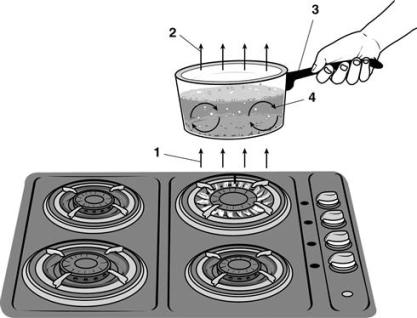
Which numbered part of the picture represents the way that energy from the sun reaches Earth?
a)
1
b)
2
c)
3
d)
4
29.
The liquid in the thermometer rises when it is placed in the hot water because ___________.
a)
it gains heat from the hot water and expands.
b)
loses heat from the hot water and contracts.
c)
the surrounding air is too warm.
d)
the liquid is boiling.
30.
Something electricity can't move through is called a(n) ______.
a)
conductor
b)
wire
c)
shoe
d)
insulator
31.
Why are metals useful for making electrical wire?
a)
Metals do not bend.
b)
Metals hold much heat.
c)
Metals are insulators.
d)
Metals are conductors.
32.
Which is NOT an insulator.
a)
Wool
b)
Plastic
c)
Copper
d)
Glass
33.
What is a example of a insulator?
a)
metal
b)
rubber
c)
water
34.
Rubber is a insulator.
a)
true
b)
false
35.

a)
conductor
b)
insulator
36.
Which of the following is a sign that a chemical reaction has occurred?
a)
change in shape
b)
melting
c)
formation of a gas
d)
dissolving
37.
Which of the following is NOT an example of a physical change?
a)
crumpled paper
b)
pencil sharpening
c)
shrunken clothing
d)
sour milk
38.
When you break a cracker into pieces it is a
a)
Chemical change
b)
Physical change
c)
Chemical Weathering
d)
Physical Weathering
39.
Which weather tool measures air pressure?
a)
thermometer
b)
barometer
c)
anemometer
d)
psychrometer
40.
Which condition usually means cloudy, stormy weather?
a)
high pressure
b)
low pressure
41.
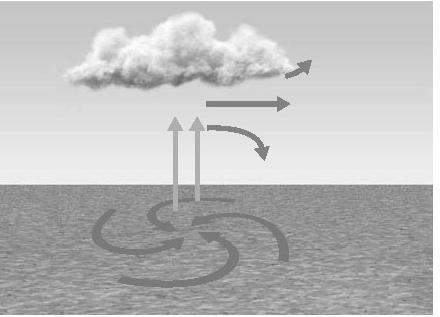
Which type of pressure system is pictured?
a)
high
b)
low
c)
medium
d)
none
42.

What is the water cycle?
a)
the 3 forms of water
b)
the movement of water on, above, or below the surface of the Earth
c)
when water melts
d)
when clouds form
43.

What part of the water cycle does this picture show?
a)
condensation
b)
precipitation
c)
evaporation
44.
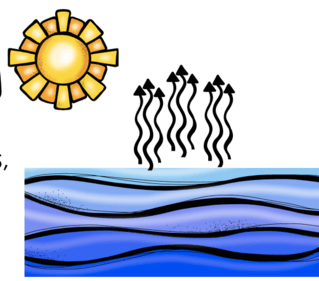
What part of the water cycle does this picture show?
a)
condensation
b)
precipitation
c)
evaporation
45.
What is condensation?
a)
The part of the water cycle when the sun heats up water, turning it from a liquid into water vapor or steam. It rises from the ground into the air.
b)
The part of the water cycle when the water vapor in the air gets cold. The water turns back into a liquid and forms clouds.
c)
The part of the water cycle when clouds get heavy and can no longer hold the liquid water. This causes the water to fall from the sky to the earth as rain, snow, sleet, or hail.
46.
What is precipitation?
a)
The part of the water cycle when the sun heats up water, turning it from a liquid into water vapor or steam. It rises from the ground into the air.
b)
The part of the water cycle when the water vapor in the air gets cold. The water turns back into a liquid and forms clouds.
c)
The part of the water cycle when clouds get heavy and can no longer hold the liquid water. This causes the water to fall from the sky to the earth as rain, snow, sleet, or hail.
47.
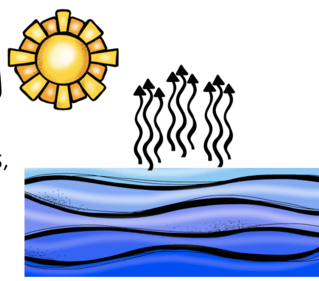
Evaporation happens when the sun ___________ water and turns it into vapor.
a)
cools
b)
heats up
c)
freezes
d)
lights up
48.

What is it called when plants give off water vapor as a waste product?
a)
condensation
b)
evaporation
c)
sublimation
d)
transpiration
49.

What is the name of this tool?
a)
wind vane
b)
anemometer
c)
wind sock
50.
Which characteristic would a child not inherit from one or both of its parents?
a)
freckles
b)
hair style
c)
eye color
d)
dimples
51.
Which trait does a puppy inherit from its parents?
a)
fur color and pattern
b)
obedience to commands
c)
food brand preferences
d)
affection for a specific home
52.
A litter of kittens have traits that are similar to both the mother cat and the father cat. Which best explains this situation?
a)
The kittens are provided the same kind of milk from their mother as they grow.
b)
The kittens inherit some of their traits from their mother and some from their father.
c)
The kittens are kept at the same temperatures by their mother when they are first born.
d)
The kittens are taught by their parents to have similar traits.
53.
Which statement best supports why many offspring look similar to their parents?
a)
Offspring inherit characteristics from one parent.
b)
Offspring inherit characteristics from both parents.
c)
Parents choose which characteristics to pass on to their offspring.
d)
Parents choose to change their appearance to match that of their offspring.
Reset

