
 Worksheets
Levels of Classification
Total questions: 60
Worksheet time: 1hrs 10mins
Name
Class
Date
1.
The two parts of a scientific name are the species name and the ______ name.
a)
Phylum
b)
Genus
c)
Kingdom
d)
Order
2.
Animalia, Protista and Fungi are the
a)
Scientific names for organisms
b)
Names of kingdoms
c)
Levels of classification
d)
Names of scientists who founded taxonomy
3.
Kim is studying two types of chimpanzees: Pan troglodytes and Pan paniscus. Based on their names, Kim can conclude that the two types of chimpanzees belong to
a)
Different genera (genera = plural for genus)
b)
Different species
c)
Different kingdoms
d)
The same species
4.

Although clown fish do not have sharp teeth, they are in the same class as sharks because
a)
They both have scales.
b)
They have the same outer color.
c)
They have the same body shape (fins, backbone)
d)
They both eat the same things.
5.
A snake, iguana, and a turtle are all grouped together because they share similar characteristics. Which of the following characteristics do they NOT share?
a)
smooth, wet skin
b)
cold blooded
c)
lay eggs and dry skin
d)
vertebrates
6.
On the playground, a group of students observed an animal that had an exoskeleton, eight legs, and joints. The animal they observed was
a)
mammal
b)
vertebrate
c)
mollusk
d)
invertebrate
7.
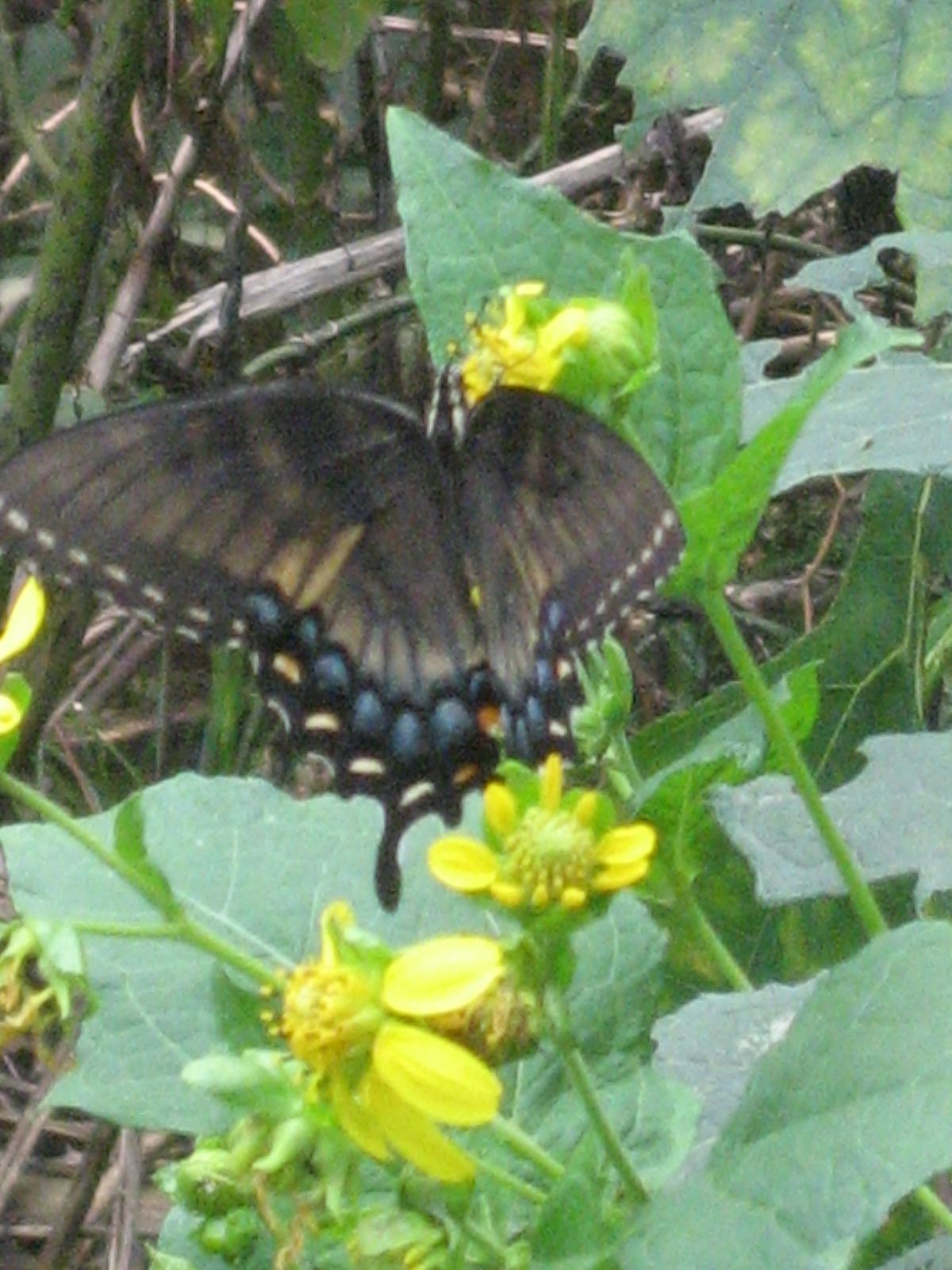
The 8 levels of classification, most broad to most specific.
a)
Domain, Genus, Family, Order, Class, Phylum, Kingdom, Species
b)
Domain, Species, Kingdom, Genus, Phylum, Family, Class, Order
c)
Domain, Kingdom, Phylum, Class, Order, Family, Genus, Species
d)
Order, Kingdom, Species, Domain, Phylum, Family, Class, Genus
8.
The first part of a scientific name is an organism's _______________ and the second part is its ________________.
a)
species, genus
b)
phylum, order
c)
class, spices
d)
genus, species
9.

Using this dichotomous key, identity the name of the circled fish.
a)
band-tail puffer
b)
spotted goat fish
c)
peacock flounder
d)
trumpet fish
10.

A student discovers an arachnid with a segmented abdomen, long legs, and a tail with no stinger. The student uses the dichotomous key below to identify it. Which arachnid has the student found?
a)
Whip Scorpion
b)
Wind Scorpion
c)
Daddy long legs
d)
Scorpion
11.

Using this dichotomous key, identify the name of the circled Fish, J.
a)
peacock flounder
b)
band-tail puffer
c)
trumpet fish
d)
spotted goat fish
12.
The natural differences in traits are called ___________________.
a)
artificial selection
b)
eukaryotes
c)
variations
d)
phylums
13.
If two organisms are in the same phylum, they must be in the same:
a)
class
b)
kingdom
c)
species
d)
family
14.
What is a species?
a)
the process by which inherited traits in a population change over generations
b)
the process by which individuals that are better adapted to their environment are more likely to survive and reproduce
c)
a group of organisms that can reproduce and have fertile offspring
d)
a characteristic that improves the ability of individuals in a population to survive and reproduce
15.

The name "Felis Catus" includes which of the following ranks?
a)
Genus and Species
b)
Species and Subspecies
c)
Class and Order
d)
Kingdom and Phylum
16.
1. The division of organisms into groups or classes based on characteristics is
a)
taxonomy
b)
classification
c)
life science
d)
biology
17.
For hundreds of years, people thought all living things belonged to one of two groups. What were the two groups?
a)
living and nonliving
b)
animals and flowers
c)
animals and plants
d)
microscopic and nonmicroscopic
18.
The scientific name for the common house cat is Felis domesticus. What is its species name?
a)
Felis
b)
house cat
c)
domesticus
d)
feline
19.

Which of these is not a plant?
a)
evergreen
b)
flower
c)
wheat
d)
mushroom
20.
Tigers, Jellyfish, Gorillas and Sponges are all part of kingdom _______.
a)
Animalia
b)
Plantae
c)
Fungi
d)
Bacteria
21.
Which kingdom is autotrophic AND has a cell wall?
a)
Bacteria
b)
Fungi
c)
Plantae
d)
Protista
22.

You would find mushrooms in which kingdom?
a)
Plantae
b)
Protists
c)
Fungi
d)
Animalia
23.

Which kingdom do humans belong to?
a)
Plantae
b)
Fungi
c)
Animalia
d)
Protista
24.
Term given to describe the 2 name naming system is:
a)
dichotmous key
b)
binomial nomenclature
c)
2 scientific names
d)
binomial key
25.
Which of the following organisms are MOST closely related?
a)
organisms that share a domain
b)
organisms that share a family
c)
organisms that share a genus
d)
organisms that share an order
26.
Which of the following characteristics will most likely be helpful in identifying a butterfly using a dichotomous key?
a)
Migrates north every spring
b)
hangs on branches
c)
flutters wings fast on hot days
d)
Wings have long extensions
27.
What step do we always start with when using dichotomous keys?
a)
1
b)
2
c)
3
d)
4
28.
Cladograms are constructed by grouping organisms together based on their____________ characteristics.
a)
shared
b)
different
c)
similar
d)
opposite
29.
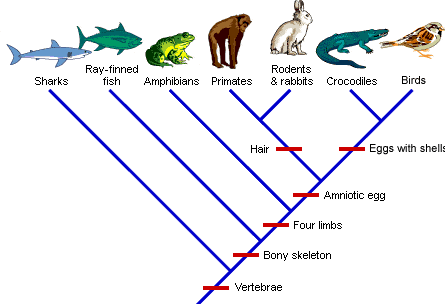
According to this cladogram, sharks are MOST closely related to which organism?
a)
Amphibians
b)
Ray finned fish
c)
Crocodiles
d)
Birds
30.
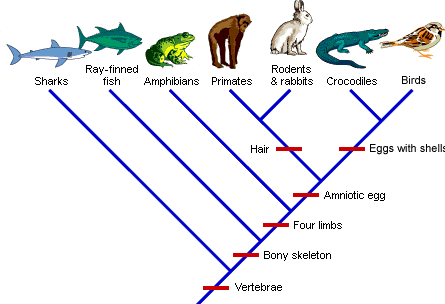
Which two orgainsms have hair?
a)
Sharks & Ray Finned Fish
b)
Primates & Rodents
c)
Birds & Crocodiles
d)
Rabbits & Birds
31.

According to this cladogram, birds are LEAST related to:
a)
Amphibians
b)
Sharks
c)
Ray Finned Fish
d)
Crocodiles
32.
Who first proposed binomial nomenclature as a way of classifying organisms?
a)
Carolus Linnaeus
b)
Carl's Jr.
c)
Charles Darwin
d)
Henry Groseclose
33.

Which two orgainsms have hair?
a)
Sharks & Ray Finned Fish
b)
Primates & Rodents
c)
Birds & Crocodiles
d)
Rabbits & Birds
34.

What is a dichotomous key used for in science?
a)
To organize biomes
b)
Identify organisms
c)
Identify bacteria only
d)
None of these
35.
What is the study of classification called?
a)
Taxonomy
b)
Geology
c)
Anatomy
d)
Geometry
36.
What are the three domains?
a)
Green, Blue, Red
b)
Autotrophic, Heterotrophic, Both
c)
Archea, Eukarya, Bacteria
d)
Marine Organism, Land Organism, or Both
37.
what are the 6 kingdoms???
a)
Protista, Animalia, Fungi, Plantae, Archaebacteria, Eubacteria
b)
Protista, Animalia, Lizards, Plantae, Archaebacteria, Eubacteria
c)
Animalia, fungi, plantae, Archaebacteria, Eubacteria
d)
mammals, birds, insects, crocodile.
38.

One characteristic used to place organisms into kingdoms is..
a)
Body shape
b)
How they move
c)
How many cells
d)
How they reproduce
39.

Domain Eukarya has ________ kingdoms.
a)
2
b)
4
c)
6
d)
8
40.
The domain Archaea:
a)
Are multi-cellular.
b)
Undergo photosynthesis.
c)
Have membrane bound organelles.
d)
Are able to tolerate extreme conditions.
41.
Which domain contains organisms that are unicellular, prokaryotic, and can cause illness yet also make food such as yogurt.
a)
Eukarya
b)
Archaea
c)
Bacteria
42.
the science of naming and grouping organisms
a)
classification
b)
taxonomy
c)
systematics
d)
organization
43.
What tool do we use to classify things?
a)
Camera
b)
Scientists have to tell us
c)
Measuring tape
d)
Dichotomous key
44.
This domain is characterized by ancient bacteria that can live in extreme environments, such as volcanoes.
a)
Archaea
b)
Bacteria
c)
Eukarya
d)
Prokarya
45.
Which domain contains organisms that are unicellular, prokaryotic, and can cause strep throat or e. coli infections?
a)
Eukarya
b)
Archaea
c)
Fungi
d)
Bacteria
46.
Which kingdom are mosses, ferns, conifers, and flowering plants a part of?
a)
Archaebacteria
b)
Plantae
c)
Animalia
d)
Protista
47.
Which kingdom is part of the domain Archaea?
a)
Animalia
b)
Archaebacteria
c)
Eubacteria
d)
Plantae
48.
Which kingdom is a part of the domain Bacteria?
a)
Archaebacteria
b)
Animalia
c)
Eubacteria
d)
Protista
49.
Organisms that are classified as autotrophic are able to-
a)
be seen with the human eye
b)
move
c)
reproduce
d)
make their own food
50.
Why do we use scientific names?
a)
Because we like to sound smart.
b)
Because they are recognized world wide.
c)
Because organisms only have one common name and it makes it easier.
d)
What? What are scientific names?
51.

The scientific name for water bear is Hypsibius dujardini. What is its genus?
a)
Hypsibius
b)
dujardini
c)
water
d)
tardigrade
52.
If two species share the same class, they also share the same______.
a)
phylum
b)
order
c)
genus
d)
species
53.
In a properly written scientific name, which part is lowercase?
a)
species
b)
genus
54.
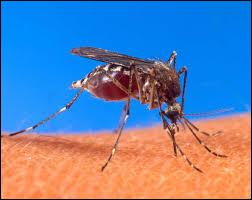
Mosquito belongs to what kingdom?
a)
Animal Kingdom
b)
Plant Kingdom
c)
Fungi Kingdom
d)
Protista Kingdom
55.

Dandelion, What kingdom does it belongs to?
a)
Plant Kingdom
b)
Animal Kingdom
c)
Fungi Kingdom
d)
Protista Kingdom
56.
Prokaryotes do not have a nucleus or membrane bound organelles.
a)
True
b)
False
57.

I am prokaryotic and am found everywhere. What kingdom do I belong to?
a)
Eubacteria
b)
Archaebacteria
c)
Fungi
d)
Protista
58.

Which of the following is correctly written in the binomial nomenclature system?
a)
Red wolf
b)
Canis lupus
c)
Ailurus Fulgens
d)
Kingdom
59.

If two organisms are in the same phylum, they must also be in the same
a)
class
b)
species
c)
family
d)
kingdom
60.

A student discovers an organism with a segmented abdomen, long legs, and a tail with no stinger. The student uses the dichotomous key below to identify it. Which arachnid has the student found?
a)
Whip Scorpion
b)
Wind Scorpion
c)
Daddy long legs
d)
Scorpion
100 %

