
 Worksheets
7th grade science TCAP review
Total questions: 150
Worksheet time: 2hrs 18mins
Name
Class
Date
1.
Heredity is the passing of traits from _____________________ to _____________________
a)
predators to prey
b)
water to rain
c)
parents to offspring
d)
fungi to protists
2.
___________________________ is the study of how traits are passed on, or inherited.
a)
dominant traits
b)
ratio
c)
phenotype
d)
genetics
3.
Why did Mendel choose to study pea plants in order to learn how traits are passed from parent to offspring?
a)
Pea plants grow quickly
b)
Pea plants are ultraviolet
c)
Pea plants are rare and expensive
d)
Pea plants are take years to grow
4.
If a child has red hair, they inherited a certain _______________ from their parents.
a)
ratio
b)
trait
c)
probability
d)
sex chromosome
5.
One trait that is ALWAYS present and causes the other traits to disappear is a ________________________
a)
recessive trait
b)
aggressive trait
c)
absent trait
d)
dominant trait
6.
True or False: Recessive traits are ALWAYS present
a)
True
b)
False
7.
A ___________________ is a relationship between two numbers
a)
genetic
b)
trait
c)
ratio
d)
cycle
8.
Offspring receives two sets of _____________ (one from each parent)
a)
blue jeans
b)
genes
c)
machines
d)
pedigree
9.
_____________________ is the appearance of an organism, or how it looks
a)
phenotype
b)
ratio
c)
recessive trait
d)
heredity
10.

A ________________________ is used to predict the possible genotype from certain parents
a)
Mendel Grid
b)
Genetic Tic Tac Toe
c)
Punnett Square
d)
Pedigree Plot
11.
Aa, DD, bB, yy are all examples of
a)
genotypes
b)
phenotypes
12.
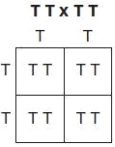
What ratio of the offspring from the cross shown will be homozygous recessive for the trait of tallness?
a)
0 in 4
b)
1 in 4
c)
2 in 4
d)
4 in 4
13.
Which of the following genotypes is heterozygous?
a)
Bb
b)
BB
c)
bb
d)
B
14.
In a flowering plant species, red flower color (R) is dominant over white flower color (r). What is the genotype of any red-flowering plant resulting from this species?
a)
rr
b)
R
c)
RR
d)
RR or Rr
15.
In a heterozygous genotype, the ___________ allele takes over in the phenotype.
a)
recessive
b)
dominant
c)
lower case letter
d)
both
16.
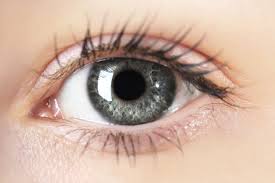
What you see, or the physical appearance.
a)
Genotype
b)
Phenotype
c)
Homozygous
d)
Heterozygous
17.
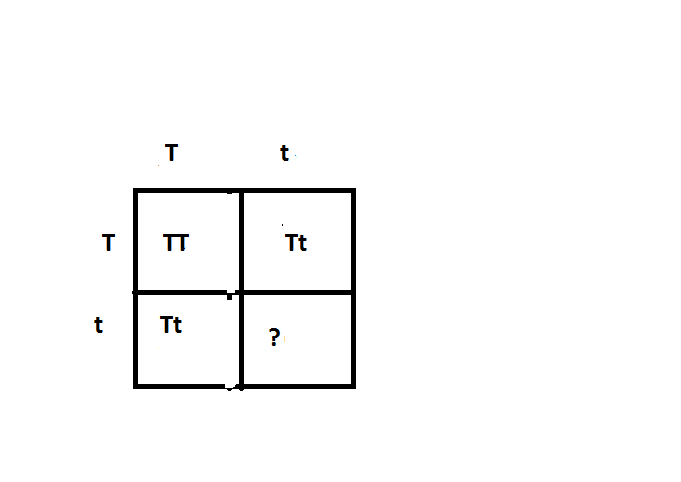
T = tall and t = short
In the punnett square below, what belongs in the missing square
In the punnett square below, what belongs in the missing square
a)
tt
b)
Tt
c)
Bb
d)
TT
18.
What do we call the bottom of a transverse wave?
a)
crest
b)
trough
c)
wavelength
d)
amplitude
19.

What kind of wave is pictured below?
a)
compressional wave
b)
transverse wave
c)
sound wave
d)
mechanical wave
20.
What do we call the top of the wave?
a)
crest
b)
trough
c)
amplitude
d)
frequency
21.
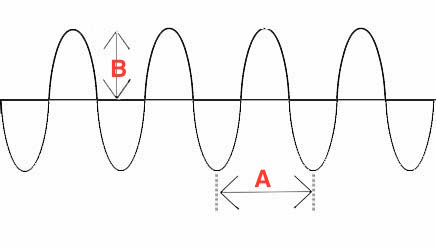
What property of this wave is represented by the letter "A"
a)
amplitude
b)
crest
c)
trough
d)
wavelength
22.
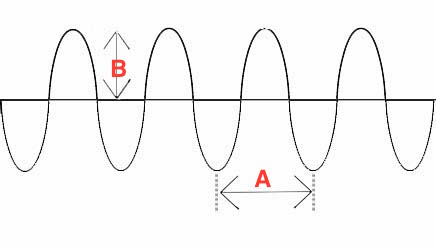
What property of the wave is represented by the letter "B"?
a)
amplitude
b)
crest
c)
trough
d)
wavelength
23.
The lowest point on a wave is the:
a)
Amplitude
b)
Crest
c)
Trough
d)
Wavelength
24.
The number of wavelengths that pass a point each per second is:
a)
frequency
b)
period
c)
longitudinal
d)
transverse wave
25.

Which vocabulary term is used to identify the distance between points C & G?
a)
Amplitude
b)
Crest
c)
Frequency
d)
Wavelength
26.
When the frequency of a wave increases, what happens to the wavelength?
a)
The wavelength is not directly affected by the frequency of a wave.
b)
The wavelength increases.
c)
The wavelength decreases.
d)
More specific information is needed to form a conclusion about the wavelength.
27.
A mechanical wave cannot travel through...
a)
a vacuum(empty space).
b)
water.
c)
air.
d)
glass.
28.
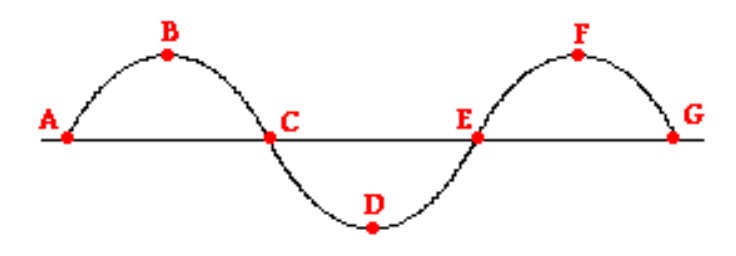
Which letter(s) represent the trough of the wave?
a)
A
b)
B & D
c)
D
d)
C & G
29.
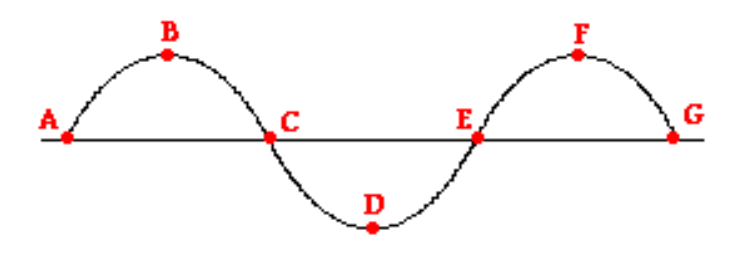
Which letter(s) represent the crest of the wave?
a)
A
b)
B & D
c)
B & F
d)
F
30.
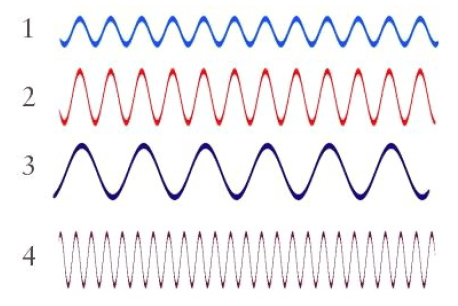
Which wave in the diagram has the greatest frequency?
a)
1
b)
2
c)
3
d)
4
31.

Which wave in the diagram has the greatest wavelength?
a)
1
b)
2
c)
3
d)
4
32.
crest to crest or trough to trough
a)
crest
b)
trough
c)
amplitude
d)
wavelength
33.
The Law of Inertia
a)
Newton's
1st
Law of Motion
1st
Law of Motion
b)
Newton's
2nd
Law of Motion
2nd
Law of Motion
c)
Newton's
3rd
Law of Motion
3rd
Law of Motion
34.
F=ma
a)
Newton's
1st
Law of Motion
1st
Law of Motion
b)
Newton's
2nd
Law of Motion
2nd
Law of Motion
c)
Newton's
3rd
Law of Motion
3rd
Law of Motion
35.
For every action, there is an equal and opposite reaction.
a)
Newton's
1st
Law of Motion
1st
Law of Motion
b)
Newton's
2nd
Law of Motion
2nd
Law of Motion
c)
Newton's
3rd
Law of Motion
3rd
Law of Motion
36.
An automobile you are riding in suddenly stops, but you continue to go forward.
a)
Newton's
1st
Law of Motion
1st
Law of Motion
b)
Newton's
2nd
Law of Motion
2nd
Law of Motion
c)
Newton's
3rd
Law of Motion
3rd
Law of Motion
37.
When the force on a car is doubled, the acceleration is doubled.
a)
Newton's
1st
Law of Motion
1st
Law of Motion
b)
Newton's
2nd
Law of Motion
2nd
Law of Motion
c)
Newton's
3rd
Law of Motion
3rd
Law of Motion
38.
A stationary bumper car is set in motion by the outside force of another bumper car colliding with it.
a)
Newton's
1st
Law of Motion
1st
Law of Motion
b)
Newton's
2nd
Law of Motion
2nd
Law of Motion
c)
Newton's
3rd
Law of Motion
3rd
Law of Motion
39.
A rocket in outer space continues to move.
a)
Newton's
1st
Law of Motion
1st
Law of Motion
b)
Newton's
2nd
Law of Motion
2nd
Law of Motion
c)
Newton's
3rd
Law of Motion
3rd
Law of Motion
40.
A magician pulls a table cloth from under a table of dishes.
a)
Newton's
1st
Law of Motion
1st
Law of Motion
b)
Newton's
2nd
Law of Motion
2nd
Law of Motion
c)
Newton's
3rd
Law of Motion
3rd
Law of Motion
41.
The harder you hit a baseball, the faster it accelerates.
a)
Newton's
1st
Law of Motion
1st
Law of Motion
b)
Newton's
2nd
Law of Motion
2nd
Law of Motion
c)
Newton's
3rd
Law of Motion
3rd
Law of Motion
42.
As the fuel in a rocket ignites, the force of gas expansion and explosion pushes out the back of the rocket and pushes the rocket forward.
a)
Newton's
1st
Law of Motion
1st
Law of Motion
b)
Newton's
2nd
Law of Motion
2nd
Law of Motion
c)
Newton's
3rd
Law of Motion
3rd
Law of Motion
43.
You push against the floor when you walk and the floor pushes back on you.
a)
Newton's
1st
Law of Motion
1st
Law of Motion
b)
Newton's
2nd
Law of Motion
2nd
Law of Motion
c)
Newton's
3rd
Law of Motion
3rd
Law of Motion
44.

What is the formula to calculate speed?
a)
S = t/d
b)
S = d/t
c)
S = d x t
d)
S = t x d
45.

What is velocity?
a)
the quickness of an object
b)
the location of an object
c)
acceleration
d)
speed in a specific direction
46.

A runner races in the 100 meter dash. It takes her 10 seconds to finish. What is her average speed?
a)
10 m/s
b)
1000 m/s
c)
100 seconds
d)
10 seconds
47.

Which of these are both male reproductive structures?
a)
Stigma and Style
b)
Anther and Filament
c)
Style and Ovary
d)
Stigma and Anther
48.
What part of a flower produces female reproductive cells (OVULES)?
a)
anther
b)
ovary
c)
sepal
d)
filament
49.
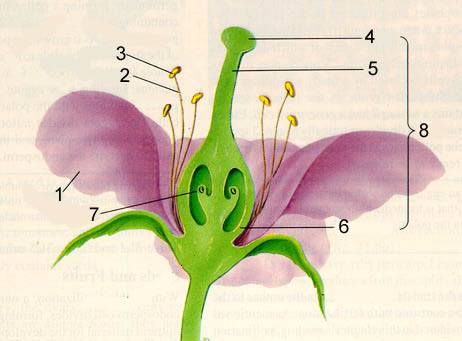
What is #2 pointing to?
a)
anther
b)
filament
c)
ovary
d)
style
50.
Where is pollen made?
a)
ovary
b)
petal
c)
pistil
d)
anther
51.
What is the sticky part of the flower that catches pollen?
a)
style
b)
stigma
c)
ovary
d)
petal
52.
What are the small leaves called that protect the bud?
a)
sepal
b)
petal
c)
leaves
d)
seed
53.

What is #8 pointing to?
a)
petal
b)
stamen
c)
pistil
d)
ovary
54.
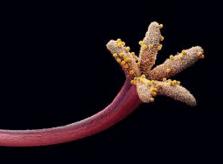
The part of the flower on which the pollen grains land.
a)
pistil
b)
stamen
c)
sepals
d)
stigma
55.
Why are flowers very colorful (and why do they produce odor?)
a)
So people buy them
b)
To make gardens look good
c)
To attract pollinators
d)
To attract sunlight
56.
What part of the flower will turn into a seed if fertilized by a pollen grain?
a)
ovary
b)
anther
c)
ovule
d)
filament
57.
The filament___________
a)
holds up the anther
b)
protects the petal
c)
is the male part of the flower
d)
catches pollen
58.

Name part X.
a)
anther
b)
stigma
c)
ovule
d)
ovary
59.
What is #3 pointing to?
a)
anther
b)
filament
c)
ovary
d)
style
60.
What is #5 pointing to?
a)
anther
b)
filament
c)
ovary
d)
style
61.
What is #6 pointing to?
a)
anther
b)
filament
c)
ovary
d)
style
62.
The ENTIRE female part of the flower
a)
pistil
b)
stamen
63.
The ENTIRE male part of the flower
a)
pistil
b)
stamen
64.
What happens during photosynthesis?
a)
cell uses oxygen to make food
b)
cell uses energy in sunlight to make food
c)
cell uses glucose to make oxygen
d)
cell uses solar energy to make carbon dioxide
65.
What are the products of photosynthesis?
a)
carbon dioxide and water
b)
carbon dioxide and sugars
c)
oxygen and sugars
d)
oxygen and water
66.
What captures energy from sunlight during photosynthesis?
a)
carbohydrates
b)
solar cells
c)
chlorophyll
d)
stomata
67.
Which statement BEST describes one step in the process of photosynthesis?
a)
mitochondria release oxygen
b)
mitochondria transform solar energy into sugar
c)
chloroplasts absorb solar energy
d)
chloroplasts release energy by breaking down food molecules
68.

The oxygen made by living organisms is produced where?
a)
In the cytoplasm
b)
In chloroplasts
c)
In mitochondria
d)
In the nucleus
69.
How does photosynthesis benefit heterotrophs?
a)
The energy from sunlight creates food for the plants that heterotrophs eat
b)
The carbon dioxide created by photosynthesis helps heterotrophs breathe
c)
The mitochondria used in photosynthesis creates heterotrophs
d)
Photosynthesis does not help heterotrophs
70.

What cellular organelle is best represented by diagram?
a)
mitochondria
b)
chloroplast
71.
Which of the following molecules is used to produce ATP in the mitochondria?
a)
Carbon Dioxide
b)
Glucose
c)
Sunlight
d)
Water
72.
What is the MAIN purpose of cellular respiration?
a)
to convert sugar into a form usable by our cells
b)
to convert energy from light energy into energy
c)
to produce carbon dioxide and water from glucose and oxygen
d)
to allow the breathing process of inhaling and exhaling
73.
The stage of respiration that releases most of the energy in glucose occurs in the
a)
mitochondria
b)
chloroplast
c)
nucleus
d)
cytoplasm
74.
In the human body, cellular respiration breaks down sugar molecules after they enter the cell. What is produced by the cell as a result of this process?
a)
bacteria
b)
enzymes
c)
energy
d)
oxygen
75.
Different kinds of cells have different numbers of mitochondria. Which kind of cell is most likely to need more mitochondria per cell to maintain normal function?
a)
a cell that absorbs a large amount of sunlight
b)
a cell that stores a large amount of food
c)
a cell that uses a large amount of energy
d)
a cell that produces a large amount of waste
76.
How are photosynthesis and respiration related?
a)
They are opposite processes
b)
They both produce carbon dioxide
c)
They have the same equation
d)
They both produce oxygen
77.
Which of the following is the correct equation for PHOTOSYNTHESIS?
a)
6CO2 + 6H2O --> 6O2 + C6H12O6
b)
6CO2 + C6H12O6 + 6H2O --> O2
c)
6O2 + 6H2O --> 6CO2 + C6H12O6
d)
C6H12O6 + 6O2 ---> 6H2O + 6CO2
78.
Which is the correct chemical equation for CELLULAR RESPIRATION?
a)
Glucose (Sugar) + Oxygen --> Carbon Dioxide + Water + ATP (Energy)
b)
ATP (Energy) + Oxygen --> Carbon Dioxide + Water + Glucose (Sugar)
c)
Glucose (Sugar) + Carbon Dioxide --> Oxygen + Water + ATP (Energy)
Glucose (Sugar) + Carbon Dioxide --> Oxygen + Water + ATP (Energy)
Glucose (Sugar) + Carbon Dioxide --> Oxygen + Water + ATP (Energy)
d)
Glucose (Sugar) + Water + Oxygen --> Carbon Dioxide + Oxygen + ATP (Energy)
79.
What is cellular respiration?
a)
the breakdown of glucose to release ATP
b)
the breakdown of glucose to release NADH
c)
the breakdown of glucose to release FADH
d)
the breakdown of glucose to release carbon
80.

Where is there a high concentration of water?
a)
in the flower
b)
cannot be determined by picture.
c)
in the vase
d)
in the leaves
81.

Which way will the water molecules move during osmosis?
a)
Out of the cell, so the cell shrinks.
b)
Out of the cell, so the cell swells.
c)
Into the cell, so the cell shrinks.
d)
Into the cell, so the cell swells.
82.

How many diamond molecules need to move to reach equilibrium?
a)
2 molecules will move inside the cell.
b)
2 molecules will move outside the cell.
c)
There is no movement because the molecules are at equilibrium.
83.

Which diagram best shows the end result of diffusion?
a)
F
b)
G
c)
H
d)
J
84.

The picture is an example of...
a)
active transport
b)
passive transport
85.
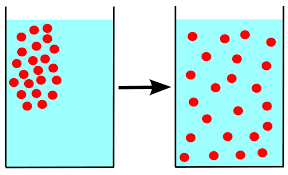
The picture below is an example of _________________.
a)
osmosis
b)
diffusion
c)
active transport
86.
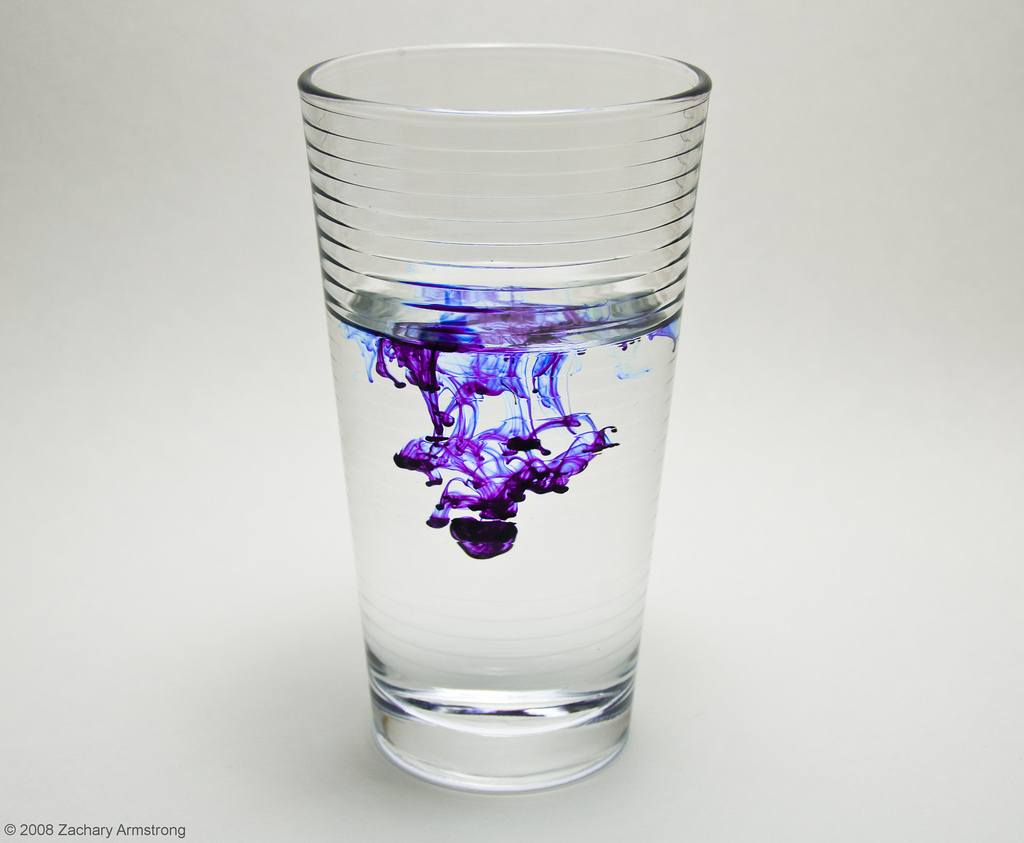
Where is there a low concentration of dye?
a)
at the bottom of cup
b)
in the color
c)
at the top of cup
87.

The cell below will ____ over time
a)
shrink
b)
expand
c)
stay the same size
88.

The cell below will _____ over time
a)
shrink
b)
expand
c)
stay the same size
89.
Osmosis is the movement of _____ across a membrane.
a)
food
b)
energy
c)
oxygen
d)
water
90.
During osmosis
a)
water moves from high to low concentration
b)
large or oddly shaped molecules move across a cell membrane
c)
water moves when energy is used
d)
proteins are built
91.
Permeable means
a)
things can pass through
b)
the concentration levels are different
c)
it is permanent
d)
things are stuck
92.
What does selectively-permeable mean?
a)
The cell controls what passes in and out of the cell
b)
Nothing gets through
c)
The cell lets only large substances through
93.

a)
Prophase
b)
Interphase
c)
Anaphase
d)
Telophase
94.

a)
Anaphase
b)
Cytokinesis
c)
Telophase
d)
Metaphase
95.

a)
Cytokinesis
b)
Interphase
c)
Anaphase
d)
Metaphase
96.

a)
Anaphase
b)
Cytonkinesis
c)
Interphase
d)
Prophase
97.

a)
Cytokinesis
b)
Anaphase
c)
Telophase
d)
Prophase
98.
The phase in mitosis where chromosomes move away and are pulled apart by spindles to opposite sides of the cell.
a)
prophase
b)
anaphase
c)
metaphase
d)
telephase
99.
Chromosomes condense from long stands into rod like structures and pair up.
a)
Prophase
b)
Interphase
100.

Which is Metaphase?
a)
A
b)
E
c)
C
d)
F
101.

In mitosis, the two resulting cells are
a)
different from the starting cell and identical to each other.
b)
different from the starting cell and different from each other.
c)
identical to the starting cell and different from each other.
d)
identical to the starting cell and identical to each other.
102.
The time between cell divisions in the life cycle of the cell is called
(Also when the cell is just hanging out)
(Also when the cell is just hanging out)
a)
anaphase
b)
interphase
c)
prophase
d)
metaphase
103.
Where does a cell contain it's genetic material?
a)
nucleus
b)
nucleolus
c)
cytoskeleton
d)
golgi
104.
This system breaks down food into nutrients that the body can absorb.
a)
digestive
b)
excretory
c)
reproductive
d)
immune
105.
This system transports oxygen and nutrients around the body.
a)
circulatory
b)
respiratory
c)
skeletal
d)
digestive
106.
One of the functions of this system is to allow you to use your 5 senses to make observations about the environment.
a)
Excretory
b)
Nervous
c)
Digestive
d)
Muscular
107.
Which system sends electrical messages that helps control the body's responses to internal and external changes?
a)
nervous
b)
endocrine
c)
reproductive
d)
integumentary
108.
Lungs are the primary organs of this system.
a)
muscular system
b)
nervous system
c)
circulatory system
d)
respiratory system
109.
Transports oxygen, hormones, and nutrients to all the body cells. Moves wastes and carbon dioxide away from cells.- Think.... *transportation system*
a)
Circulatory
b)
Digestive
c)
Nervous
d)
Muscular
110.
a body part (such as a heart or brain) made up of two or more different tissues joined together to perform a *specific* function
a)
cell
b)
tissue
c)
organ
d)
Organ System
111.
A living thing that is composed of many systems working together.
a)
Organ
b)
Organ System
c)
Organism
d)
Tissue
112.
A group of cells that work together.
a)
Tissue
b)
Organ
c)
Cells
d)
Organ System
113.
The ___________ is the basic unit of life
a)
organ
b)
cell
c)
atom
d)
tissue
114.
What is the correct order of organization
a)
tissues-cells-organs-organ systems-organism
b)
cell-tissue-organs-organ systems-organism
c)
organism-cells-tissues-organ systems-organism
d)
tissues-cells-organs-organ sytems-organism
115.
This organelle takes food and turns it into ENERGY for plant and animal cells.
a)
Chloroplast
b)
Mitochondria
c)
Lysosome
d)
Ribosome
116.
The site of photosynthesis
a)
ribosome
b)
mitochondria
c)
chloroplast
d)
nucleus
117.

Directs all cell activities through the DNA located there.
a)
Lysosomes
b)
Nucleus
c)
ribosomes
d)
Mitochondria
118.
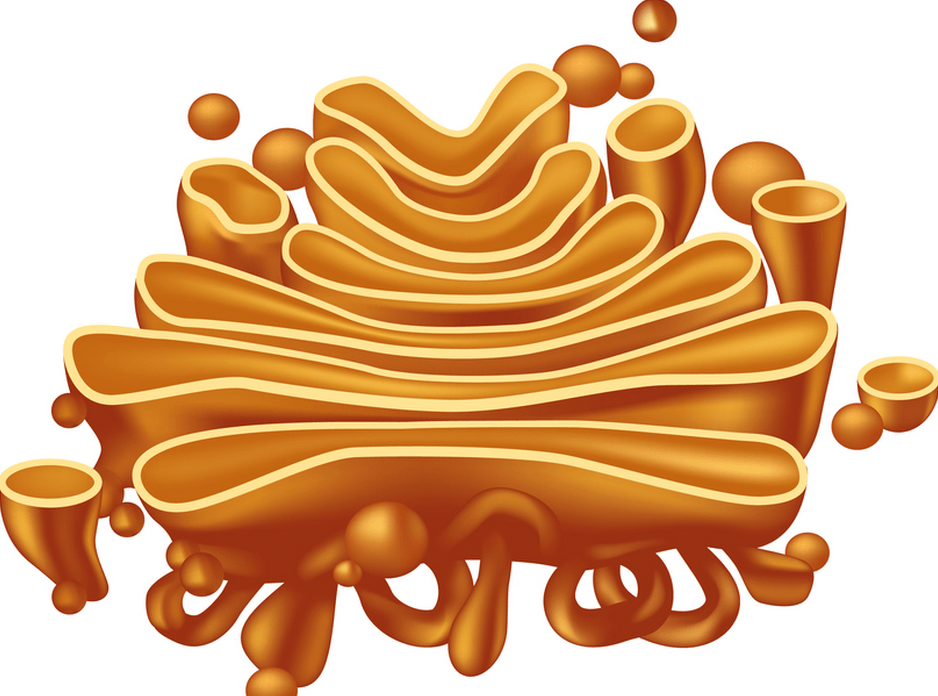
I am a packaging and shipping machine! Who am I?
a)
vacuole
b)
ribosome
c)
mitochondrion
d)
golgi apparatus
119.
Which of the following is directly involved in the transportation of materials inside/within the cell?
a)
Endoplasmic Reticulum
b)
Vacuole
c)
Lysosome
d)
Mitochondria
120.
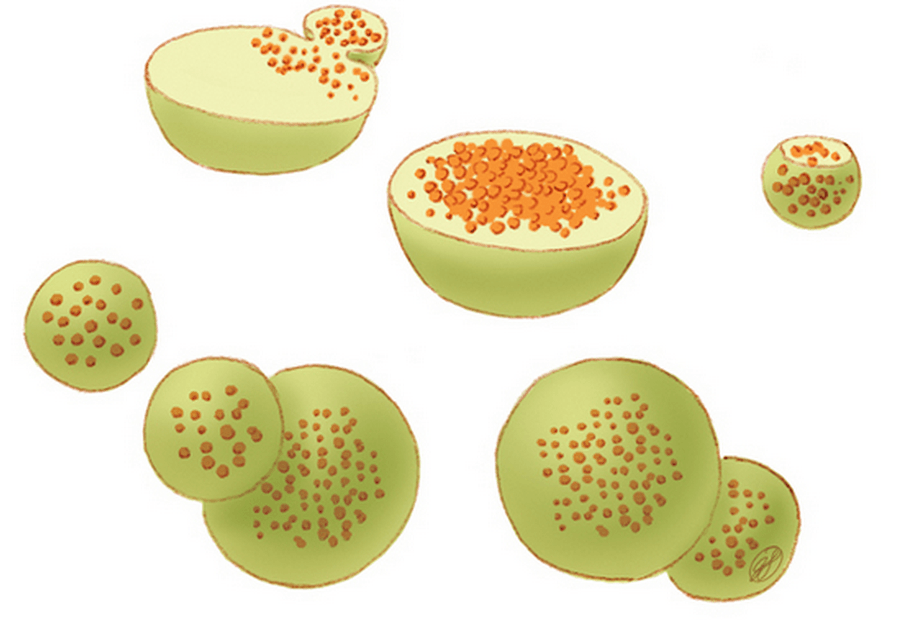
You might think of me as the trash collector, but recycler is maybe more accurate. What am I?
a)
mitochondria
b)
lysosome
c)
vacuole
d)
ribosome
121.
What is found in both plant and animal cells but is much larger in plant cells?
a)
Nucleus
b)
Mitochondria
c)
Chloroplast
d)
Vacuole
122.
Where are proteins made?
a)
Golgi body
b)
Mitoichondria
c)
Chromosomes
d)
Ribosomes
123.
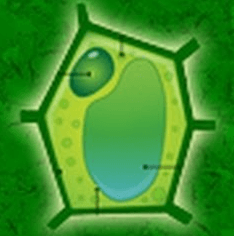
A rigid layer that lies outside the cell's membrane is...
a)
Cytoskeleton
b)
Cilia
c)
Cell Wall
d)
Flagella
124.
What organelle is called the "powerhouse" of a cell?
a)
Endoplasmic Reticulum
b)
Nucleus
c)
Mitochondria
d)
Nucleolus
125.
What is the gel-like substance inside of cells called?
a)
photoplasm
b)
photosynthesis
c)
cytoskeleton
d)
cytoplasm
126.

I am only found in a plant cell. What am I?
a)
cell wall
b)
mitochondria
c)
cytoplasm
d)
chloroplast
127.

What is the difference between rough and smooth ER?
a)
There is no difference.
b)
Plants have rough ER, animals have smooth ER.
c)
What type of injuries the Doctors treat.
d)
Rough has ribosomes, smooth does not.
128.
The color of a mineral in powder form is called the mineral's
a)
hardness
b)
specific gravity
c)
luster
d)
streak
129.
How light reflects off of a mineral is called the mineral's
a)
luster
b)
streak
c)
cleavage
d)
fracture
130.
Diamond has a hardness of ___ on Mohs Hardness Scale.
a)
1
b)
5
c)
8
d)
10
131.
A mineral's resistance to being scratched is called?
a)
streak
b)
luster
c)
hardness
d)
heft
132.

What type of event will occur at this boundary?
a)
Earthquake
b)
Volcano Eruption
c)
Tornado
d)
Mountain Building
133.
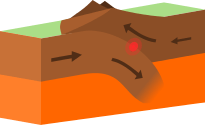
What type of plate boundary is this?
a)
Plate
b)
Divergent
c)
Convergent
d)
Transform
134.
Which of the following causes Earth's tectonic plates to move?
a)
Energy from the Sun
b)
Magnetic Pole Reversal
c)
Convection currents in the mantle
d)
Faults in Mountain Ranges
135.
A divergent boundary occurs when plates ....
a)
Pull apart
b)
Come together
c)
Slide past each other
d)
subducting
136.
Which of the following is the name of the ancient supercontinent formed 28 Million Years ago.
a)
Pangea
b)
Gondwanda
c)
Laurasia
d)
Neverland
137.
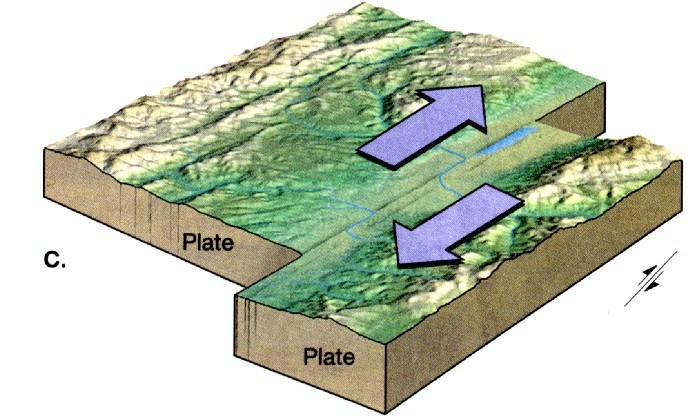
What type of plate boundary is this?
a)
Transform
b)
Convergent
c)
Divergent
d)
Plate
138.
What are the two types of crust
a)
continental and oceanic
b)
ocean and upper
c)
lower and upper
d)
pizza and subway
139.
Subduction zones in the ocean can create which features?
a)
islands
b)
volcanoes
c)
earthquakes
d)
all of the above
140.
Earthquakes and volcanoes are most likely found in which locations?
a)
At plate boundaries
b)
in oceans
c)
in the middle of continents
d)
in the middle of plates
141.

The huge pieces of the earth's crust are called ______________________.
a)
crust
b)
plates
c)
directions
d)
seismos
142.

Addition of new sea floor
a)
Subduction
b)
Sea Floor Spreading
c)
Sea Floor subduction
d)
Convergent
143.
What is the rate of movement of the tectonic plates?
a)
1 to 10 miles per year
b)
1 to 10 centimeters per year
c)
1 to 10 inches per year
d)
1 to 10 earths per year
144.
Which rock is made of cooling magma?
a)
metamorphic
b)
sedimentary
c)
diamond
d)
igneous
145.
What describes the inner core?
a)
Very dense, very hot metal
b)
Any layer of the earth that is liquid
c)
It is mostly made of rock
d)
The core is the top of the earth
146.

Which is a picture of Pangea?
a)
A
b)
B
c)
C
d)
D
147.
Tectonic plates float on which layer of Earth?
a)
Mantle (the asthenosphere part)
b)
Crust (the lithosphere part)
c)
Mantle (the mesophere part)
d)
Outer core
148.

What mineral is harder than talc but softer than calcite?
a)
Diamond
b)
Feldspar
c)
Gypsum
d)
Flourite
149.
What are the three main types of rock?
a)
Sedimentary, Mineral, Magma
b)
Sedimentary, Igneous, Metamorphic
c)
Metamorphic, Mineral, Igneous
d)
Convergent, Sedimentary, Metamorphic
150.

Which earth layer is #3?
a)
Crust
b)
Mantle
c)
Outer core
d)
Inner core
100 %

