
 Worksheets
8th grade Mixed Review
Total questions: 170
Worksheet time: 4hrs 0mins
How many covalent bonds can a carbon atom make?
two
four
six
eight
Anything that has mass and takes up space is called
matter
energy
heterogeneous
homogeneous
Which is the correct set of acid properties, as described by Boyle:
sour taste, corrosive, change litmus from red to blue
sweet taste, slippery, change litmus from blue to red
sour taste, slippery, change litmus from blue to red
sour taste, corrosive, change litmus from blue to red sour taste, corrosive, change litmus from blue to red
Substances that CANNOT be broken down chemically into other substances are
elements
compounds
mixtures
solutions
One example of a chemical change is
filtering
burning wood
boiling water
crushing a can
Earth is kept in orbit around the sun by
its speed and distance from the sun.
inertia and gravity.
its shape and size.
electricity and magnetism.
Does a hollow ball with a density of 1.67 g/ml float or sink when placed in water
float
sink
Andrea is standing at an intersection. She quickly determines the velocity of the cars on the street and decides she can cross safely. Why is her estimation of velocity more helpful than knowing the speed of the cars?
Velocity is a vector
Velocity is a scalar
Velocity is an octet
Velocity is scalene

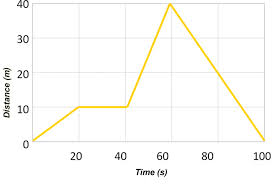
In the following graphs, the slope represents which characteristic of motion?
acceleration
kinetic energy
speed
momentum
We learned of three things that are conserved. What are they
work, energy and power
mass, energy and momentum
mass, momentum and relativity
pressure, acceleration and mass
If you reject the hypothesis, it means you did your experiment wrong.
True
False

This object would move
to the left
to the right
up
down

Does the following equation comply with the law of Conservation of Mass?
Yes, the number of reactant molecules is equal to the number of product molecules
Yes, the number of reactant atoms is equal to the number of product atoms
No, the number of reactant molecules is not equal to the number of product molecules
No, the number of reactant atoms is not equal to the number of product atoms
What is an astronomical unit (A.U.)?
the distance between the Earth and center of the galaxy
the distance between the asteroid belt and the Sun
a really big unit
the average distance between the Earth and the Sun
Which of the following methods is used to separate the colors in food dyes?
evaporation
sieving
chromatography
decanting
If you heat a liquid and measure the temperature at which it boils, you are measuring a(n)
atomic property
physical property
chemical property
molecular property
The building blocks of proteins are called
fatty acids
simple sugars
aminoacids
nucleic acids
According to Newton, when a hammer strikes and exerts force on a nail, the nail
creates a friction with the hammer.
disappears into the wood.
exerts an equal force back on the hammer.
moves at a constant speed. moves at a constant speed.
In an experiment where you change only the temperature, the temperature is the
responding variable
manipulated variable
hypothesis
controlled parameter controlled parameter
Which of the following is NOT an example of a physical change
gasoline burning
dissolving salt
crushing a can
boiling water boiling water
What is conventionally considered the smallest possible piece of matter?
element
atom
molecule
mixture
Two ways to increase acceleration of an object are
increase force and increase mass
decrease mass and decrease force
decrease force and increase mass
increase force and decrease mass
What is a simple way to summarize Newton's 2nd law?
density = mass/volume
force = mass x acceleration
what goes around comes around
volume = length x width x height


Which of the following occurs as a result of convection currents?
Tectonic plates on the crust move.
The mantle increases in size.
Pressure in the crust increases.
Pressure in the crust decreases.

Wegner used all of the following pieces of evidence in his theory of plate tectonics, EXCEPT?
Continents and fossils fitting together/matching-up like puzzle pieces
glacier scars and other climate evidence from temperature
mountain ranges and rocks lining up across continents
distribution of tortoises on the Galapagos islands
When a piece of cork is cut in half its density
is cut in half, too.
doubles
quadruples
remains the same remains the same


If you wrap more coils around an electromagnet, it will become...
brighter
stronger
weaker
invisible

Which of the following is NOT a statement found in cell theory.
All living things are composed of cells
All cells come from pre-existing cells
Cells are the basic unit of structure and function of all living things
Cells are able to function in different environments
Element that is a waste product of photosynthesis and can rust metals.
H2O
O (oxygen)
C (carbon)
CO2

Look at the diagram.
If these organisms were arranged in a food pyramid, which organism would have the least amount of total energy available?
coyote
lizard
insect
frog
Look at the diagram.
Which population would increase most if the insects were eliminated?
decomposers
producers
primary consumers
secondary consumers
Which of the following populations begins the flow of energy through the food web?
coyotes
insects
lizards
shrubs
A community in which barn owls and snakes consume only mice is being observed. If the number of snakes increases, which of the following is most likely to happen first?
The barn owl population will increase.
The mouse population will decrease.
The barn owl population will decrease.
The mouse population will remain the same.
Which of the following explains why producers are always found at the beginning of a food chain?
Consumers are eaten by a variety of producers.
Producers convert light energy into chemical energy.
Producers are larger than consumers.
Producers are found in fewer numbers than consumers.


How can you decide if an object is in motion?
if its speed increases
if its distance from another object is changing
if its direction changes
if its velocity increases
A place or object used for comparison to determine if something is in motion is a ......
unit of measurment
parameter
constant
reference point

After 1.5 seconds, the squirrel has traveled approximately...
2 meters
3 meters
3.9 meters
4 meters
On a graph showing motion, what information is plotted on the x-axis?
distance
time
rate
direction
A change in velocity can involve ......
a change in speed
a change in direction
a change in acceleration
a change in distance


What is a force?
How much something weighs
How much matter something has
A push or a pull on an object
How massive something is
Which is not one of the Laws of Motion?
Objects only on move when something pushes or pulls them. They keep moving until something stops them.
Objects can move freely
The harder an object is pushed or pulled the faster it goes
The more massive and object is to start or stop
What is Gravity?
A force that pulls things to Earth
A strong pull on metals
The rubbing together of matter
When matter bumps against each other
What is matter?
How much something weighs
How something changes
How much space something takes up
How something looks
What is mass?
How much space something takes up
How big something is
How small something is
The amount of matter in an object.
Ms. Miller and Ms. Watson are exercising. Ms. Miller has a tennis ball, and Ms. Watson a soccer ball. They each kick their ball with the same amount of force. Ms. Miller's tennis ball travels 5 feet. Ms. Watson's soccer ball travels 2 feet. Which law of motion explains why?
Objects only move when something pushes or pulls them
The harder an object is pushed or pulled, the faster it goes
The more massive an object is, the harder it is to move.
Objects tend to move until something stops them.
Adam makes a paper air plane. He throws it across the room. It glides through the air and then falls to the ground. What force caused the paper airplane to fall?
gravity
push
friction
magnetism
A soccer ball is rolling across the grass. It begins to slow down. Then it stops. What force caused the motion to stop?
push
pull
gravity
friction




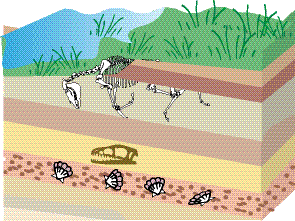
The oldest fossils are found
At the top of the rock layers
Near the bottom of the rock layers
In the middle of the rock layers
Somewhat near the surface

Which is more likely to form a fossil?
a fish because it has bones
a worm because it has skin
a jellyfish because it has tentacles
leaves on a tree because they are green
Humans often change ecosystems as a result of population growth, consumption, and technology. All of the following exemplify a way in which humans modify ecosystems except?
factory and automotive emissions causing acid rain
redirecting and storing freshwater behind dams
cutting down trees to build new buildings and roads
maintaining your body's homeostasis


All of these statements are part of cell theory, EXCEPT
Cells are made up of atoms
All living things are composed of cells
Cells are the basic units of structure and function in living things
All cells come from existing cells
This organelle converts energy into forms that are usable by the cell.
ribosome
lysosome
chloroplast
mitochondria
Which idea in cell theory supports the fact that each cell acts as a system (parts working together to achieve a complex task)?
It states that all living things are made up of one or more cells.
It states that they basic units of structure and function are cells.
It states that cells come from previously existing cells.
It states that all cells have a nucleus which divides.
What is the basic unit of matter?
cells
atoms
protons
organelles
What do greenhouse gases do in our atmosphere?
They keep all the air within the Earth
They block harmful radiation from reaching the Earth
They absorb radiation given off by the Earth
They make the Earth cooler

Which of the following is the best conclusion that can be made from this graph?
Atmospheric carbon dioxide levels have been decreasing since 1960
Hawaii has a lot of carbon dioxide
Humans have been working hard to decrease carbon dioxide levels
Atmospheric carbon dioxide levels have increased steadily since 1960s.

Which of the following is the best conclusion that can be made from this graph?
Average temperatures change from year to year.
Although global average temperatures fluctuate from year to year, the global average temperatures have increased as the levels of carbon dioxide have increased
Green house gases have no relationship to global average temperatures. In the 1910s the temperature was very cold even though the concentrations of greenhouse gases were relatively high.
Atmospheric concentrations of carbon dioxide have increased steadily since the 1850's

Which of the following is the best description of the process shown in the image?
Water and carbon dioxide plus light produce oxygen and glucose
Water and oxygen plus light produce carbon dioxide and glucose.
Water, oxygen and carbon dioxide plus light produce glucose.
Glucose and oxygen plus light produce carbon dioxide and water.
Which of the following models correctly identifies the relationship between photosynthesis and respiration


A student is collecting the gas given off from a plant in bright sunlight at a temperature of 27°C. The gas being collected is probably ________.
carbon dioxide
ATP
oxygen
glucose
The passing down of traits from parent to offspring is called ...
environmental traits
heredity
behavioral traits
adaptations
If the body cells of an organism have 12 chromosomes, how many chromosomes do the sex cells have?
36
24
12
6

What does a Punnett square show?
Only the dominant alleles in a genetic cross
All the possible outcomes of a genetic cross
Only the recessive alleles in a genetic cross
All of Mendel’s discoveries about genetic crosses
Organisms that DO NOT reproduce sexually (asexual reproduction) create identical copies of themselves (clones). Which of the following diagrams would best illustrate this concept.


In the cross between a homozygous dominant female and a homozygous recessive male (illustrated in the Punnett square), what is the probability that the offspring will show the recessive trait?
75%
50%
25%
0

A decrease in the frog population would MOST likely lead to an increase in the population of which organisms?
grasshopers
snakes
owls
grass
To reduce erosion in an area, an exotic fast-growing vine is introduced into the area without any growth control. How will the new plant most likely have an effect on the ecosystem?
The vine will compete with native plants for resources
The vine will provide protection for the native plants
The vine will compete with native plants for resources
The vine will compete with native animals for food, water, and minerals
Which of these best explains why predators need plants, such as grass, in their ecosystems?
Plants are a large part of their diet.
Plants provide food for the animals that the predators eat.
Plants provide safety for the predators.
Plants break down the organisms that the predators eat.
Which of the following models would be best to use when explaining how matter is conserved in the geosphere?


According to the rock cycle, which of the following transitions are possible? Assume an unlimited number of steps. Check all that apply.
An igneous rock becomes a sedimentary rock.
A sedimentary rock becomes soil.
A metamorphic rock becomes an igneous rock.
Magma becomes sedimentary rock
According to the theory of continental drift, why do the coastlines of Africa and South America appear to fit together so well?
Africa and South America are drifting towards each other and will soon fit together perfectly.
Ocean currents on either side of the Atlantic have eroded the coastlines into the same shape.
Africa and South America used to be joined together, but split apart long ago.
The theory does not explain why the coastlines seem to match.

All of the following lines of evidence support the idea that all the continents were once joined together, EXCEPT
Mountains created by colliding continents.
Evidence of glaciers in unexpected places.
Similar looking animals and plants can be found in almost every continent today.
Similar rocks found on different continents.
Fossil evidence and the fit of the continents
In a closed system, what will weigh more when a chemical change is complete? The reactants before the chemical reaction, or the product after the reaction is complete?
They both will weigh the same
The reactants will weigh more than the products
The products always weigh more than the reactants
They both will loose mass after the reaction
Students are performing an experiment in class where they combine 20 grams of a colorless liquid with 10 grams of a second colorless liquid. The reaction that occurs creates a white insoluble powder that settles at the bottom of the beaker. If no gas was produced, what is the expected weight of the powder AND any remaining liquid?
10 grams
20 grams
30 grams
40 grams
A student asks why the ashes from a fire have a much lower mass than the wood that was burned. Which is the correct answer to the student’s question?
Water in the wood reacts with the fire causing it to condense into ashes
Heat causes molecules to lose mass
Atoms in the wood are destroyed during the fire
Matter from the wood is released into the air in the form of gases

Which pair of elements will probably NOT share properties?
Li and K
K and Fr
K and Ca
Ca and Be
According the law of conservation of matter, you might have a carbon atom in you that came from a dinosaur. How is this possible?
the carbon became energy which you used later
the carbon changed forms many times though physical and chemical changes but was never destroyed
you probably ate a piece of fossil dinosaur directly
It's not possible. Carbon is created "fresh" in plants as part of sugar

Which of the following statements is supported by this graph?
The hydrosphere is heating up at a much more rapid pace than the atmosphere and the geosphere
Ocean heating is caused by an increase in carbon emissions
Sea levels are going up as climate warms. This puts towns and cities near the ocean at risk of flooding
There has been a decrease in snow cover because the ice caps are melting

Look at the diagram below representing layers of rocks and the fossils buried in them in four different locations. Which layer would be the OLDEST?
layer A
layer B
layer C
layer D

Look at the diagram below representing layers of rocks and the fossils buried in them in four different locations. What is the most logical explanation for the absence of layers B, C and D at location 3
Those three layers never formed because the conditions were not conducive for supporting life.
At some point in the past the three missing layers were weathered and eroded away.
The person that drew the image became tired and decided not to draw them.
The three missing layers suffered a catastrophic failure and evaporated into the atmosphere.

Which of the following questions can be answered by studying these fossil layers?
What did the fish eat?
Why did dinosaurs become extinct?
Which organisms lived before/after/or at the same time?
Are reptiles the ancestors to birds or fish?

The diagram illustrates an embryonic stage of two organisms. Which of the following can be determined by observing the embryos shown in the diagram?
The organisms are native to the same geographic areas.
The organisms share a common ancestry.
The organisms adapted to similar environments.
The organisms will grow into anatomically similar adults.

How does the theory of plate tectonics support the theory of evolution?
Plate tectonics does not help support the theory of evolution.
Plate tectonics provides an explanation for how the plates move and transport fossils across oceans or to the tops of mountains.
Plate tectonics provides an explanation for the existence of homologous structures in organisms that live in close geographical locations.
Plate tectonics provides an explanation for the existence of similar species on opposite sides of impassible geographic barriers, such as oceans.
Gravitational potential energy depends on the ________ and ________ of the object.
mass and movement
height and mass
height and friction
friction and movement

How much potential energy is at the top of a hill on a roller coaster ride?
0%
20%
50%
100%

When a pendulum swings, at which point is kinetic energy highest?
1
2
3
4
5
A car is travelling at a constant speed. Which of the following statements is true?
The forces acting on the car are a causing it to change shape
The forces acting on the car are unbalanced
The direction of the net force is forward
The forces acting on the car are balanced

Suppose two carts, one twice as massive as the other, fly apart when the compressed spring that joins them is released. How fast does the heavier cart roll compared with the lighter cart?
half as fast
twice as fast
the same
Newton's 3rd Law
You push on a tree with 20 N of force. If the tree doesn't move, the tree is pushing back on you with _____of force.
0 N
10 N
20 N
40 N
When the frequency of a wave increases, what happens to the wavelength?
The wavelength increases.
The wavelength decreases.
The wavelength is not directly affected by the frequency of a wave.
More specific information is needed to form a conclusion about the wavelength.
Which of the following can sound travel through?
solid
liquid
gas
a vacuum (empty space)


Sound will travel slowest through which of the following forms of matter?
milk
desk
air
door
Sound travels FASTEST through which of these materials?
Air
Empty space
Metal
Water
Sound is caused by?
force
vibrations
instruments
medium
Why is sound able to travel faster through a solid than a gas?
Gas molecules are packed tightly.
Sound does not travel faster through a solid than a gas.
Solid molecules are packed tightly.
Gas molecules move slowly.
Which of the following is NOT a mechanical wave?
sound
light
ocean
seismic
What kind of waves can travel through space?
electromagnetic waves
compressional waves
longitudinal waves
sound waves
Amplitude is a measure of how much _________ the wave is carrying
medium
matter
energy
frequency
You can't hear sounds in outer space because there is no
matter
energy
light
heat
Your best course of action for a speedy rescue when trapped underground is to ...
Yell at the top of your lungs.
Hit the walls, preferably with something metal. Even better if you hit a metal support beam or a metal pipe.
Give up. No one will ever hear you.
Create soundwaves by yelling AT the wall.
Sound waves move faster ...
On a cold day since cold molecuels are packed together more tightly so there are more collisions between molecules.
On a hot day, since hot molecules are more spread apart so there are more collisions between molecules
Temperature has no effect on sound waves.
in the vacum of space, where there is no matter.
Which of the following is the state of matter that will carry sound faster?



