
NEW
Font size
S
M
L
XL
 Worksheets
Energy Basics
Total questions: 43
Worksheet time: 28mins
Name
Class
Date
1.
the ability to do work
a)
energy
b)
Matter
c)
photons
d)
potential energy
2.
Stored energy that results from the position or shape of an object is called...
a)
Thermal
b)
Potential
c)
Kinetic
d)
Gravitational
3.

Lightning during a thunderstorm is an example of what form of energy?
a)
Radiant (potential) energy
b)
Radiant (kinetic) energy
c)
Electrical (potential) energy
d)
Electrical (kinetic) energy
4.

At what position does the rock have the greatest kinetic energy?
a)
A
b)
B
c)
D
d)
E
5.

This would be
a)
Nuclear (kinetic) energy
b)
Nuclear (potential) energy
c)
Chemical (kinetic) energy
d)
Chemical (potential) energy
6.
Energy of motion is which type of energy?
a)
Potential
b)
Kinetic
c)
Sound
d)
Gravitational
7.

A battery converts what type of energy to another?
a)
sound to kinetic
b)
light to heat
c)
mechanical to electrical
d)
chemical to electrical
8.
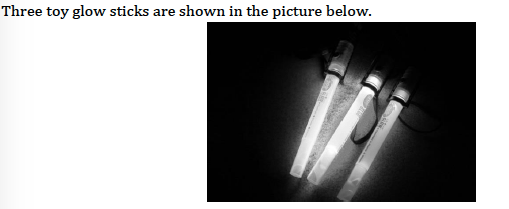
The glow sticks produce light for a short amount of time. The light from the glow stick is a conversion from what to what?
a)
thermal to light
b)
gravitational to potential
c)
radiant to electrical
d)
chemical to light
9.
Wind turbines and windmills convert what energy to another?
a)
Kinetic to electric
b)
Gravitational potential to electric
c)
Mechanical to potential
d)
Thermal to sound
10.
Work is:
a)
A transfer of energy by a force to move and object
b)
Something you get paid for
c)
Something you take home
d)
Makes you sweat
11.
The formula for work is:
a)
d = r x t
b)
p = m x v
c)
f = m x a
d)
w = d x f
12.
According to which law of energy, energy can't be created or destroyed?
a)
First law of motion
b)
The law of tacos
c)
Laws of Energy
d)
law of conservation of energy
13.

The purpose of the panels is to change solar energy into ____________.
a)
light energy
b)
electrical energy
c)
chemical energy
d)
mechanical energy
14.
a measurement of the average kinetic energy of particle in an object?
a)
temperature
b)
conduction
c)
current
d)
convection
15.
what is the meaning of conduction
a)
when heat transfers from objects that are not touching
b)
heat rise
c)
cold fall
d)
when heat transfers from objects that are touching
16.
what kind of heat is happening when the sun heats your body
a)
conduction
b)
convection
c)
density
d)
radiation
17.
Which is a nonrenewable source of energy?
a)
nuclear
b)
wind
c)
sunlight
d)
biomass
18.
Which is a nonrenewable source of energy?
a)
solar
b)
wind
c)
coal
d)
geothermal
19.
Which is a renewable source of energy?
a)
coal
b)
uranium
c)
ocean tides
d)
natural gas
20.
Which is a renewable source of energy?
a)
a dam
b)
a nuclear plant
c)
a coal mine
d)
an oil refinery
21.
A material that reduces or prevents the transfer of energy.
a)
conductor
b)
conduction
c)
radiation
d)
insulator
22.

This energy comes from heat, such as geysers, beneath earth’s surface.
a)
Biomass
b)
Geothermal
c)
Solar
d)
Oil
23.

These power plants are located at large rivers, dams, and waterfalls.
a)
Wind
b)
Biomass
c)
Hydroelectric
d)
Propane
24.

This energy sources is used in many homes to heat stoves and water heaters.
a)
Geothermal
b)
Solar
c)
Natural Gas
d)
Wind
25.
Energy efficiency can be calculated using the formula:
a)
Efficiency = (useful output) / (input) * 100
b)
Efficiency = (useful input) / (all output) * 100
c)
No formula
26.
What does the second law of thermodynamics state?
a)
Energy cannot be created nor destroyed
b)
Energy is lost when changing from one form to another
c)
Energy can be increased when changing from one form to another
d)
Mass is not related to energy
27.
What word could be used to describe the tendency towards disorder?
a)
Mass
b)
Work
c)
Entropy
d)
Free energy
28.
“Energy Star,” “USDA Organic,” and “Fair Trade Certified” are all examples of
a)
ecosystems
b)
ecolabelling
c)
non-market values
d)
market failure
29.
In making environmental policies, government interacts with
a)
organizations
b)
businesses
c)
citizens
d)
all of the above
30.
Most major laws in modern U.S. environmental policy were enacted in the
a)
1960's and 1970's
b)
1980's and 1990's
c)
years between 2000 and 2005
d)
years between 2005 and 2010
31.
A power company is given free land by the government to reduce the cost of providing wind-generated electricity to rural residents. This is an example of a
a)
command & control approach
b)
cap & trade system
c)
subsidy
d)
green tax
32.
This agency creates policies regarding energy and the safe handle of nuclear material. This agency promotes supply and delivery of reliable, affordable, and environmentally sound energy.
a)
Environmental Protection Agency
b)
Environmental Protection Agency
c)
Department of Energy
d)
Federal Energy Regulatory Commission
33.
This agency controls the price of natural gas and electricity for business transactions that occur between states (interstate).
a)
Federal Energy Regulatory Commission
b)
Nuclear Regulatory Commission
c)
Department of Energy
d)
Environmental Protection Agency
34.
This is the federal organization that ensures that all Americans are protected against specific hazards to the environment and human health where they learn, work and live.
a)
Department of Energy
b)
Nuclear Regulatory Commission
c)
Environmental Protection Agency
d)
Energy Policy Act
35.
Requires that the government, businesses, and people prevent or reduce the amount of any substance entering the air, waterways, and land. The act establishes activities for recycling, source reduction, and sustainable agriculture. It helps to promote the conservation of energy, water, and natural resources.
a)
Clean Air Act
b)
Clean Water Act
c)
National Environmental Policy Act
d)
Pollution Prevention Act
36.
Which act increases clean renewable fuel production, research on greenhouse gas, and improves thegovernment’s energy performance?
a)
Pollution Prevention Act
b)
Energy Independence and Security Act
c)
Energy Policy Ac
d)
Clean Water Act
37.
Which agency generates safety policies and regulations for nuclear reactors and materials?
a)
Environmental Protection Agency
b)
Federal Energy Regulatory Commission
c)
Department of Energy
d)
Nuclear Regulatory Commission
38.
Ultimately, all biofuels are ________, because they are the result of ________.
a)
geological; sedimentation
b)
solar; photosynthesis
c)
inefficient; decomposition by microorganisms
d)
synthetic; chemical manipulation of hydrocarbons
39.
Today ________ provide Sweden with most of its total energy and virtually all of its electricity.
a)
hydroelectric, nuclear, biofuels and new renewables
b)
sulfur dioxide, fusion and fossil fuels
c)
nuclear, fossil fuels and new renewables B) biomass, nuclear, hydrogen
d)
biomass, nuclear, hydrogen
40.
Major barrier preventing more widespread use of biodiesel is ________.
a)
the lack of government support
b)
political and economic inertia and current lack of abundant fueling stations
c)
a readily available supply of domestic petroleum
d)
the lack of support from the public
41.
Energy conservation in the United States ________.
a)
can be accomplished only through changes in environmental laws
b)
is unlikely to ever occur
c)
can be accomplished by changes in tax laws
d)
can be improved as individuals make conscious choices to reduce personal consumption
42.
The greatest damage to the environment caused by oil extraction is from ________.
a)
the initial logging
b)
the remediation and relocation
c)
road construction and infrastructure development
d)
the drilling
43.
Deposits of natural gas are most numerous in ________.
a)
the Middle East
b)
Panama
c)
South America
d)
USA and Russia
Reset

