wayground logo

Free Printable Worksheets

Font size

S
M
L
XL
Worksheets

Atoms and Matter Review

Total questions: 20

Worksheet time: 14mins

Name
Class
Date
1.

What are atoms composed of?

a)

a nucleus and electron orbitals

b)

only protons and neutrons

c)

a jelly substance

d)

salts and sugars

2.
Particles in an atom that are neutral and have no charge are 
a)
negatrons 
b)
electrons 
c)
neutrons 
d)
protons 
3.
The smallest particle of any particular type of matter is known by which of the following terms?
a)
Compound
b)
Atom
c)
Chemical
d)
Element
4.
The subatomic particle with a negative charge is the
a)
electron
b)
proton
c)
neutron
d)
nucleus 
5.
What is the atomic number?
a)
the number of protons
b)
the number of protons and neutrons
c)
the number of neutrons
d)
the number of protons and electrons
6.
What is the mass number?
a)
the number of protons
b)
the number of protons and neutrons
c)
the number of neutrons
d)
the number of protons and electrons
7.
How many neutrons does the isotope of lithium have?
a)
8
b)
3
c)
4
d)
5
8.
How many protons does this isotope of titanium have?
a)
48
b)
22
c)
26
d)
70
9.

How many protons does Carbon have?

a)

3

b)

4

c)

5

d)

6

10.
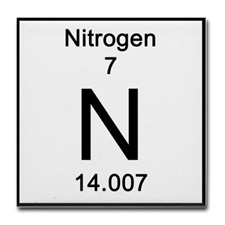
What is the number of protons that the element in this image contain?
a)
14
b)
7
c)
15
d)
18
11.
What is the atomic mass of "F"
a)
9
b)
18
c)
17
d)
19
12.
The positive particles of an atom are 
a)
electrons 
b)
positrons 
c)
neutrons 
d)
protons 
13.
the central region of an atom where its neutrons and protons are is its 
a)
nucleus 
b)
electron cloud
c)
core 
d)
center 
14.

What binds protons and neutrons together in the nucleus?

a)

strong potential energy

b)

a strong nuclear force

c)

electromagnetism

d)

strong kinetic energy

15.

Electrons are found in energy levels outside of the nucleus. What is another name for energy levels.

a)

rings

b)

electrolevels

c)

orbitals

d)

circular objects

16.

Electrons have_______________mass.

a)

no

b)

equal

c)

a lot

d)

very little

17.

What are valence electrons?

a)

extra electrons that do not fit in the nucleus

b)

electrons found in the outside energy level

c)

all electrons found in the atom

d)

electrons that did not become protons

18.

How many valence electrons are in Silicon?

a)

5

b)

4

c)

14

d)

8

19.

How many valence electrons are in Antimony?

a)

5

b)

4

c)

14

d)

8

20.

How many valence electrons are in Neon?

a)

5

b)

4

c)

14

d)

8