
 Worksheets
Peay's Periodic Table Test
Total questions: 84
Worksheet time: 2hrs 59mins
Name
Class
Date
1.
Which particle has a positive charge?
a)
electron
b)
orbital
c)
proton
d)
neutron
2.
Choose the particle that has no charge.
a)
nucleus
b)
neutron
c)
proton
d)
electron
3.
This particle determines what element you have - the elements identity.
a)
electron
b)
proton
c)
neutron
d)
valence shell
4.
What is the mass of a proton and a neutron?
a)
1amu
b)
2grams
c)
13amu
d)
10cm
5.
This causes the mass of the nucleus to increase.
a)
adding an electron
b)
adding a neutron
c)
more orbitals
d)
adding negatively charged particles
6.
Has a mass of 1/200th the mass of a proton.
a)
electron
b)
neutron
c)
nucleus
d)
electron cloud
7.
An electron has a _____ charge.
a)
negative
b)
positive
c)
neutral
8.
Describe an Electron Cloud?
a)
the mist outside of an atom
b)
home of the protons
c)
where electrons are located
d)
nucleus
9.
What are the maximum number of electrons that go on the first 3 energy levels?
a)
2,4,16
b)
2,8,18
c)
4,8,12
d)
3,4,6
10.
What are valence electrons?
a)
electrons on the first orbital always
b)
nucleus
c)
the outermost shell
d)
the number of electrons on the outermost orbital
11.
Which particles make up the nucleus of an atom?
a)
protons and neutrons
b)
electrons and protons
c)
electrons, protons, and neutrons
d)
electrons and neutrons
12.
The particles of the atom you can find by knowing the atomic number.
a)
neutrons
b)
protons and electrons
c)
protons and neutrons
d)
atomic mass
13.
The subatomic particle that determines the identity of an element.
a)
neutron
b)
proton
c)
electron
d)
outer shell
14.
What is the mass number and name of an element with 8 protons and 8 neutrons?
a)
16 - Carbon
b)
16 - Oxygen
c)
24 - Oxygen
d)
8 - Neon
15.
An element with a mass number of 10 and an atomic number of 6 has how many protons?
a)
5
b)
8
c)
6
d)
10
16.
An element with a mass number of 11 and an atomic number of 5 has how many neutrons?
a)
11
b)
5
c)
6
d)
16
17.
An atom has 10 protons, 15 neutrons and 10 electrons what is its mass number.
a)
20
b)
10
c)
5
d)
25
18.
Matter that cannot be broken down into a simpler substance – building blocks of life.
a)
neutron
b)
atom
c)
electron
d)
quarks
19.
Elements on the periodic table increase by...
a)
atomic mass
b)
size
c)
mass number
d)
atomic #
20.
An atom has 13 protons, 15 neutrons and 13electrons what is its mass number?
a)
13
b)
26
c)
28
d)
15
21.
Most of the mass of an atom is contained here.
a)
electron orbitals
b)
nucleus
c)
shells
d)
atomic #
22.
What is the number that gives you the element and the number of protons contained in each elemental atom?
a)
atomic mass
b)
mass number
c)
symbol
d)
atomic #
23.

What is the atomic number?
a)
The number of protons in an element
b)
The number of neutrons in an element
c)
The number of protons and neutrons.
d)
The number of protons and electrons.
24.

Electrons have virtually no mass (weight).
a)
True
b)
False
25.

What is the atomic number of an element with 12 protons, 13 neutrons and 12 electrons?
a)
12
b)
13
c)
25
d)
24
26.

Changing the number of electrons in an atom changes its...
a)
element type.
b)
charge.
c)
isotope type.
d)
atom type.
27.

Changing the number of neutrons in an atom changes its...
a)
element type.
b)
mass (weight).
c)
charge.
d)
atom type.
28.

How many protons are in an atom of carbon?
a)
12.01
b)
8
c)
6
d)
14
29.

How many electrons does a neutral carbon atom have?
a)
0
b)
2
c)
14
d)
6
30.

When there are the same number of protons and electrons in an atom, that atom is a...
a)
positive ion.
b)
negative ion.
c)
unstable isotope.
d)
neutral atom.
31.

Which is an electron?
a)
A
b)
B
c)
C
32.

Which is a proton?
a)
A
b)
B
c)
C
33.

Which is a neutron?
a)
A
b)
B
c)
C
34.
An element can be defined by the number of ___________ in the nucleus of its atoms.
a)
protons
b)
neutrons
c)
electrons
d)
atoms
36.

What parts of the atom make up most of its mass?
a)
protons and electrons
b)
protons and neutrons
c)
neutrons and electrons
d)
electrons
36.
What parts of the atom make up most of its mass?
a)
protons and electrons
b)
protons and neutrons
c)
neutrons and electrons
d)
electrons
37.

What is the atomic mass number?
a)
the number of protons in an element
b)
the number of neutrons in an element
c)
the number of protons and neutrons
d)
the number of protons and electrons
38.

What is the mass of a proton?
a)
about 1/1800th of an amu
b)
0 amu
c)
1 amu
d)
2/3 amu
39.

What is the mass of a neutron?
a)
about 1/1800th of an amu
b)
0 amu
c)
1 amu
d)
2/3 amu
40.

Where are protons located in an atom?
a)
nucleus
b)
electron cloud
c)
neutron
d)
who knows?
41.

Where are neutrons located within an atom?
a)
nucleus
b)
electron cloud
c)
neutron
d)
who knows?
42.

Where are electrons located in an atom?
a)
nucleus
b)
electron cloud
c)
neutron
d)
who knows?
43.

The number of protons is equal to the
a)
atomic mass
b)
atomic number
c)
atomic structure
d)
atomic link
44.

What is the name of the positively charged particle found in the center of the atom?
a)
proton
b)
electron
c)
neutron
45.
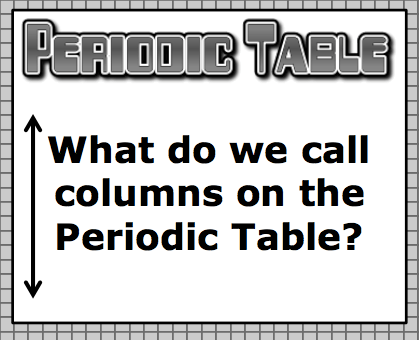
a)
Periods
b)
Groups
46.
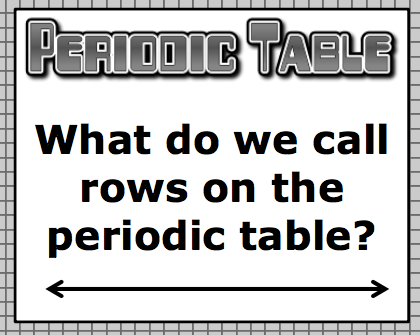
a)
Periods
b)
Groups
47.
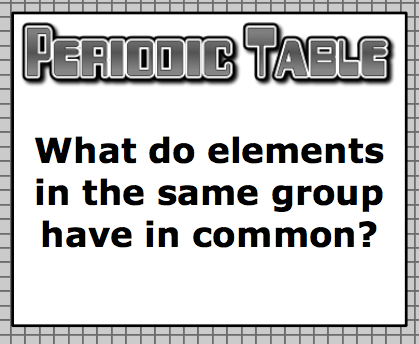
a)
energy levels
b)
valence electrons
c)
protons
d)
neutrons
48.
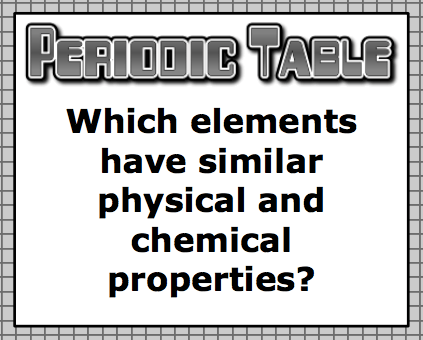
a)
Same group
b)
Same period
49.
a)
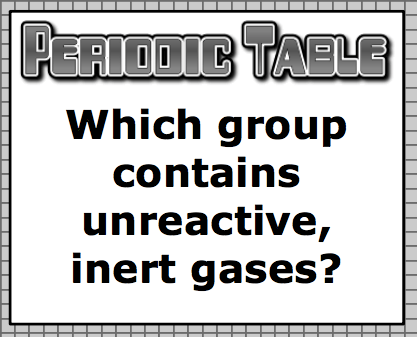
Group 1
b)
Group 17
c)
Group 2
d)
Group 18
50.
a)
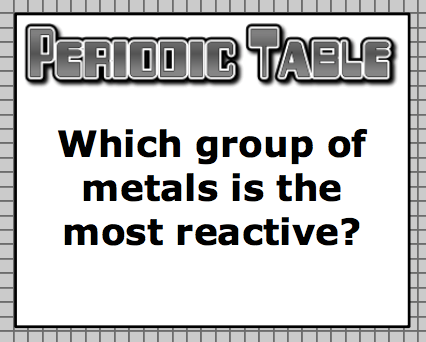
Group 1
b)
Group 17
c)
Group 18
d)
Group 2
51.
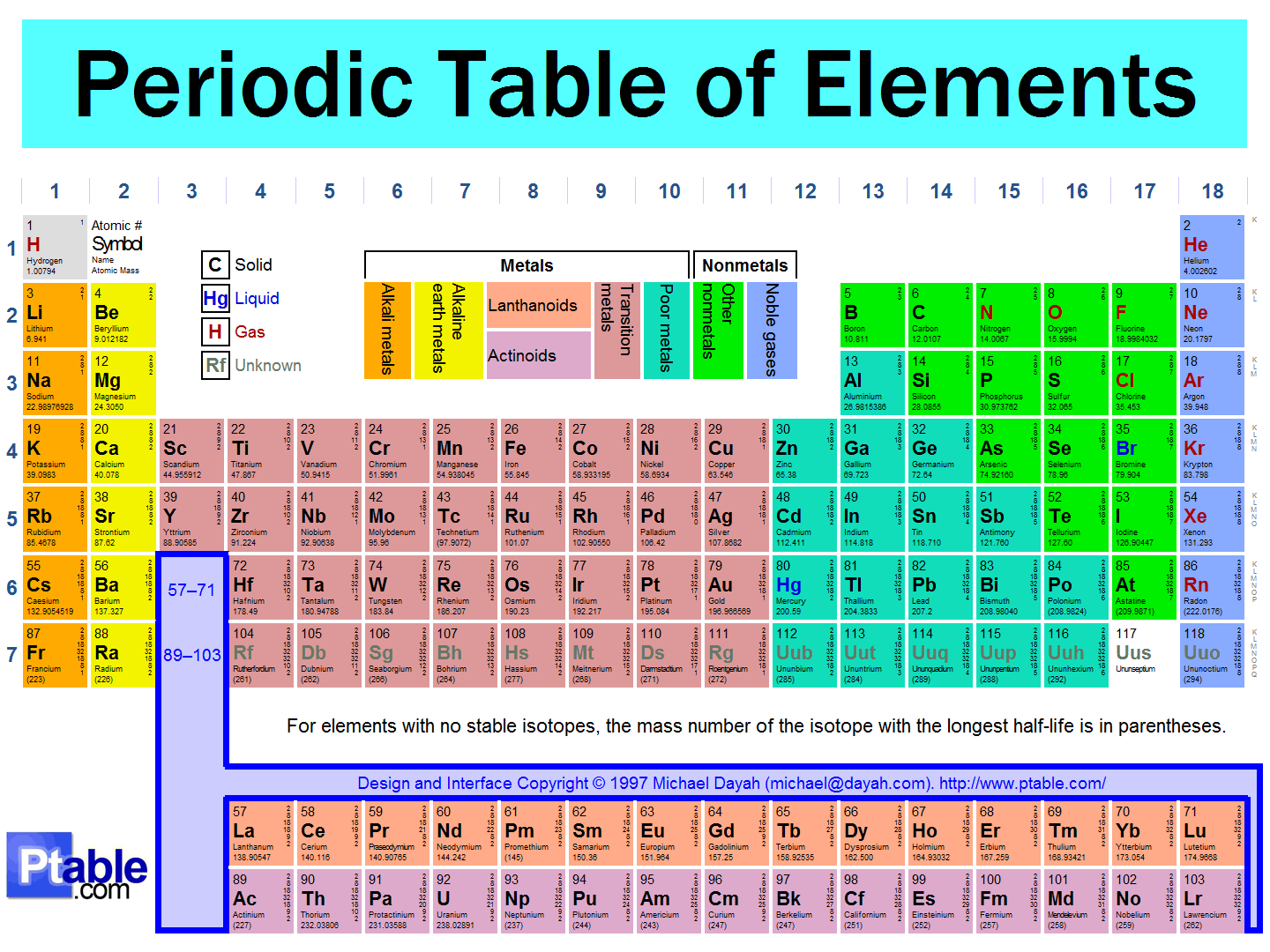
The horizontal row on the periodic table is called a
a)
group
b)
family
c)
period
d)
atomic number
52.
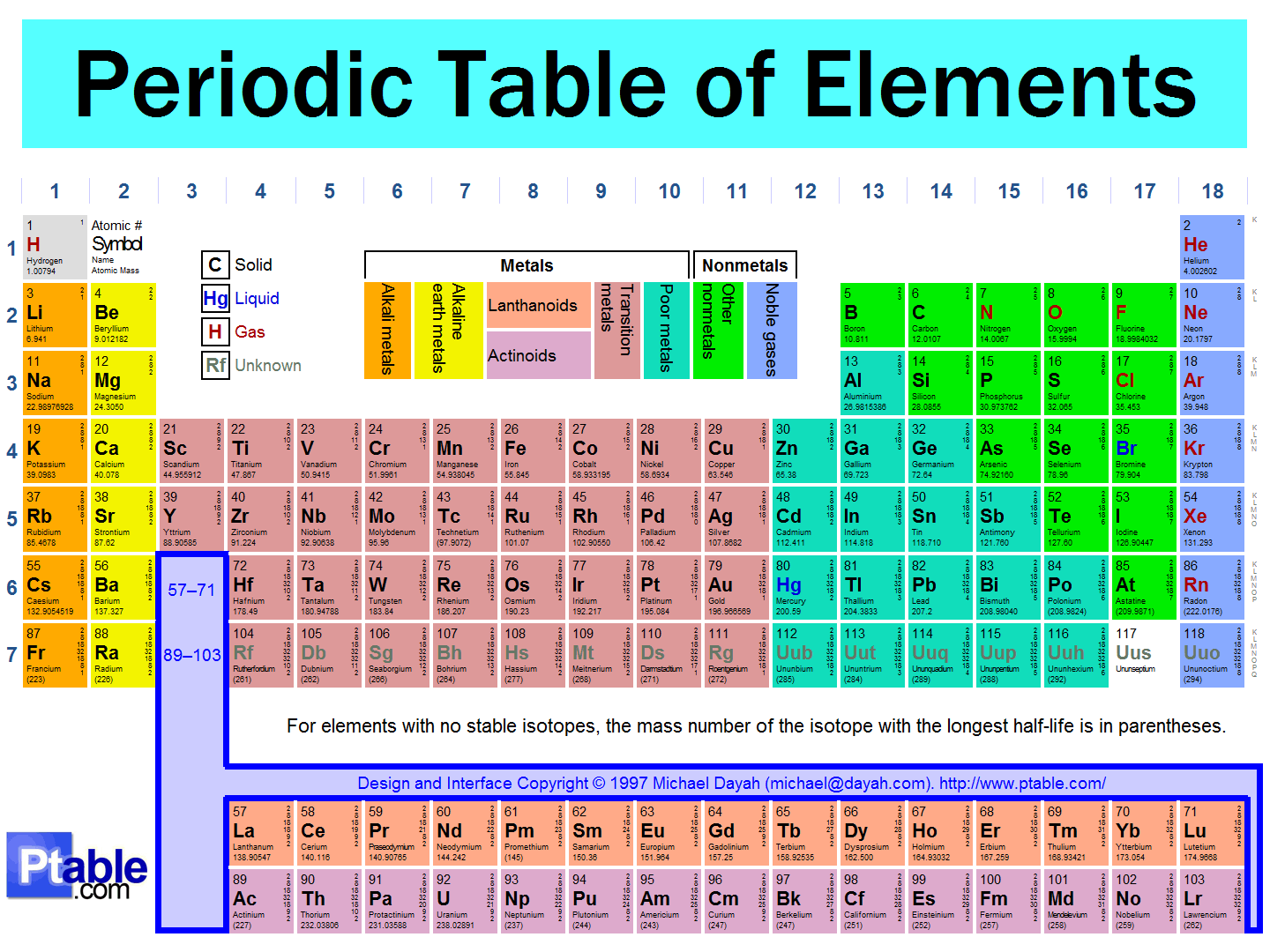
A vertical column is called...
a)
group
b)
tower
c)
period
d)
crew
53.
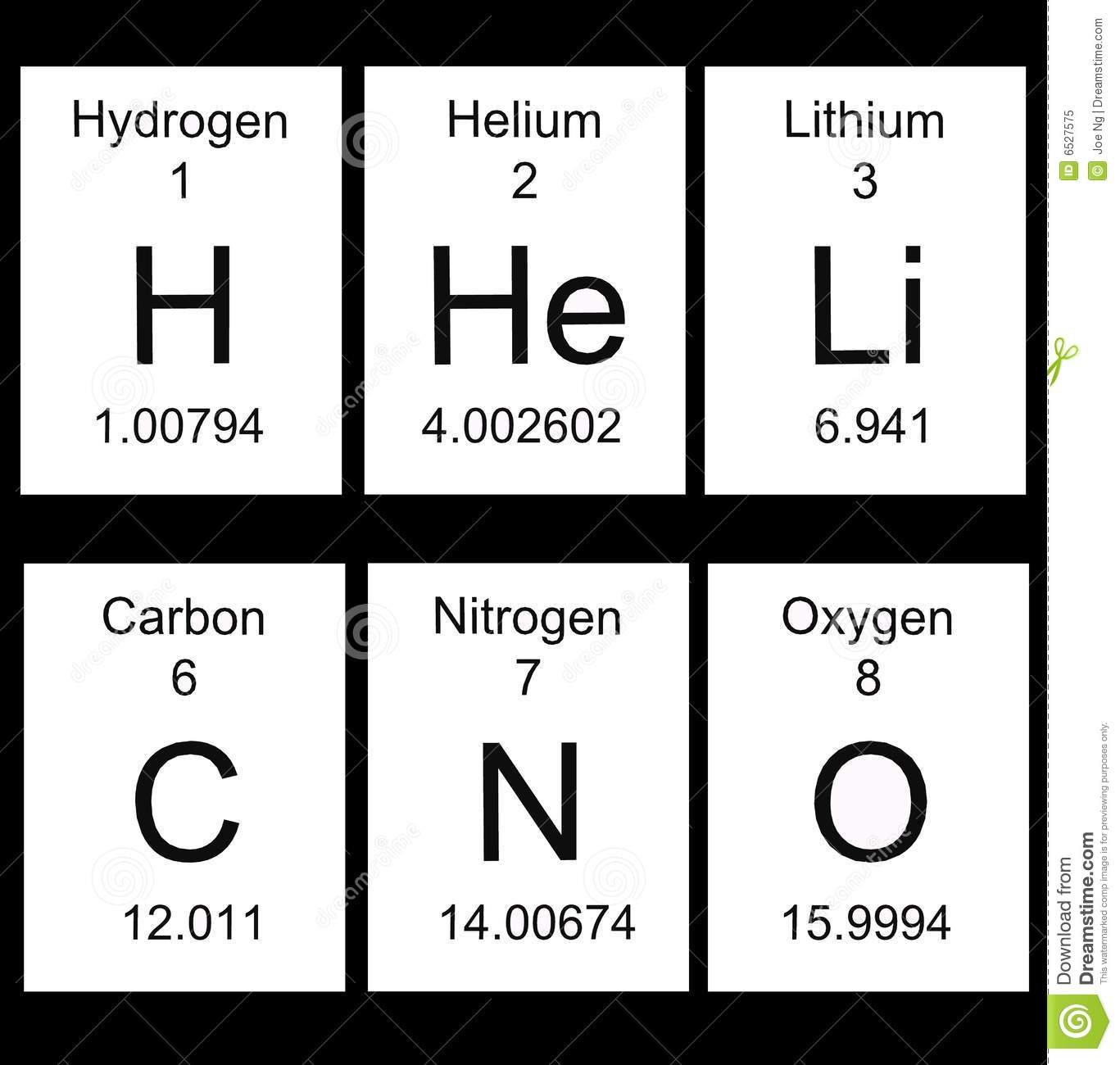
The number at the top of each square on the periodic table is the ...
a)
atomic number
b)
atomic mass
c)
Chemical Symbol
d)
Element Name
54.
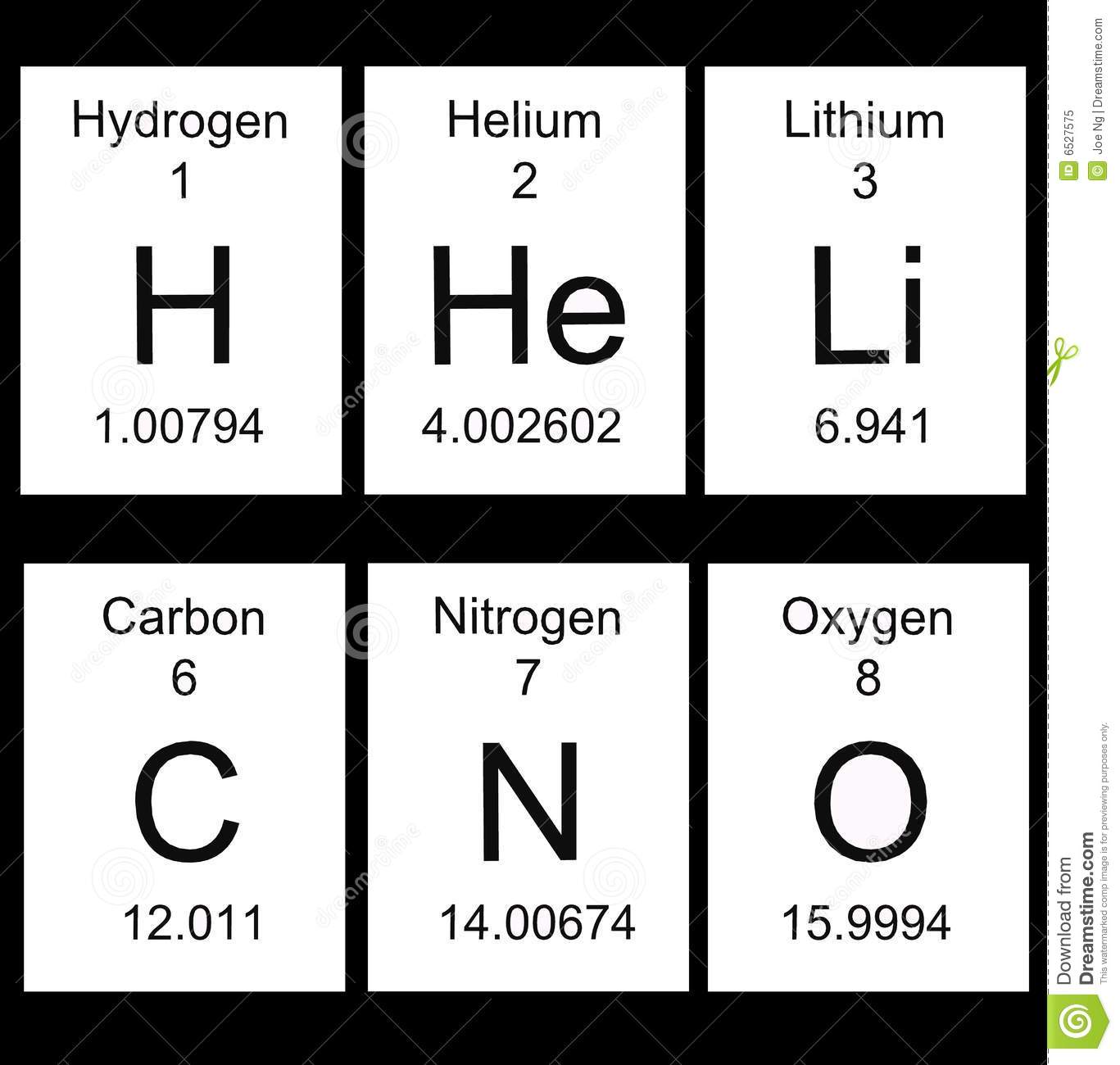
The number at the bottom of each square on the periodic table is the ...
a)
atomic number
b)
atomic mass
c)
chemical symbol
d)
element name
55.
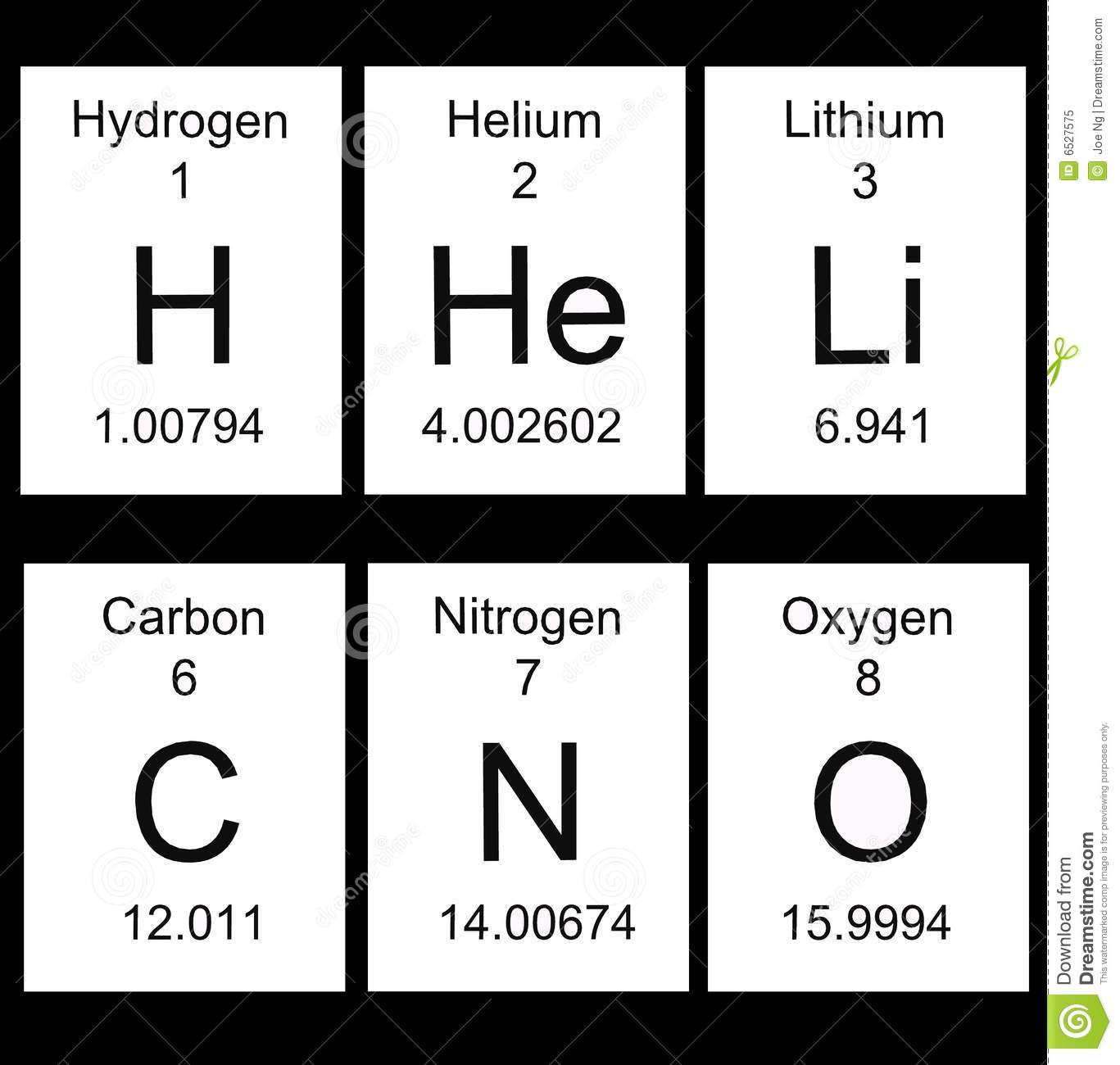
What is the chemical symbol for Lithium?
a)
H
b)
He
c)
Li
d)
N
56.
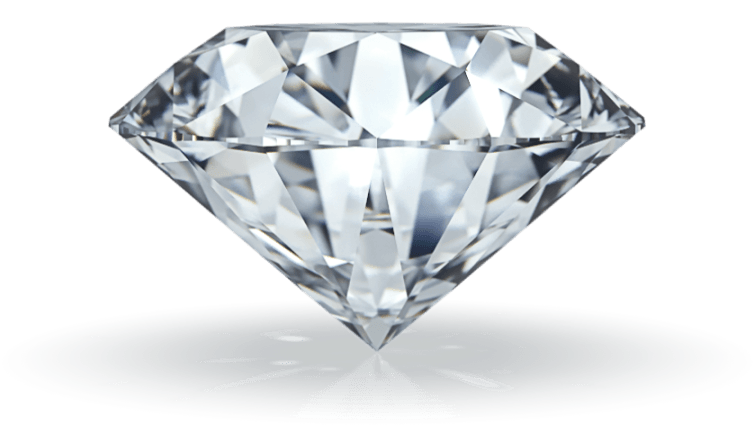
Diamonds are a pure form of what element?
a)
Carbon
b)
Oxygen
c)
Silicon
d)
Silver
57.
How can compounds be changed into simpler substances?
a)
by physical separation
b)
by chemical changes
c)
they cannot be changed
d)
by physical reactions
58.
A pure substance that cannot be broken down into other substances by chemical or physical means.
a)
compound
b)
atom
c)
mixture
d)
element
59.
A mixture that is uniform and well mixed is _____.
a)
homogeneous
b)
hetergeneous
c)
pure substance
d)
compoud
60.
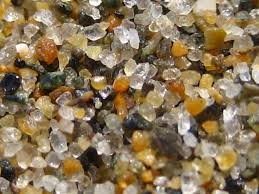
The picture shown here is what type of mixture?
a)
homogeneous
b)
hetergeneous
c)
pure substance
d)
element
61.
A pure substance made up of two or more elements that are chemically combined.
a)
compound
b)
atom
c)
mixture
d)
element
62.
The building block of matter is
a)
Mixture
b)
Atom
c)
Element
d)
Substance
63.
This is made up of one or more of the SAME kind of atom
a)
Element
b)
Mixture
c)
Compound
d)
Matter
64.
Water is an element
a)
true
b)
false
65.
This contains a variety elements and compounds that ARE NOT chemically combined.
a)
Water
b)
Mixture
66.
Copper is a mixture.
a)
True
b)
False
67.
A homogeneous mixture has the same composition of particles throughout.
a)
True
b)
False
68.
Ocean water is a __________ mixture
a)
Homogeneous
b)
Heterogeneous
69.
Alex goes into the garden and digs up a shovel full of dirt. This is a _____________ mixture.
a)
Homogeneous
b)
Heterogenous
70.

A magnet was placed near a pile that contained both iron and sulfur. The magnet was moved gradually closer to the pile. As it neared the pile, the magnet started attracting small pieces of iron from the pile.
Which of these statements best describes the contents of the pile?
Which of these statements best describes the contents of the pile?
a)
It is a heterogeneous mixture of iron and sulfur that can be separated by magnetism.
b)
It is a solution of iron and sulfur that can be separated by magnetism.
c)
It is a compound of iron and sulfur that can be separated by magnetism.
d)
It is a suspension of sulfur in iron that can be separated by magnetism.
71.
What type of substance is always made up of a single type of atom?
a)
compound
b)
mixture
c)
molecule
d)
element
72.
How could you break down the compound calcium carbonate into the elements that make it up?
a)
by melting
b)
by crushing
c)
with a filter
d)
with chemical changes
73.
Which of these substances is a compound?
a)
chlorine
b)
nitrogen
c)
uranium
d)
ammonia
74.
What is a homogeneous mixture?
a)
a mixture that is the same throughout.
b)
a mixture that is made up of one type of atom.
c)
a mixture that is made up of one type of compound
d)
a mixture that cannot be separated through physical changes
75.
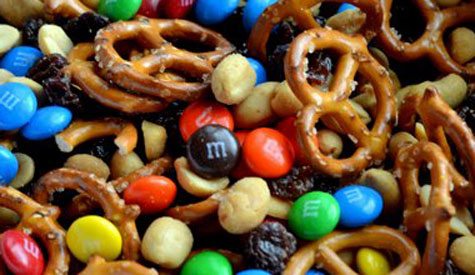
Can a mixture be separated?
a)
No
b)
Yes
c)
Only sometimes
76.
What is an example of a mixture?
a)
iron
b)
ice
c)
soil
d)
gold
77.
Carbon dioxide
a)
Pure Substance & Element
b)
Pure Substance & Compound
c)
Mixture & Homogenous
d)
Mixture & Heterogenous
78.
Carbon
a)
Pure Substance & Element
b)
Pure Substance & Compound
c)
Mixture & Homogenous
d)
Mixture & Heterogenous
79.
You are eating a pizza. What type of mixture are you consuming?
a)
homogeneous
b)
heterogeneous
c)
pure substance
d)
The Periodic Table
80.

Pepsi is a . . .
a)
Heterogeneous mixture
b)
homogeneous mixture
c)
Element
d)
Compound
81.
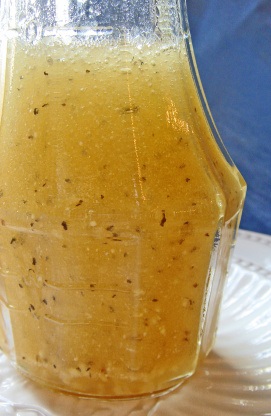
Italian Salad Dressing is a . . .
a)
heterogeneous mixture
b)
homogeneous mixture
c)
Pure Substance
d)
Compound
82.
Which of the following is an element?
a)
Sugar
b)
Salt
c)
Water
d)
Oxygen
83.
How can mixtures be separated?
a)
by chemical means
b)
by physical means
c)
by chemical reactions
d)
they cannot be broken down
84.
Combination of two or more pure substances that are not chemically combined
a)
compound
b)
atom
c)
mixture
d)
element
100 %

