
 Worksheets
Atoms
Total questions: 26
Worksheet time: 18mins
Name
Class
Date
1.
The positive particles of an atom are
a)
electrons
b)
positrons
c)
neutrons
d)
protons
2.
the central region of an atom where its neutrons and protons are is its
a)
nucleus
b)
electron cloud
c)
core
d)
center
3.
an atom with atomic number 6 would have how many protons
a)
6
b)
12
c)
3
d)
cannot be determined
4.
Particles in an atom that are neutral and have no charge are
a)
negatrons
b)
electrons
c)
neutrons
d)
protons
5.
True or False? Neutrons have a negative charge
a)
True
b)
False
6.
What is the atomic number for an element with three protons?
a)
2
b)
1
c)
3
d)
6
7.

What does the 1.00794 stand for?
a)
Hydrogen
b)
atomic number
c)
atomic mass
d)
atomic explosion
8.
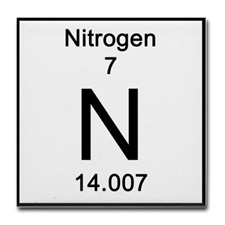
What is the number of protons that the element in this image contain?
a)
14
b)
7
c)
15
d)
18
9.
Where are electrons of an atom found?
a)
Nucleus
b)
Electron Cloud
c)
Some are in the nucleus and some in the electron cloud.
d)
They are moving everywhere.
10.
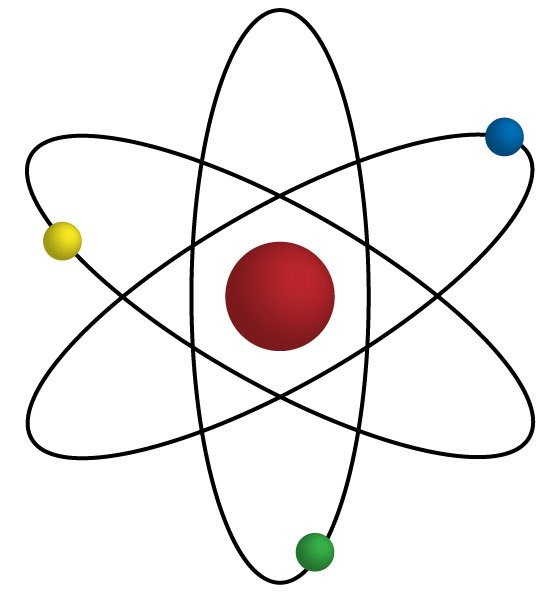
What are the 3 particles that make-up the atom?
a)
protons, neutrons, and isotopes
b)
neutrons, isotopes, and electrons
c)
positives, negatives, and electrons
d)
protons, neutrons, and electrons
11.
Water is an example of a(n)
a)
element
b)
compound
12.
Gold is an example of a(n)
a)
Element
b)
Compound
c)
Nugget
13.
A heterogeneous mixture
a)
is not evenly mixed (not uniform)
b)
is evenly mixed (uniform)
14.
A homogeneous mixture
a)
is unevenly mixed (not uniform)
b)
is evenly mixed (uniform)
15.

Cookies and cream ice cream would be classified as
a)
A homogenous mixture
b)
A heterogenous mixture
c)
An element
d)
A compound
16.

Classify type of change in matter in cooking an egg
a)
Physical Change
b)
Chemical Change
17.

4. What type of change in matter is involved in cutting a piece of ribbon?
a)
physical change
b)
chemical change
18.

5. In melting of ice, what type of change in matter will occur?
a)
Physical Change
b)
Chemical change
19.

2. Lighting a match is which type of change in matter?
a)
physical change
b)
chemical change
20.
This particle determines what element you have - the elements identity.
a)
electron
b)
proton
c)
neutron
d)
valence shell
21.
Where is the nucleus located in an atom?
a)
Near the electron shells/levels
b)
Near the center of an atom
22.

Which two subatomic particles make up the nucleus of an atom?
a)
Protons and Electrons
b)
Neutrons and Electrons
c)
Electrons and Protons
d)
Protons and Neutrons
23.

Can a mixture be separated?
a)
No
b)
Yes
c)
Only sometimes
24.
An example of a compound would be:
a)
hydrogen gas (H2)
b)
heterogeneous
c)
sodium chloride (NaCl)
d)
oxygen gas (O2)
25.
You are eating a pizza. What type of mixture are you consuming?
a)
homogeneous
b)
heterogeneous
c)
pure substance
d)
The Periodic Table
26.
Carbon falls under which category?
a)
Element
b)
Compound
c)
Mixture & Homogenous
d)
Mixture & Heterogenous
100 %

