
 Worksheets
Aquatic Ecosystems
Total questions: 12
Worksheet time: 11mins
Name
Class
Date
1.
What are areas where freshwater meets saltwater called?
a)
wetlands
b)
estuaries
c)
coastal byways
d)
intertidal zones
2.
Aquatic ecosystem that has a thin layer of water covering soil that is wet most of the time is called ____.
a)
wetland
b)
estuary
c)
lake
d)
puddle
3.
Wetlands and estuaries purify water and filter out _____.
a)
dead organisms
b)
waste products
c)
salt
d)
pollution
4.
What factors affect aquatic ecosystems?
a)
Light, salinity, temperature
b)
Sun, moon and stars
c)
Nothing
d)
Coral reefs, whales
5.
Which factor(s) affect aquatic ecosystems?
a)
depth
b)
flow
c)
nutrients
d)
all affect aquatic ecosystems
6.
Why does photosynthesis not occur in the deep ocean?
a)
Lack of nutrients
b)
Low oxygen levels
c)
Excess sunlight
d)
Sunlight does not penetrate
7.
An area where land is periodically underwater.
a)
Wetland
b)
Forest
c)
Desert
d)
Woodland
8.
Wetlands are important to fisheries in the united states because many of the fish caught each year use the wetlands for _______ and ________
a)
Dying and decaying
b)
Feeding and spawning
c)
Living and working
d)
Escaping and evading
9.
The largest freshwater marsh in the United States.
a)
Louisiana swamp
b)
Mississippi river
c)
Texas coastline
d)
Florida everglades
10.
Deep ocean technology has discovered organisms in hydrothermal vents that do not rely on sunlight to survive. What do these organisms use as their energy source?
a)
chemosynthesis
b)
electrical charge
c)
hydropower
d)
thermal heat
11.
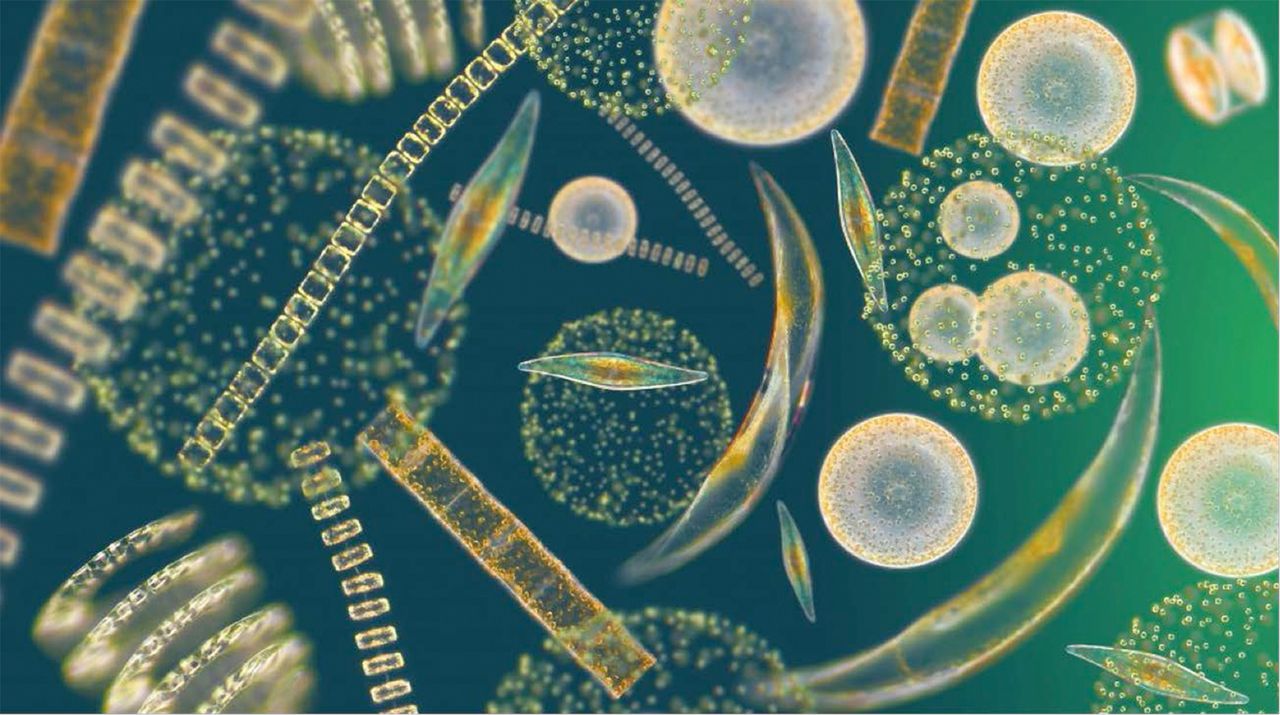
Plankton that uses photosynthesis:
a)
Phytoplankton
b)
Zooplankton
12.

Which of the following are producers in the food web?
a)
Phytoplankton and seaweed
b)
Phytoplankton and zooplankton
c)
Squid and Elephant Seal
d)
Seaweed and Crabs
100 %

