
NEW
Font size
S
M
L
XL
 Worksheets
7th Grade Science
Total questions: 71
Worksheet time: 1hrs 5mins
Name
Class
Date
1.
What is the water cycle?
a)
the 3 forms of water
b)
the movement of water on, above, or below the surface of the Earth
c)
when water melts
d)
when clouds form
2.

What part of the water cycle does this picture show?
a)
condensation
b)
precipitation
c)
evaporation
3.
Which of these is an example of precipitation?
a)
snow
b)
air
c)
clouds
d)
vapor
4.

Where are the three smallest bones in your body found?
a)
outer ear
b)
middle ear
c)
inner ear
d)
eye
5.

Where on the periodic table are the metalloids found?
a)
Right Side
b)
Along the Zig Zag Line
c)
Right Side
6.
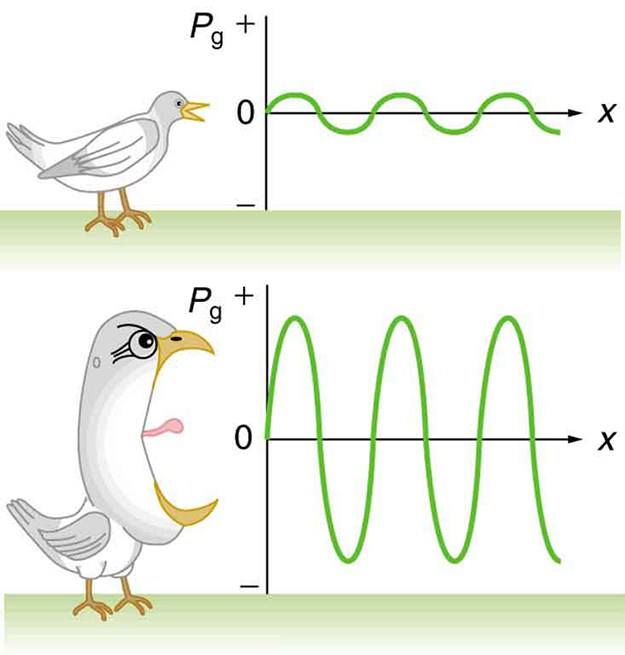
When a sound is louder what measurement gets bigger?
a)
Frequency
b)
Amplitude
c)
Wavelength
d)
Crest
7.
Which is the opposite of condensation?
a)
runoff
b)
evaporation
c)
precipitation
d)
transpiration
8.
Snow, sleet, hail, and rain are all examples of ________________.
a)
evaporation
b)
condensation
c)
accumulation
d)
precipitation
9.

What does groundwater do?
a)
It sends water to our buildings, houses, and water transplant places
b)
to the sky
c)
to the sun
d)
To the Earth's surfaces
10.

What is it called when plants give off water vapor as a waste product?
a)
condensation
b)
evaporation
c)
sublimation
d)
transpiration
11.
Particles in an atom that are neutral and have no charge are
a)
negatrons
b)
electrons
c)
neutrons
d)
protons
12.
Where does HEARING (interpreting the nerve impulses) take place?
a)
outer ear
b)
middle ear
c)
inner ear
d)
brain
13.
When water _________, dew forms.
a)
Melts
b)
Evaporates
c)
Condenses
d)
Precipitates
14.
The part of the ear that is shaped like a snail shell is the ________________.
a)
eustachian tube
b)
cochlea
c)
eardrum
d)
semi-circular canal
15.

Does the size of the solar panel affect how much sun light is taken in?
a)
Yes
b)
No
c)
It depends if the panel is made from something else
d)
Yes, no, maybe so
16.
Which color has the longest wavelength?
a)
red
b)
violet
c)
white
d)
blue
17.
If the number of protons equal the number of _____, the atom will have no charge
a)
protons
b)
neutrons
c)
electrons
d)
nucleus
18.
Which color has the shortest wavelength?
a)
red
b)
violet
c)
black
d)
white
e)
yellow
19.
During a chemical reaction, atoms are NOT
a)
Rearranged
b)
Created
c)
Broken
d)
Growing
20.
When all wavelengths of light are being absorbed we see?
a)
red
b)
violet
c)
black
d)
white
e)
blue
21.
When all colors are being reflected we see?
a)
black
b)
white
c)
yellow
d)
red
22.
The smallest particle of any particular type of matter is known by which of the following terms?
a)
Compound
b)
Atom
c)
Chemical
d)
Element
23.
% of sun's energy reflected into space
a)
51%
b)
19%
c)
30%
24.
If an atom has 3 electrons, how many protons does it have?
a)
1
b)
2
c)
4
d)
3
25.
Spectrum that is able to be seen by the human eye
a)
infrared
b)
ultraviolet
c)
visible light
d)
all three
26.
Sun burn is caused by this
a)
infrared
b)
ultraviolet
c)
visible light
d)
all three mentioned
27.

Does solar power power come from the sun?
a)
Yes
b)
No
28.
Rainbow demonstrates this
a)
infrared
b)
ultraviolet
c)
visible light
d)
all three mentioned
29.
Which absorbs and releases heat the quickest?
a)
water
b)
land
c)
they are the same
30.
Choose a greenhouse gas
a)
carbon dioxidie
b)
oxygen
c)
nitrogen
31.
% of sun's energy absorbed on Earth
a)
51%
b)
30%
c)
19%
32.

A student placed a pencil in a cup of water. The pencil appears broken because light-
a)
always travels in a straight line
b)
bends when it passes through water
c)
makes the water in the glass evaporate
d)
reflects the pencil on the water's surface
33.
An atom with an unequal number of protons and electrons is said to have (a) ___.
a)
no charge
b)
balance
c)
charge
d)
unbalance
34.
Which of the following is a PRODUCT of photosynthesis?
a)
Oxygen
b)
Carbon dioxide
c)
Water
d)
Light
35.
Highest point of a wave
a)
crest
b)
trough
c)
wavelength
d)
frequency
36.
Solar Energy is a nonrenewable resource.
a)
True
b)
False
37.
Melting Ice
a)
Chemical Change
b)
Physical Change
38.
The frequency range of hearing for a human is __________________________.
a)
16-20,000 hertz
b)
20-20,000 hertz
c)
50-20,000 hertz
d)
100-33,000 hertz
39.

Where would you put a solar panel?
a)
On your house
b)
Throw it into the sun
c)
On your window
d)
Where sunlight can reach it
40.

What is solar energy's second use
a)
making food
b)
melting metal
c)
photosynthesis
d)
Baking a cake...(only on Thursdays)
41.
CO2
a)
Element
b)
Compound
42.

Why is solar energy considered a renewable energy source?
a)
You can get money back from the government if you put solar panels on your house
b)
Solar energy is cheaper than fossil fuels
c)
The sun's energy will not run out for billions of years
d)
Solar energy can be used to recharge batteries
43.

What is the main reason why we all don't use solar energy?
a)
They don't work at night
b)
On cloudy days we would need backup or storage systems which is expensive and some areas so not receive sun
c)
They can't be transported to many places
d)
They are exclusive to only certain countries
44.
A physical property can be observed by _________________.
a)
burning the substance
b)
changing the chemical identity of a substance
c)
using the senses
d)
placing the substance in acid
45.
H2O
a)
Element
b)
Compound
46.

People in some parts of the world cannot get enough clean water because
a)
there is not enough water
b)
they have no way to bring the water to the people
c)
there is not enough money for treatment plants
d)
all of these
47.
What does pitch depend on?
a)
amplitude
b)
frequency
c)
intensity
d)
volume of sound
48.
Which part of the ear is responsible for capturing sound and moving it into your ear?
a)
outer ear
b)
middle ear
c)
inner ear
d)
eardrum
49.
The ear functions for ___________.
a)
balance
b)
hearing
c)
both balance and hearing
50.
Signs that a chemical change has occurred include
a)
a change in color
b)
the release of bubbles
c)
the production of an odor
d)
all of the above
51.
All the elements on the left side of the periodic table are called..
a)
Metals
b)
Metalloid
c)
Nonmetals
52.
A substance that is made up for one type of atom is called an:
a)
atom
b)
element
c)
compound
d)
mixture
53.
In the compound 2H2, the H stands for
a)
Helium
b)
Hydrogen
c)
Herculineum
54.

Nonmetals are located in what section of this periodic table?
a)
Blue
b)
Yellow
c)
Pink
55.
Burning a piece of paper
a)
Chemical Change
b)
Physical Change
56.
Mixing salt and water
a)
Chemical Change
b)
Physical Change
57.
Milk turning sour
a)
Chemical Change
b)
Physical Change
58.
What is the symbol for chlorine?
a)
C
b)
Ch
c)
Ce
d)
Cl
59.
A bar of gold is made of only one ______
a)
Plasma
b)
Mixture
c)
Element
d)
Compound
60.
which of the following is an example of a physical change?
a)
a car rusting
b)
cutting a piece of wood
c)
acid rain corroding a barn door
d)
water seperating into hydrogen and oxygen atoms.
61.
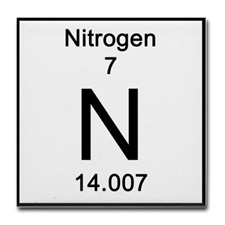
What is the number of protons that the element in this image contain?
a)
14
b)
7
c)
15
d)
18
62.
the central region of an atom where its neutrons and protons are is its
a)
nucleus
b)
electron cloud
c)
core
d)
center
63.
Is melting butter for popcorn a chemical or physical change?
a)
chemical
b)
physical
64.
When you break a cracker into pieces it is a
a)
Chemical change
b)
Physical change
c)
Chemical Weathering
d)
Physical Weathering
65.

How many atoms of Hydrogen are in this compound
a)
1
b)
2
c)
3
d)
4
66.
What is the function of ATP in living things?
a)
provides energy for cells
b)
stores genetic information
c)
provides structure in the nucleus
67.
Energy is released from ATP when
a)
a phosphate group is added
b)
adenine bonds to ribose
c)
ATP is exposed to sunlight
d)
a phosphate group is removed
68.
Which cellular organelle is responsible for manufacturing ATP?
a)
Ribosome
b)
Nucleus
c)
Mitochondria
d)
Chloroplast
69.
Muscles use a lot of cellular energy because they are highly functional. Which organelle would be in abundant to provide that energy?
a)
Nucleus
b)
Endoplasmic
c)
Vacuole
d)
Mitochondria
70.
What does the "TP" in ATP stand for?
a)
2 phosphates
b)
tri (3) phosphates
c)
Two proteins
d)
tri (3) proteins
71.

What is the source of energy for photosynthesis?
a)
carbohydrates-chemical
b)
sunlight
c)
heat-thermal
d)
electrical
Reset

