
Font size
S
M
L
XL
 Worksheets
Cummulative Science Quiz
Total questions: 139
Worksheet time: 3hrs 47mins
Name
Class
Date
1.
Which of the following energy transformations occur when a lamp that is plugged into a wall socket is functioning correctly?
a)
Chemical to light
b)
Electrical to chemical
c)
Electrical to light
d)
Chemical to electrical
2.
What energy transformations take place when a battery-operated radio is in use?
a)
Electrical to chemical to light
b)
Sound to chemical to mechanical
c)
Chemical to electrical to sound
d)
Light to electrical to thermal
3.
Which of the following best describes the energy transformations that occur when a flashlight that runs on batteries is turned on?
a)
chemical to electrical to light
b)
light to electrical to sound
c)
chemical to light to electrical
d)
electric to light to chemical
4.
Stored energy is another name for
a)
kinetic energy
b)
thermal energy
c)
potential energy
d)
sound energy
5.
The sun’s energy used by green plants to produce food is an example of light energy being converted to what other form of energy?
a)
kinetic energy
b)
heat energy
c)
mechanical energy
d)
chemical
6.
A stretched out rubber band can be classified as all of the following except
a)
Elastic potential
b)
Kinetic
c)
Potential
7.
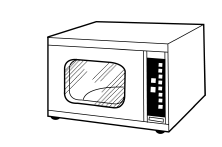
The picture shows a microwave oven. As a microwave oven is operated, electrical energy is transformed into all of the following types of energy EXCEPT —
a)
solar
b)
light
c)
thermal
d)
mechanical
8.

The Law of Conservation of Energy states energy cannot be gained or lost but only transformed.
a)
True
b)
False
9.

At which point is kinetic energy greatest
a)
W
b)
X
c)
Y
d)
Z
10.

At which point is potential energy greatest
a)
W
b)
X
c)
Y
d)
Z
11.
Patty lifts a plate into a kitchen cabinet to put it away. What type of energy is store in the plate as it sits in the cabinet?
a)
1. kinetic energy
b)
2. solar energy
c)
3. sound energy
d)
4. potential energy
12.

A rock at the edge of a cliff.
a)
Potential
b)
Kinetic
13.

Electrical Energy is transferred to _____ Energy.
a)
Thermal
b)
Solar
c)
Electrical
d)
None
14.

A basketball passing through the hoop.
a)
Potential
b)
Kinetic
15.

The purpose of the panels is to change solar energy into ____________.
a)
light energy
b)
electrical energy
c)
chemical energy
d)
mechanical energy
16.

When you eat pizza, Chemical Energy is transferred to _____ Energy.
a)
Solar
b)
Electrical
c)
Mechanical
d)
Chemical
17.

Which energy conversion is taking place when you put gasoline in a car?
a)
thermal -> electrical
b)
mechanical -> electrical
c)
chemical -> mechanical
d)
mechanical -> electromagnetic
18.
According to the Law of Conservation of Energy, energy cannot be _________ or ____________.
a)
destroyed, destroyed
b)
created, saved
c)
created, destroyed
d)
lost, found
19.
When a soccer ball is on a field, the energy it has just before being kicked is called
a)
kinetic energy
b)
potential energy
c)
mechanical energy
d)
chemical energy
20.

A student listens to music with a digital music player, similar to the one shown below. Which best describes the energy transformations that take place in the music player?
a)
Mechanical to chemical to electrical
b)
Chemical to sound to electrical
c)
Chemical to electrical to sound
d)
Electrical to heat to sound
21.
A car moving down the road is an example of
a)
Potential
b)
Kinetic
22.
Mrs. Tolson's students are complaining that it is hot in the classroom. She plugs in the fan and turns it on, which energy transformation occurs?
a)
mechanical to electrical
b)
electrical to mechanical
c)
chemical to mechanical
d)
electromagnetic to mechanical
23.

Which skier will have a greater potential energy?
a)
Skier 1
b)
Skier 2
24.
The type of energy that moves objects is...
a)
Thermal Energy
b)
Sound Energy
c)
Mechanical Energy
d)
Chemical
25.
Energy causes ___________ to occur.
a)
change
b)
motion
c)
age
d)
laziness
26.
How many different elements are in this chemical formula: C2H2ClK3
a)
6
b)
8
c)
2
d)
4
27.
How many different elements are in this chemical formula: C2H2ClK3
a)
6
b)
8
c)
2
d)
4
28.
Which of the following atomic symbols is written correctly?
a)
ee
b)
hE
c)
C
d)
CL
29.
Which of the following is a pure substance?
a)
CO
b)
C02
c)
Co
d)
H2O
30.

What is gold?
a)
element
b)
compound
c)
mixture
31.

What is water?
a)
element
b)
compound
c)
mixture
32.
What is water?
a)
element
b)
compound
c)
mixture
33.

When two or more elements chemically combine
a)
element
b)
compound
c)
mixture
d)
solution
34.
Which one can be found on the periodic table?
a)
Compound
b)
Element
35.
_________ is a pure substance that cannot be broken down into simpler substances.
a)
element
b)
molecule
c)
compound
d)
mixture
36.
___________ is the place where known elements are represented.
a)
compound
b)
element
c)
Periodic Table of Elements
d)
Silicon
37.
Which element is one of the most abundant in both solid parts of Earth and in living matter?
a)
Carbon
b)
Oxygen
c)
Nitrogen
d)
Phosphorus
38.
Which of these grouping of elements could have the characteristic of brittle?
a)
Metal
b)
Nonmetal
39.
Which of the following is a good conductor of heat?
a)
Metal
b)
Nonmetal
c)
Metalloid
40.
Which of these is a property of metals?
a)
It's malleable
b)
It can't conduct electricity
c)
They are used in food
d)
It's very brittle
41.
Which of the following properties refers to the ability of metals to be drawn into wires?
a)
A. malleability
b)
B. compressibility
c)
C. ductility
d)
D. luster
42.
Which of the following property of metal can reflect light
a)
A. malleability
b)
B. compressibility
c)
C. ductility
d)
D. luster
43.
If a substance breaks easily, it is said to be ________________.
a)
A. Magnetic
b)
B. Brittle
c)
C. Conductive
d)
D. Ductile
44.
Metals appear to the _______ of the dark ziz-zag line on the periodic table.
a)
A. right
b)
B. middle
c)
C. left
45.
Nonmetals occur to the ________of the dark zig-zag on the periodic table.
a)
A. right
b)
B. middle
c)
C. left
46.
What does malleable mean?
a)
able to bend
b)
will break easily
c)
can be used for wire
d)
is shiny
47.
What does ductile mean?
a)
electricity flows easily
b)
quacks like a duck
c)
can be drawn into a wire
d)
able to bend
48.

How would this element be classified?
a)
Metal
b)
Nonmetal
c)
Metalloid
d)
Metamorphic
49.
Silicon is a semiconductor and has properties of both metals and nonmetals. What type of element is Silicon?
a)
Metal
b)
Nonmetal
c)
Metalloid
d)
Pretty
50.
Which type of elements touch the zigzag line?
a)
Metals
b)
Nonmetals
c)
Metalloids
d)
Metals and Metalloids
51.
´Elizabeth was examining elements and their physical properties. She described an element is her science journal as having no shine, an insulator, and very brittle. What would this element be a metal, nonmetal, or metalloid?
a)
metal
b)
nonmetal
c)
metalloid
52.

Which is NOT property of metals?
a)
brittleness
b)
conductivity
c)
ductility
d)
luster
53.
Insulators
a)
Metals
b)
Nonmetals
c)
Metalloids
54.
A student is given a sample of an unknown substance. He is asked to determine if it is classified as a metal, a metalloid, or a nonmetal. He discovered that the unknown element conducted some heat and electricity, had a shiny luster, and broke easily. This element is most likely a
a)
metal
b)
nonmetal
c)
metalloid
d)
cannot be determined
55.

Some students conducted a laboratory investigation to learn more about the physical properties of different elements. They observed four samples and recorded their observations in the table . Based on these observations, which sample is most likely a nonmetal?
a)
Sample 1
b)
Sample 2
c)
Sample 3
d)
Sample 4
56.
What is the element name of this symbol Na?
a)
A. Nitrogen
b)
B. Neon
c)
C. Sodium
d)
D. Sulfur
57.
What is the element name of this symbol K?
a)
A. Phosphorus
b)
B. Potassium
c)
C. Sodium
d)
D. Magnesium
58.
What is the symbol for Helium?
a)
A. He
b)
B. H
c)
C. Be
d)
D. Na
59.
What is the element name of this symbol K?
a)
A. Phosphorus
b)
B. Potassium
c)
C. Sodium
d)
D. Magnesium
60.
Which of the following is a sign that a chemical reaction has occurred?
a)
change in shape
b)
melting
c)
formation of a gas
d)
dissolving
61.
Is hammering wood together to build a house a chemical or physical change?
a)
chemical
b)
physical
62.
A change in the size, shape, or state of matter.
a)
chemical change
b)
physical change
c)
chemical reaction
d)
electron change
63.
Which of the following is NOT an example of a physical change?
a)
crumpled paper
b)
pencil sharpening
c)
shrunken clothing
d)
sour milk
64.
Kim puts an ice cube in a beaker and it melts. This is a good example of:
a)
a physical change.
b)
a chemical change.
c)
an experiment.
d)
an analysis.
65.
what is the definition of chemical change?
a)
any change that results in the formation of new chemical substances.
b)
changing clothes
c)
matter cannot be created or destroyed, only change form
d)
changes affecting the form of a chemical substance, but not its chemical composition.
66.
Energy due to motion is ____________ energy.
a)
Potential
b)
Energy
c)
Kinetic
d)
Friction
67.
__________ is stored energy.
a)
Potential
b)
Kinetic
c)
None of the above
d)
All of the above
68.

What kind of energy is in flowerpot sitting on a windowsill?
a)
Potential
b)
Kinetic
69.
Energy can not be created or destroyed, only converted from one form to another.
a)
true
b)
false
70.

What kind of energy does this device use?
a)
Chemical
b)
Electrical
c)
Mechanical
d)
Nuclear
71.

A battery converts what type of energy to another?
a)
sound to kinetic
b)
light to heat
c)
mechanical to electrical
d)
chemical to electrical
72.

At which point is potential energy greatest?
a)
W
b)
X
c)
Y
d)
Z
73.

What type of energy is in this picture?
a)
Kinetic
b)
Potential
c)
Chemical
d)
Sound
74.

What kind of energy is represented in this picture?
a)
Thermal
b)
Potential
c)
Nuclear
d)
Mechanical
75.
On a roller coaster, where is maximum kinetic energy?
a)
At the bottom of a big hill
b)
When going around a corner
c)
When going upside down
d)
At the top of a big hill
76.
The ability to do work is
a)
power
b)
energy
c)
thermal
d)
kinetic
77.
Energy stored in food and fuels
a)
Gravitational potential energy
b)
Chemical Potential Energy
c)
Elastic Potential Energy
d)
Energy
78.
A cell phone battery dies. It gets plugged into an electrical outlet to recharge. Which of the following energy transformations occur during the charging?
a)
mechanical to chemical
b)
electrical to solar
c)
chemical to light
d)
electrical to chemical
79.
Mr. Frohmberg thinks its too hot in the classroom. He plugs in a fan and turns it on, what energy transformation now occurs?
a)
mechanical to electrical
b)
electrical to mechanical
c)
chemical to mechanical
d)
electromagnetic to mechanical
80.
A student listens to music with a digital music player, similar to the one shown below. Which best describes the energy transformations that take place in the music player?
a)
Mechanical to chemical to electrical
b)
Chemical to sound to electrical
c)
Chemical to electrical to sound
d)
Electrical to heat to sound
81.
Electrical -> Mechanical -> Sound
a)
A triple beam balance measuring an object’s mass
b)
A pencil sharpener plugged into a wall outlet
c)
A projector displaying a diagram on the screen
d)
A working flashlight used to light up a dark corner
82.
Inside a power plant, coal is burned to produce hot gases. What type of energy conversion takes place as hot gases cause turbines to move?
a)
Thermal energy to chemical energy
b)
Thermal energy to kinetic energy
c)
electrical energy to kinetic energy
d)
Kinetic energy to thermal energy
83.
What kind of energy comes from the Sun?
a)
chemical
b)
electrical
c)
solar
d)
mechanical
84.

What kind of energy does the plate in a microwave need in order to spin?
a)
mechanical
b)
electromagnetic
c)
chemical
d)
thermal
85.

What do we call a change from one form of energy to another?
a)
Energy change
b)
Energy transformation
c)
Energy conversion
d)
Energy creation
86.
The inclined plane makes work easier by _____ the amount of effort that must be applied to raise or lower a load.
a)
increasing
b)
accelerating
c)
reducing
d)
softening
87.

Students pulled the same mass up an inclined plane that was 20 cm, 30 cm, and 40 cm long. Each time, they used a spring scale to measure the force needed to pull the mass up the inclined plane. What did they conclude?
a)
Less force was needed on the 20 cm plane
b)
More force was needed on the 40 cm inclined plane.
c)
The least amount of force was needed on the 40 cm inclined plane.
d)
The least amount of force was needed on the 30 cm inclined plane.
88.

The longer the inclined plane, the ___________________ to move the object
a)
the less input force you need
b)
the more input force you need
c)
the more output force you need
d)
the less output force you need
89.
A motorcycle, a car and a bicycle, and a truck are moving at the same speed. Which one has the least kinetic energy?
a)
motorcycle
b)
car
c)
bicycle
d)
truck
90.

An apple hanging from the branch of a tree falls down. How does its energy change as it falls?
a)
The kinetic energy of the apple converts to potential energy.
b)
The potential energy of the apple coverts to kinetic energy.
c)
The kinetic energy of the apple remains constant.
d)
The potential energy of the apple remains constant.
91.
Which of the following decreases when an object is moved using an inclined plane?
a)
The distance the object moves.
b)
The pull of gravity on the object.
c)
The force needed to move the object.
d)
The amount of space the object occupies.
92.

Which of the following has the greatest potential energy?
a)
A
b)
B
c)
C
d)
D
93.

At which point will the skater have the least potential energy?
a)
Point A
b)
Point B
c)
Point C
d)
Point A and C
94.

Which point has the most kinetic energy?
a)
D
b)
E
c)
C
d)
F
95.

At which point is potential energy greatest?
a)
W
b)
X
c)
Y
d)
Z
96.

At which point is kinetic energy greatest?
a)
W
b)
X
c)
Y
d)
Z
97.

At what position would a cyclist have the most kinetic energy?
a)
A
b)
B
c)
D
d)
F
98.
As a boulder rolls from the top of the hill to the bottom, how does its potential and kinetic energy change?
a)
Potential and kinetic energy both increase
b)
Potential increaes and kinetic decreases
c)
Potential decreases and kinetic increases
d)
Potential and kinetic energy both decrease
99.

How does a single fixed puled, like the one seen here, help you do work?
a)
changes the direction of the force
b)
increases the amount of applied force
c)
decreases the amount of applied force
d)
allows you to pull the rope a shorter distance
100.
What does a pulley system do?
a)
Forces two objects to split
b)
Changes an objects speed
c)
Changes an objects velocity
d)
Changes the direction of the pull used to lift the load
101.
What is a disadvantage of using an inclined plane to lift a heavy object?
a)
The object must be moved a greater distance.
b)
It takes less effort to move the object.
c)
Many objects are difficult to lift straight up.
d)
Heavy object usually take up more space.
102.

Calculate the average speed (in meter/sec) if a cheetah runs 180 meters in 10 seconds.
a)
198 m/sec
b)
170 m/sec
c)
12 m/sec
d)
18 m/sec
103.
A distance vs. time graph shows an object's
a)
frame of reference
b)
speed
c)
acceleration
d)
favorite food
104.

Total distance divided by total time is
a)
average speed
b)
constant speed
c)
instantaneous speed
d)
acceleration
105.

What is happening at A?
a)
Stationary
b)
Accelerating
c)
Slower steady speed; moving away from the starting position
d)
Steady speed; returning to start position
106.

What is happening at D?
a)
Stationary
b)
Accelerating
c)
Fast steady speed; moving away from the starting position
d)
Slower steady speed; moving away from the starting position
107.

How long did it take this object to travel 10 m?
a)
0 s
b)
10 s
c)
15 s
d)
20 s
108.
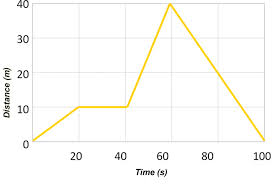
How long did it take this object to travel back to its reference/starting point?
a)
20 s
b)
30 s
c)
60 s
d)
100 s
109.
The part of the earth that includes the crust and the upper mantle and is split into tectonic plates is the
a)
lithosphere
b)
crust
c)
asthenosphere
d)
mantle
110.
The hottest layer
a)
crust
b)
inner core
c)
mantle
d)
outer core
111.
The coolest layer
a)
crust
b)
inner core
c)
mantle
d)
outer core
112.
The thinest layer
a)
crust
b)
inner core
c)
mantle
d)
outer core
113.
The thickest layer
a)
crust
b)
inner core
c)
mantle
d)
outer core
114.
The least dense layer
a)
crust
b)
inner core
c)
mantle
d)
outer core
115.
The most dense layer
a)
crust
b)
inner core
c)
mantle
d)
outer core
116.
This layer is completely liquid
a)
crust
b)
inner core
c)
mantle
d)
outer core
117.
This layer is a mix between solid and liquid
a)
crust
b)
inner core
c)
mantle
d)
outer core
118.
This layer is completely solid due to the intense pressure it is under
a)
crust
b)
inner core
c)
mantle
d)
outer core
119.
This layer is solid
a)
crust
b)
asthenosphere
c)
mantle
d)
outer core
120.
Supporting Evidence: fossils, continent shape, landforms
a)
Continental Drift
b)
Seafloor Spreading
c)
Plate Tectonics
121.
Supporting Evidence: subduction, earthquakes, volcanoes, Mid-Atlantic Ridge, older theories
a)
Continental Drift
b)
Seafloor Spreading
c)
Plate Tectonics
122.
The theory stating the continents were once joined in a large mass that broke apart.
a)
Continental Drift
b)
Seafloor Spreading
c)
Plate Tectonics
d)
Pangaea
123.
The theory that states that the Earth is divided into plates that float and move in slow, constant motion.
a)
Continental Drift
b)
Seafloor Spreading
c)
Plate Tectonics
d)
Tectonic Plates
124.
The circular pattern of heating, rising, cooling, sinking of magma in the mantle causing tectonic plates to move.
a)
Plate Tectonics
b)
Convection Currents
c)
Pangaea
d)
Subduction
125.
Volcanoes are most often formed at this boundary.
a)
Divergent
b)
Convergent
c)
Normal
d)
Transform
126.
The Mid-Atlantic Ridge is formed at this boundary.
a)
Divergent
b)
Convergent
c)
Normal
d)
Transform
127.
There are 3 types of crust.
a)
True
b)
False
128.
Which type of rock results from melting and cooling of magma?
a)
Igneous
b)
Metamorphic
c)
Sedimentary
d)
Extrusive
129.
Which type of rock forms from extreme heat and pressure?
a)
Igneous
b)
Sedimentary
c)
Organic
d)
Metamorphic
130.
Which type of igneous rock forms above ground?
a)
Intrusive
b)
Organic
c)
Extrusive
d)
Foliated
131.
A metamorphic rock changes into an igneous rock by what two processes?
a)
Melting and cooling
b)
Extreme heat and pressure
c)
Compaction and cementation
d)
Weathering and erosion
132.
Wind, water, and ice breaking down rock is called
a)
Erosion
b)
Deposition
c)
Compaction
d)
Weathering
133.
Lava which cools on Earth's surface forms an
a)
metamorphic rock
b)
intrusive igneous rock
c)
extrusive igneous rock
d)
foliated metamorphic rock
134.
Magma cooling and hardening below Earth's surface forms an
a)
Intrusive igneous rock
b)
Extrusive igneous rock
c)
Foliated metamorphic rock
d)
Organic sedimentary rock
135.
Scientists classify rocks by their composition and
a)
chemicals
b)
size
c)
color
d)
texture
136.
Sediment being moved from one area to another is called
a)
erosion
b)
deposition
c)
weathering
d)
compaction
137.
A naturally occurring solid mixture of minerals and organic matter is a
a)
mineral
b)
rock
c)
composition
d)
pebble
138.
The chemical makeup of a rock
a)
Composition
b)
Texture
c)
Minerals
d)
Organic matter
139.
Sediment being dropped off and laid to rest
a)
Deposition
b)
Erosion
c)
Weathering
d)
Lithification
Reset

