
 Worksheets
6th Grade SS TCAP
Total questions: 41
Worksheet time: 22mins
How did the use of metal tools most affect the development of civilizations during the Neolithic Age?
by allowing for the development of long-distance trade
by improving the transportation of goods between regions
by expanding the productivity of agricultural labor
by increasing dependence on hunting and gathering
Why is Abraham an important figure in the history of the ancient Hebrews?
He was a Hebrew scholar during the Babylonian exile.
He led the Hebrew people from slavery in Egypt.
He was chosen to be the first Jewish king.
He was a founder of Judaism.
What is the name of the first form of writing?
Sanskrit
cuneiform
hieroglyphics
calligraphy
The first civilizations arose _______ because the conditions for farming were good.
near the sea
in the mountains
in river valleys
in the desert
A century is a period of
10 years.
100 years.
500 years.
1,000 years.
Which of the following is an example of a people’s culture?
art
language
literature
all of the above
The first humans were
farmers.
artisans.
hunter-gatherers.
scribes.
In ancient India’s caste system, which social class was above all others?
Brahmins
Kshatriyas
Vaisyas
Sudras
The few Sumerians who learned how to write often became _______, holding high positions in
society.
merchants
heads of households
scribes
artisans
In what way did a boy’s life in Athens differ from a boy’s life in Sparta?
Athenian boys went to school; Spartan boys served in the military
Athenian boys studied combat; Spartan boys played sports.
Athenian boys lived in barracks; Spartan boys lived at home.
Athenian boys became citizens at 30; Spartan boys became citizens at 18.
In which type of government is the leader not a king or queen but a person elected by citizens?
monarchy
oligarchy
republic
theocracy
Which of the following was an advantage of early farming lifestyles?
greater security
steady food supply
growing populations
all of the above
Who were the first people to develop the idea of citizenship?
Egyptians
Greeks
Romans
Chinese
In a barter economy
goods are purchased with money.
prices for goods are set by the government.
prices for goods change based on supply and demand.
goods are exchanged without using money.
What new method of irrigation did Mesopotamian farmers use to grow crops in a hot, dry climate?
They used buckets to carry the water from the river to the fields.
They prayed to the gods to bring the annual floods.
They dug deep wells to find the water under the desert sand.
They built irrigation waterways and ditches to bring water to their fields.
What architectural feature developed by the Romans appears on many modern buildings in the
United States?
arches and domes
colonnades
porches
stairs
The faith practiced by the ancient Israelites was different from other religions at that time because
most other people
worshiped many gods and goddesses.
were Christians.
had no written texts.
believed in Greek and Roman gods.
The Greek alphabet was based on which of these alphabets?
Egyptian
Phoenician
Mesopotamian
Syrian
Which of the following epics is the world’s oldest known story?
Iliad
Odyssey
Epic of Gilgamesh
Mahabharata
What was the Silk Road?
a network of trade routes that extended from India to the Mediterranean
a trade route that crossed the Sahara desert
an ocean trade route that connected Europe to the Americas
a network of trade routes that stretched from China to southwest Asia
Why did China’s first civilizations develop along the Huang He River?
little of China’s land could be farmed
annual floods left behind rich topsoil in the Huang He valley
mountains and deserts cover most of China’s land
all of the above
Which of the following statements is NOT true?
The need for food caused early humans to form nomadic groups.
Herders settled in one place so their animals could graze the land.
After learning to grow food, early humans could settle in one place.
Farmers stayed close to their fields and began to live in villages.

Along what river did China's earliest civilizations develop?
Huang He (Yellow)
Indus
Yangtze
Nile
Line of rulers from the same family
Legalism
long Chinese line
filial piety
dynasty
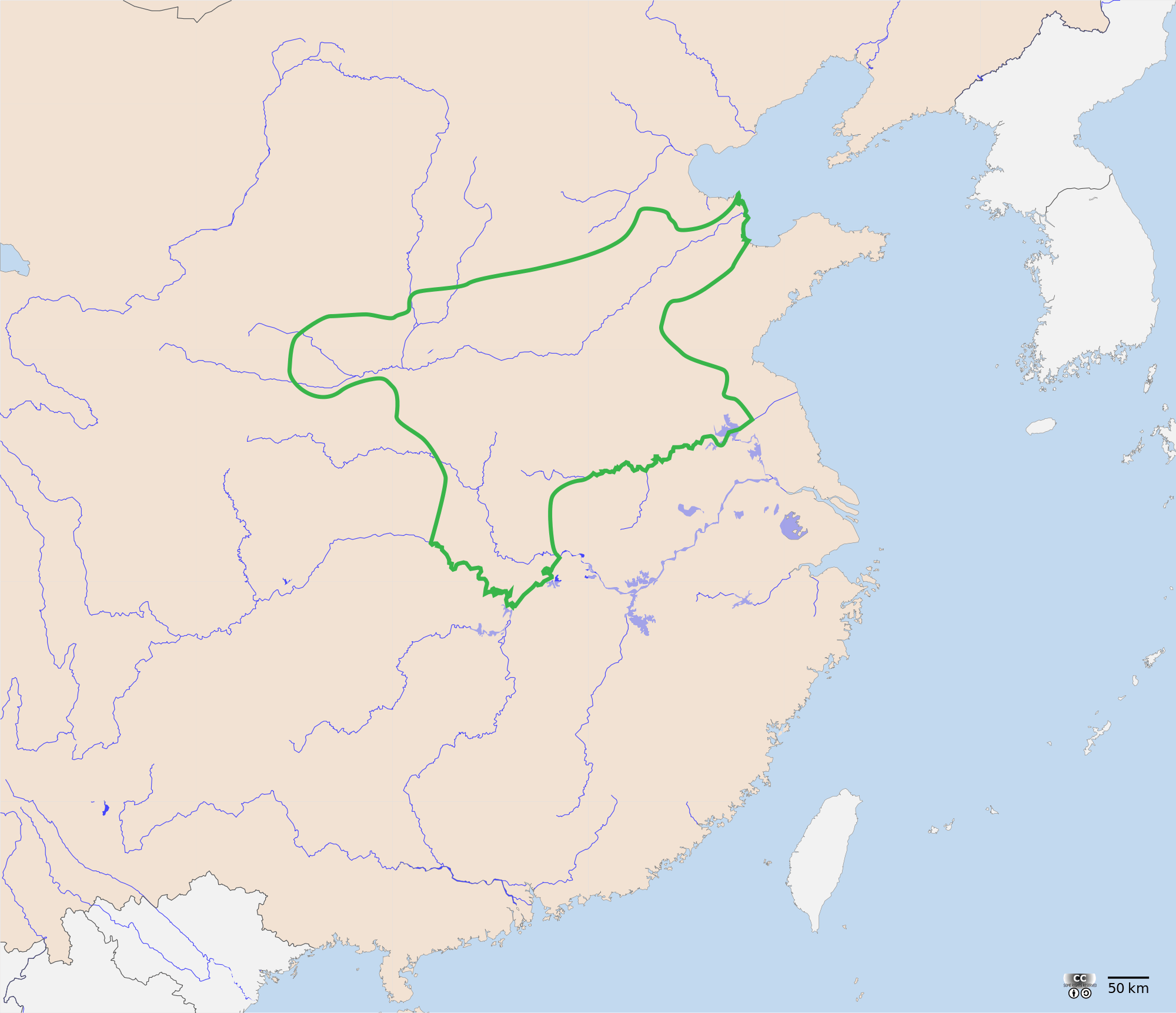
What was the name of China's FIRST dynasty?
Shang
Zhou
Hanfeizi
Huang He

The right of a Chinese Dynasty to rule with the blessings of the Gods is called...?
The Mandate of Heaven
The Dynastic Cycle
The Heavenly Commandments
The Oracle Bones
Who became the first Emperor of China by uniting warring kingdoms?
Wudi
Shi Huangdi
Confucius
Han

A Chinese philosophy that emphasizes proper behavior.
Confucianism
Civil Servant
Daoism
Legalism
A Chinese philosophy that emphasizes strict obedience to laws.
Confucianism
Civil Servant
Daoism
Legalism

The Purpose of the Great Wall was to?
Keep people in
Show how awesome China was
To be seen from space
To protect from invading nomadic tribes

Trade route that stretched from western China to southern Asia
filial piety
Silk Road
Great Wall
Anyang
Who changed Rome from a republic to an empire after the Senate gave him power?
Caesar Augustus
Julius Caesar
Diocletian
Nero
Who divided the Roman Empire into two sections to make it easier to control?
Constantine
Cicero
Diocletian
Jesus Christ
Which Jewish carpenter from Galilee spread a message of love and faith in God's heavenly kingdom?
Jesus
Peter
Constantine
Paul
Which skilled Roman military leader and politician declared himself dictator for life?
Nero
Julius Caesar
Caligula
Augustus
Which emperor legalized Christianity in the Roman Empire?
Caligula
Constantine
Nero
Julius Caesar
Which statements describe factors that led to the decline of the Roman Empire? (more than 1 answer possible)
Empire became to big to maintain
The army kept barbarian tribes from invading imperial territory.
Strong and competent rulers remained in charge to the very end of the empire.
Roman emperors and generals fought each other over land.

