
 Worksheets
Chapter 4, 5 and 6 Review
Total questions: 49
Worksheet time: 54mins
Name
Class
Date
1.
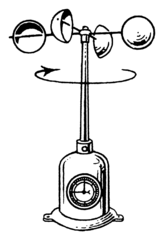
This weather instrument is an...
a)
wind vane
b)
anemometer
c)
barometer
d)
thermometer
2.

This weather instrument is a...
a)
anemometer
b)
barometer
c)
wind vane
d)
thermometer
3.

This weather instrument is a...
a)
thermometer
b)
wind vane
c)
anemometer
d)
rain gauge
4.

This weather instrument is a...
a)
thermometer
b)
anemometer
c)
rain gauge
d)
barometer
5.

This weather instrument is a...
a)
anemometer
b)
Christmas ornament
c)
wind vane
d)
barometer
6.
Temperature is measured in...
a)
degrees
b)
inches
c)
centimeters
d)
feet
7.
A high pressure system means we might have this weather.
a)
Snow blizzard
b)
Sunny and dry
c)
Rain storm
d)
Tornado
8.
A low pressure system means we might have this weather.
a)
Sunny
b)
A clear sky
c)
Dry day
d)
Stormy or wet
9.
Where you will find the ozone layer.
a)
stratosphere
b)
thermosphere
c)
exosphere
d)
mesosphere
10.
Where weather occurs.
a)
stratosphere
b)
thermosphere
c)
troposphere
d)
mesosphere
11.
The hottest layer.
a)
troposphere
b)
thermosphere
c)
exosphere
d)
mesosphere
12.
What does the earth's atmosphere do?
a)
help to regulate the temperature on Earth
b)
Help UV rays to reach the Earth's surface
c)
Creates meteors in the sky
d)
Keep ocean waters cold
13.
What is the function of the ozone layer?
a)
to allow UV rays to get to Earth
b)
to block UV rays from getting to Earth
c)
To keep oxygen in
d)
to allow meteors to get to Earth
14.
Which layer is the outermost layer?
a)
troposphere
b)
thermosphere
c)
exosphere
d)
mesosphere
15.
This is the layer where meteors, or shooting stars, burn up.
a)
Troposphere
b)
Stratosphere
c)
Mesosphere
d)
Thermosphere
16.
What happens to air pressure as you move upward into the atmosphere?
a)
increases
b)
decreases
c)
stays the same
17.
Air pressure is greater _______.
a)
at the top of the mountain
b)
at the bottom of the mountain
c)
at the center of the mountain
18.

The remains of living things that died long ago are often found in what type of rock?
a)
igneous rocks
b)
sedimentary rock
c)
metamorphic rock
d)
all rocks
19.

The cooled and hardened magma from volcanoes form what rocks?
a)
igneous
b)
sedimentary
c)
metamorphic
d)
fossils
20.

The thickest layer of Earth is the ___ where it is so hot that the rock there is soft.
a)
inner core
b)
crust
c)
outer core
d)
mantle
21.

Hot, molten rock inside the earth is called ...
a)
lava
b)
magma
c)
igneous rock
d)
minerals
22.

Once magma reaches the earth's surface, it is called __________.
a)
a vent
b)
minerals
c)
igneous rocks
d)
lava
23.

Large rocks can be broken down into smaller rocks by wind and water. These small rocks can break down into very tiny pieces called _______.
a)
minerals
b)
pebbles
c)
sediments
d)
chalk
24.

Rocks that are buried deep in the earth can be changed into an entirely new rock when it goes through what?
a)
weathering and erosion
b)
pressing and cementing
c)
heat and pressure
d)
cooling and hardening
25.

A never ending process by which rocks are changed from one type to another.
a)
weathering and erosion
b)
rock cycle
c)
heat and pressure
d)
pressing and cementing
26.

1. What will happen if an igneous rock is put under an extreme amount of heat and pressure?
a)
it will melt into lava
b)
it will weather and erode
c)
it will become a metamorphic rock
d)
it will become a sedimentary
27.

This rock formed when bits of other rocks became pressed into a solid. What type of rock is it?
a)
Sedimentary Rock
b)
Metamorphic Rock
c)
Igneous Rock
28.
What are the 3 major types of rocks?
a)
Igneous, Metamorphic, Sedimentary
b)
Metamorphic, Igneous, Cementation
c)
Brown, Red, Gray
d)
Streak, Hardness, Breakage
29.
What process is used to form sedimentary rocks?
a)
Lava cools and hardens to form a rock.
b)
Weathering, Erosion, Deposition, Compaction, Cementation
c)
Extreme heat and pressure from inside the Earth turn rocks into new rocks.
d)
Magma trapped under the Earth's surface cools and solidifies.
30.
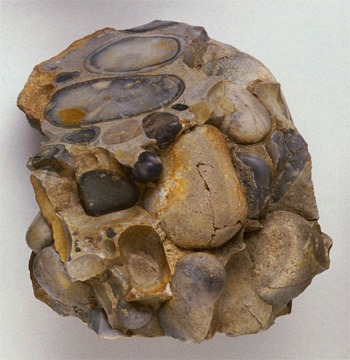
This rock was formed by smaller pieces of rock that settled at the bottom of a lake millions of years ago. What type of rock is this?
a)
Sedimentary
b)
Igneous
c)
Metamorphic
31.
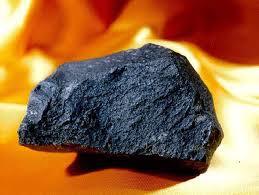
This rock was found near the mouth of a volcano. What type of rock is this?
a)
Sedimentary
b)
Igneous
c)
Metamorphic
32.
What is deposition?
a)
Dropping off sediment
b)
Movement of sediment
c)
Breaking down of sediment
33.

The process when rocks break into smaller pieces due to exposure to natural elements is called
a)
erosion
b)
weathering
c)
sediments
d)
deposition
34.
The movement of weathered material (sediment) is called?
a)
weathering
b)
erosion
c)
deposition
d)
cementation
35.

This rock started as lava that cooled and then was heated and put under pressure over time. What type of rock is this?
a)
Sedimentar
b)
Igneous
c)
Metamorphic
36.
Aquifers store ____ water.
a)
ground
b)
lake
c)
ocean
d)
glacier
37.

Study the graph below. Where is most of the Earth's water located?
a)
Rivers and Lakes
b)
Glaciers and Icecaps
c)
oceans
d)
groundwater
38.

Why is MOST of the freshwater on Earth not available for our use?
a)
All freshwater on Earth is easily accessible for use.
b)
It is frozen in the icecaps and glaciers.
c)
It is surface water.
d)
It is underground.
39.

Study the graph below. What is the dissolved solid that is most commonly found in Earth's oceans?
a)
calcium
b)
magnezium
c)
sulfur
d)
sodium chloride (salt)
40.
Soil formation begins with the weathering of_______.
a)
Humas
b)
Subsoil
c)
Litter
d)
Rock
41.
The layer of soil which the topsoil is found.
a)
Horizon A
b)
Horizon B
c)
Horizon C
d)
Horizon D or R
42.
The MAIN thing Decomposers do for the the soil is the following:
a)
Store moisture
b)
Burrow deep in the soil
c)
Make space for air and water
d)
Break down and digest dead organisms
43.
Decayed organic material in soil is called______.
a)
Litter
b)
Silt
c)
Humus
d)
Clay
44.
The movement of rocks and weathered materials is called_________.
a)
Chemistry
b)
Physical
c)
Weathering
d)
Erosion
45.
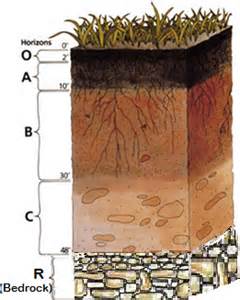
Which horizon is made up of partially weathered rocks?
a)
Horizon A
b)
Horizon B
c)
Horizon C
d)
Horizon D or R
46.
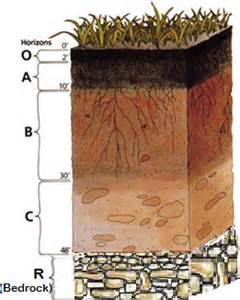
In which horizon is most of the HUMUS?
a)
Horizon A
b)
Horizon B
c)
Horizon C
d)
Horizon D or R
47.

Use the graph to answer the following question: According to the graph, which two months in 2001 had the most tornadoes?
a)
April and May
b)
May and July
c)
May and June
d)
June and July
48.

Which statement best summarizes the trend shown in the graph?
a)
Tornadoes always occur most frequently in May and June.
b)
Tornadoes occur when the weather is warmest.
c)
In 2001, tornadoes were most frequent in April, May, and June.
d)
Tornadoes are generally most frequent in the winter.
49.

The graphs show average monthly precipitation for two locations in Arizona. Use them to help you answer this question.
During which months do these locations receive the most precipitation?
a)
January through March
b)
April through June
c)
July through September
d)
October through December
100 %

