
 Worksheets
Unit Review - Organisms and Environments
Total questions: 45
Worksheet time: 46mins
An organism is -
A plant
An animal
A single living thing
All of the above

The living and non-living things working together in an environment
Ecosystem
Population
Community
Atmosphere
Why are decomposers an important part of ecosystems?
They break down dead organisms to return nutrients to the soil.
They produce their own food for survival.
They play a role in preventing weathering and erosion.
They provide most of the energy to consumers.

How is this bee interacting with living things in its environment?
It is breathing the fresh air.
It is enjoying the sunshine.
It is collecting pollen from the flower.

How is this lizard interacting with non-living things in his environment?
It is eating an insect.
It is sunning itself on a rock.
It is hiding among the plants.

In a food web, what do the arrows represent?
The direction of predator to prey
Smaller to larger organisms
Larger to smaller organisms
The direction of the energy flow
The energy in a food web starts with the...
Moon
Seed
Sun
Predator

What do you call an organism that makes its own food?
Consumer
Producer
Herbivore
Decomposer

Which organism's energy is transferred most in this food web?
Hawk, because they are predators in this web.
Grasshoppers, because they are at the bottom of this web.
Marsh grass, because they are producers in this web.
Shrew, because they support two chains in this web.


What is missing from this food web?
Decomposer
Prey
Consumer
Producer
Grasshoppers eat grasses and grains.
Birds eat grasshoppers and grains.
Foxes eat rabbits and birds.
Which of the following would fit in this food web diagram?
Fox --> Bird --> Grains
Grains --> Grasses --> Bird
Grasshopper --> Bird --> Fox
Grasses --> Grasshopper --> Fox
Many birds, such as hawks, have sharp claws, called talons, on their feet. Sharp talons help a hawk interact with which part of its environment?
water they drink from streams
diseases that make them sick
the animals they catch and eat
the sunlight that warms them

Plants with small leaves -
grow taller than plants with large leaves.
do not lose as much water as plants with large leaves.
make more seeds than plants with large leaves.
lose their leaves faster than other plants in winter.

The primary role of feathers and fur is to help animals -
float
migrate
control body temperature
build a nest

A wasp beetle has the same body markings as a wasp, which can fool its predators. This adaptation is called -
behavior
countershading
camouflage
mimicry


Which feature helps an animal hide from other animals?
looking like a dangerous animal
being the same color as the place it lives (camouflage)
having sharp claws or a strong shel
having only a few young and caring for them
Plants with spines and waxy leaves are well-suited for life in which environment?
Desert
Temperate forest
Grassland
Tropical Rainfroest
Living organisms, including humans, can change their environment.
True
False

If beavers build a large dam on a river, then -
the area might flood.
their teeth will grow too long.
the mice population would increase.

If an invasive plant species takes over in a forest, then -
sunlight will reach more plants.
native plant growth may decrease.
windy days will increase.
native plants will have more access to water.
When a plant or animal becomes crowded in its environment, it makes it harder to meet its survival needs.
True
False

If a disease decreases the coyote population, then:
ponds may flood.
crops could be wiped out.
the number of mice in the area may increase.

How would building a highway affect an environment?
Saltwater pollutes freshwater.
Marine life is threatened.
Animals cannot travel through their ecosystem in the same way.
Which is an example of an acquired physical trait?
blue eyes
a scar
long eyelashes
dimples
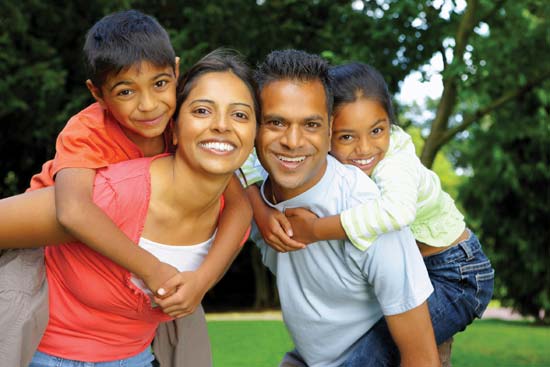


Which trait would most likely be inherited by a baby?
brown hair
crying a lot
ability to play basketball
speaking a language

Which of these is an inherited trait?
Tara's red hair
Ryan's bank account
Betty's dancing skills
Marco's excellent Spanish
The stages of growth for all organisms
Life Cycle
Pupa
Nymph
Metamorphosis

What is the name for the stage in the cricket life cycle that is the smaller version of the adult?
Larva
Nymph
Pupa
Sprout

The life cycles of insects and plants both include stages of growth from seed/egg to ______.
adult
larva
egg
seedling

One way in which a plant life cycle is like an animal life cycle is that both plants and animals...
grow larger over time
use seed to reproduce
live for hundreds of years
lay eggs that hatch

Which of the following organisms goes through metamorphosis, including the stages of egg, larva, pupa, and adult?
Human beings
Trees
Beetles
Lima beans

How is the life cycle of a beetle similar to the life cycle of a frog? Both life cycles...
include a tadpole stage.
produce adults with wings.
take place in the water.
begin with eggs.

Which shows the correct order in the life cycle of a beetle?
larva, egg, pupa, adult
egg, larva, pupa, adult
egg, adult, pupa, larva
egg, larva, adult
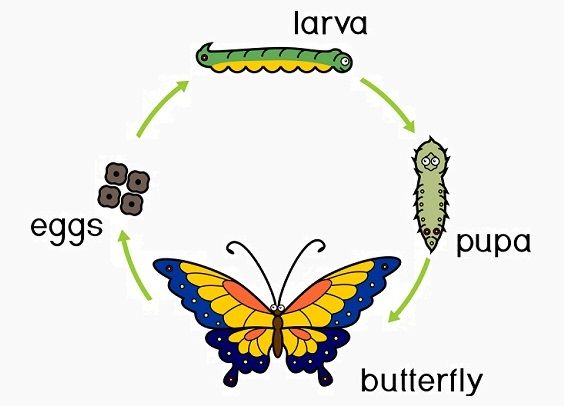
What is a "complete metamorphosis"?
When an organism completely changes after going through a pupa phase
When an organism starts as a nymph and grows larger into an adult
When an organism starts as an egg
When an organism hatches as an adult

