Worksheets
CBA 4.9AB Review
Total questions: 40
Worksheet time: 26mins

Where do the antelopes get their energy from?
coyotes
hawks
sun
grass

Where do the coyotes get their energy from?
mountain lions
antelopes
hawks
grass
What is a producer?
An organism that eats other organisms.
An organism that breaks down dead organisms.
An organism that makes its own food.
An organism
What three things does a plant need in order to produce its own food
water
carbon dioxide
oxygen
sunlight

What type of organism is pictured above?
producer
consumer
decomposer
the sun
What is a consumer?
An organism that makes its own food
An organism that breaks down dead organisms
An organism that eats other organisms
The sun

Which organism is a producer (makes its own food)?
daisy
rabbit
mushroom
earthworm
How does an organism get energy?
By drinking water
By eating
By absorbing it
How can a deer get its energy in a forest?
by drinking water
by eating grass and other plants
by eating squirrels
by sun tanning

How does the fish get its energy?
water plant
the sun
bugs
pelican

Where does the pelican get its energy from?
sun
water plant
bugs
fish

Where does the snake get its energy from?
robin
eagle
deer
squorrel

Where does the squirrel get its energy from?
prairie grass
plant seeds
deer
the sun

Where does the eagle get its energy from?
squirrel
robin
field mouse
mountain lion

Where do the hawks get their energy from?
the sun
grass
squirrels
antelopes
Where do the hawks get their energy from?
the sun
grass
squirrels
antelopes
What begins the food chain?
water
the sun
moon
soil
What does the word predator mean?
an animal that hunts and eats other animals.
an animal that is hunted by other animals.
an animals that eats other animals
an animal that eats plants
What does the word prey mean?
an animal that hunts and eats other animals.
an animal that is hunted by other animals
an animal that eats only plants
an animal
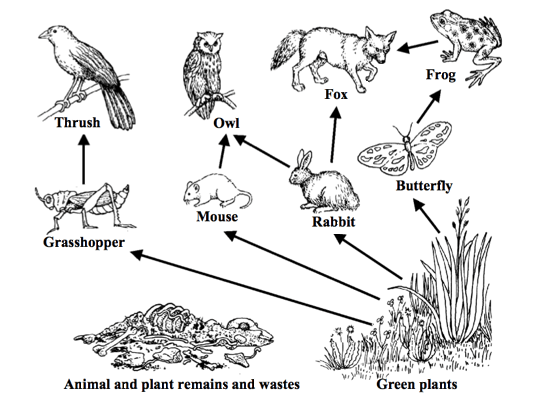
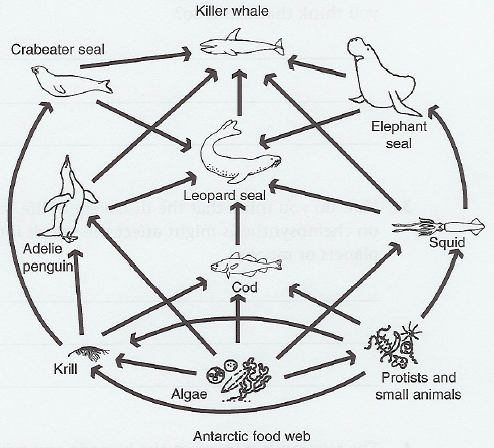
What do the direction of the arrows mean in a food web?
consumer to producer
producer to decomposer
predator to prey
producer to consumer

What would happen if all of the bass were caught during fishing season?
The minnows would die off.
The snapping turtles will need to consume more sunfish.
The insect larvae would over populate.
The sunfish would lose a source of energy.
If a fire destroyed the woods in a forest, what change would likely occur in the food web?
Producers would need to get a new energy source.
There would be more consumers.
Animals that eat plants will need to find a new place to eat.
Plants would grow and over populate the ecosystem.

How many organisms would lose a direct source of energy if the grass burned up?
1
2
4
3
If a battery powers the phone, then the sun powers___________.
light
waves
photosynthesis
hurricane
How can humans negatively impact a food web?
plant flowers
destroying land
Control the population of deer
promote native habitats in lakes