
 Worksheets
Unit 4 quiz prep
Total questions: 64
Worksheet time: 54mins
Name
Class
Date
1.
What is the original source of almost all energy in most ecosystems?
a)
carbohydrates
b)
sunlight
c)
water
d)
carbon
2.
What is the term for each step in the transfer of energy and matter within a biological community?
a)
energy path
b)
food web
c)
trophic level
d)
food pyramid
3.
Autotrophs make up the _______ level in all ecosystems.
a)
First
b)
Second
c)
Third
d)
Fourth
4.

A living relationship between two species in which one organism is harmed is called...
a)
mutualism
b)
commensalism
c)
parasitism
d)
niche
5.

The image provided is an example of a(n):
a)
Carnivore
b)
Herbivore
c)
Producer
d)
Autotroph
6.

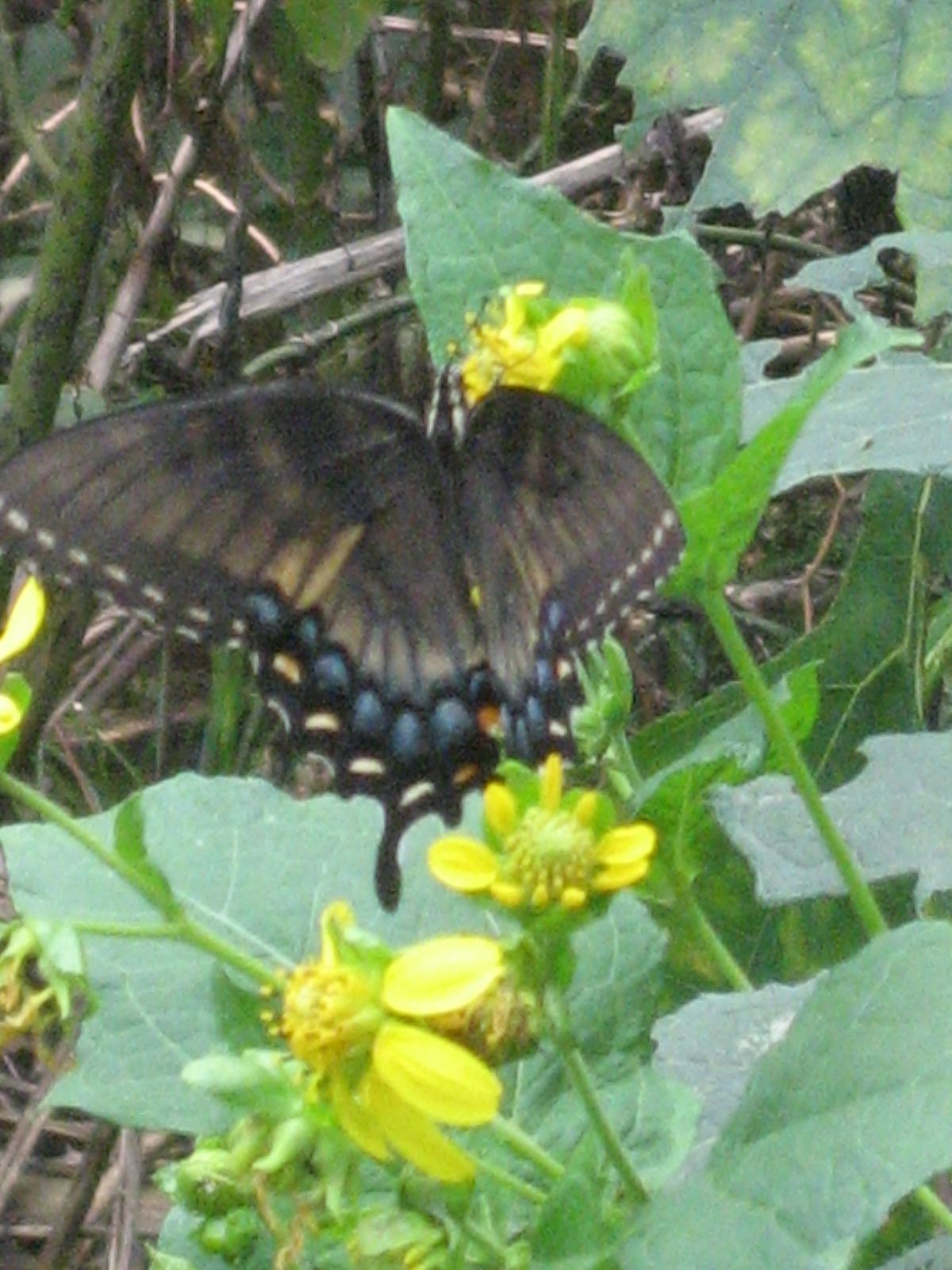
The image provided is an example of a(n):
a)
Producer
b)
Autotroph
c)
Consumer
d)
Insect
7.
The amount of energy that usually transfers from one trophic level to the next...
a)
10%
b)
20%
c)
80%
d)
50%
8.
Consumer that eats plants
a)
heterotroph
b)
herbivore
c)
producer
d)
community
9.
The nonliving aspects of an ecosystem.
a)
Abiotic factors
b)
Biotic factors
10.
The living portions of the ecosystem.
a)
Biotic factors
b)
Abiotic factors
11.

What are the Abiotic factors in this image?
a)
water, sunlight, dirt, air
b)
birds and plants
c)
birds, water, dirt
d)
plants, water
12.

An individual belonging to a specific species
a)
Biotic
b)
Community
c)
Organism
d)
Reptile
13.

All of the living and nonliving things in an area that interact with each other are called a/an ______.
a)
community
b)
habitat
c)
population
d)
ecosystem
14.

An area where an organism finds food, shelter and water in a specific arrangement
a)
niche
b)
biosphere
c)
biome
d)
habitat
15.

The study of how living things interact with one another and with their environment.
a)
Biology
b)
Lithology
c)
Ecology
d)
Farmacology
16.

Organisms that look similar and can produce fertile offspring
a)
Species
b)
Fish
c)
Community
d)
Trees
17.
Two or more members of a particular species living and interacting in the same area
a)
Community
b)
Population
c)
Organisms
d)
Biosphere
18.

Different populations living and interacting with each other in the same area
a)
Biome
b)
Ecosystem
c)
Community
d)
Niche
19.

Which organism do the owl and the weasel compete for in the food web?
a)
Hawk
b)
Spider
c)
Grasshopper
d)
Shrew
20.

Which of the following is a herbivore?
a)
cricket
b)
frog
c)
hawk
d)
shrew
21.
What might happen if you remove a primary consumer from the ecosystem?
a)
There would be more food for secondary consumers.
b)
The number of primary consumers would increase.
c)
The number of plants would increase.
d)
The number of secondary consumers would increase.
22.
A consumer that hunts is called:
a)
a producer.
b)
an omnivore.
c)
a predator.
d)
a herbivore.
23.
A frog eats a fly. The frog and fly are demonstrating ________.
a)
mutualism
b)
competition
c)
predator/prey
d)
parasitism
24.
A tick and a dog have this type of relationship.
a)
mutualism
b)
commensalism
c)
neutralism
d)
parasitism
25.
How do producers obtain energy?
a)
They conduct photosynthesis.
b)
They consume plants.
c)
They consume primary consumers.
d)
They consume secondary consumers.
26.

relationship in which two species live closely together
a)
resource
b)
mutualism
c)
succession
d)
symbiosis
27.

symbiotic relationship in which one organisms benefits and the other organism is not affected
a)
invasive (non-native) species
b)
mutualism
c)
nitrogen fixation
d)
commensalism
28.

symbiotic relationship in which both organisms benefit
a)
competition
b)
Mutualism
c)
nitrogen fixation
d)
energy pyramid
29.
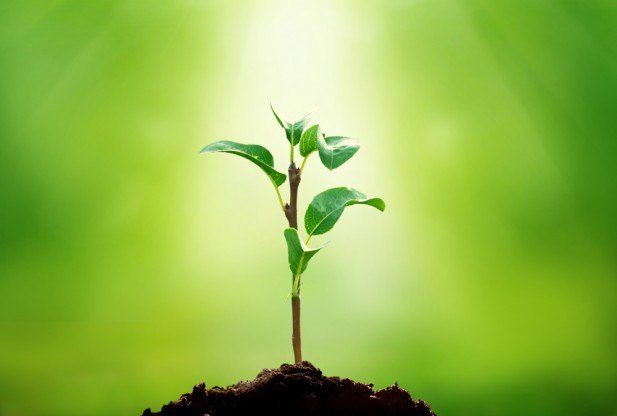
An organism that uses sunlight to create its own food is known as a:
a)
Producer
b)
Heterotroph
c)
Consumer
d)
Decomposer
30.
The arrows in a food chain or web represents what?
a)
They point to the organism that is being eaten.
b)
It shows how sunlight flows within an ecosystem.
c)
They show what direction the energy is flowing between organisms.
d)
They represent how water is transferred within a habitat.
31.
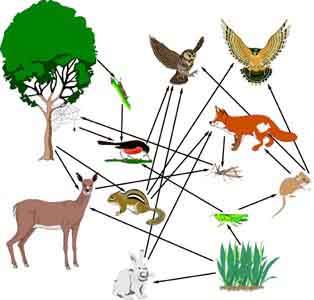
What does a food web represent?
a)
All connections of energy flow throughout all organisms in a habitat.
b)
The specific ways that mutualism is carried out.
c)
A single pathway or energy flow between organisms.
d)
How carnivores get their food.
32.

An energy pyramid represents what?
a)
How much sunlight is available for the ecosystem to use.
b)
How much energy a particular organism needs.
c)
How much energy is needed to build a pyramid.
d)
The amount of energy available to the next 'feeder' in a food web.
33.
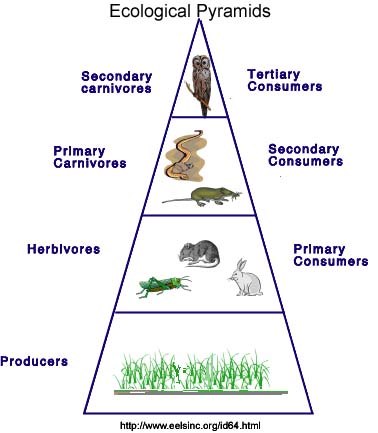
The largest group of organisms found in a food web would be:
a)
Primary Consumers
b)
Producers
c)
Decomposers
d)
Tertiary Consumers
34.

The fox in this food web would be considered a:
a)
Tertiary Consumer
b)
Producer
c)
Secondary Consumer
d)
Primary Consumer
35.

The mouse in this food web would be considered a:
a)
Primary Consumer
b)
Producer
c)
Tertiary Consumer
d)
Secondary Consumer
36.
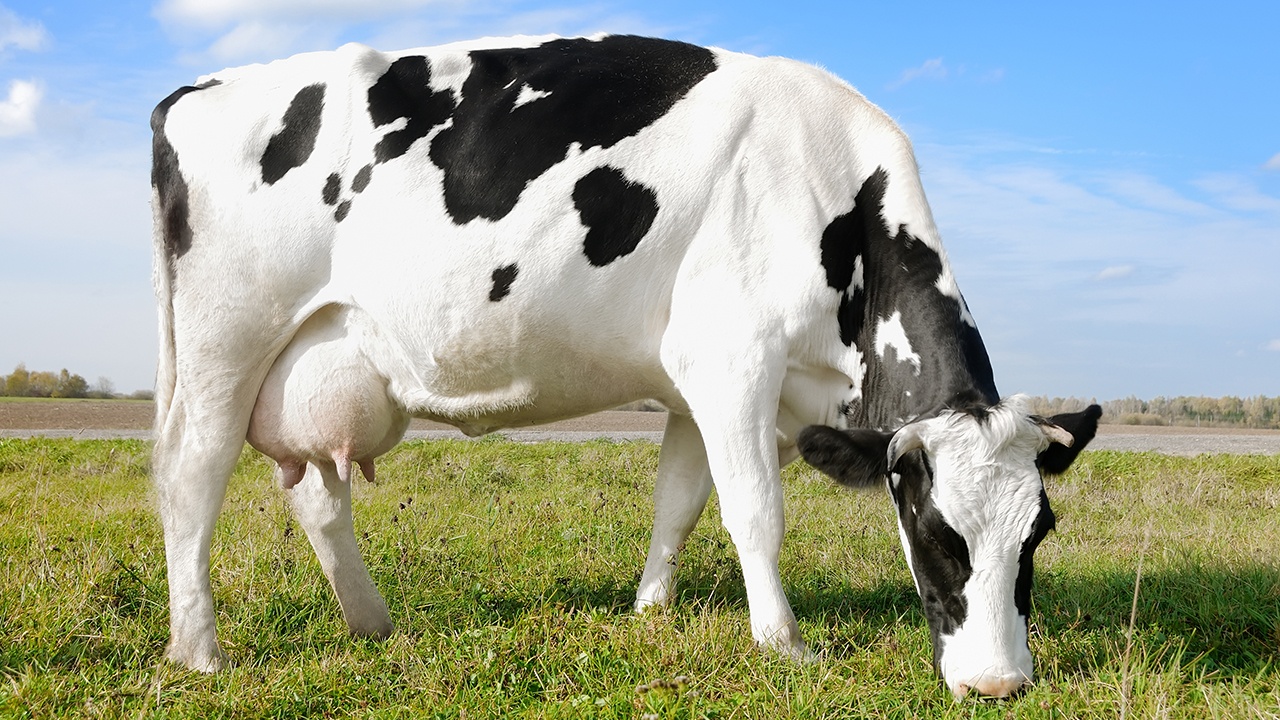
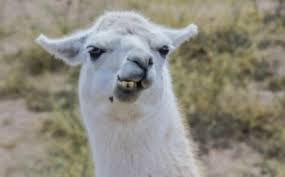
The image provided is an example of a(n):
a)
Autotroph
b)
Carnivore
c)
Herbivore
d)
Decomposer
37.

Pseudoscorpions often hitch rides on the backs of large beetles or true bugs. What is the ecological relationship?
a)
Mutualism
b)
Commensalism
c)
Parasitism
d)
Cooperation
38.

Barnacles sometimes live on the outside surface of other larger shelled organisms without causing any harm. What is the ecological relationship?
a)
Mutualism
b)
Parasitism
c)
Commensalism
d)
Predator-Prey
39.

Cows and pronghorn both eat the same types of food in areas of Utah. What is the ecological relationship?
a)
Cooperation
b)
Parasitism
c)
Commensalism
d)
Competition
40.

Ants protect soft bodied aphids and in return the aphids feed the ants a sugary drink. What is the ecological relationship?
a)
Cooperation
b)
Parasitism
c)
Commensalism
d)
Mutualism
41.

Chickens will eat both insects and seeds. Which term best describes this feeding pattern?
a)
Omnivore
b)
Carnivore
c)
Herbivore
d)
Producer
42.

An animal that feeds on what another animal has killed is known as a:
a)
Scavenger
b)
Mutualist
c)
Decomposer
d)
Parasite
43.

A clownfish uses a sea anenome as a safe place to live. While living there, the clownfish lures in food for the anenome. This is an example of what type of relationship?
a)
Predator-Prey
b)
Commensalism
c)
Mutualism
d)
Parasitism
44.

This is known as a relationship in which both organisms involved benefit.
a)
Predator-Prey
b)
Commensalism
c)
Mutualism
d)
Decomposition
45.

A feeder fish usually follows behind sharks to pick up food scraps that they leave behind. The fish gets food and the shark is unaffected. This is an example of:
a)
Mutualism
b)
Commensalism
c)
Parasitism
d)
Decomposition
46.
This term describes a living part of an environment.
a)
Biotic factor
b)
Sunlight
c)
Abiotic Factor
d)
Niche
47.

An organism that eats other organisms to obtain energy is known as a:
a)
Mutualist
b)
Autotroph
c)
Producer
d)
Heterotroph
48.
The term for the role an organism has in the community.
a)
niche
b)
habitat
c)
tolerances
d)
competition
49.
The range of all conditions in which a species lives and how it gets what it needs to survive and reproduce.
a)
population
b)
ecosystem
c)
niche
d)
biology
50.
What is an organisms “job” or role within an ecosystem?
a)
Trophic Level
b)
Niche
c)
Herbivore
d)
Prey
51.
What is the purpose of a dichotomous key?
a)
to find a common ancestor
b)
to show the evolution of organisms
c)
to show relationships between organisms
d)
to identify organisms
52.

From the table, which two animals are MOST CLOSELY related
a)
House Cate and Red Fox
b)
Red Fox and Dog
c)
Dog and Wolf
d)
Wolf and Gopher
53.
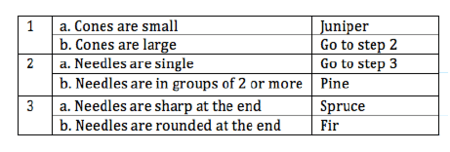
A dichotomous key for trees is provided. Hikers found a tree that has large brown cones and single sharp needles. What species of tree have the hikers found?
a)
Juniper
b)
Pine
c)
Spruce
d)
Fir
54.
What step do we always start with when using dichotomous keys?
a)
1
b)
2
c)
3
d)
4
55.
When using a dichotomous key to identify organisms, what do we look at?
a)
physical features
b)
weather patterns
c)
environment
d)
diet
56.
The 8 levels of classification, most broad to most specific.
a)
Domain, Genus, Family, Order, Class, Phylum, Kingdom, Species
b)
Domain, Species, Kingdom, Genus, Phylum, Family, Class, Order
c)
Domain, Kingdom, Phylum, Class, Order, Family, Genus, Species
d)
Order, Kingdom, Species, Domain, Phylum, Family, Class, Genus
57.
Term given to describe the 2 name naming system is:
a)
dichotmous key
b)
binomial nomenclature
c)
2 scientific names
d)
binomial key
58.
The first part of a scientific name is an organism's _______________ and the second part is its ________________.
a)
species, genus
b)
phylum, order
c)
class, spices
d)
genus, species
59.
When using a dichotomous key to identify organisms, what do we look at?
a)
physical features
b)
weather patterns
c)
environment
d)
diet
60.
The scientific name for an organism is made from the:
a)
class and family name
b)
genus and species name
c)
domain and kingdom name
d)
kingdom and phylum name
61.
Which kingdom contains members who are prokaryotic?
a)
Archaebacteria and Eubacteria
b)
Archaebacteria and Protista
c)
Eubacteria and Animalia
d)
Eubacteria and Fungi
62.
What do protists, plants, fungi, and animals ALWAYS have in common? They are all...
a)
Multicellular
b)
Eukaryotic
c)
Prokaryotic
d)
Consumers
63.
Members of this kingdom never have a cell wall
a)
Animalia
b)
Plantae
c)
Archaebacteria
d)
Protista
64.
Who first proposed binomial nomenclature as a way of classifying organisms?
a)
Carlous Linnaeus
b)
Carl's Jr.
c)
Charles Darwin
d)
Henry Groseclose
100 %

