
 Worksheets
U4 Cells TEST Review
Total questions: 60
Worksheet time: 41mins
Name
Class
Date
1.
Stores food and water for the cell.
a)
Cytoplasm
b)
Cell Wall
c)
Vacuole
d)
Nucleus
2.
Controls what enters and leaves the cell
a)
Mitochondria
b)
Cell Membrane
c)
Cell Wall
d)
Nucleus
3.

What would happen to the plant cell without the chloroplasts?
a)
There wouldn't be an organelle that performs photosynthesis
b)
There wouldn't be an organelle that serves as the resevoir for water and waste
c)
There wouldn't be an organelle that regulates what comes in and out of the cell
d)
They wouldn't be an organelle that makes necesary proteins
4.

What do all of these organisms have in common?
a)
They all have uniform offspring
b)
They are all made of cells
c)
They possess the same features
d)
They have the same internal and external structures
5.

According to cell theory, where did this cell come from?
a)
another living cell
b)
energy from sun
c)
a multicellular organism
d)
the nonliving environment
6.

Robert Hooke, Anton van Leeuwenhoek, Theodor Schwann, Rudolf Virchow, and Matthias Schliden were all responsible for what theory?
a)
The Theory of Gravity
b)
The Theory of Relativity
c)
The Cell Theory
d)
The Theory of Continental Drift
7.
What tool do you use to view the cells?
a)
metric ruler
b)
centrifuge
c)
microscope
d)
pipette
8.
The first part of the Cell Theory states: "What happens in Cell Theory, stay in Cell Theory."
a)
True
b)
False
c)
I don't know
d)
Ummmm
9.
Rocks are not living because
a)
they never move
b)
they aren't needed for humans
c)
they are not made of cells
d)
they don't break down
10.
An organism made of one cell is called
a)
unicellular
b)
multicellular
11.
what is the control center in a cell
a)
mitochondria
b)
DNA
c)
nucleus
d)
movement
12.
also known as the "powerhouse"
a)
cell membrane
b)
storage
c)
cytoskeleton
d)
mitochondria
13.

What is the fluid inside a cell called?
a)
Endoplasimic Reticulum
b)
Orange Juice
c)
Water
d)
Cytoplasm
14.

This organelle helps plants keep their rigid structure.
a)
Cell wall
b)
Cell membrane
c)
Chloroplast
d)
Nucleus
15.

Chloroplasts carry out...
a)
Phagocytocis
b)
Phylocytosis
c)
Photosynthesis
d)
Respiration
16.
All of this type of cell are single celled.
a)
animal
b)
prokariotic
c)
plant
d)
eukariotic
17.
If a cell has a nucleus, then it must be what type of cell?
a)
animal
b)
prokaryotic
c)
eukaryotic
d)
plant
18.
Where is DNA stored in a cell?
a)
Lysosomes
b)
Golgi Complex
c)
Ribosomes
d)
Nucleus
19.
Plant and animal cells are identical.
a)
True
b)
False
20.

What of the following is a prokaryote?
a)
animal cell
b)
bacteria
c)
virus
d)
plant cell
21.
Only one type of cell contains a chloroplast. Which one?
a)
plant
b)
animal
c)
bacteria
d)
fungi
22.
Which of the following is found in plant cells but not in animal cells?
a)
cell wall
b)
cell membrane
c)
mitochondria
d)
vacuole
23.
Which of the following is NOT part of the Cell Theory?
a)
All living things are made up of 1 or more cells
b)
All cells come from pre-existing cells
c)
Cells are basic unit of structure for living things
d)
All cells have a nucleus
24.
Which scientist discovered that all animals are made up of cells in 1839?
a)
Hooke
b)
Leewenhoek
c)
Schwann
d)
Virchow
25.
Which Scientist was the first to view cells in living things through a microscope?
a)
Leewenhoek
b)
Virchow
c)
Hooke
d)
Schwann
26.
This guy first saw cells of cork through a microscope....and Newton hated his guts.
a)
Anton nan Leeuwenhoek
b)
Robert Hooke
c)
Peter Parker
d)
Mr. Foltz
27.
This scientist concluded that plants are made of cells:
a)
Virchow
b)
Schwann
c)
Schleiden
d)
Leeunwenhoek
28.
What is a difference between eukaryotic cells and prokaryotic cells?
a)
Only prokaryotic cells have cytoplasm
b)
Only eukaryotic cells have a cell membrance
c)
Only prokaryotic cells have genetic material
d)
Only eukaryotic cells have membrance-bound organelles
29.

Fruit fly body cells have 8 chromosomes. After mitosis, you would expect a resulting fruit fly daughter cell to have ...
a)
16 chromosomes.
b)
46 chromosomes.
c)
8 chromosomes.
d)
4 chromosomes.
30.
The process by which the nuclear material is divided equally between two new cells
a)
mitosis
b)
cancer
c)
spindle
d)
centromere
31.

Name the phase:
a)
Anaphase
b)
Telophase
c)
Metaphase
d)
Prophase
32.

What is the next phase of mitosis?
a)
Prophase
b)
Metaphase
c)
Anaphase
d)
Telophase
33.

What is the next phase of mitosis?
a)
Prophase
b)
Metaphase
c)
Anaphase
d)
Telophase
34.

Name the phase:
a)
Prophase
b)
Metaphase
c)
Anaphase
d)
Telophase
35.

Name the phase:
a)
Prophase
b)
Metaphase
c)
Anaphase
d)
Telophase
36.

Name the phase:
a)
Prophase
b)
Metaphase
c)
Anaphase
d)
Telophase
37.

The organelle that helps in cell division and produces spindle fibers.
a)
Chromosome
b)
Centriole
c)
Cytoplasm
d)
Chloroplast
38.

The stages of mitosis in order
a)
Metaphase, Anaphase, Prophase, Telophase
b)
Prophase, Anaphase, Metaphase, Telophase
c)
Prophase, Metaphase, Anaphase, Telophase
d)
Anaphase, Prophase, Telophase, Metaphase
39.
Why do we need meiosis?
a)
To double the number of chromosomes going into sex cells
b)
To halve the number of chromosomes going into sex cells
c)
To triple the number of chromosomes going into sex cells
d)
To not change the number of chromosomes going into sex cells
40.
The purpose of meiosis is to form ________ cells.
a)
body
b)
sex
c)
somatic
d)
brain
41.

When an area of a chromatid is exchanged with the matching area on a chromatid of its homologous chromosome, _________________ occurs
a)
crossing over
b)
mutagenesis
c)
hybridization
d)
fertilization
42.
If a somatic (body) cell in a butterfly contains 24 chromosomes, a butterfly egg would contain
a)
3
b)
6
c)
12
d)
24
43.
How many daughter cells are produced at the end of meiosis?
a)
1
b)
2
c)
3
d)
4
44.
Which of the following is NOT a gamete (sex cell)?
a)
egg
b)
sperm
c)
skin cell
d)
all of the above are gametes
45.
What is the first level of organisation?
a)
cells
b)
tissues
c)
organs
46.
group of similar tissues working together to perform a function
a)
organs
b)
cells
c)
systems
47.
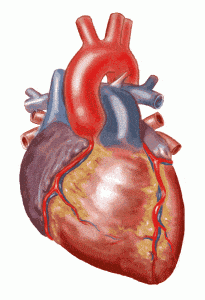
This is a example of ........
a)
cell
b)
organ system
c)
organ
d)
tissue
48.
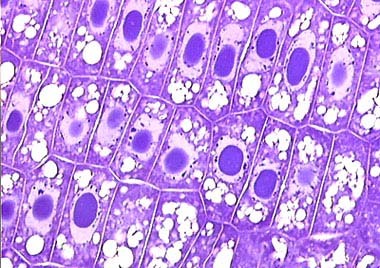
This is a example of ........
a)
cell
b)
tissue
c)
organ
d)
organ system
49.
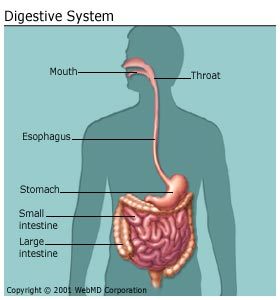
This is a example of........
a)
organ system
b)
cells
c)
organ
d)
tissue
50.
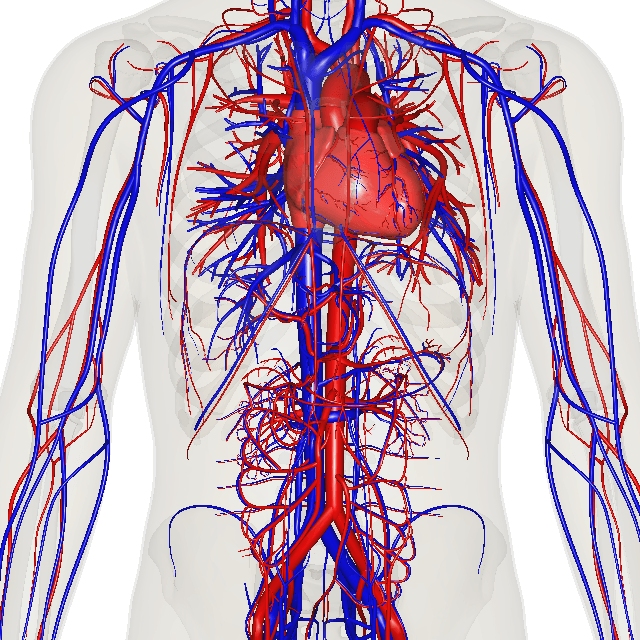
This is a example of ........
a)
organ
b)
organ system
c)
tissue
d)
cell
51.
The ___________ is the basic unit of life
a)
organ
b)
cell
c)
atom
d)
tissue
52.
Hold the slide in place on the stage
a)
Stage
b)
Stage Clips
c)
Aperature
d)
Light Source
53.
Moves the stage slightly to sharpen the image
a)
Body Tube
b)
Course Focus Knob
c)
Aperature
d)
Fine Focus Knob
54.
Supports the microscope and located at the bottom
a)
Base
b)
Arm
c)
Body Tube
d)
Stage
55.
Place where slide is placed on while being viewed
a)
Base
b)
Stage Clips
c)
Diaphragm
d)
Stage
56.

Number 12
a)
Course Adjustment
b)
Fine Adjustment
c)
Small Adjuster
d)
Large Adjuster
57.

Number 11
a)
Course Adjustment
b)
Fine Adjustment
c)
Small Adjuster
d)
Large Adjuster
58.
To be considered a living thing, how many characteristics of a living thing are needed?
a)
All 6
b)
4 or more
c)
At least 2
59.
A dog barks when the doorbell rings. Which characteristic?
a)
Responds to stimulus
b)
Cellular organization
c)
Obtains & uses energy
60.
A tadpole becomes a frog. Which characteristic?
a)
Adapted to environment
b)
Reproduces
c)
Grows & develops
100 %

