wayground logo

Free Printable Worksheets

NEW

Font size

S
M
L
XL
Worksheets

Cells

Total questions: 61

Worksheet time: 5hrs 5mins

Name
Class
Date
1.

In our mental model of the cell, the balloon represents the

a)

cell wall

b)

cell membrane

c)

cytoplasm

d)

ribosomes

2.

In our mental model of the cell, the jello represents the

a)

cell wall

b)

cell membrane

c)

cytoplasm

d)

ribosomes

3.

In our mental model of the cell, the poppy seeds represents the

a)

cell wall

b)

cell membrane

c)

cytoplasm

d)

ribosomes

4.

The city limits... controls what goes in and out of the cell/city!

a)

nucleus

b)

cell membrane

c)

ER

d)

Golgi

5.

The road system... allows for movement within the cell/city.

a)

nucleus

b)

cell membrane

c)

ER

d)

mitochondria

6.

The city hall... controls all of the activities of the cell/city.

a)

nucleus

b)

ER

c)

Golgi

d)

ribosome

7.

The City Hall computer... stores all of the important information about the cell/city and its activities.

a)

Golgi

b)

ER

c)

DNA

d)

vacuole

8.

The post office... processes, packages, and transports materials in and out of the cell/city.

a)

Golgi

b)

ER

c)

chloroplast

d)

ribosome

9.

The construction company... builds structures (proteins) for the cell/city giving it unique characteristics.

a)

ribosomes

b)

chloroplasts

c)

ER

d)

Golgi

10.

The recycling plant... breaks down materials so it can be reused by the cell/city.

a)

ribosome

b)

lysosome

c)

vacuole

d)

cell membrane

11.

The warehouse... stores materials needed by the cell/city.

a)

vacuole

b)

nucleus

c)

mitochondria

d)

chloroplast

12.

The power company... produces energy for the cell/city.

a)

nucleus

b)

ribosome

c)

mitochondria

d)

cell membrane

13.

The solar power plant... uses the sun's energy to produce power for the cell/city.

a)

Golgi

b)

chloroplast

c)

mitochondria

d)

ER

14.

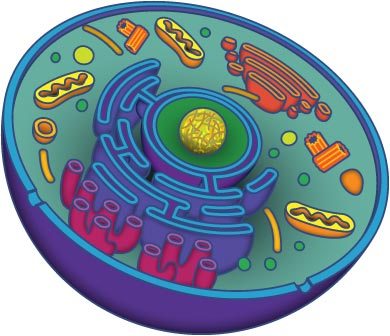
The organelle that's red.

a)

ER

b)

nucleus

c)

Golgi

d)

cell membrane

15.

The organelle that's pink.

a)

ER

b)

nucleus

c)

Golgi

d)

cell membrane

16.

The organelles that are green.

a)

chloroplasts

b)

vacuole

c)

ER

d)

Golgi

17.

The organelles that are orange.

a)

chloroplasts

b)

mitochondria

c)

ER

d)

Golgi

18.
According to cell theory, where did this cell come from?
a)
another living cell
b)
energy from sun
c)
a multicellular organism
d)
the nonliving environment
19.
What tool do you use to view the cells?
a)
metric ruler
b)
centrifuge
c)
microscope
d)
pipette
20.
Which of the following is NOT a cell theory.
a)
All non-living things are made of cells
b)
All cells come from pre-existing cells
c)
Cells are the basic unit of structure and function of all living things
21.
What is the basic structural and functional unit of all living things? 
a)
atom
b)
cell
c)
molecule
d)
human
22.
An organism made of one cell is called
a)
unicellular
b)
multicellular
23.
Chloroplasts carry out...
a)
Phagocytocis
b)
Phylocytosis
c)
Photosynthesis
d)
Respiration
24.

All cells are either prokaryotic or eukaryotic.

a)

true

b)

false

25.

All cells have

a)

DNA

b)

RNA

c)

ribosomes

d)

All of the above

26.
What is a sac like structure used to store water, waste, and nutrients?
a)
Golgi body
b)
vacuoles
c)
nuclear membrane
d)
lysosomes
27.
What organelle is responsible for making proteins?
a)
ribosomes
b)
lysosomes
c)
nucleolus
d)
nucleus
28.
Animal cells do not have...
a)
mitochondria
b)
lysosomes
c)
vacuoles
d)
chloroplasts
29.
This organelle breaks down food to release energy
a)
cytoplasm
b)
chloroplasts
c)
mitochondria
d)
golgi body
30.
This protective layer controls what enters and leaves the cell
a)
ribosome
b)
cytoplasm
c)
endoplasmic reticulum
d)
cell membrane
31.
The system of channels that transport materials throughout the cell
a)
nucleous
b)
golgi body
c)
vacuoles
d)
endoplasmic reticulum 
32.
What organelle breaks down food molecules, cell wastes, and worn-out cell parts?
a)
mitochondria
b)
lysosomes
c)
cytoplasm
d)
golgi bodies
33.
What is the control center of the cell that directs all the cell's activities?
a)
nucleus
b)
cell wall
c)
vacuole
d)
nuclear membrane
34.
The organelle that functions to package and deliver proteins
a)
lysosome
b)
endoplasmic reticulum
c)
golgi bodies
d)
nucleus
35.
Who was the scientist who looked at a slice of cork under a microscope and saw the cork's cell walls?
a)
Robert Hooke
b)
Matthias Schleiden
c)
Anton van Leewenhoek
d)
Thedor Schwann
36.
Who was the scientist who looked at a slice of cork under a microscope and saw the cork's cell walls?
a)
Robert Hooke
b)
Matthias Schleiden
c)
Anton van Leewenhoek
d)
Thedor Schwann
37.
Which of these choices is not an organelle?
a)
lung
b)
endoplasmic reticulum
c)
chloroplast
d)
mitochondria 
38.
What is the jelly-like interior of the cell?
a)
cell wall
b)
cell membrane
c)
cytoplasm
d)
chromosomes
39.
Cell theory states that...
a)
all living things are made of cells
b)
cells are the basic unit of life 
c)
living things come from other living cells
d)
All of the above 
40.
The ____________________ are structures in the nucleus that contain genetic information.
a)
chromosomes
b)
nucleolus
c)
lysosomes
d)
golgi body
41.
The parts of the cell are also called
a)
matter
b)
blocks
c)
proteins
d)
organelles
42.
The basic unit of life is the _______________
a)
atom
b)
cell
c)
molecule
d)
organic compound
43.
Which of the following are functions of both cells and living organisms?
a)
converting food to usable energy
b)
using water
c)
getting rid of waste
d)
all the answers are correct 
44.
Why might the powerhouse of cells be a good description for mitochondria?
a)
Mitochondria make food for the cell to use
b)
Mitochondria make energy from sunlight for the cell to use 
c)
Mitochondria convert energy from food into a form the cell can use
d)
all the answers are correct 
45.
What are the green organelles in a plant cell that use sunlight to create food?
a)
vacuoles
b)
mitochondria
c)
chloroplasts
d)
lysosomes
46.
The ___________ is the basic unit of life
a)
organ
b)
cell
c)
atom
d)
tissue
47.
Organs and tissues that perform the same function is called _____________?
a)
cells
b)
tissues 
c)
organ system
d)
organs
48.
A group of tissues that perform a similar function is called_____. (Examples include the heart, lungs or stomach)
a)
cells
b)
tissues
c)
organs
d)
organ system
49.
 A group of cells that have similar functions? Examples are nervous, epithelial, muscle and connective
a)
cells
b)
tissues
c)
organs
d)
atoms
50.
When many organ systems work together it can form...
a)
organ
b)
cells
c)
organ system
d)
organism 
51.
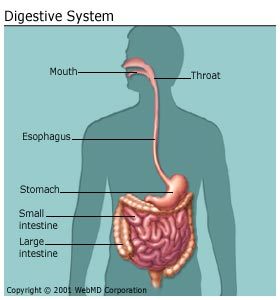
This is a example of........ 
a)
organ system
b)
cells
c)
organ
d)
tissue
52.
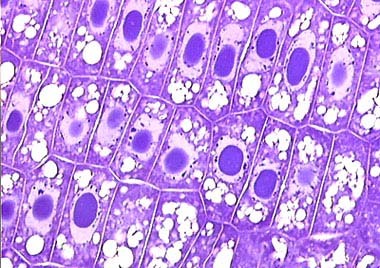
This is a example of ........
a)
cell
b)
tissue
c)
organ 
d)
organ system
53.
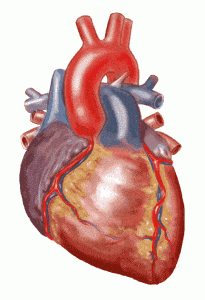
This is a example of ........
a)
cell
b)
organ system
c)
organ
d)
tissue
54.
Stores food and water for the cell.
a)
Cytoplasm
b)
Cell Wall
c)
Vacuole
d)
Nucleus
55.
Controls what enters and leaves the cell
a)
Mitochondria
b)
Cell Membrane
c)
Cell Wall
d)
Nucleus
56.
What would happen to the plant cell without the chloroplasts?
a)
There wouldn't be an organelle that performs photosynthesis
b)
There wouldn't be an organelle that serves as the resevoir for water and waste
c)
There wouldn't be an organelle that regulates what comes in and out of the cell
d)
They wouldn't be an organelle that makes necesary proteins
57.
What do all of these organisms have in common?
a)
They all have uniform offspring
b)
They are all made of cells
c)
They possess the same features
d)
They have the same internal and external structures
58.
According to cell theory, where did this cell come from?
a)
another living cell
b)
energy from sun
c)
a multicellular organism
d)
the nonliving environment
59.
Robert Hooke, Anton van Leeuwenhoek, Theodor Schwann, Rudolf Virchow, and Matthias Schliden were all responsible for what theory?
a)
The Theory of Gravity
b)
The Theory of Relativity
c)
The Cell Theory
d)
The Theory of Continental Drift
60.
What tool do you use to view the cells?
a)
metric ruler
b)
centrifuge
c)
microscope
d)
pipette
61.
All living things are made up of...
a)
cells
b)
cell tissues
c)
organ
d)
organ systems