
 Worksheets
U3 Ecology 2 Review
Total questions: 60
Worksheet time: 46mins
Name
Class
Date
1.
the place where an organism lives
a)
home
b)
nest
c)
habitat
d)
car
2.

Where can a polar habitat be found?
a)
North and South Pole
b)
Australia
c)
North and South America
d)
Asia
3.
Th following is a producer
a)
rose
b)
cat
c)
raccoon
d)
worm
4.
the following is a consumer
a)
flower
b)
tree
c)
racoon
d)
mushroom
5.
the following is a decomposer
a)
rose
b)
cat
c)
worm
d)
dog
6.
organisms that break down material
a)
producers
b)
consumers
c)
decomposers
d)
predators
7.
organisms that cannot create their own food and must eat others to obtain food
a)
producers
b)
consumers
c)
decomposers
d)
predators
8.
a change an animal makes to become better able to survive
a)
transformation
b)
shedding
c)
adaptation
d)
population
9.
an organism that is hunted by others as food
a)
predator
b)
prey
10.
an organism that hunts other organisms
a)
predator
b)
prey
11.
the amount of an organism in an area
a)
species
b)
group
c)
population
d)
average
12.
What is abiotic
a)
Sun
b)
Rain
c)
Plants
d)
Soil
13.
Is the SUN biotic or abiotic
a)
Abiotic
b)
Biotic
14.
Are PLANTS biotic or abiotic
a)
Biotic
b)
Abiotic
15.
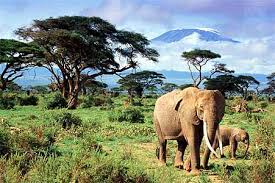
What are the biotic factors in this image?
a)
sunlight, elephants, and grasses
b)
sunlight, water, and air
c)
elephants, plants, trees
16.
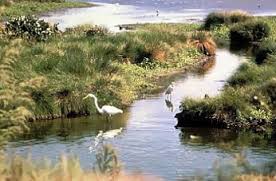
What are the abiotic factors in this image?
a)
water, sunlight, dirt, air
b)
birds and plants
c)
water, plants, and birds
17.
Which of the following best describes a community?
a)
sharks, groupers, anemones and shrimp on a coral reef
b)
decorator crabs on the seafloor
c)
loggerhead sea turtles in Atlantic
d)
prairie grassland in Wyoming
18.
Which of the following is a population?
a)
hawks, barred owls, and eagles on NC coast
b)
mountain stream
c)
all the frogs in a pond
d)
blue-tailed skinks (lizards) around a barn
19.
Which is the third level of enviornmental organization
a)
Organism
b)
Ecosystem
c)
Population
d)
Community
20.

Which organism in this food chain is a producer?
a)
Seaweed
b)
clam
c)
starfish
d)
seagull
21.

In this diagram, removing which living factor will have the MOST impact on this food chain?
a)
sun
b)
grass
c)
grasshopper
d)
robin
22.

The rabbit in this food web would be considered a:
a)
Decomposer
b)
Producer
c)
Secondary Consumer
d)
Primary Consumer
23.

In this Food Web Pyramid Which type of consumer gets only 10% of the energy stored in plants?
a)
Herbivore
b)
Carnivore
c)
Omnivore
d)
Secondary Consumer
24.
What does a Secondary Consumer eat?
a)
Tertiary Consumers
b)
Primary Consumers
c)
Producers
d)
Secondary Consumers
25.
Energy increases as you move up the food pyramid (from bottom to top).
a)
True
b)
False
26.
Consumer that eats plants
a)
heterotroph
b)
herbivore
c)
producer
d)
community
27.
What does every food chain start with?
a)
producers
b)
sun
c)
consumer
d)
decomposers
28.
What is another name for producer?
a)
consumer
b)
herbivore
c)
autotroph
d)
lichen
29.
An animal that hunts other animals for food is a ___________
a)
herbivore
b)
predator
c)
prey
d)
omnivore
30.
A community of living and nonliving things in their natural environment makes up a
a)
food web
b)
ecosystem
c)
food chain
31.

The shrew provides energy for the _______?
a)
cricket
b)
grasshopper
c)
frog
d)
snake
32.

Which of the following is a herbivore?
a)
cricket
b)
frog
c)
hawk
d)
shrew
33.

A fox is an example of...
a)
Biotic Factor
b)
Abiotic Factor
34.
Which is a producer?
a)
deer
b)
tall grass
c)
lion
d)
worm
35.
Which is a decomposer?
a)
deer
b)
tall grass
c)
lion
d)
worm
36.

What is this called?
a)
Food Web
b)
Food Chain
c)
Abiotic Factors
37.

PHYTOPLANKTON is a
a)
Herbivore
b)
Carnivore
c)
Omnivore
d)
Producer
38.

In the energy pyramid here, which organisms have the most energy available?
a)
Producers
b)
Carnivores
c)
Herbivores
d)
Top Predator
39.

In the energy pyramid below, which organism has the least amount of energy available?
a)
Producers
b)
Herbivores
c)
Carnivores
d)
Top Predator
40.
The relationship between a Canadian lynx and a snowshoe hare is an example of
a)
parasite and host
b)
predator and prey
c)
competition
d)
mutualism
41.
If the death rate of a population is greater than the birthrate, the population decreases.
a)
True
b)
False
42.
The carrying capacity is the smallest number of individuals in a population that can live in one area.
a)
true
b)
false
43.
An organism's specific role in its habitat is called a niche.
a)
true
b)
false
44.
A prairie dog, a hawk, and a badger are all members of the same
a)
niche
b)
community
c)
species
d)
population
45.
All of the following are examples of limiting factors for populations except
a)
space
b)
food
c)
time
d)
weather
46.
What is commensalism?
a)
Relationship in which 3 species benefits
b)
Relationship in which one organism eats another
c)
Relationship in which 1 species benefits and the other is unaffected
d)
When 1 organism relies on another for life
47.
What is mutualism?
a)
When organisms only eat plants
b)
Relationship in which 2 or more species benefit
c)
Organisms eat plants only
d)
Relationship in which 1 species benefits and the other is unaffected
48.
What is parasitism?
a)
Relationship in which one organism depends on another(the host)
b)
Relationship in which 2 or more species benefit
c)
Relationship in which 1 species benefits and the other is unaffected
d)
When organisms produce their own food
49.
A tapeworm and a cat have this type of relationship.
a)
mutualism
b)
parasitism
c)
commensalism
d)
competition
50.
A frog eats a fly. The frog and fly are demonstrating ________.
a)
mutualism
b)
competition
c)
predator/prey
d)
parasitism
51.
Barnacles create home sites by attaching themselves to whales. This neither harms nor benefits the whales. What kind of relationship is this?
a)
Mutualism
b)
Parasitism
c)
Commensalism
52.
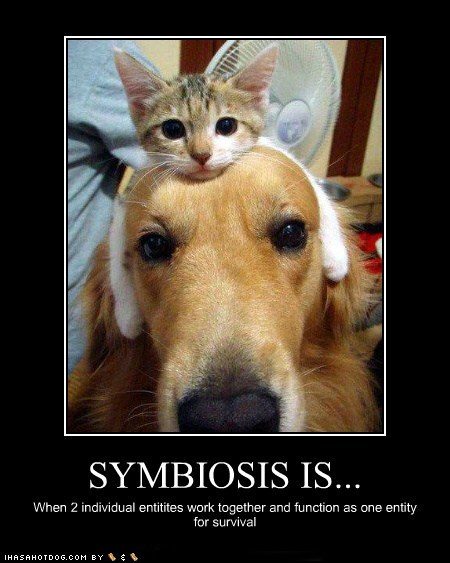
A relationship in which two species live closely together.
a)
resource
b)
mutualism
c)
succession
d)
symbiosis
53.
How many types of symbiosis are there?
a)
5
b)
7
c)
3
d)
If you pick this you're silly
1000
1000
54.
What type of symbiosis is this?
*Hermit crabs find shells left by snails that have died and move in.
* Snails die and leave behind their shells.
*Hermit crabs find shells left by snails that have died and move in.
* Snails die and leave behind their shells.
a)
commensalism
b)
mutualism
c)
parasitism
d)
predation
55.
Which of the following is an example of cooperation among organisms of the same species?
a)
2 male rams compete for a mate.
b)
Hawks and Eagles compete for food.
c)
A pack of wolves hunt together.
d)
Monkeys drop leaves for deer to eat.
56.

What type of relationship is this?
a)
predator/prey
b)
mutalism
c)
commensalism
d)
parasitism
57.

This figure shows three warblers with different niches in a spruce tree habitat. The warblers are feeding in different areas of the tree which allows them to avoid _
a)
competing with one another for food
b)
establishing a strict territory from one another
c)
creating a symbiotic relationship with one another
d)
caring for their young by supplying food
58.

What caused the significant increase in the rabbit population after 10 years in this study?
a)
The fox population reached its lowest size.
b)
The fox population reached its highest size.
c)
The fox population had only 20 members
d)
The fox population had 160 members.
59.

This graph represents the relationship between _
a)
predator and prey
b)
producers and consumer
c)
commensalism and parasitism
d)
competition and cooperation
60.
Which of the following best shows the relationship between producers, consumers, and decomposers?
a)
Corn plants -> mice -> snakes -> decomposers
b)
Snakes -> mice -> decomposers -> corn plants
c)
Corn plants -> decomposers -> snakes -> mice
d)
Decomposers -> snakes -> corn plants -> mice
100 %

