wayground logo

Free Printable Worksheets

NEW

Font size

S
M
L
XL
Worksheets

Body System Interactions and Feedback Mechanisms

Total questions: 20

Worksheet time: 24mins

Name
Class
Date
1.

What are the levels of organization starting from simple to complex?

a)

cells- tissues- organs- organ systems- organisms- populations- communities- ecosystem

b)

ecosystem- communitites- populations- organisms- organ systems- organs- tissues- cells

c)

cells- organs- tissues- organ systems- populations- ecosystem

d)

tissue- cells- organs- organ systems- organisms- populations- communities- ecosystem

2.
Organs of this system include the kidneys and bladder
a)
Digestive
b)
Excretory
c)
Immune
d)
Skeletal
3.
Which human body systems interact to produce movement of the body?
a)
Nervous and endocrine
b)
Skeletal and muscular
c)
Circulatory and digestive
d)
Excretory and nervous
4.
The two body systems that work together to protect you from foreign pathogens are...
a)
Integumentary and immune
b)
Reproductive and muscular
c)
Endocrine and digestive
d)
Respiratory and circulatory
5.
The circulatory system interacts with the ______ system to remove waste from our blood and produce urine.  
a)
nervous
b)
endocrine
c)
excretory
d)
digestive
6.
The circulatory system interacts with the ____ system when as it surrounds the small intestine. Broken down food (nutrients) is delivered in the blood to all the cells.  
a)
digestive
b)
excretory
c)
nervous
d)
skeletal
7.
The immune system interacts with the _____ system because most of the immune cells travel in the blood.  
a)
muscular
b)
circulatory
c)
digestive
d)
respiratory
8.
The nervous system interacts with the ____ system when it send a message to the adrenal glands to release the hormone "adrenaline" into our blood.  
a)
endocrine
b)
skeletal
c)
muscular
d)
digestive
9.

In humans, the gases oxygen and carbon dioxide must be exchanged between the environment and cells. During this exchange, oxygen is delivered to the red blood cells so that they can function properly in the blood stream. Which two body systems are working together to achieve this goal?

a)

Endocrine and Reproductive

b)

Skeletal and Muscular

c)

Respiratory and Circulatory

d)

Digestive and Excretory

10.
David has diabetes. His sugar level is often rising and lowering. Which body system is in charge of regulating his sugar levels?
a)
Excretory
b)
Endocrine
c)
Circulatory
d)
Nervous
11.

When your body comes in contact with a sharp object, an impulse sent you your brain triggers a reflex that causes you to move away from the object. What body systems are interacting to cause this response?

a)

Nervous, Respiratory,

b)

Nervous, Muscular

c)

Nervous, Skeletal

d)

Nervous, Digestive

12.
What is another word that can be used to describe "homeostasis"?
a)
STABLE
b)
EQUAL
c)
COMPLETE
d)
CORRECT
13.
If the environment gets cold, we will often shiver in order to:
a)
keep body temperature the same as the external temperature
b)
decrease body temperature
c)
increase body temperature
d)
regulate blood pressure
14.

When you get cut, your skin cells release hormones that signal platelets to come and stop the bleeding. Platelets then release more hormones that signal even more platelets to help stop bleeding. The hormone signals continue growing until the cut is closed.

a)

Positive Feedback Response

b)

Negative Feedback Loop

15.
When glucose levels in the blood rise, your brain sends a signal to your pancreas. The pancreas releases insulin, which opens channels in cell membranes to allow glucose to enter the cell, lowering blood sugar levels. 
a)
Positive Feedback Response
b)
Negative Feedback Loop 
16.
Rapid growth during puberty causes your body to release more and more growth hormones. As you grow, more and more growth hormones are released until puberty is reached, and then the hormones stop.
a)
Positive Feedback Response
b)
Negative Feedback Loop 
17.
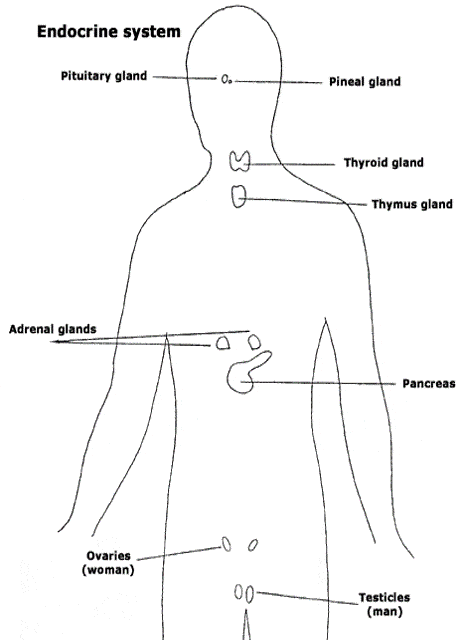
a body system that controls growth and homeostasis by secreting hormones from glands.
a)
skeletal system
b)
nervous system
c)
endocrine sytem
d)
integumentary system
18.

What is an example of a positive feedback mechanism?

a)
b)
19.

What is an example of a negative feedback mechanism?

a)
b)
20.
The main purpose of the ____________ system is to break food particles into pieces that can be used.
a)
circulatory
b)
respiratory
c)
digestive
d)
skeletal