
 Worksheets
LIFE AND ORGANISMS
Total questions: 20
Worksheet time: 13mins
It is the fundamental unit of life carrying out the functions of an organism.
cell
cytoplasm
DNA
protoplasm
Who discovered cell in a cork slice under his self designed microscope?
(a)
It is a the process by which certain living organism ingest or engulf other particles.
homeostasis
phagocytosis
photosynthesis
osmosis
"MITOSIS" is a cell division where the parents cell's traits were ensured to be transferred to their offspring, hence it was known as cell (a)
It is a hair-like structured part present in eukaryotic cells that is used for locomotion and transporting organelles in different places.
(a)
The cellular membrane breaks down during what stage of cell?
Anaphase
Metaphase
Prophase
Telophase
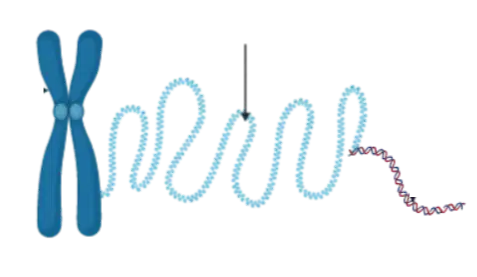
What do you call the part pointed by the arrow?
(a)
It is a fluid - filled sac found in the cytoplasm of cells.
chromosome
lysosome
mitochondria
vacuole
It is the green pigment of the plant responsible for the production of ATP.
chlorophyll
cytoplasm
endoplasmic reticulum
mitochondria
It is during this phase that the genomic DNA is replicated
(a)

What stage of cell cycle is shown in the illustration?
(a)
It is the building and repairing cellular structures and regulating biological processes of each organisms.
(a)
They are essential organelles and synthesizing proteins using the genetic information from messenger RNA.
cytoplasm
endoplasmic reticulum
ribosome
vacuole
It is an organelle that makes up carbohydrates and lipoproteins and essential for maintaining the cell's internal balance.
chlorophyll
cytoplasm
golgi apparatus
mitochondria
It is the control center of the cell in which our genetic material is located.
chromosome
mitochondria
nucleus
vacuole
Who was this German scientist who observed the cells in eukaryotic cells mostly in Kingdom Animalia?
(a)
It is a finger-like structured part of a cell that is used for the locomotion or movement of sperm cells.
(a)
This is a thin covering that holds the cell together and separates it from other neighbouring cells and the outside environment
(a)
These cells are relatively small, no nucleus, and with little defined internal structures.
Eukaryotic
Multicellular organisms
Prokaryotic
Cytokinesis
What is the complete name of your GEN BIO teacher?
(a)

