Wayground logo

Free Printable Worksheets

Font size

S
M
L
XL
Worksheets

2018 8th Grade Spring Final Review

Total questions: 156

Worksheet time: 2hrs 47mins

Name
Class
Date
1.
What will happen when these magnets are brought close together?
a)
They will attract each other.
b)
They will repel each other.
c)
Both magnets will turn to the left
d)
Both magnets will turn to the right
2.
Iron, Nickel and cobalt are all __________________ materials
a)
Shiny
b)
poles
c)
magnetic
d)
cold
3.
Where is the strongest attraction force of the magnet?
a)
at the poles
b)
in the middle
c)
above the magnet
d)
below the magnet
4.
A magnet will attract scissors if the scissors contain: 
a)
copper
b)
aluminum
c)
gold
d)
nickel
5.
Which of the following is true about a bar magnet?
a)
Its magnetic field is strongest near its center.
b)
It is surrounded by a magnetic field.
c)
The north pole is stronger than the south pole.
d)
The south pole is stronger than the north pole.
6.
The space around a magnet where the force of a magnet can attract best is called__________
a)
magnetism
b)
bar magnet
c)
horseshoe magnet
d)
magnetic field
7.
Magnetism is a type of ____________
a)
force
b)
book
c)
plant
d)
animal
8.
The force of magnetism can go through many materials.
a)
True
b)
False
9.
What would we call a nail that can pick up a paperclip because it is touching a magnet?
a)
temporary magnet
b)
poles
c)
force
d)
detector
10.
What characteristics do magnetic substances have?
a)
They can give you a "shock" when you touch them
b)
They can push or pull objects without touching them
c)
They are always black and cold to touch
d)
They fall faster than other objects when you drop them
11.
How is Earth's magnetic field similar to that of a magnet?
a)
It is hundreds of miles long
b)
It has north and south poles
c)
It is made in Earth's core
d)
It is shaped like a horseshoe
12.
What is our best evidence that Earth has a magnetic field?
a)
All things fall toward Earth's center
b)
A compass needle lines up with it
c)
Winds blow from east to west
d)
Earth's oceans all have currents
13.
Where is Earth's magnetic field strongest?
a)
Along the outside lines
b)
Along the inside lines on either side
c)
Where the lines are close together at the poles
d)
In the space outside of the lines
14.
How is an electromagnet different from a permanent magnet?
a)
An electromagnet is smaller and less powerful.
b)
An electromagnet's magnetism can be turned off.
c)
An electromagnet can be built without using metal.
d)
An electromagnet does not attract objects containing iron.
15.
A simple electromagnet can be made with which of the following?
a)
an electric current
b)
a turbine and nail
c)
a nail, a wire, and a battery
d)
a compass and a battery
16.
How can the strength of an electromagnet be increased?
a)
by rubbing it with a stronger magnet
b)
by increasing the coils of wire around the iron
c)
by increasing the length of the wire from the battery
d)
by loosening the coil of wire around the iron
17.
True or False: A magnetic field is invisible.
a)
True
b)
False
18.
The Law of Inertia
a)
Newton's
1st
Law of Motion
b)
Newton's
2nd
Law of Motion
c)
Newton's
3rd
Law of Motion
19.
F=ma
a)
Newton's
1st
Law of Motion
b)
Newton's
2nd
Law of Motion
c)
Newton's
3rd
Law of Motion
20.
For every action, there is an equal and opposite reaction.
a)
Newton's
1st
Law of Motion
b)
Newton's
2nd
Law of Motion
c)
Newton's
3rd
Law of Motion
21.
An automobile you are riding in suddenly stops, but you continue to go forward.
a)
Newton's
1st
Law of Motion
b)
Newton's
2nd
Law of Motion
c)
Newton's
3rd
Law of Motion
22.
When the force on a car is doubled, the acceleration is doubled.
a)
Newton's
1st
Law of Motion
b)
Newton's
2nd
Law of Motion
c)
Newton's
3rd
Law of Motion
23.
A stationary bumper car is set in motion by the outside force of another bumper car colliding with it.
a)
Newton's
1st
Law of Motion
b)
Newton's
2nd
Law of Motion
c)
Newton's
3rd
Law of Motion
24.
A rocket in outer space continues to move.
a)
Newton's
1st
Law of Motion
b)
Newton's
2nd
Law of Motion
c)
Newton's
3rd
Law of Motion
25.
A magician pulls a table cloth from under a table of dishes.
a)
Newton's
1st
Law of Motion
b)
Newton's
2nd
Law of Motion
c)
Newton's
3rd
Law of Motion
26.
A skater pushes another skater forward, but the one pushing moves backwards.
a)
Newton's
1st
Law of Motion
b)
Newton's
2nd
Law of Motion
c)
Newton's
3rd
Law of Motion
27.
The harder you hit a baseball, the faster it accelerates.
a)
Newton's
1st
Law of Motion
b)
Newton's
2nd
Law of Motion
c)
Newton's
3rd
Law of Motion
28.
You push against a wall and the wall is pushing back on you.
a)
Newton's
1st
Law of Motion
b)
Newton's
2nd
Law of Motion
c)
Newton's
3rd
Law of Motion
29.
The acceleration of a 4 kg bowling ball will be greater than the acceleration of a 6 kg bowling ball if the same force is applied to both.
a)
Newton's
1st
Law of Motion
b)
Newton's
2nd
Law of Motion
c)
Newton's
3rd
Law of Motion
30.
As the fuel in a rocket ignites, the force of gas expansion and explosion pushes out the back of the rocket and pushes the rocket forward.
a)
Newton's
1st
Law of Motion
b)
Newton's
2nd
Law of Motion
c)
Newton's
3rd
Law of Motion
31.
You step from a boat to a dock.  The boat moves backwards as you move forwards and you fall in the water.
a)
Newton's
1st
Law of Motion
b)
Newton's
2nd
Law of Motion
c)
Newton's
3rd
Law of Motion
32.
You push against the floor when you walk and the floor pushes back on you.
a)
Newton's
1st
Law of Motion
b)
Newton's
2nd
Law of Motion
c)
Newton's
3rd
Law of Motion
33.
You are carrying a lunch tray when you bump into the edge of a table.  Although the tray did not tip, your milk falls off of the front of the tray.
a)
Newton's
1st
Law of Motion
b)
Newton's
2nd
Law of Motion
c)
Newton's
3rd
Law of Motion
34.
You slide towards the window when a car makes a sudden turn.
a)
Newton's
1st
Law of Motion
b)
Newton's
2nd
Law of Motion
c)
Newton's
3rd
Law of Motion
35.
A swimmer pushes water back with her arms but her body moves forward.
a)
Newton's
1st
Law of Motion
b)
Newton's
2nd
Law of Motion
c)
Newton's
3rd
Law of Motion
36.
A second grader is pulling her sled behind her in the snow.  She is crying because when she stopped to tie on her hat, the sled kept sliding and hit her in the back of her legs.
a)
Newton's
1st
Law of Motion
b)
Newton's
2nd
Law of Motion
c)
Newton's
3rd
Law of Motion
37.
When you paddle a kayak, you push the paddle backwards in the water and the kayak goes forward.
a)
Newton's
1st
Law of Motion
b)
Newton's
2nd
Law of Motion
c)
Newton's
3rd
Law of Motion
38.
What is Newtons 1st law of motion?
a)
Force= Mass multiplied by acceleration 
b)
An object at rest stays at rest unless acted on an unbalanced force.
c)
For every action there is a equal and opposite  re-action.
d)
Law of gravity 
39.
What is Newtons 2nd law of motion?
a)
Force= Mass multiplied by acceleration
b)
An object at rest stays at rest unless acted on an unbalanced force.
c)
For every action there is a equal and opposite  re-action.
d)
Law of gravity 
40.
What is Newtons 3rd law of motion?
a)
Force= Mass multiplied by acceleration
b)
An object at rest stays at rest unless acted on an unbalanced force.
c)
For every action there is a equal and opposite  reaction.
d)
Law of gravity 
41.
Mass is a measure of an object's inertia. Objects with greater mass have a greater inertia; objects with less mass have less inertia.
a)
true 
b)
false 
42.
Which force produces a change in motion?
a)
unbalanced force
b)
balanced force
c)
gravitational force
d)
frictional force
43.
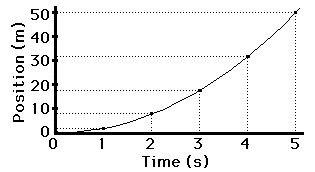
The picture of the position vs. time graph shows an object that is...
a)
accelerating/speeding up
b)
moving at a constant speed 
c)
not moving 
d)
accelerating/slowing down. 
44.
What is the standard unit force is measured in?
a)
Newtons
b)
pounds
c)
grams
d)
meters
45.
Which has more Inertia? (so need more force to move) 
a)
Truck
b)
Ant
c)
A cat
d)
A skateboard
46.
What is the formula for force?
a)
F=M/A
b)
F=MA
c)
F=AX
d)
what is force?
47.
According to Newton's second law, if you increase the force applied to an object :
a)
it accelerates more
b)
it doesn't move
c)
you get more inertia
d)
it decelerates
48.
Who is the scientist who came up with the Laws of Motion?
a)
Sir Issac Newton
b)
The Greeks
c)
John Dalton
d)
Sir John Newt
49.
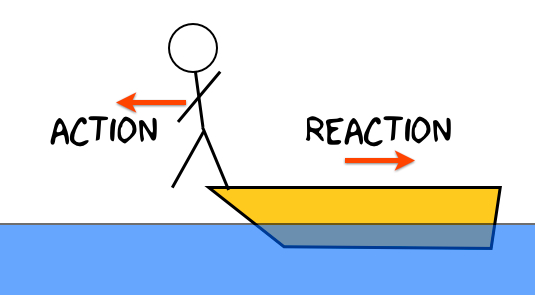
What law of motion does this picture represent?
a)
Newtons 1st law
b)
Newtons 4th law 
c)
Newtons 3rd law 
d)
Newtons 2nd law
50.
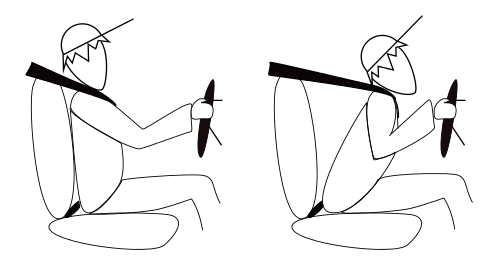
What Newtons law does this picture represent
a)
Newtons 2nd law 
b)
Law of gravity 
c)
Newtons 1st law
d)
Newtons 5th law
51.
On a distance vs. time graph, the steeper the slope _____
a)
the slower the speed
b)
the faster the speed
c)
less acceleration
d)
greater acceleration
52.
When something has speed in a certain direction it is called ___________.
a)
motion
b)
position
c)
velocity
d)
speed
53.
Change in speed over a given period of time is
a)
velocity
b)
motion
c)
speed
d)
acceleration
54.
LT5: The rate at which velocity CHANGES is: 
a)
acceleration
b)
speed
c)
direction
d)
physics
55.
An empty truck and a fully loaded truck are next to each other at a traffic light. When the light turns green, the lighter truck increases speed more quickly. Which of these best explains this situations
a)
Newton's first law
b)
Newton's second law
c)
Newton's third law
d)
Conservation of momentum
56.
Newton's first law of motion states that __________.
a)
when a force is applied on an object, there is an equal force applied by the object in the opposite direction
b)
hen a force acts on an object, its acceleration is in the same direction as the force
c)
an object will remain at rest or keep moving with a constant velocity unless a force acts on it
d)
cceleration is calculated by dividing the force exerted on an object by the mass of the object
57.

What is an example of an unbalanced force?

a)

a person standing

b)

a person pushing against a gym wall

c)

a person sitting in a seat

d)

a person pushing a cart across the floor

58.

What is an example of a balanced force?

a)

a person pushing a car across the road

b)

two people pushing a box with the same force

c)

a boat slowing down on a lake

59.

Which is true?

a)

objects with less mass require less force

b)

objects with less mass require more force

c)

objects with more mass require less force

60.
The high point of a wave.
a)
crest
b)
trough
c)
amplitude
d)
wavelength
61.
The low point of a wave.
a)
crest
b)
trough
c)
amplitude
d)
wavelength
62.
The maximum height of a wave.
a)
crest 
b)
trough
c)
amplitude
d)
wavelength
63.
The distance from one point to the same point on the next wave.
a)
crest
b)
trough
c)
amplitude
d)
wavelength
64.
The SI unit for frequency is ________.
a)
m
b)
m/s
c)
hertz
d)
s
65.
Which is an example of a longitudinal wave?
a)
light wave
b)
sound wave
c)
visible wave
d)
radio wave
66.
What do waves transfer?
a)
energy
b)
matter
c)
work
d)
power
67.
Which type of wave can travel through matter or empty space?
a)
electromagnetic
b)
mechanical
c)
work 
d)
power
68.
The number of times a waves passes a given point in one sec
a)
frequency
b)
amplitude
c)
energy
d)
trough
69.
Wave that moves perpendicular to the motion of the wave
a)
transverse
b)
compressional
c)
physical 
d)
chemical
70.
 travels only through matter
a)
mechanical wave 
b)
electromagnetic wave 
71.
material in which a mechanical wave travels
a)
medium 
b)
vacuum 
c)
black holes
d)
chocolate
72.
disturbance that transfers energy from one place to another
a)
wave
b)
energy
c)
vacuums 
73.
What kind of wave is this?
a)
Transverse Wave
b)
Longitudinal Wave
74.
What kind of wave is this?
a)
Transverse
b)
Longitudinal
75.
What kind of wave is this?
a)
Transverse
b)
Longitudinal
76.
Which letter is marked at the troughs of the wave?
a)
C
b)
A
c)
B
d)
D
77.
The number of wavelengths that pass a point each per second is:
a)
frequency
b)
period
c)
longitudinal 
d)
transverse wave 
78.
When the frequency of a wave increases, what happens to the wavelength?
a)
The wavelength is not directly affected by the frequency of a wave.
b)
The wavelength increases.
c)
The wavelength decreases.
d)
More specific information is needed to form a conclusion about the wavelength.
79.
A mechanical wave cannot travel through...
a)
a vacuum(empty space).
b)
water.
c)
air. 
d)
glass.
80.
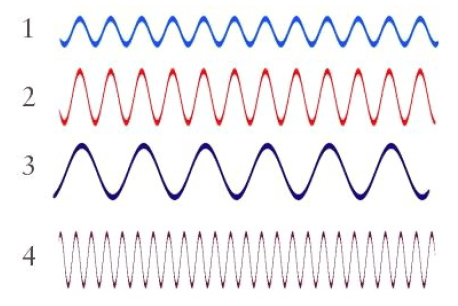
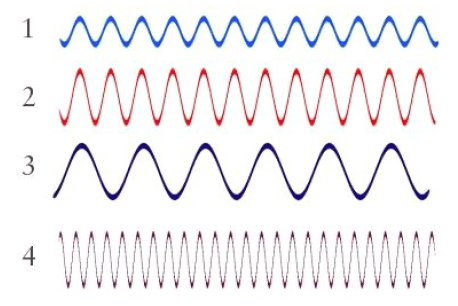
Which wave in the diagram has the greatest frequency?
a)
1
b)
2
c)
3
d)
4
81.
Which wave in the diagram has the greatest wavelength?
a)
1
b)
2
c)
3
d)
4
82.
Which of the following can sound travel through?
a)
solid
b)
liquid
c)
gas
d)
all of the above
83.
When a wave strikes and object and bounces off. (example echo)
a)
medium
b)
refraction
c)
reflection
d)
interference
84.
When a wave bends as it passes through at an angle from one medium to another.(example: pencil in a glass of water-)
a)
medium
b)
refraction
c)
reflection
d)
interference
85.
Which sequence of DNA bases would pair with the ones shown in the partial strand below?
 ATG TGA CAG
a)
ATG TGA CAG
b)
TAC ACT GTC
c)
GTA AGT GAC
d)
CAT TCA CTG
86.
The genetic material of an organism is composed of
a)
lipids
b)
proteins
c)
DNA
d)
carbohydrates
87.
A chromosome is best described as a 
a)
gene that has more than one form.
b)
green cell found in many plants.
c)
strand of DNA containing genetic information.
d)
reproductive cell found in certain kinds of bacteria.
88.
Which statement about DNA is correct?
a)
A child's DNA will be unrelated to the mother's or father's DNA.
b)
A child's DNA will show similarities to both the mother's and father's DNA.
c)
A female child's DNA will exactly match the mother's DNA.
d)
A male child's DNA will exactly match the father's DNA.
89.
DNA contains the code for constructing which molecules?
a)
proteins
b)
fats
c)
starches
d)
sugars
90.
In humans, B is the allele for brown eyes and b is the allele for blue eyes.  Two brothers both have brown eyes, but one of them has both the B and b alleles while the other only has B alleles.  Which statement is true about the brothers?
a)
they have the same genotype and phenotype
b)
they have different phenotypes and genotypes
c)
they have the same phenotype but different genotypes
d)
they have the same genotypes but different phenotypes
91.
Which of the following best describes the number of chromosomes in a normal human body cell?
a)
23 pairs of chromosomes
b)
46 different types of chromosomes
c)
46 male chromosomes and 46 female chromosomes
d)
23 original chromosomes and 23 duplicate chromosomes
92.
Which of the following statements best describes a DNA molecule?
a)
it is a double helix
b)
it contains the sugar, ribose
c)
it is composed of amino acids
d)
it contains the nitrogenous base uracil
93.
Female cattle that have white coats are crossed with male cattle that have red coats.  Both male and female offspring have roan coats, which are coats with both red hairs and white hairs.  Which of the following best describes the genetics of coat color in the cattle?
a)
the red and white alleles are sex-linked
b)
the red and white alleles are codominant
c)
the red allele is recessive to the white allele
d)
the red allele is dominant to the while allele
94.
In tomato plants, the tall vine allele (T) is dominant to the short vine allele (t).  Two tomato plants are crossed.  Among the offspring plants grown from seed, 45% have tall vines and 55% have short vines.  What are the most likely genotypes of the parent plants?
a)
TT and tt
b)
Tt and tt
c)
Tt and TT
d)
tt and tt
95.
The genotype of an organism describes the
a)
codons that make up the genes of the organism
b)
number of genes on the organism's chromosomes
c)
genetic make up of a trait
d)
type of chromosomes present in the nucleus
96.
In some chickens, feather color is inherited by incomplete dominance.  If one parent with black feathers (BB) is crossed with a white-feathered parent (WW), all the offspring will have gray feathers (BW)  What is the percent chance of producing a gray feathered offspring when crossing a gray-featherd hen with a white-feathered rooster?
a)
25%
b)
50%
c)
75%
d)
100%
97.
Two spotted leopards produce a litter of four cubs.  Three of the cubs are spotted and one is solid black.  The black coat is probably what type of trait?
a)
dominant
b)
polygenic
c)
recessive
d)
sex-linked
98.
In some pea plants, the allele for yellow seed color (Y) is dominant over the allele for green seed color (y).  Two plants were crossed; three-fourths of the offspring plants had yellow seeds, and one-fourth of the offspring plants had green seeds. Based on the results, what were the genotypes of the parent plants?
a)
Yy, yy
b)
Yy, Yy
c)
YY, yy
d)
YY, Yy
99.
A  common mutation in cats is polydactyly, the presence of extra toes.  Cats with the dominant allele (P) have extra toes on the front feet.  Cats with the genotype pp have the normal number of toes. What is the probability of the offspring of two cats, one with the normal number of toes and one that is heterozygous, will display polydactyly?
a)
25%
b)
50%
c)
75%
d)
100%
100.
Which of these combinations results in the expression of a recessive trait?
a)
two dominant alleles
b)
a dominant sex-linked allele and a Y chromosome
c)
two recessive alleles
d)
a dominant allele and a recessive allele
101.
Which of these is an example of a heterozygous genotype?
a)
Rr
b)
wrinkled
c)
RR
d)
round
102.
Assume that in humans there is a 50/50 chance that a child will be a boy.  If a mother and father have four sons, what are the chances that their fifth child will be a daughter?
a)
1/2
b)
1/5
c)
1/16
d)
1/25
103.
Which of the following is a phenotype?
a)
BB
b)
Bb
c)
bb
d)
Blue eyes
104.
What is a phenotype
a)
The genetic make up (code)
b)
The physical trait
105.
the passing of genetic traits from parent to offspring.
a)
heredity
b)
trait
c)
gene
d)
allele
106.
having two of the same genes for the trait (sometimes called purebred).
a)
homozygous
b)
hetrozygous
c)
protein
d)
chromosome
107.
having two different genes for a trait (sometimes called hybrid).
a)
protein
b)
homozygous
c)
heterozygous
d)
genotype
108.
Magda is a tall, 11 year old drummer. She has a scar on her right cheek. She is good at swimming. Which of her traits did Magda most likely inherit?
a)
height
b)
the scar
c)
ability to swim
d)
ability to play drums
109.
An allele whose trait only shows up when no dominant allele is present.
a)
hidden allele
b)
dominant allele
c)
recessive allele
d)
present allele
110.
AA and Aa always show up as
a)
dominant
b)
recessive
111.
Which of the following genotypes is homozygous dominant?
a)
A
b)
Aa
c)
AA
d)
aa
112.
An allele whose trait always shows up in the organism when the allele is present.
a)
recessive allele
b)
dominant allele
c)
hidden allele
d)
present allele
113.
one of the alternative forms of a gene that governs a characteristic, such as hair color
a)
allele
b)
gene
c)
trait
d)
DNA
114.
genetic makeup
a)
phenotype
b)
genotype
c)
heterzygous
d)
allele
115.
father of genetics
a)
Gregor Mendel
b)
James Watson
c)
Dr. Robbins
d)
Francis Crick
116.
A characteristic that an organism can pass on to its offspring through its genes
a)
protein
b)
trait
c)
DNA
d)
gene
117.
Is Bb dominant or recessive?
a)
dominant
b)
recessive
118.
Is bb dominant or recessive?
a)
dominant
b)
recessive
119.
Is short a genotype or phenotype?
a)
genotype
b)
phenotype
120.
Is AA a genotype or phenotype?
a)
genotype
b)
phenotype
121.
What is the genotype?
A green wrinkled pea plant  RR has two dominant alleles
a)
wrinkled pea plant
b)
allelels
c)
RR
d)
green
122.
what is the phenotype?
A green wrinkled  pea plant RR has two dominant alleles
a)
RR
b)
dominant
c)
green wrinkled
d)
alleles
123.
Is zz dominant or recessive
a)
dominant
b)
recessive
124.
Hair colour is an example of
a)
genotype
b)
phenotype
125.
Having the genes for baldness is an example of
a)
genotype
b)
phenotype
126.
Which of the following is heterozygous
a)
FF
b)
tt
c)
Gg
d)
RR
127.
Which of the following is homozygous recessive?
a)
rr
b)
AA
c)
TT
d)
Ff
128.
What does the prefix homo- in homozygous mean?
a)
same
b)
different
c)
dating
d)
humans
129.
What does the prefix hetero- in heterozygous mean?
a)
same
b)
different
c)
dating
d)
human
130.
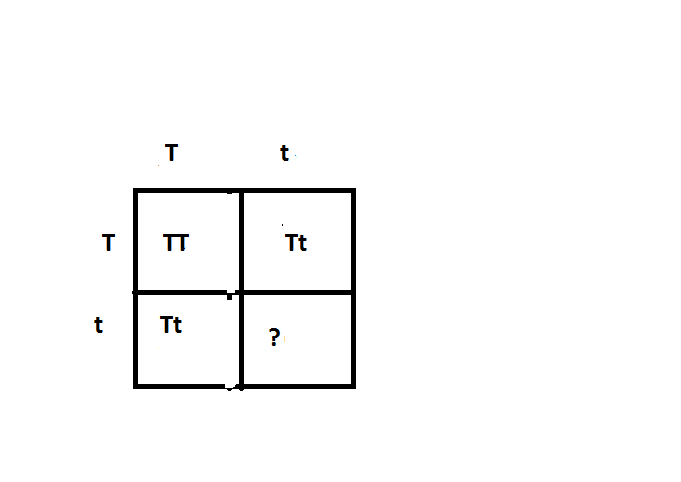
T - tall and t = short
In the punnett square below, what belongs in the missing square
a)
tt
b)
Tt
c)
Bb
d)
TT
131.
A homozygous dominant brown mouse is crossed with a heterozygous brown mouse (tan is the recessive color). 
a)
100 % tan
b)
100 % brown 
c)
50 % brown and 50% tan 
d)
75 % brown and 25 % tan 
132.
Two heterozygous red flower (white flowers are recessive) are crossed. What is the phenotype?
a)
75% red and 25% white
b)
25% red and 75% white
c)
100 White 
d)
50% red 50% red 
133.
A red flower (Rr) is crossed with a white flower (rr). What is the genotype?
a)
0 RR; 0 Rr: 4 rr
b)
2 RR; 0 Rr: 2 rr
c)
4 RR; 0 Rr: 0 rr
d)
0 RR; 2 Rr: 2 rr
134.
What type of inheritance do two alleles have if their traits blend together? 
a)
Incomplete Dominance
b)
Co-Dominance
c)
Mendelian Inheritance
d)
Homozygous Inheritance
135.
How are Incomplete Dominance and Co Dominance different than a normal Mendelian cross?
a)
There is no difference
b)
The heterozygous genotype has a unique phenotype
c)
There is no heterozygous genotype
d)
There is only one phenotype regardless of genotype.
136.
This type of inheritance pattern is a MIXTURE of both traits.
a)
incomplete dominance
b)
co-dominance
c)
complete dominance
d)
recessive pattern
137.
This type of inheritance pattern shows BOTH traits in possible offspring
a)
complete dominance
b)
incomplete dominance
c)
co-dominance
d)
dominant pattern
138.
A calico cat shows both the traits for orange fur and black fur. What kind of allele expression is this?
a)
Incomplete Dominance
b)
Co dominance
c)
Independent assortment
d)
Recessive inheritance
139.
This is an example of ___________.
a)
 Incomplete Dominance
b)
 Codominance
140.
This is an example of ___________.
a)
Incomplete Dominance
b)
Codominance
141.
Mendelian or not:
When two plants with yellow seeds are crossed, they produce some offspring (kids) with yellow seeds and some with brown seed.
a)
Mendelian
b)
Not
142.
Mendelian or not:
When a tall and a short version of a plant are crossed, the kids are middle-length
a)
Mendelian
b)
Not
143.
Each one of the boxes on the Punnett Square represents what probability of an offsprings' genotype?
a)
25%
b)
1%
c)
10%
d)
0%
144.
B = brown fur  b = white fur
In the punnett square, what is the probability for white fur? 
a)
0%
b)
25%
c)
50%
d)
75%
145.
HOW DID THE U.S. WIN THE SPACE RACE?  
a)
LAUNCHED THEIR OWN SATELLITE 
b)
LAUNCHED THEIR FIRST FEMALE ASTRONAUT INTO SPACE
c)
THE 1ST ASTRONAUTS ON THE MOON
d)
JOHN GLENN ORBITING THE EARTH
146.
WHAT KIND OF ANIMAL DID THE U.S. USE TO LAUNCH INTO SPACE BEFORE HUMANS ?  
a)
CATS
b)
MONKEYS
c)
SNAKES
d)
DOGS
147.

What was the Apollo Project?

a)

A series of space flights dedicated to getting American astronauts to the moon.

b)

A series of rockets designed to go to the Sun.

c)

A class of astronauts who graduated from MIT.

d)

An unpublished Percy Jackson novel.

148.

Who declared that the United States would put a man on the moon by the end of the 1960s?

a)

Martin Luther King, Jr.

b)

Lyndon B Johnson

c)

Robert Kennedy

d)

John F Kennedy

149.

Then on July 20, 1969, Neil Armstrong became the first man to set foot on the moon during the Apollo ____ mission.

a)

7

b)

9

c)

11

d)

13

150.

The purpose of this project was to launch a man into orbit and bring him back safely.

a)

Project Gemini

b)

Project Apollo

c)

Project X

d)

Project Mercury

151.

The purpose of this project was to learn to live and work in space (change orbit, maneuver, walk in space).

a)

Project Gemini

b)

Project Moon

c)

Project Apollo

d)

Project Mercury

152.
Final stage of USA’s goal to get to the Moon. This program landed a spacecraft on the Moon.
a)
Project Moon
b)
Project Apollo
c)
Project Mercury
d)
Project Gemini
153.
First man to land on the Moon
a)
Neil Armstrong
b)
Buzz Aldrin
c)
Yuri Gagarin
d)
John Glenn
154.

In Project Mercury, who was the first American in space

a)

Alan Shepard

b)

John Glenn

c)

Neil Armstrong

d)

Gus Grissom

155.

Which is the correct sequence?

a)

Project Mercury - Project Gemini - Apollo Missions

b)

Project Gemini - Project Mercury - Apollo Missions

c)

Project Mercury - Apollo Missions - Project Mercury

156.

How was Project Mercury different from Project Gemini?

a)

In Project Mercury each space capsule held only one astronaut; in Project Gemini, each space capsule held two astronauts.

b)

In Project Mercury each space capsule held two astronauts; in Project Gemini, each space capsule held only one astronaut.

c)

Project Mercury was a success, but Project Gemini failed.

d)

Project Mercury was a failure, but Project Gemini was a success.