

wayground logo

Free Printable Worksheets

Font size

S
M
L
XL
Worksheets

The Atom - Unit Review

Total questions: 22

Worksheet time: 29mins
Name
Class
Date
1.
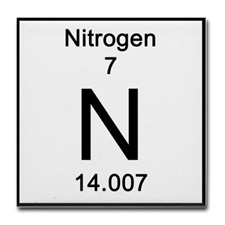
What is the number of protons that the element in this image contain?
a)
14
b)
7
c)
15
d)
18
2.
all matter is made of what 
a)
energy 
b)
atoms 
c)
electrons 
d)
compounds 
3.

If an atom loses a neutron, what happens?

a)

Its mass is lowered, and it becomes a different element.

b)

Its mass stays the same, and it is still the same element

c)

Its mass stays the same, and it becomes a different element.

d)

Its mass is lowered, but it is still the same element.

4.
an atom with atomic number 6 would have how many protons 
a)
6
b)
12
c)
3
d)
cannot be determined 
5.
Which of the following is a negatively charged subatomic particle?
a)
Electron
b)
Proton
c)
Neutron
d)
Quark
6.

The mass of an electron is __________.

a)

equal to the mass of the proton and the neutron

b)

not significant to the overall mass of the atom

c)

higher than the mass of the proton or the neutron

7.

If this atom has a balanced charge, how many protons would you expect to find in this atom? (Refer to the illustration to answer this question)

a)

2

b)

6

c)

4

d)

0

8.
The atomic number of an elements is the total number of which particles in the nucleus?
a)
neutrons
b)
protons
c)
electrons
d)
protons and electrons
9.
Where are electrons of an atom found?
a)
Nucleus
b)
Electron Cloud
c)
Some are in the nucleus and some in the electron cloud.
d)
They are moving everywhere.
10.
What is the atomic number for an element with three protons?
a)
2
b)
1
c)
3
d)
6
11.

Which term describes atoms with different atomic masses due to varying numbers of neutrons?

a)

compounds

b)

isotopes

c)

cations

d)

ions

12.

What is the amount of a certain isotope that occurs in a natural sample of an element?

a)

percent abundance

b)

percent atomic weight

c)

average atomic mass

d)

ion abundance

13.
If an atom has 10 protons, 10 neutrons, and 10 electrons, what is the mass of the atom?
a)
10
b)
20
c)
30
14.
What is the mass number?
a)
the number of protons
b)
the number of protons and neutrons
c)
the number of neutrons
d)
the number of protons and electrons
15.

Protons and neutrons are composed of __________.

a)

quarks

b)

molecules

c)

ions

d)

electrons

16.
What is the location of the electron?
a)
the free floating negatively charged electron cloud
b)
the free floating positively charged electron cloud
c)
the very dense positively charged electron orbital
d)
the positively charged very dense nucleus
17.
Isotopes are atoms of the same element with different #’s of __________ & therefore different __________.
a)
n0 ;  atomic #’s
b)
p+ ; atomic #’s
c)
e- ; atomic masses
d)
n0 ; atomic masses
18.
What do these isotopes of carbon all have in common?
a)
neutrons & mass number
b)
atomic number and neutrons
c)
atomic number and electrons
d)
protons, atomic number, and mass number
19.
What is Half-life?
a)
The amount of time it takes for some of the nuclei in a sample of the isotope to decay
b)
The amount of time it takes for half the electrons in a sample of the isotope to decay
c)
The amount of time it takes for half the nuclei in a sample of the isotope to decay
d)
the amount of time it takes to double the nuclei in a sample of the isotope to decay
20.
The splitting of a nucleus into smaller nuclei is
a)
fusion
b)
fission
c)
half-life
d)
gamma radiation
21.

Why does radioactive decay occur?

a)

Nuclear forces disintegrate protons.

b)

The electric force and nuclear forces are in opposition to each other.

c)

The electric force causes electrons to be released.

22.

When does radioactive decay occur?

a)

when an atom gains electrons

b)

when neutrons accumulate in the nucleus

c)

when the nucleus decays

d)

when an atom loses electrons
