wayground logo

Free Printable Worksheets

Font size

S
M
L
XL
Worksheets

8th Grade Science Review

Total questions: 109

Worksheet time: 2hrs 34mins

Name
Class
Date
1.
A scientific theory...
a)
is based on lots of evidence
b)
is not valid
c)
is not reliable
d)
has not been tested many times
2.
Which of the following is an explanation for a natural phenomenon that is supported by a large body of scientific evidence?
a)
scientific theory
b)
scientific law
c)
hypothesis
d)
observation 
3.
A scientific ____________ is a statement that describes what always happens under certain conditions in nature.
a)
law
b)
theory
c)
method
d)
variable
4.
What is a law?
a)
Describes what happens
b)
Explains a process
5.
When experimenting with the growth of a plant, a scientist uses three (of the same type of) plants, two different fertilizers, equal light, and equal water. What type of variable is the fertilizer?
a)
Dependent
b)
Independent
c)
Control
d)
Compound
6.
Research Question: Does the type of gasoline put in a car effect how fast the car can drive. What is the independent variable?
a)
Type of gasoline
b)
which car the gas is put into
c)
how fast the car can drive
d)
how much gas is put into the car
7.
Ms. S set up an experiment to see how the mass of a ball affects the distance it rolls off a ramp. What is the dependent variable?
a)
Distance traveled by the ball
b)
Height of the ramp
c)
Mass of the ball
d)
Where the experiment took place.
8.
The independent variable is the ONE thing you _____.
a)
change
b)
keep the same
c)
experiment with
d)
investigate
9.
Walker is testing which fertilizer will grow the tallest grass.  The height of the grown grass is the __ variable.
a)
constant (same)
b)
independent (changes)
c)
dependent (measured)
10.
Why do scientists use the scientific method?
a)
To make sure they get credit for their discoveries.
b)
To make sure their results are valid and can be performed by other scientists.
c)
So that other scientist don't get mad at them
11.
What are the materials in your scientific method? 
a)
your favorite markers and lucky eraser
b)
everything you will need to complete your experiment
c)
a hypothesis
d)
step by step directions to complete an experiment
12.
The summary at the end of an experiment that explains the results is called the ___________________
a)
conclusion
b)
procedures
c)
materials
d)
responding variable
13.
If plants are exposed to sunlight, then they will grow taller.
What part of the scientific method is this an example of?
a)
Procedure
b)
Hypothesis
c)
Question
d)
Results
14.
A _____________________ is something that scientists use to represent an object or process
a)
mass
b)
matter
c)
model
d)
weight
15.
Why do other stars appear so much smaller than the sun?
a)
They are much smaller
b)
They are so far away
c)
They are not as bright
d)
They are dwarf stars
16.
What color of star is the hottest?
a)
Blue
b)
Red
c)
Yellow
d)
Orange
17.
What color of star is the coolest?
a)
Red
b)
Yellow
c)
Blue
d)
White
18.
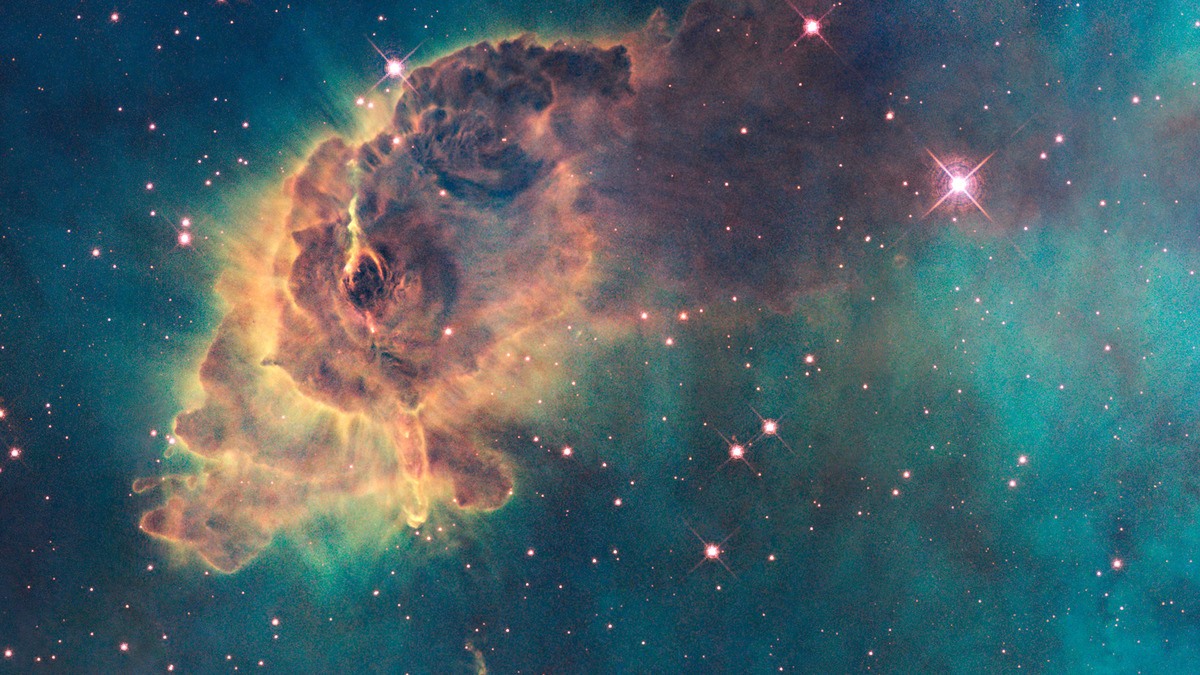
What is the name of the gas/dust clouds that form stars?
a)
Nebulas
b)
Protostars 
c)
Supernova
d)
Neutron Star
19.
Which layer of the sun is also known as the "crown" layer? 
a)
Core
b)
Chromosphere
c)
Corona
d)
Convection zone
20.
Which layer of the sun is considered to be the suns "surface layer"
a)
Photosphere
b)
Chromosphere
c)
Corona
d)
Core
21.
How many layers are in the Sun's ATMOSPHERE?
a)
1
b)
2
c)
3
d)
4
22.
Earth and the other planets closest to the Sun are made mostly of _______
a)
gas
b)
metal
c)
water
d)
rock
23.
Earth's ________ on its axis causes day and night.
a)
rotation
b)
revolution
c)
phase
d)
comet
24.
One kind of  _______ is the crescent Moon.  
a)
axis
b)
asteroid
c)
phase
d)
space probe
25.
One full orbit of an object around another object is called a ________.
a)
axis
b)
rotation
c)
revolution
d)
satellite
26.
One of the main differences between the outer and inner planets is __________.
a)
The inner planets all have water
b)
the inner planets are much bigger than the outer planets
c)
the outer planets are gas planets
d)
the outer planets have rings, and the inner planets don't
27.
Select the order from smallest to largest.
a)
Sun, Milky Way, solar system, universe
b)
Sun, Milky Way, universe, solar system
c)
Sun, solar system, Milky Way, universe
d)
Sun, solar system, universe, Milky Way
28.
Why does Earth have different seasons? 
a)
because of the distance between Earth and the sun 
b)
because of the speed of Earth as it rotates on its axis 
c)
because of the amount of light blocked by the moon on its axis 
d)
because of the tilt of Earth on its axis as it moves around the sun 
29.
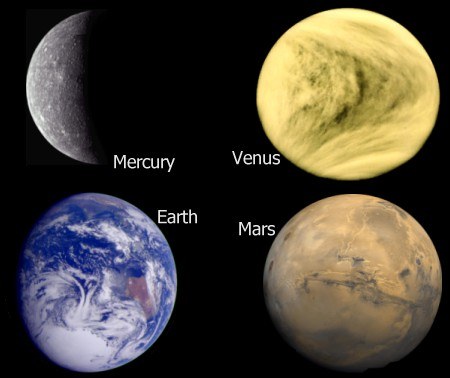
What is the correct order of the planets, starting at the sun? 
a)
Mars, Venus, Earth, Mercury, Jupiter, Saturn, Uranus, Neptune
b)
Mercury, Venus, Earth, Jupiter, Mars, Uranus, Saturn, Neptune
c)
Mercury, Venus, Earth, Mars, Jupiter, Saturn, Uranus, Neptune
d)
Neptune, Uranus, Saturn, Jupiter, Mars, Earth, Venus, Mercury
30.
What are the first four terrestrial planets made of?
a)
Gas
b)
Rock
c)
Metal
d)
Ice
31.
Identify the gas giant planets.
a)
Neptune, Mars, Venus, Jupiter
b)
Venus, Mercury, Mars, Earth
c)
Mars, Saturn, Sun, Earth
d)
Jupiter, Saturn, Uranus, Neptune
32.
What force keeps the planets orbiting around the sun?
a)
Gravity
b)
Magnets
c)
Friction
d)
Light Energy
33.
States that younger rocks lie above older rocks if the layers have not been disturbed
a)
Law of crosscutting
b)
Law of superposition
c)
Relative Dating
d)
Unconformity
34.
What is a fossil?
a)
A dead organism
b)
Sedimentary Rock
c)
Bone
d)
Preserved remains or traces of an organism 
35.
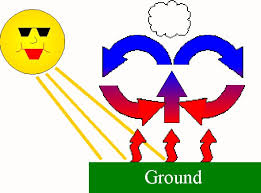
What is the definition of CONVECTION
a)
When heat transfers through waves.
b)
When heat transfers from objects that are touching.
c)
a  hot liquid or air that  expands, becomes less dense, and rises or becomes more dense, and sinks.
d)
Heat traveling from the sun
36.
Which of the following is an example of convection?
a)
A hair dryer is drying up your hair.
b)
When the AC or heater changes the temperature.
c)
When a car engine turns hot after being turned on.
d)
When you are making soup and the water is rising and lowering.
37.
Warm air rises and the cool air sinks demonstrates this type of heat transfer. 
a)
conduction
b)
convection
c)
radiation
d)
Insolation 
38.
Warm air is __________ dense than cold air and rises creating convection currents.
a)
more
b)
less
39.
The chart that arranges elements by atomic number is:
a)
Atomic Number
b)
Metal
c)
Periodic Table
d)
Chart
40.
If an element does NOT conduct electricity and is NOT shiny or malleable, it is a:
a)
Metal
b)
Nonmetal
c)
Gas
d)
Liquid
41.
The smallest unit of an element that still has the properties of that element is:
a)
Proton
b)
Nonmetal
c)
Atomic number
d)
Atom
42.
A substance that is generally shiny, can be bent, and often conducts heat and electricity is:
a)
Gas
b)
Nonmetal
c)
Metal
d)
Element
43.
A POSITIVE subatomic particle:
a)
Neutron
b)
Electron
c)
Atom
d)
Proton
44.
A NEGATIVE subatomic particle is:
a)
Electron
b)
Neutron
c)
Proton
d)
Metal
45.
How are compounds and elements different?
a)
Elements are metals; compounds are nonmetals
b)
Elements are pure substances; compounds are not
c)
Elements exist as solids, liquids, and gases; compounds are solids
d)
Elements have one kind of atom; compounds have different kinds of atoms
46.
A student is given four solid substances to test.  One is a metal.  What are properties of metal that student could test for?
a)
Malleableness
b)
Shininess
c)
Conducts electricity
d)
All of the above
47.
A(n) ______ is a substance with a pH less than 7
a)
Acid
b)
Alkaline
c)
Base
d)
Buffer
48.
A(n) _______ is a substance with a pH greater than 7.
a)
Base
b)
Acid
c)
Buffer
d)
Water
49.
What is the only substance with a neutral pH of 7?
a)
Milk
b)
Orange Juice
c)
Water
d)
Blood
50.
Are there any compounds on the periodic table 
a)
yes there are many 
b)
no because only elements are on the periodic table
c)
I think they are?
51.
In a mixture, substances 
a)
keep their properties
b)
have a definite chemical composition
c)
lose their properties
d)
combine chemically 
52.
Water is an example of 
a)
element
b)
compound
c)
mixture
d)
an ion 
53.
Two or more substances that have been combined but not chemically changed makeup 
a)
mixture
b)
element
c)
compound
d)
ion 
54.
A substance made up of two or more elements that have been chemically combined 
a)
mixture
b)
substance
c)
compound
d)
ion 
55.
Is hammering wood together to build a house a chemical or physical change?
a)
chemical
b)
physical
56.
Is melting butter for popcorn a chemical or physical change?
a)
chemical
b)
physical
57.
Is bleaching your hair a physical or chemical change?
a)
physical
b)
chemical
58.
Is burning wood a chemical or physical change?
a)
chemical
b)
physical
59.
Which of the following is NOT an example of a physical change?
a)
crumpled paper
b)
pencil sharpening
c)
shrunken clothing
d)
sour milk
60.
Kim puts an ice cube in a beaker and it melts. This is a good example of:
a)
a physical change.
b)
a chemical change.
c)
an experiment.
d)
an analysis.
61.
Photosynthesis is an example of a
a)
physical change
b)
chemical change
62.
When you break a cracker into pieces it is a 
a)
Chemical change
b)
Physical change
c)
Chemical Weathering
d)
Physical Weathering
63.
Is mold growing on cheese a physical or chemical change?
a)
Physical 
b)
Chemical
64.
Which moon phase is when you can't see the moon at all?
a)
Waning crescent
b)
Full moon
c)
Waxing gibbous
d)
New moon
65.
Phases of the moon in which the moon appears to be getting larger are referred to as _.
a)
waxing
b)
waning
c)
new
d)
eclipse
66.
As the moon's shape appears to get smaller, we say that the moon is _.
a)
swelling
b)
waxing
c)
waning
d)
disappearing
67.
What Moon phase is this?
a)
Full Moon
b)
Waxing Gibbous
c)
New Moon
d)
Half Moon
68.
What Moon phase is this?
a)
Waxing Crescent
b)
Waning Gibbous
c)
Waning Crescent
d)
Waxing Gibbous
69.
What Moon phase is this?
a)
Last Quarter
b)
New Moon
c)
Third Quarter
d)
First Quarter
70.
What happens when the area in which you live tilts away from the sun?
a)
It is summer.
b)
It is spring.
c)
It is winter.
d)
It is fall.
71.
What are the reasons for the seasons?
a)
Earth's tilt and rotation.
b)
Earth's rotation and revolution.
c)
Earth's tilt and revolution.
d)
Earth's tilt and resolution
72.
Why do we always see the same side of the moon from Earth?
a)
because the phases change
b)
because it rotates and revolves at the same rate
c)
because half of the moon always receives sunlight
d)
The moon changes positions�
73.

How does the Hubble Space Telescope help scientists explore space?

a)

by showing the phases of the moon

b)

by magnifying galaxies across the universe

c)

by counting the planets in our solar system

d)

by finding a way to send humans to Mars

74.

which of the following does NOT belong in the electromagnetic spectrum:

a)

X-ray

b)

sound wave

c)

ultra violet rays

d)

microwaves

75.
Electromagnetic waves________________travel through space.
a)
Never
b)
Cannot
c)
Can
d)
Wish they could
76.
The blue section of the wave is measuring _________________.
a)
wavelength
b)
crest
c)
trough
d)
amplitude 
77.
The acronym (letters) used to remember visible light is____________
a)
KTPERRY
b)
ROYGBIV
c)
DOGPOUND
d)
ROMERO
78.
Sound waves are NOT___________________________.
a)
Electromagnetic Waves
b)
Waves
c)
Mechanical Waves
d)
Compression
79.
Wavelengths on the right side of the Electromagnetic spectrum are ______________.
a)
short
b)
long
c)
average
80.
_______ carry the greatest amount of energy. 
a)
x-rays
b)
gamma rays
c)
infrared rays
d)
visible light
81.
What process occurs when light energy is captured in autotrophs and converted into sugar?
a)
Photosynthesis
b)
Cellular Respiration
82.
What is the ultimate ORIGINAL source of energy for living things
a)
Sugar
b)
Sun
c)
Moon
d)
Carbon Dioxide
83.
What is the pigment in chloroplasts that performs photosynthesis?
a)
Chlorosynthesis
b)
Chlorophyll
c)
ADP
d)
Electron Transport
84.
Which gas is removed from the atmosphere during photosynthesis?
a)
hydrogen
b)
oxygen
c)
nitrogen
d)
carbon dioxide
85.
What are the products of photosynthesis?
a)
water and carbon dioxide
b)
oxygen and glucose
c)
oxygen and carbon dioxide
d)
oxygen and water
86.
Plants need ________ for photosynthesis
a)
oxygen
b)
soil
c)
carbon dioxide
d)
sugar
87.
What is photosynthesis?
a)
The process in which humans eat their food
b)
When a photographer takes a photo.
c)
To get your pictures from the photo lab.
d)
The process in which plants make their food.
88.
Leaves look green because.....
a)
they eat their vegetables
b)
to blend into their environment
c)
they contain a molecule named chlorophyll
d)
they are sick
89.
When humans burn fossil fuels, most of the carbon quickly enters the                       as carbon dioxide.
a)
Water
b)
Atmosphere
c)
Sun
d)
Air
90.
Combustion is another word for _______________.
a)
a train
b)
a bus
c)
a dog
d)
burning
91.
What does not produce carbon dioxide?
a)
Photosynthesis
b)
Burning Fossil Fuels
c)
Animal respiration
d)
Plants decaying
92.
In the carbon cycle, producers take in the gas __
a)
carbon dioxide
b)
oxygen
c)
nitrogen
d)
carbon monoxide
93.
All of the carbon in existence is continually recycled in the carbon cycle
a)
True
b)
False
94.
If the plant population decreased, the amount of carbon would _________.
a)
Stay the same
b)
Increase
c)
Decrease
95.
The Law of Conservation of Energy states:
a)
Energy can created or destroyed but not transformed 
b)
Energy cannot be created or destroyed, it can only transformed
c)
Energy can't be created, destroyed or transformed
96.

What would happen to the bird if the green fish died out?

a)

the bird population would grow

b)

the bird population would die out

c)

the smaller fish will die out

97.

What is the bottom layer of the an energy pyramid?

a)

producer

b)

tertiary consumer

c)

Secondary consumer

d)

primary consumer

98.

What does an energy pyramid show?

a)

Energy flow in a community

b)

Longest lifespans

c)

The stronger animal the higher it is on the pyramid

99.
What is the volume of the liquid in the pictured graduated cylinder? 
a)
2000 mL 
b)
100 mL
c)
1500 mL 
d)
1400 mL
100.
If you start with a water level at 150 milliliters in a graduated cylinder & you drop in a stone and the level raises to 157 milliliters.  How much water was displaced by the stone? 
a)
6 ml
b)
7 ml
c)
157 ml
d)
150ml
101.
Suppose an astronaut were to visit a planet where the gravity is half that of Earth.  His MASS on that planet would be ______________.
a)
half his Earth mass
b)
the same as his Earth mass
c)
twice his Earth mass
d)
the same as his weight
102.
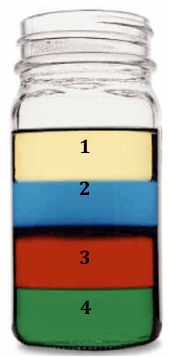
Put the liquids in order from most dense to least dense?
a)
4, 3, 2, 1
b)
1, 2, 3, 4
c)
3, 4, 2, 1, 
d)
4, 3, 1, 2
103.

John measures a rock and finds it to be 16 grams. What does John know about the rock?

a)

its density

b)

its mass

c)

its volume

d)

its weight

104.
What is the volume of this prism?
a)
24 cubic cm
b)
600 cubic cm
c)
60 cubic cm
d)
240 cubic cm
105.
Density is...
a)
the amount of mass in an object
b)
the amount of space an object takes up
c)
the amount of matter in a given space
d)
the weight of an object
106.
What is the definition of "weight"?
a)
measure of the force of gravity on your body
b)
the time it takes to get on a ride 
c)
the amount of matter in an object
d)
the size of an object
107.
A measure of how much matter an object has is--
a)
weight
b)
gravity
c)
mass
d)
volume
108.
The weight of an object _________ as it moves away from the center of Earth.
a)
increases
b)
stays the same
c)
triples
d)
decreases
109.
The mass of an object ___________ as it moves away from the center of Earth
a)
stays the same
b)
decreases
c)
increases
d)
doubles