wayground logo

Free Printable Worksheets

Font size

S
M
L
XL
Worksheets

Biology EOC Review

Total questions: 181

Worksheet time: 3hrs 39mins

Name
Class
Date
1.
What will most likely be the result if all of the mitochondria are removed from a plant cell? 
a)
It will be unable to carry out respiration. 
b)
It will lose water through osmosis.  
c)
It will break down ribosomes in the cell
d)
It will be unable to photosynthesize.
2.
During strenuous exercise, body temperature increases. The body responds to the increase in temperature by sweating, which helps to reduce the body temperature. Which is demonstrated in this situation?
a)
excretion
b)
metabolism
c)
homeostasis 
d)
synthesis
3.
Before mitosis begins, which happens before the nucleus starts dividing?
a)
The cytoplasm separates.
b)
The DNA replicates. 
c)
The sister chromatids separate. 
d)
The homologous chromosomes cross over. 
4.
What is the function of autotrophs in the carbon cycle?
a)
to use oxygen to produce glucose 
b)
to take in excess water
c)
to use carbon dioxide to produce glucose
d)
to feed on herbivores 
5.
Two different populations of birds live in the same area and eat the same types of food. Which most likely describes the relationship between these two populations of birds? 
a)
competition
b)
mutualism
c)
parasitism
d)
predator-prey
6.
What will most likely happen if the human population continues to grow at current rates?
a)
There will be fewer natural resources available for future generations.
b)
There will be an increase in nitrogen levels in the atmosphere. 
c)
There will be a decrease in water pollution. 
d)
There will be an increase in the number of strong hurricanes. 
7.
A strand of DNA has these bases:
 AGC CAT GTA TAC What is the complementary DNA strand?
a)
ACG GAT CTA TAG
b)
TCG GTA CAT ATG
c)
TGC CTA GAT ATC
d)
UCG CUA CAU AUG
8.
Which statement best describes the relationship that exists among proteins, DNA, and cells?
a)
Proteins combine to produce cells, which produce DNA
b)
Proteins are made up of DNA, which determines the cells that are produced. 
c)
DNA is made up of proteins, which tell a cell how to function. 
d)
Cells contain DNA, which controls the production of proteins.
9.
Why is meiosis important for sexual reproduction?
a)
It allows the zygote formed from fertilization to have triple the chromosome number of the organism. 
b)
It allows gametes to have twice the original number of chromosomes of the organism.
c)
It allows gametes to have half the original number of chromosomes of the organism. 
d)
It allows the zygote formed from fertilization to have half the original number of chromosomes of the organism. 
10.
Which process produces the most variation within a species? 
a)
Asexual reproduction
b)
Sexual reproduction
c)
mitosis
d)
cloning
11.
What are the subunits of DNA and their function? 
a)
nucleotides that store information 
b)
monosaccharides that provide quick energy for the cell
c)
lipids that store energy and provide insulation 
d)
proteins that provide the building blocks for the structural components of organisms 
12.
The use of pesticides on crops has been a common farming practice for decades. What has been the greatest effect of natural selection through the use of pesticides on certain insect populations? 
a)
Natural selection has been altered because the insects and their predators are killed. 
b)
The rate of selection is increased because the pesticides do not kill the insects that are naturally resistant to it. 
c)
The rate of selection has decreased because the pesticides kill only young insects. 
d)
The pesticides have altered natural selection by causing the insect DNA to spontaneously mutate.
13.
What is the difference between the full classification of organisms and their scientific names?
a)
The full classification of organisms and their scientific names vary in different countries. 
b)
The scientific names of organisms include the order and family of the organisms, but the full classification includes only the species name
c)
The full classification of organisms will include more categories of organisms than their scientific names. 
d)
The scientific names of organisms include a single nomenclature, but the full classification includes various nomenclatures.
14.
What type of organic molecules are enzymes? 
a)
carbohydrates
b)
lipids 
c)
nucleic acids
d)
proteins
15.
A freshwater plant is placed in a container of saltwater. What will most likely happen to the cells of the plant?
a)
They will swell because water will move into them.
b)
They will swell because salt will move into them
c)
They will shrink because water will move out of them.
d)
They will shrink because salt will move out of them.
16.
How does the amount of energy resulting from fermentation compare with that of aerobic respiration? 
a)
Aerobic respiration results in less energy.
b)
Aerobic respiration results in more energy.
c)
Each process results in equal amounts of energy.
d)
Each process results in variable amounts of energy.
17.
This diagram shows a plant cell. Which structure is found in a plant cell but is absent in an animal cell? 
a)
1
b)
2
c)
3
d)
4
18.
During which phase of the cell cycle is the cell growing and preparing for cellular division? 
a)
cytokinesis
b)
anaphase
c)
prophase
d)
interphase
19.
The yucca plant releases a strong scent at night when the yucca moth is active. The yucca moth, attracted by the scent, gathers pollen from the yucca flower. The yucca moth then deposits her eggs and the pollen on another plant. This ensures that the plant will be cross-pollinated and that the yucca moth larvae have a steady food supply. Which relationship does this BEST illustrate?
a)
commensalism
b)
mutualism
c)
parasitism
d)
predation
20.
What best describes the genetic material shown in photograph B. 
a)
The chromosomes are in anaphase
b)
The chromosomes are in metaphase
c)
DNA is possibly being replicated 
d)
The genetic material is around the poles and cytokinesis is occurring
21.
All of the following are true of the cell cycle shown in the diagram except ___.
a)
A, B, and C represent interphase
b)
DNA is replicated at B 
c)
Cytokinesis and new daughter cells are found at E
d)
Mitosis and cytokinesis are represented by D 
22.
Which of the following are true of the cell cycle?
a)
The cell spends most of its time dividing 
b)
The cell spends most of its time growing
c)
Replication of DNA occurs at M 
d)
Cells enter G0 after M
23.
When is DNA replicated during the cell cycle?
a)
During the G1 phase
b)
During the G2 phase 
c)
During the S phase
d)
 During the M phase
24.
What best describes the genetic material shown in photograph E.
a)
The chromosomes are in anaphase
b)
The chromosomes are in metaphase 
c)
DNA is possibly being replicated
d)
The genetic material is around the poles and cytokinesis is occurring 
25.
In DNA replication, complementary base pairing occurs between ___.
a)
Cytosine and uracil 
b)
Adenine and guanine
c)
Adenine and uracil
d)
Adenine and thymine
26.
All of the following are true about DNA replication except ___.
a)
It is semiconservative
b)
It occurs during the S-phase of the cell cycle 
c)
It allows daughter cells to have exact copies of the genetic code
d)
It reduces the chromosome number by half for the production of gametes
27.
DNA polymerase 
a)
Is an enzyme 
b)
Adds new nucleotides to the template strand 
c)
Proofreads DNA strands to see that they are correct 
d)
All of these are functions of DNA polymerase
28.
In DNA replication, three of the four choices listed below are correctly paired.  Select the exception.   A.  A – C B.  C – G C.  A – T D.  T – A
a)
A-C
b)
C-G
c)
A-T
d)
T-A
29.
Identify this process.
a)
Replication
b)
Transcription
c)
Translation
d)
Proof reading 
30.
When, during the cell cycle, does this occur?
a)
During G1 
b)
During S
c)
During G2
d)
During M
31.
.  In step b, the original strands have separated because ___.
a)
DNA polymerase has stopped functioning
b)
Hydrogen bonds between the bases have broken
c)
Water hydrolyzes the bases into their subunits
d)
Bases naturally repel each other
32.
When step d is completed, the two DNA molecules formed will be ___.
a)
Identical to each other but not to the parent 
b)
 Identical to the parent but not to each other 
c)
Identical to each other and to the parent
d)
Different from each other and from the parent 
33.
The ability of the genetic material to ___ provides the genetic variability required for evolution to occur in a population.
a)
Store information
b)
Be replicated
c)
Undergo changes
d)
 All are correct 
34.
Which is a characteristic of cancer?
a)
rapid and uncontrolled cell growth
b)
 cell growth delayed at the G1 checkpoint. 
c)
cell growth delayed at the G2 checkpoint. 
d)
damage to a cell’s cytoplasm
35.
Why do cancer cells not respond properly to cell signals and controls?
a)
damage to a cell’s cytoplasm
b)
damage to a cell’s sister chromatids 
c)
damage to a cell’s DNA
d)
damage to a cell’s wall and membrane 
36.
.  Cancer is a disorder in which some cells have lost the ability to control their ___.
a)
size
b)
spindle fibers
c)
growth rate
d)
surface size
37.
Which of the cells depicted in the line graph are most likely cancerous?                  
 
a)
Line A
b)
Line B
c)
Line C
d)
Line D
38.
The genetic code is nearly universal. That means, with few exceptions, the same codons code for the same amino acids in all organisms. What does the near universality of the genetic code suggest? 
a)
All life-forms can reproduce with one another
b)
All life-forms have the same number of genes. 
c)
All life-forms have a common evolutionary ancestor. 
d)
All life-forms arose about the same time in Earth’s history.
39.
The intersection of the left, top, and right nitrogenous bases indicates which amino acid a mRNA codon represents.  This is true for all organisms.  This indicates that the ___.
a)
The genetic code is universal. 
b)
We, as organisms, differ only in our sequence of bases
c)
The genetic code determines the sequence of amino acids making up a protein 
d)
 All of the above
40.
What do all of these organisms have in common?
a)
Universal genetic code
b)
Components that make up the genetic code
c)
Traits that are determined by genes that are translated into proteins
d)
Organisms have all of above in common 
41.
 Which sequence depicts the correct order of protein synthesis within a cell? 
a)
DNA → mRNA → amino acids → proteins
b)
DNA → amino acids → mRNA → proteins
c)
 DNA → mRNA → proteins → amino acids
d)
DNA → proteins → amino acids → mRNA
42.
The figures show four process involving DNA and RNA.  Which figure shows the process of transcription?
a)
Figure A
b)
Figure B
c)
Figure C
d)
Figure D
43.
Which molecule is paired with its correct role in protein synthesis? 
a)
Nucleus – forms peptide bonds 
b)
Ribosome – carries DNA instructions
c)
mRNA – joins amino acids 
d)
 tRNA – transfers amino acids
44.
Which best describes the interaction between DNA and RNA during protein synthesis?
a)
RNA carries the code to the nucleus where DNA translates the code into a protein
b)
DNA travels to the ribosome where RNA translates the code into a protein 
c)
RNA carries the code from DNA in the nucleus to the ribosome for protein synthesis
d)
DNA travels to the cytoplasm while RNA remains in the nucleus 
45.
During the process of protein synthesis, a section of the DNA molecule is copied into which other molecule?
a)
nucleic DNA 
b)
cytoplasmic DNA
c)
messenger RNA
d)
transfer RNA
46.
Which molecule carries amino acids to the ribosomes?
a)
mRNA
b)
tRNA
c)
DNA
d)
ATP
47.

What structure is label #3?

a)

Nucleus

b)

Mitochondria

c)

Vacoule

d)

Golgi body

48.

If the percentage of DNA is made of 30% Thymine, what is the correct percentage of Guanine?

a)

30

b)

20

c)

15

d)

60

49.

Replicate the following strand of DNA:

AATCATGGA

a)

AATCATGGA

b)

TTAGTACCT

c)

UUAGUACCU

d)

GGATAUCUA

50.

What are the 4 nitrogen bases?

a)

adenine, thymine, cytoplasm, and guanine

b)

adenine, thymine, cytosine, and glucose

c)

adenine, thymine, cytosine, and gylcerol

d)

adenine, thymine cytosine, and guanine

51.

Which organelle is DNA usually found in

a)

cell membrane

b)

chloroplast

c)

vacoule

d)

nucleus

52.

Fruit fly body cells have 8 chromosomes. After mitosis, you would expect a resulting fruit fly daughter cell to have ...

a)

16 chromosomes

b)

8 chromosomes

c)

46 chromosomes

d)

4 chromosomes

53.

Name the phase

a)

Prophase

b)

Telophase

c)

Metaphase

d)

Anaphase

54.

Name this phase?

a)

Anaphase

b)

Telophase

c)

Prophase

d)

Interphase

55.

DNA is replicated during the ______ phase of the cell cycle

a)

G1

b)

G2

c)

Synthesis

d)

Cytokinesis

56.

What kind of cells are made in MEIOSIS?

a)

Skin cells

b)

Liver cells

c)

Diploid cells

d)

Haploid cells

57.

When an area of a chromatid is exchanged with the matching area on a chromatid of its homologous chromosome, _________________ occurs

a)

Crossing over

b)

Mutagenesis

c)

Fertilization

d)

Hybridization

58.

Meiosis makes sperm and egg cells. In humans, sperm and egg cells each have _____ chromosomes. Therefore a fertilized human egg cell (sperm and egg cell combined) would create a cell with _____ chromosomes.

a)

23,46

b)

46,23

c)

2,4

d)

50,100

59.

What is one of the advantages, why is it better to reproduce sexually versus asexually?

a)

survival of the fittest

b)

genetic variation

c)

overproduction

d)

cloning

60.

Mason is studying an unknown organism. He discovers that the organism is unicellular, undergoes asexual reproduction, and it does not have a nucleus. How would this organism be classified?

a)

Kingdom Animilia

b)

Kingdom Protista

c)

Kingdom Fungi

d)

Kingdom Bacteria

61.

Which of the following correctly identifies the order of the levels of taxonomy?

a)

Domain, Kingdom, Phylum, Class, Order, Family, Genus, Species

b)

Species, Class, Domain, Genus, Family, Kingdom, Order, Phylum

c)

Kingdom, Phylum, Class, Order, Family, Genus, Species, Domain

d)

Domain, Phylum, Order, Genus, Kingdom, Class, Family, Species

62.

Which of the statements below is true?


A. Bacteria Cell and B. Animal Cell

a)

Figure A is a eukaryotic cell and B is a prokaryotic cell.

b)

Figure A and B are both eukaryotic cells.

c)

Figure A is a prokaryotic cell and B is a eukaryotic cell.

d)

Figure A and B are both prokaryotic cells.

63.

Water temperature would be an example of ...

a)

a biotic factor

b)

an abiotic factor

64.

The clear, jelly-like material in a cell fills the space in the cell and supports and protects the cell’s organelles.

a)

Cytoplasm

b)

Nucleus

c)

Cell Membrane

d)

Mitochondria

65.

Controls the movement of materials in and out of the nucleus.

a)

Endoplasmic Reticulum

b)

Cellular Membrane

c)

Cytoplasm

d)

Nuclear Membrane

66.

The part of the cell that makes protein

a)

Vacoues

b)

Golgi body

c)

Ribosomes

d)

Cytoplasm

67.

Protects the cell from the outside environment. (Only Plants)

a)

Cell Membrane

b)

Cell Wall

c)

Chloroplasts

d)

Vacoules

68.

Breaks down food to release energy. Known as the power plant of the cell.

a)

Endoplasmic Reticulum

b)

Ribosomes

c)

Mitochondria

d)

Cell Wall

69.

Uses energy from the sun to make food for the plant.

a)

Cell Wall

b)

Cell Membrane

c)

Chloroplasts

d)

Vacoule

70.

Magda is a tall, 11 year old drummer. She has a scar on her right cheek. She is good at swimming. Which of her traits did Magda most likely inherit?

a)

height

b)

ability to swim

c)

the scar

d)

ability to play drums

71.

Two brown eyed parents (Bb) have a baby. What is the chance the baby is blue eyed?

a)

0%

b)

50%

c)

25%

d)

75%

72.

W=white hair

w= non-white hair

If you cross a horse with WW and a horse with ww what fraction of the offspring would be expected to have white hair?

a)

0

b)

50%

c)

75%

d)

100%

73.

Squidward has light blue skin, and his genotype for this trait is Bb. Which of the following would describe Squidward?

a)

Purebred

b)

Homozyqous

c)

Hybrid

d)

Sex-linked

74.

What anchor plants to the ground and absorb water and nutrients?

a)

Roots

b)

Stem

c)

Xylem

d)

Leaves

75.

Which of the following statements best describes xylem's function in the plant?

a)

transports water and minerals up from the roots to the rest of the plant

b)

transports food down from the leaves to the rest of the plant

c)

transports water and minerals down from the roots to the rest of the plant

d)

transports food up from the leaves to the rest of the plant

76.

transports food up from the leaves to the rest of the plant

a)

Petals

b)

Pistil

c)

Stamen

d)

Sepals

77.
Which process is used to make mRNA from the DNA in the nucleus?
a)
transcription
b)
translation
c)
replication 
78.
Which RNA bases would pair with TACGAA in transcription
a)
AUGCUU
b)
ATGCTT
c)
GCATCC
d)
GCAUCC
79.
Where does transcription take place?
a)
nucleus
b)
cytoplasm
c)
ribosome
80.
How many amino acids are coded for by this sequence of nucleotides:
ATG GGA ACT CCA
a)
4
b)
2
c)
6
d)
12
81.
What is occurring in this picture?
a)
Translation
b)
Replication
c)
Translocation
d)
Transcription
82.
Which species’ DNA is most similar to the DNA of the toothed whale? 
a)
Hippopotamus 
b)
Baleen Whale
c)
Grazing Mammals
d)
Camels
83.
The white feathers of a snowy owl allow it to blend in with its environment during the winter months (snow). This is an example of ________________
a)
Species
b)
Environmental Change
c)
Adaptation
d)
Variation
84.
What is the advantage of having different shaped beaks?
a)
To look different from other species.
b)
To be able to eat the food readily available in the environment.
c)
To protect itself against predators.
d)
To protect itself against prey.
85.
Cattle egrets forage (feed) in fields among cattle. The egret gets easy access to flying insects stirred up by the cattle, and the cattle don't care if they are there or not.
a)
mutualism
b)
commensalism
c)
competition
d)
parasitism
86.
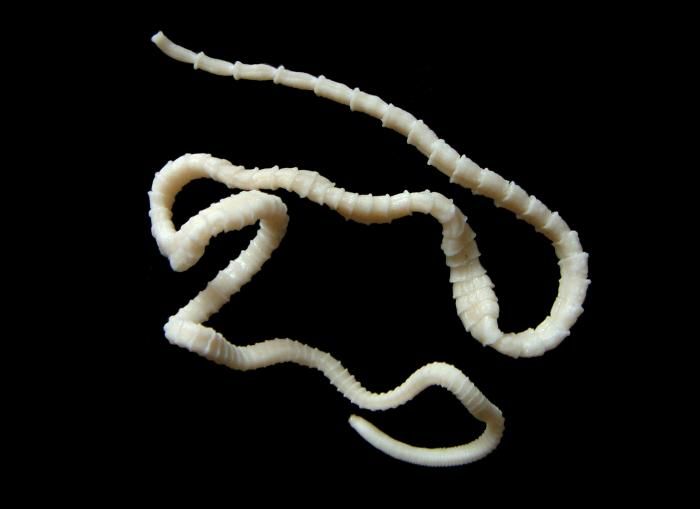
A tapeworm and a cat have this type of relationship.
a)
mutualism
b)
parasitism
c)
commensalism
d)
competition
87.
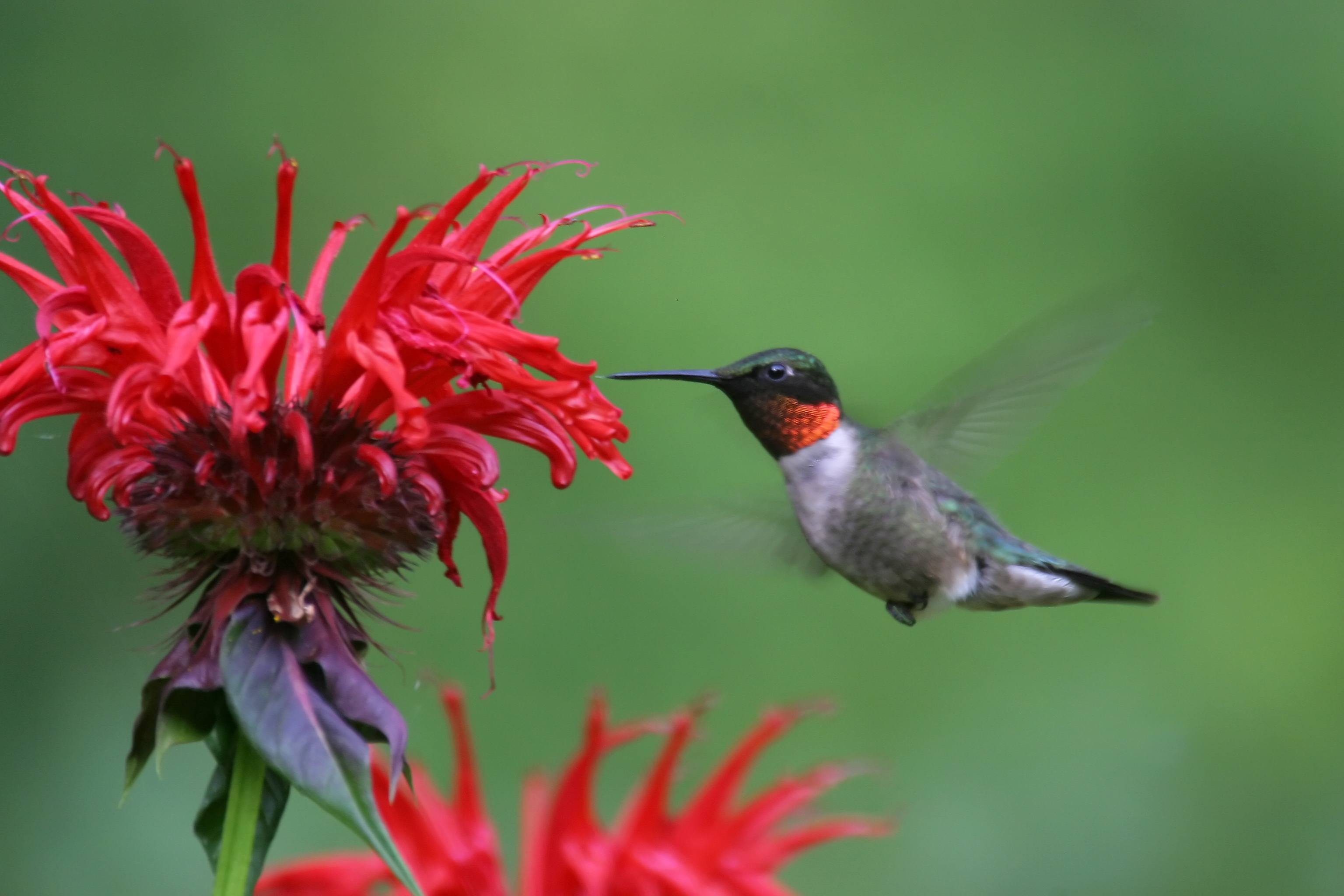
What type of symbiosis?  Hummingbirds feed on nectar from flowers.  The flowers are pollinated by hummingbirds as they move from flower to flower.
a)
commensalism
b)
mutualism
c)
parasitism
d)
predation
88.
Which type of cell has no nucleus?
a)
Eukaryote
b)
Prokaryote
c)
Animal
d)
Plant
89.
Which type of cell?
a)
Prokaryote
b)
Eukaryote
90.
Which type of cell?
a)
Prokaryote
b)
Eukaryote
c)
Mixed
91.
Has ribosomes
a)
Prokaryote
b)
Eukaryote
c)
both
d)
nihn
92.
This diagram shows the cell cycle.

Which of the following activities occur in the S phase?
a)
Replication of the DNA
b)
Growth of the cell
c)
Formation of the mitotic spindle
d)
Breakdown of the nuclear membrane
93.
Which process is an example of asexual reproduction?
a)
An amoeba divides in half to form two amoebas.
b)
A bee transfers pollen from one flower to another.
c)
A female fish deposits eggs on a rock, then a male fish releases sperm on them.
d)
Earthworms exchange sperm
94.
Which is the most likely function of a group of cells that contain a high number of chloroplasts?
a)
Respiration
b)
Transpiration
c)
Photosynthesis
d)
Fermentation
95.
A researcher is studying a particular disease-causing agent. The agent has a protein coat, but it lacks a nucleus, contains no other organelles, and can reproduce only when it is inside an animal cell. The researcher should classify the agent as which of the following?
a)
A bacterium
b)
A fungus
c)
A virus
d)
A protist
96.
Energy for most chemical reactions in cells is supplied by which of the following molecules?
a)
DNA
b)
ATP
c)
RNA
d)
Hemoglobin 
97.
Which pair of structures best shows that plant cells have functions different from animal cells?
a)
Cytoplasm and mitochondria
b)
Chloroplasts and cell wall
c)
Ribosome and golgi
d)
Nucleus and cell membrane
98.
Meiosis is the process by which gametes are produced. In which of the following human organs would meiosis occur?
a)
Liver
b)
Stomach
c)
Testis
d)
Lungs
99.
SB2a. The diagram below shows a pair of DNA nucleotides. The nitrogenous base cytosine (C) is labeled.
Which nitrogenous base pairs with cytosine?
a)
adenine (A)
b)
guanine (G)
c)
thymine (T)
d)
uracil (U)
100.
SB2a. Which of the following are the main components of a DNA nucleotide?
a)
Ribose-sugar, phosphate, nitrogen base
b)
Deoxyribose-sugar, nitrogen base, phosphorous
c)
Deoxyribose-sugar, phosphate, nitrogen base
d)
Glucose, nitrogen base, phosphate
101.
SB2a. Which of the following is found in RNA nucleotides but not in DNA nucleotides?
a)
Nitrogen-containing base
b)
Phosphate group
c)
Ribose sugar
d)
Deoxyribose sugar
102.
SB2b. Which statement about translation is correct?
a)
Amino acids are assembled into a protein on the ribosome
b)
Ribosomal RNA and transfer RNA form base pairs
c)
Messenger RNA is made from DNA
d)
Transfer RNA contains the genetic code copied from DNA
103.
SB2b.Which of the following features of DNA is the most important in determining the phenotype of an organism?
a)
the direction of the helical twist
b)
the number of deoxyribose sugars
c)
the sequence of nitrogenous bases
d)
the strength of the hydrogen bonds
104.
SB2b.
-ACGTAG-
The base sequence of a DNA strand that complements this DNA base sequence is
 
a)
–TGCATC-
b)
–ACGTAG-
c)
–TGCAUC-
d)
–UGCAUC-
105.
SB2c. The diagram below represents division of a cell that produces two daughter cells. When new cells are formed through the process of mitosis, the number of chromosomes in the new cells
a)
increases every time the cell divides.
b)
remains the same as in the parent cell.
c)
decreases every time the cell divides.
d)
is half of that of the parent cell.
106.
SB2c. A scientist is trying to discover a new treatment to stop lung cancer cells from dividing. In the cancer cells, which of these processes will stop if the treatment is successful?
a)
mitosis
b)
meiosis
c)
binary fission
d)
genetic recombination
107.
SB2c. What you see, or the physical appearance.
a)
Genotype
b)
Phenotype
c)
Homozygous
d)
Heterozygous
108.
SB2c. Specialized cells in the humans undergo a process that produces gametes. What is this process called?
a)
binary fission
b)
meiosis
c)
fertilization
d)
enzyme regulation
109.
SB2c. When gametes are produced from a parent cell during normal meiosis, which of the following describes the number of chromosomes in each resulting cell?
a)
Each resulting cell has the same number of chromosomes as the parent cell.
b)
Each resulting cell has twice the number of chromosomes as the parent cell.
c)
Each resulting cell has one-half the number of chromosomes as the parent cell.
d)
Each resulting cell has one-fourth the number of chromosomes as the parent cell.
110.
SB2d. A mutation is least likely to affect a cell when the mutation:
a)
reverses the order of bases in a DNA strand
b)
allows the total number of bases in a DNA sequence to remain the sam
c)
replaces a base with its complementary base
d)
produces a triplet that codes for the same amino acid as the original triple
111.
SB2d. The original mRNA strand has 3 triplets:  
AUG-AUU-CAC

Which of the following mutations causes the LEAST amount of harm to the cell?
a)
AUG-AUC-AC
b)
AUU-AUU-CAC
c)
AUG-AUC-CAC
d)
AUG-CAU-UCA-C
112.
SB2d. 12.The following diagram shows a mutation that occurs in the hemoglobin gene to produce a recessive genetic disorder called sickle cell anemia.
Which of the following statements best describes why the change in only one DNA base of the hemoglobin gene results in a different protein product of the gene?
a)
the change prevents mRNA from being made
b)
the change alters the amino acid sequence of the protein
c)
the change causes the blood cells to divide in an uncontrolled way
d)
the change creates a second strand of mRNA for each RNA molecule
113.
Name the process in the picture.
a)
transcription
b)
mitosis
c)
translation
d)
replication
114.
Name the photosynthesizing organelle of the plant cell.
a)
G
b)
B
c)
J
d)
C
115.
What process is occurring in the picture?
a)
DNA replication
b)
mitosis
c)
protein synthesis
d)
meiosis
116.
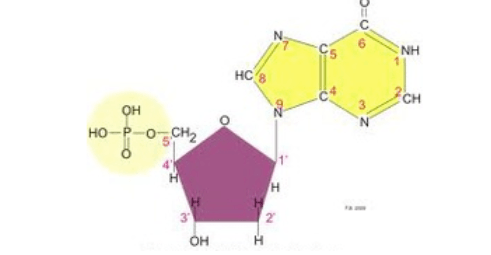
Name B.
a)
phosophate
b)
glucose
c)
deoxyribose
d)
nitrogen base
117.
Which gas is filling the balloon in the experiment?
a)
Oxygen
b)
Carbon Dioxide
c)
Glucose
d)
Water
118.
What type of punnett square?
a)
codominance
b)
incomplete dominance
c)
complete dominance
d)
sex linked recessive
119.
Widow's peak is dominant to straight hair line. Cross a heterozygous widow's peak female with a heterozygous widow's peak male. What is the genotype ratio?
a)
1:2:1
b)
3:1
c)
1:1
d)
1:0
120.
The legs of crocodiles and mice have similar bone structures and develop in a similar way.  What type of structures are the leg bones?
a)
homologous structures
b)
analogous structures
c)
fossilized structures
d)
vestigial structures
121.
Which of these statements best describes natural selection?
a)
Natural selection changes the traits of individuals.
b)
Natural selection prevents changes in the members of a species.
c)
Natural selection prevents changes in the traits of individuals.
d)
Natural selection changes populations
122.
What does the fossil record show about the history of species of Earth?
a)
Species stay the same over time.
b)
Species evolve from one form to another.
c)
Modern species have no relationship to ancient species.
d)
No species have become extinct in the last 2 million years.
123.
The field of biology that deals with classifying organisms is
a)
phylogeny
b)
genetics
c)
taxonomy
d)
embryology
124.
The standardized system for naming organism is known as binomial nomenclature.  What two pieces of information are used to name and identify organisms using this system?
a)
genus and species
b)
class and genus
c)
class and species
d)
domain and kingdom
125.
The genetic variation that leads to evolution can occur when genes from one population are introduced into the gene pool of a different population.  This process is known as
a)
mutation
b)
crossing over
c)
natural selection
d)
gene flow
126.
Which of these processes is most likely to increase the genetic diversity that plays a role in evolution?
a)
binary fission
b)
cell division
c)
asexual reproduction
d)
sexual reproduction
127.
Which level of organization is represented by a group of different tissues working together to perform a complex function?
a)
cell
b)
tissue
c)
organ
d)
organism
128.
All the organ systems of the human body work together to maintain homeostasis.  What is homeostasis?
a)
a stable internal environment
b)
response to external stimuli
c)
protection from bacteria and other pathogens
d)
the ability to pass characteristics to one's offspring
129.
What is the function of the vascular system in plants?
a)
photosynthesis
b)
reproduction
c)
responding to stimuli
d)
transporting water and nutrients
130.
Some plants have xylem, which transports water taken in by the roots upward through the plant.  At what level of organization is xylem classified?
a)
organ
b)
tissue
c)
cell
d)
organ system
131.
What process uses carbon dioxide water and sunlight as reactants and produces glucose and oxygen?
a)
cellular respiration
b)
photosynthesis
c)
making proteins
d)
transciption
132.
Which process using sugar and oxygen as reactants and produces carbon dioxide, water and ATP?
a)
Cellular Respiration
b)
Photosynthesis
c)
Transcription
d)
Translation
133.
What type of molecule is a protein that acts as a catalyst by speeding up chemical reactions in living things?
a)
substrate
b)
product
c)
reactants
d)
enzymes
134.
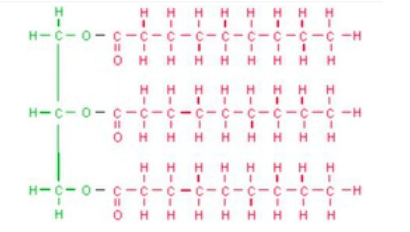
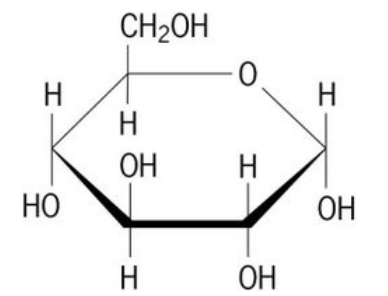
Which biomolecule is this a picture of?
a)
Protein
b)
Nucleic Acid
c)
Lipid
d)
Carbohydrate
135.
Which biomolecule is this a picture of?
a)
Protein
b)
Nucleic Acid
c)
Lipid
d)
Carbohydrate
136.
Which biomolecule is this a picture of?
a)
Protein
b)
Nucleic Acid
c)
Lipid
d)
Carbohydrate
137.
Which biomolecule is also known as enzymes?
a)
Carbohydrate
b)
Lipid
c)
Nucleic Acid
d)
Protein
138.

Which biomolecule is contained in pastas and breads? Also make up sugars and starches.

a)

Lipid

b)

Protein

c)

Nucleic Acid

d)

Carbohydrate

139.
Which biomolecule is made of nucleotides and contain you DNA?
a)
Carbohydrate
b)
Lipids
c)
Protein
d)
Nucleic Acid
140.
Which biomolecule helps form muscles?
a)
Nucleic Acid
b)
Carbohydrate
c)
Protein
d)
Lipids
141.
Which biomolecule contain your genetics?
a)
Carbohydrate
b)
Lipid
c)
Nucleic Acid
d)
Protein
142.

Which biomolecule is a main source of quick energy?

a)

Nucleic Acid

b)

Protein

c)

Lipid

d)

Carbohydrate

143.
Which biomolecule includes fats, such as triglycerides, oils, waxes, and steroids (cholesterol); insoluble in water; provides energy storage, insulation, part of cell membrane, and hormones 
a)
Nucleic Acid
b)
Lipids
c)
Carbohydrate
d)
Protein
144.
Which biomolecule contains Deoxyribonucleic acid; a sequence of bases that makes hereditary code; Ribonucleic acid; ­translate hereditary code into proteins that determine how the cell will function under various conditions; provides storage and retrieval of information­; encode genes, gene expression, helps make proteins 
a)
Nucleic Acid
b)
Lipid
c)
Carbohydrate
d)
Protein
145.
Many monomers can be cross-linked together to form ______________. 
a)
molecules
b)
plastic material
c)
polymers
d)
balloons and silly putty
146.
The image is an example of a
a)
Lipid
b)
Polysaccaride
c)
Protein
d)
Lipid (polypeptide)
147.
Building blocks of polymers.
a)
monomer
b)
polypeptide
c)
monosaccharide
d)
glycerol
148.
This diagram shows a diploid cell with two pairs of homologous chromosomes.  Due to independent assortment, what is the possible genetic make-up of gametes produced by this organism?
a)
 SsTt
b)
Ss, Tt
c)
S, s, T, t
d)
ST, St, sT, st
149.
Hitchhiker's thumb (H) is dominant to no hitchhiker's thumb (h). A woman who does not have hitchhiker's thumb marries a man who is heterozygous for hitchhiker's thumb. What is the probable genotypic ratio of their children?
a)
 0% Hh: 100% hh
b)
 50% Hh: 50% hh
c)
75% Hh: 25% hh
d)
100% Hh: 0% hh
150.
One of the parents of a child has phenylketonuria (PKU), which is caused by recessive alleles. The other parent does not have the PKU alleles. What is the chance that the couple will have a child with phenylketonuria?
a)
0%
b)
50%
c)
 75%
d)
 100%
151.
Mendel hypothesized that reproductive cells have only one factor for each inherited trait. This hypothesis is supported by which observation?
a)
 Haploid cells are produced by mitosis.
b)
Diploid cells are produced by mitosis.
c)
Haploid cells are produced by meiosis.
d)
Diploid cells are produced by meiosis
152.
Segment of DNA in a chromosome that contains information used to produce a protein
a)
genome
b)
exons
c)
gene
d)
introns
153.
DNA is what shape?    
a)
Helix
b)
Triple Helix
c)
Double Helix
d)
Circular
154.
The sides of the helix, referred to as the backbone of DNA, are made up of:
a)
alternating sugar and phosphate molecules
b)
alternating base and phosphate molecules
c)
paired nitrogenous bases
d)
d. paired sugar molecules
155.
During complementary base pairing, Adenine pairs with what other nitrogenous base? 
a)
Adenine
b)
Cytosine
c)
Guanine
d)
Thymine
156.
What mutation has occurred here? 
T-G-A-C-C-A
T-G-A-G-C-A
a)
Substitution
b)
Deletion
c)
Insertion
d)
Frameshift 
157.
Which change below would result in a different Amino Acid? 
3'-GCT-5'
a)
GTT
b)
TCT
c)
TCC
d)
GCA
158.
DNA molecule segment is : TTACGCAAG
The mutated DNA segment is TTCGCAAG. This is an example of ___ mutation.
a)
Substitution
b)
Deletion
c)
Insertion
d)
Inversion
159.
What is the correct mRNA strand from this DNA?
CAC-GTG-ACA-GCG
a)
GTG-CAC-TGT-CGC
b)
CAC-GUG-ACA-GCG
c)
GUG-CAC-UGU-CGC
160.
Why is the order of amino acids so important?
a)
The order of amino acids dictates the function of the protein and what shape the protein will fold into.
b)
It is not important. The protein folding chamber will force the protein to fold into the correct shape.
c)
The order of the amino acids tells the cell what DNA to make.
d)
It is not important that is why most mutatiosn are silent.
161.
What is the site of Protein Synthesis?
a)
El Cerro
b)
Ribosomes
c)
Mitochondria
d)
Lysosomes
162.
This carries the DNA message from the nucleus to the ribosomes:
a)
tRNA
b)
mRNA
c)
rRNA
d)
UPS
163.
Which of the following processes produces gametes?
a)
Mitosis
b)
Meiosis
c)
Cytokinesis
d)
Protein Synthesis
164.
tRNA brings amino acids to the growing protein = 
a)
Replication
b)
Transcription
c)
Translation
d)
Mitosis
165.
What is another way of saying "hybrid"?
a)
heterozygous
b)
homozygous dominant
c)
homozygous recessive
d)
none of these choices
166.
The dominant trait is
a)
yellow pea seeds
b)
green pea seeds
c)
there is no dominant seed
d)
Jolly green giant
167.
What are the possible genotypes for this cross?
a)
TT = 25% Tt= 50% tt=25%
b)
all tall
c)
TT= 75% tt = 25%
d)
Tt = 100%
168.
The diagram shows the process of
a)
Transcription
b)
Translation
c)
Replication
d)
Mitosis
169.
A guinea pig cell has 64 chromosomes.  After mitosis, each daughter contains ___ chromosomes.
a)
128
b)
64
c)
32
d)
16
170.
A male shark has 40 chromosomes in each of its sex cells. How many would be present in its body cells?
a)
20
b)
40
c)
80
d)
160
171.
Fruit fly body cells have 8 chromosomes. After mitosis, you would expect a resulting fruit fly daughter cell to have -
a)
16 chromosomes.
b)
46 chromosomes.
c)
8 chromosomes.
d)
4 chromosomes.
172.
The end of meiosis results in  ________ to each other.
a)
2 cells that are identical
b)
4 cells that are identical
c)
2 cells that are not identical
d)
4 cells that are not identical
173.
Which 2 molecules form the sides (backbone) of the DNA ladder?
a)
deoxyribose sugar and adenine
b)
deoxyribose sugar and a hydrogen bond
c)
deoxyribose sugar and the nucleus
d)
deoxyribose sugar and phosphate
174.
Which of the following is the sugar found in RNA?
a)
Ribose
b)
Maltose
c)
Deoxyribose
d)
Amylose
175.
Which of the following is a correct difference between RNA and DNA?
a)
RNA is single stranded and DNA is double stranded
b)
RNA is double stranded and DNA is single stranded
c)
DNA uses Uracil and RNA uses Thymine
d)
RNA has deoxyribose and DNA has ribose
176.
What is transcription?
a)
DNA to mRNA
b)
DNA to tRNA
c)
mRNA to protein
d)
mRNA to amino acids
177.
What is translation?
a)
mRNA to protein
b)
amino acids to mRNA
c)
rRNA to genes
d)
genes to mRNA
178.
Which of the following is a phenotype?
a)
Aa
b)
red hair
c)
heterozygous genes
d)
mutated DNA
179.
Which of the following is homozygous dominant?
a)
Yy
b)
Y
c)
yy
d)
YY
180.
what is Bb?
a)
ressesive
b)
Dominate
c)
Heterozygous
d)
I don't know...
181.
The passing of physical characteristics from parent to offspring is __________.
a)
genetics
b)
heredity
c)
genes
d)
traits