wayground logo

Free Printable Worksheets

Font size

S
M
L
XL
Worksheets

6th Grade PASS Review #1

Total questions: 100

Worksheet time: 1hrs 13mins

Name
Class
Date
1.
An experiment is performed on plants to see how different liquids affect plant growth. Each plant in the experiment is given a different liquid; water, apple juice, or milk. Each plant has the same amount of soil, sunlight, and listens to the same music. In this investigation, the independent variable is ...
a)
The type of plant
b)
The amount of sunlight
c)
The type of music
d)
The type of liquid
2.
An experiment is performed on plants to see how different liquids affect plant growth. Each plant in the experiment is given a different liquid; water, apple juice, or milk. Each plant has the same amount of soil, sunlight, and listens to the same music. In this investigation, what are the controlled variables?
a)
Type of plant, amount of music, and sunlight
b)
Water, apple juice, milk
c)
Plant growth
3.
An experiment is performed on plants to see how different liquids affect plant growth. Each plant in the experiment is given a different liquid; water, apple juice, or milk. Each plant has the same amount of soil, sunlight, and listens to the same music. In this investigation, what is the dependent variable?
a)
Type of plant
b)
Water, apple juice, milk
c)
Plant growth
4.
Name this protist?
a)
Euglena 
b)
Amoeba 
c)
Paramecium 
d)
Volvox
5.
Name this protist?
a)
Paramecium 
b)
Amoeba 
c)
Volvox
d)
Euglena 
6.
Name this protist?
a)
Amoeba
b)
Euglena
c)
Paramecium 
d)
Volvox
7.
How does this protist move? 
a)
Pseudopods 
b)
Cilia 
c)
Flagellum
8.
How does this protist move? 
a)
Flagellum
b)
Cilia 
c)
Pseudopods
9.
How does this protist move? 
a)
Cilia
b)
Pseudopods
c)
Flagellum 
10.
Which are examples of fungi?
a)
mold
b)
yeast
c)
mushrooms
d)
all of the above
11.
Fungi are like animals because...
a)
they all reproduce sexually.
b)
they get their food from other organisms.
c)
they can move from one place to another.
d)
They are not like animals.
12.
What part of a fungus is described as long, thread-like structures that absorb nutrients?
a)
roots
b)
fruit body
c)
hyphae
d)
spores
13.
What part of a fungus is used for reproduction?
a)
spores
b)
flagellum
c)
cilia
d)
hyphae
14.
What are some bad effects of fungi?
a)
Athletes Foot
b)
Ringworm
c)
Mushroom's produce deadly poison
d)
All of the above
15.
What vocabulary word describes the breaking off of dead things and recycling it's nutrients through the food chain?
a)
Symbiosis
b)
Decomposing
c)
Budding
d)
Mycelium
16.

Vascular tissue that transports water & nutrients

a)

Xylem

b)

Phloem

17.

Vascular tissue that transports food

a)

Xylem

b)

Phloem

18.

The process of water being transported through roots, the stem, to leaves and out the leaves through pores into the air.

a)

Respiration

b)

Transpiration

c)

Photosynthesis

19.
Which types of plants usually grow close to the ground? 
a)
vascular
b)
non-vascular
20.
Which type of plants usually grow taller? 
a)
vascular 
b)
non-vascular 
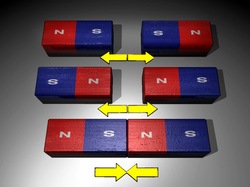
21.
What will happen when these magnets are brought close together?
a)
They will attract each other.
b)
They will repel each other.
c)
Both magnets will turn to the left
d)
Both magnets will turn to the right
22.
Magnets have a north and a south ___________
a)
shape
b)
color
c)
pole
d)
region
23.
Iron, Nickel and cobalt are all __________________ materials
a)
Shiny
b)
poles
c)
magnetic
d)
cold
24.
Where is the strongest attraction force of the magnet?
a)
at the poles
b)
in the middle
c)
above the magnet
d)
below the magnet
25.
Which object would a magnet attract?
a)
a glass bottle
b)
a piece of paper
c)
a metal paper clip
compass
d)
a rubber eraser
magnetic field
26.
Which of the following is true about a bar magnet?
a)
Its magnetic field is strongest near its center.
b)
It is surrounded by a magnetic field.
c)
The north pole is stronger than the south pole.
d)
The south pole is stronger than the north pole.
27.
A device that uses a free-moving magnetic needle to show direction is a:
a)
Ruler
b)
magnet
c)
compass
d)
magnetic field
28.
A north pole and a south pole will attract.
a)
True
b)
False
29.
Which two metals will be attracted by a magnet?
a)
iron and steel
b)
gold and silver
c)
aluminum and lead
d)
copper and cobalt
30.
What is the metal center of an electromagnet called?
a)
The current
b)
the wire
c)
the coil
d)
the core
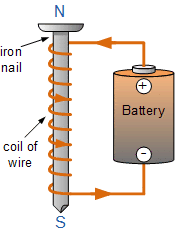
31.
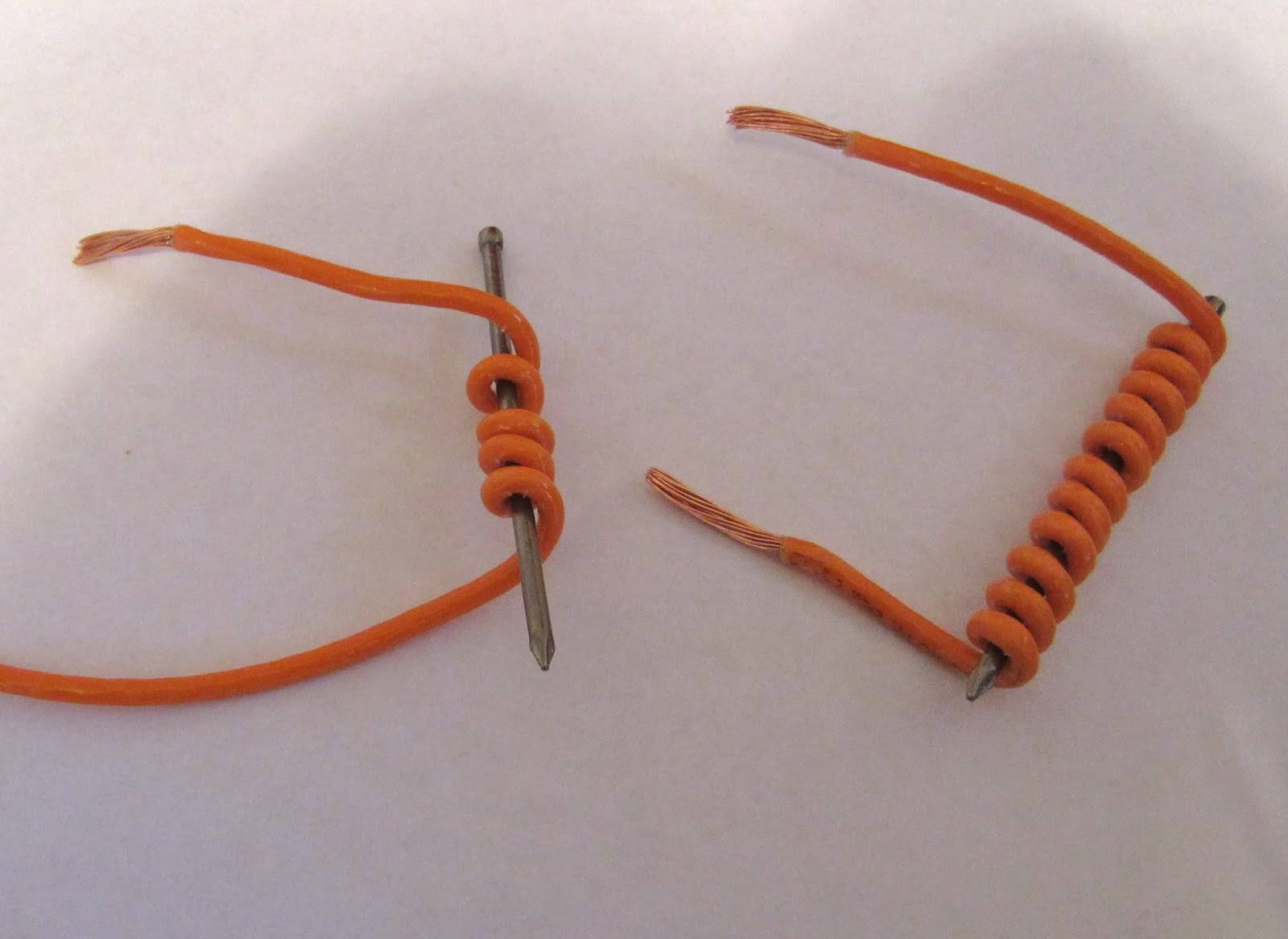
What is this?
a)
magnet
b)
electromagnet
c)
series circuit
d)
parallel circuit
32.
How do you make an electromagnet stronger?
a)
Add a motor and/or lightbulbs
b)
Add more light bulbs and/or wire coils
c)
add more wire coils and/or a switch
d)
add more wire coils and/or batteries
33.
How are electromagnets different from magnets?
a)
magnets can be turned on/off
b)
you can turn an electromagnet on/off
c)
magnets are more powerful
d)
magnets have a North and South pole
34.
What is a switch's function in a circuit?
a)
to make the current hotter or colder
b)
turn on and off the flow of current
c)
the pathway that current flows
d)
to add more power to the circuit
35.
An electric motor changes electrical energy to _________ energy. 
a)
mechanical 
b)
chemical
c)
potential
d)
free
36.
The Earth produces its own magnetic field.  True or false?
a)
False
b)
True
37.
What is magnetism?
a)
invisible objects coming together
b)
a force that either attracts or repels certain materials
c)
full of electricity
d)
metals
38.
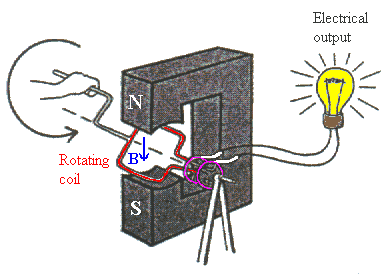
What is the transfer of electricity in a motor?
a)
chemical to mechanical 
b)
electrical to mechanical
c)
mechanical to electrical 
d)
physical to potential 
39.
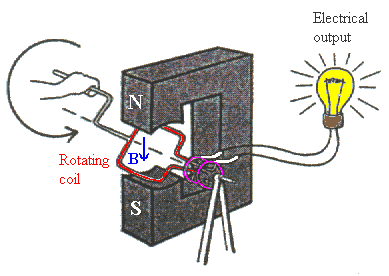
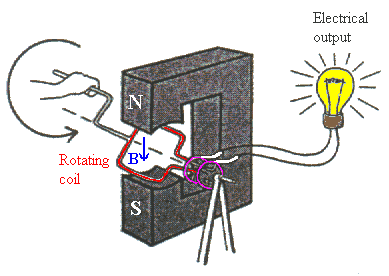
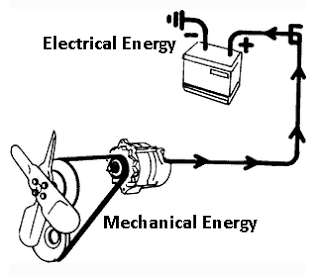
What is the transfer of electricity in a generator?
a)
Mechanical to Electrical 
b)
Physical to Potential 
c)
Electrical to Mechanical
d)
Yogurt to Light
40.
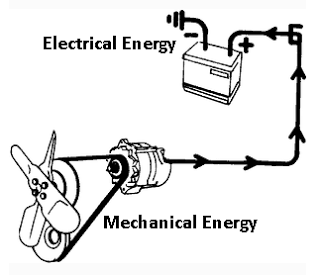
Which device uses mechanical energy to produce electrical energy?
a)
Electric Motor
b)
Magnet
c)
Generator
d)
Solar Cell
41.
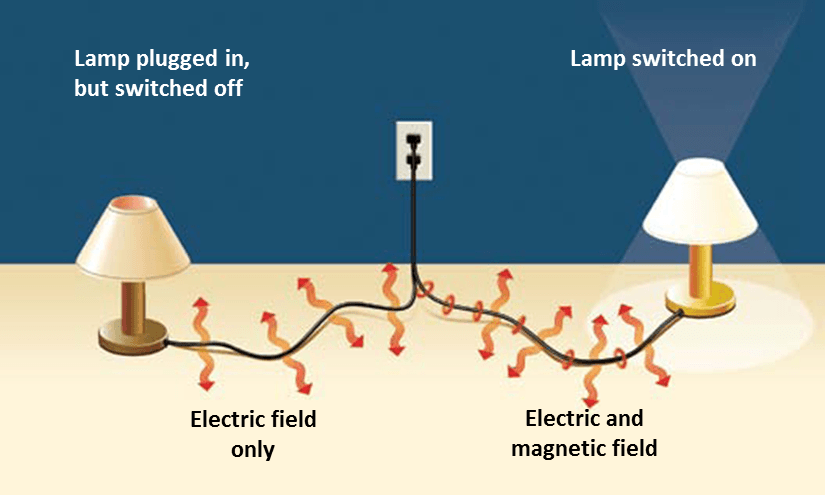
Electric fields are often associated with what other kind of field? 
a)
Magnetic Fields 
b)
Nuclear Fields 
c)
Particle Fields 
d)
Corn Fields 
42.
What device is made of coils of wire with an electrical current passing through it in order to generate a magnetic field?  
a)
Electromagnet 
b)
Generator
c)
Electron Magnet 
d)
Motor
43.
What force does a magnetic field apply without actually touching the object? 
a)
a push or pull
b)
gravity 
c)
friction 
d)
pressure 
44.
 What is the fan that turns the magnet inside a generator called? 
a)
electromagnet 
b)
turbine 
c)
solar panel 
d)
pinstock 
45.
What energy do you put IN to a generator?
a)
Mechanical
b)
Electrical
c)
Thermal
d)
Potential
46.
What type of energy comes OUT of a generator?
a)
Mechanical
b)
Electrical
c)
Thermal
d)
Potential
47.
What happens to the strength of an electromagnet as you add more coils around it?
a)
Increases
b)
Decreases
c)
Stays the same
d)
Stops completely
48.
In an electric motor, the energy transformation begins as  ----
a)
electrical and becomes chemical
b)
mechanical and becomes electrical
c)
electrical and becomes mechanical
d)
mechanical and becomes chemical
49.
What is a switch's function in a circuit?
a)
to make the current hotter or colder
b)
turn on and off the flow of current
c)
the pathway that current flows
d)
to add more power to the circuit
50.
wood is a _____?
a)
conductor
b)
insulator
51.
water is a______?
a)
conductor
b)
insulator
52.
A material in which electrons are not able to move easily 
a)
Circuit 
b)
Insulator 
c)
Resistance 
d)
Conductor
53.
A material in which electrons are able to move easily
a)
Circuit
b)
Insulator 
c)
Resistance 
d)
Conductor 
54.
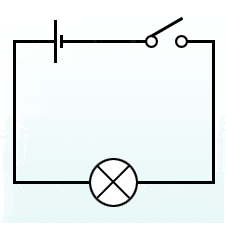
this circuit is .....?
a)
open
b)
parallel
c)
closed
d)
The cutest little circuit evah!
55.
When all parts of the circuit are connected it is a ______ circuit. 
a)
open
b)
closed
56.
 What is the reference point used to measure elevation?
a)
lake level
b)
sea level
c)
zero
d)
elevation
57.
What are the two main factors that determine the climate of an area?
a)
precipitation and humidity
b)
temperature and air pressure
c)
wind conditions and humidity
d)
temperature and precipitation
58.
What causes winds to form on Earth?
a)
solar energy
b)
ocean currents
c)
elevation differences
d)
uneven heating of the Earth by the sun
59.
What are the surface features of an area called?
a)
latitude
b)
longitude
c)
topography
d)
elevation
60.
What are the 3 major climate zones in order from equator to the poles?
a)
polar, temperate, tropical
b)
tropical, temperate, polar
c)
temperate, polar, tropical
61.
What is the condition of the Earth's atmosphere at a certain time and place?
a)
climate
b)
temperature
c)
weather
d)
air pressure
62.
Which BEST describes why latitudes closest to the equator have warmer climates?
a)
they are at lower elevations
b)
they receive more solar energy
c)
they are nearer to ocean currents
d)
they get more winds that carry energy in the form of heat
63.
What is the measure of distance in degrees north and south from the equator?
a)
latitude
b)
longitude
c)
elevation
d)
topography
64.
What is the height of an area above sea level?
a)
elevation
b)
topography
c)
latitude
d)
longitude
65.
Which sentence best describes how latitude and temperature are related?
a)
LOWER latitude = COLDER air temperature
b)
HIGHER latitude = COLDER air temperature
c)
HIGHER latitude = WARMER temperatures
66.
What is the weather conditions in an area over a long period of time?
a)
climate
b)
temperature
c)
elevation
d)
precipitation
67.
Which sentence best describes the relationship between elevation and air temperatures?
a)
LOWER elevation = COLDER temperatures
b)
HIGHER elevation = COLDER temperatures
c)
HIGHER elevations = WARMER temperatures
68.
A continental climate is ____.
a)
warm summers, cold winters, moderate precipitation
b)
hot summers, mild winters, heavy precipitation
c)
hot summers, mild winters, very little precipitation
d)
cool summers, cold winters, moderate precipitation
69.
By what amount did carbon dioxide in Earth's atmosphere increase between 1960 and 2000?
a)
40 -50 ppm
b)
60 -70 ppm
c)
110 -120 ppm
d)
360 -370 ppm
70.
In what year was the average global temperature lowest between 1880 and 2000?
a)
1880
b)
1900
c)
1940
d)
2000
71.
Which animal lays eggs?
a)
Alligator
b)
Shark
c)
Human
d)
Bear
72.

What behavior allows newborn animals to recognize and follow the first moving object they see?

a)

courting

b)

imprinting

c)

mimicry

d)

conditioning

73.

The dog in the picture is tying to cool off by panting. This response is similar to when a human does what?

a)

sneezes

b)

shivers

c)

sweats

d)

sleeps

74.

Hibernation is a response to which of the following environmental stimuli?

a)

hot weather

b)

cold weather

c)

other animals

d)

being hungry

75.

Which of the following behaviors in an animal would be prompted by the presence of other animals of the same species?

a)

hibernation

b)

shedding

c)

mimicry

d)

courtship

76.

Shivering is the body's response to:

a)

too much food

b)

extreme thirst

c)

reduced body temperature

d)

increased body temperature

77.

An insect looks like a small twig, so it can hide from its predators. This is an example of:

a)

hibernation

b)

migration

c)

mimicry

d)

camouflage

78.

Horns, claws, quills, and stingers are physical adaptations that are used for:

a)

defense

b)

movement

c)

food gathering

d)

obtaining resources

79.

A porcupine has sharp quills. Why would a porcupine need this adaptation?

a)

to keep warm

b)

to cover its skin

c)

to protect itself

d)

to kill its prey

80.

The arctic fox and snowshoe hare develop a white coat of fur during the winter months. What statement best describes this behavioral response?

a)

The color of the fur will attract a mate

b)

White fur allows the animals to reflect light and stay warm

c)

It becomes colder during the winter, so these animals need more fur to stay warm

d)

Snow falls during the winter and the white fur will camouflage the animals

81.

What is a process in which an animal learns that a stimulus and its response to that stimulus will bring a good or bad result?

a)

conditioning

b)

imprinting

c)

inherited behavior

d)

mimicry

82.
A bald eagle has a sharp hook on the end of its beak. This is an adaptation for obtaining resources.  Eagles are carnivores.  What is the beak used for?
a)
cracking seeds
b)
eating worms
c)
tearing the flesh of a smaller animal
d)
digging insects out of a tree bark
83.
A sixth grader gets home late from football practice and then stays up even later to finish his math homework.   
Why does he fall asleep in class the next day?   
a)
he needs to rebuild his muscles
b)
he needs to replenish the amount of water in his body
c)
he needs to restore his body's ability to function
d)
he needs to cool down from running in the gym
84.
(6-3.5) In the fall, black bears eat so much that they can gain up to 68 kg of fat in just two months.Why do black bears gain so much weight?
a)
to become stronger so they can better defend themselves
b)
to prepare for migration
c)
to attract a mate
d)
to prepare for hibernation
85.
Which of the following is the correct equation for PHOTOSYNTHESIS?
a)
CO+ light + H2O --> O+ Sugar
b)
CO+ sugar + H2O --> O+ light
c)
O2 + light + H2O --> CO+ Sugar
d)
CO+ O2 + H2O --> Light+ Sugar
86.
What process occurs when light energy is captured in autotrophs and converted into sugar?
a)
Photosynthesis
b)
Cellular Respiration
87.
Which organisms perform Photosynthesis?
a)
Only Autotrophs
b)
Only Heterotrophs
c)
Autotrophs and Heterotrophs
88.
What is the pigment in chloroplasts that performs photosynthesis?
a)
Chlorosynthesis
b)
Chlorophyll
c)
ADP
d)
Electron Transport
89.
Which gas is removed from the atmosphere during photosynthesis?
a)
hydrogen
b)
oxygen
c)
nitrogen
d)
carbon dioxide
90.
What are the products of photosynthesis?
a)
water and carbon dioxide
b)
oxygen and glucose
c)
oxygen and carbon dioxide
d)
oxygen and water
91.
What is photosynthesis?
a)
The process in which humans eat their food
b)
When a photographer takes a photo.
c)
To get your pictures from the photo lab.
d)
The process in which plants make their food.
92.
Chloroplasts are...
a)
Structures of animal cells to produce ATP
b)
Organelles where lipids are elaborated
c)
Specialized structures of plants where food is made
d)
Waste organelle of plants
93.
What is the pigment in chloroplasts that performs photosynthesis?
a)
Chlorosynthesis
b)
Chlorophyll
c)
ADP
d)
Electron Transport
94.
Which organelle from the plant cell is primarily responsible for converting sunlight to energy?
a)
Mitochonria
b)
Nucleus
c)
Vacuole
d)
Chloroplast
95.
What process is the diagram representing?
a)
Photosynthesis
b)
Soil development
c)
Plant reproduction
d)
Nitrogen Cycle
Nitrogen cycle
96.
What is produced as a result of photosynthesis?
a)
Glucose and Chlorophyll
b)
Glucose and Oxygen
c)
Water and Light energy
d)
Carbon dioxide and Water
97.
If all four plants were watered daily but placed in a closet, receiving no sunlight, what process would NOT occur?
a)
Ingestion of carbon dioxide
b)
Filtration of water through the soil
c)
Photosynthesis
d)
Water absorbtion
98.
The reactants of photosynthesis are
a)
sugar and water.
b)
sugar and oxygen.
c)
carbon dioxide and water.
d)
carbon dioxide and oxygen.
99.
The purpose of cellular respiration is to produce ?
a)
energy
b)
oxygen
c)
sugar
d)
protein
100.
Plants take in _______ and give out _____ all the time.  
a)
oxygen ... carbon dioxide 
b)
carbon dioxide ... oxygen
c)
carbon dioxide ... carbon dioxide 
d)
oxygen ... oxygen