Worksheets
Earth Science Review EOY
Total questions: 100
Worksheet time: 1hrs 3mins
The envelope of gases surrounding Earth is called the
ozone layer.
atmosphere.
gaseous cloud.
gas continuum.
The layer of our atmosphere where satellites orbit is called the
mesosphere.
thermosphere.
exosphere.
trophosphere.
Most meteors heading to Earth will burn up in the
thermosphere.
mesosphere.
trophosphere.
stratosphere.
Most weather occurs in the
thermosphere.
mesosphere.
stratosphere.
trophosphere.
What is the correct order of the atmospheric layers starting with the layer closest to Earth?
troposphere, stratosphere, mesosphere, thermosphere, and exosphere.
troposphere, stratosphere, thermosphere, mesosphere, and exosphere.
stratosphere, troposphere, mesosphere, thermosphere, and exosphere.
stratosphere, mesosphere, troposphere, exosphere, and thermosphere.
As you go higher in the atmosphere, what happens to air pressure?
It will decrease.
It will increase.
It will remain the same.
It will first increase and then rapidly decrease.
A barometer is used to measure
air pressure.
wind speed.
air temperature.
humidity.
What is used to measure wind speed?
hygrometer.
weather vane.
speedometer.
anemometer.
A high pressure system is associated with
precipitation.
fair weather.
stormy weather.
gentle precipitation followed by mild conditions.
Besides water vapor, the main components of the air we breathe are
nitrogen, oxygen, argon, and carbon dioxide.
nitrogen, oxygen, carbon dioxide, and carbon monoxide.
nitrogen, oxygen, xenon, and fluorine.
nitrogen, oxygen, methane, and chlorine.


Around the same temperature on Earth, water can exists as a
solid.
liquid.
gas.
It can exist in all three states.
Water can dissolve a lot of things and is often called the
great emancipator.
corrosion eliminator.
universal solvent.
perfect solution.
A water molecule is light enough to be a gas, but most of the molecules stick together to form a liquid. This is because
a water molecule is slightly positive on one side and slightly negative on the other side.
water is too heavy to become a gas.
Earth's gravity is too strong.
water is made of two elements.
The climate is often milder (compared to other areas) near
mountains.
grasslands.
open fields.
large bodies of water.
Approximately what percentage of Earth's water is non-frozen freshwater?
1%
3%
36%
51%
Approximately what percentage of Earth's water is salt water?
7%
39%
62%
97%
2(C₆H₁₂O₆)


Who was the first to use the telescope to study space in 1609?
Galileo
Kepler
Copernicus
Newton
Large rocks in space, smaller than a planet, that orbit the sun. Most are found in between Mars and Jupiter.
Asteroid
Meteoroid
Meteor
Comet
Who was the first person to set foot on the moon?
Neil Armstrong
Buzz Aldrin
Michael Collins
Alan Shepard
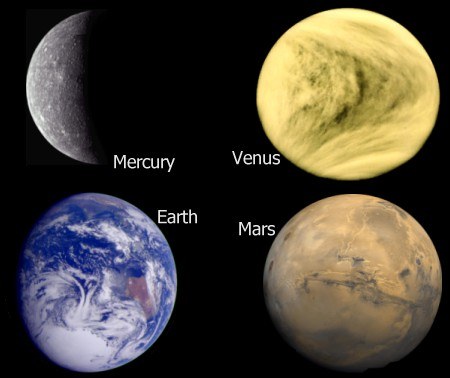

What part of the scientific method is this an example of?