wayground logo

Free Printable Worksheets

Font size

S
M
L
XL
Worksheets

Unit 10 Test: Great Depression & New Deal

Total questions: 93

Worksheet time: 1hrs 7mins

Name
Class
Date
1.

purchasing stock on credit

a)

bank holiday

b)

dole

c)

buying on margin

d)

recession

2.

an attemp to overcome judicial opposition to the New Deal

a)

bank holiday

b)

court-packing plan

c)

buying on margin

d)

recession

3.
a type of credit in which a small down payment is followed by monthly payments
a)
bull market
b)
buying on margin
c)
installment buying
d)
consumer revolution
4.
President Hoover's philosophy that Americans must work harder to dig out of the depression.
a)
chicken in every pot
b)
rugged individualism
c)
Square Deal
d)
New Deal
5.
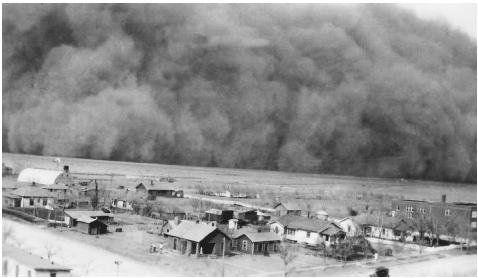
The Dust Bowl devastated what part of the U.S. during the Great Depression?
a)
West Coast
b)
New England
c)
Deep South
d)
Great Plains
6.
Which of the following DID NOT cause the Dust Bowl?
a)
overproduction
b)
windstorms
c)
drought
d)
tornadoes
7.
Which of the following was NOT a cause of the Great Depression?
a)
Hawley-Smoot Tariff
b)
Easy Credit
c)
Mistakes of the Federal Reserve
d)
high farm prices
8.
Paying a small % of a stock's price & borrowing the rest is known as what?
a)
buying on margin
b)
speculation
c)
fiat money
d)
price supports
9.
Buying stock without knowing the risks, assuming it will just go up is known as ________.
a)
speculation
b)
buying on margin
c)
market capitalization
d)
hammering the market
10.
The collection of markets and exchange where the issuing and trading of equities, bonds and other sorts of securities takes place.
a)
Margin
b)
New Deal
c)
Deficit Spending 
d)
Stock Market 
11.
On October 29, 1929 share prices on the New York Stock Exchange completely collapsed and partially caused the Great Depression.
a)
Black Thursday
b)
Black Tuesday 
c)
Black Friday
d)
Black Sunday 
12.
A time in America following the roaring 20's where America experience rising unemployment that did not end until the onset of World War II. 
a)
New Deal
b)
Roaring 20's
c)
Great Depression
d)
Cold War 
13.
What effect did the Dust Bowl storms have on the Great Depression?
a)
Many farmers were forced to leave the Great Plains.
b)
Unemployment decreased gradually.
c)
Many homes long the Mississippi River were flooded.
d)
Hoover was re-elected as president.
14.
The Bonus Army incident in 1932 best illustrates the idea that
a)
F.D.R.'
s relief programs were unsuccessful.
b)
many felt that Herbert Hoover was not handling the Depression well.
c)
protests by veterans during the Depression were effective.
d)
the U.S. Army had increased in size and power during the Depression.
15.
Which was NOT a LONG-TERM cause of the Great Depression?
a)
Buying stock on margin
b)
Stock market crash (Black Tuesday)
c)
too much production and consumer spending
d)
Laisezz-faire economic policies
16.
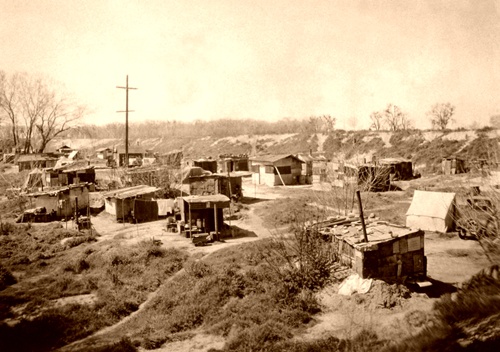
What were the villages full of shacks located in cities filled with unemployed Americans called?
a)
Hoovervilles
b)
Okies
c)
Bonus Army Bases
d)
Rooseveltowns
17.
Which economic factor contributed most directly to the start of the Great Depression?
a)
low worker productivity
b)
high income taxes
c)
decreasing tariff rates
d)
buying stocks on margin
18.
Which of the following was NOT an effect of the Great Depression?
a)
homelessness
b)
bank failures
c)
high tariffs
d)
struggling farmers
19.
All of the following were causes of the Great Depression except - 
a)
Prohibition
b)
Overspeculation on stocks
c)
failing banks
d)
high tariffs
20.
Which cause of the Great Depression led to the decrease in the prices of goods and food?
a)
Stock Market Crash
b)
Overproduction
c)
Federal Reserve did not help failing banks
d)
High Tariffs 
21.
FDR's legislative plan to end the Depression that included dramatic reforms of government agencies and powers.
a)
Buying on Margin
b)
New Deal
c)
Business Cycle
d)
Social Security Act
22.

The rhythm in which an economy expands and contracts its production.

a)

Business/Economic Cycle

b)

New Deal

c)

Business Margins

d)

Great Depression

23.
The process of purchasing stock with credit, hoping to sell at a high enough price to pay the loan and make a profit.
a)
Bonus Army
b)
Buying on Margin
c)
Congress of Industrial Organization
d)
Tennessee Valley Authority
24.
Radio programs in which FDR explained his plan for recovery from the Great Depression.
a)
Campfire Chats
b)
Fireside Chats
c)
Fire Pit Chats
d)
Bonfire Chats
25.
A group of WWI veterans that demanded their bonus payments early.
a)
Bonus Navy
b)
Bonus Coast Guard
c)
Bonus Marines
d)
Bonus Army
26.

A union that organized workers according to industry, not by skill

a)

Senate of Communism Corporations

b)

Tennessee Valley Authority

c)

Congress of Industrial Organizations

d)

Bonus Army

27.
Buying stock without knowing the risks, assuming it will just go up is known as ________.
a)
speculation
b)
buying on margin
c)
market capitalization
d)
hammering the market
28.
What new deal program insures bank deposits & helped to stop bank failures?
a)
SEC
b)
FDIC
c)
AAA
d)
TVA
29.
Why did FDR propose the Supreme Court Packing Plan?
a)
to influence the Supreme Court to keep the New Deal going
b)
to make it more conservative
c)
to make the Supreme Court more efficient
d)
to make the Supreme Court more diverse
30.
What New Deal program gives you a monthly pension when you turn 65?
a)
Social Security
b)
TVA
c)
Medicare
d)
FDIC
31.
What New Deal program paid young men to plant trees & build parks while sending $$$ home?
a)
CCC
b)
WPA
c)
PWA
d)
TVA
32.
The AAA helped what group of people by raising market prices?
a)
teachers
b)
farmers
c)
plumbers
d)
doctors
33.
The TVA generated what for the people of the Tennessee River Valley?
a)
electricity
b)
oil
c)
fresh water
d)
natural gas
34.
What were the villages full of shacks located in cities filled with unemployed Americans called?
a)
Hoovervilles
b)
Okies
c)
Bonus Army Bases
d)
Rooseveltowns
35.
What are cash payments or food given by the government straight to the poor?
a)
direct relief
b)
price supports
c)
fiat money
d)
rugged individualism
36.
What federal policy led to the expansion of the Federal Government?
a)
New Deal
b)
Return to Normalcy
c)
Fair Deal
d)
Great Deal
37.
Also known as Keynesian Economics, it's when the government spends more money than it receives in taxes
a)
deficit spending
b)
speculation
c)
buying on margin
d)
surplus spending
38.
What diverse group of Americans supported FDR & his programs?
a)
New Deal Coalition
b)
New Right
c)
Bonus Army
d)
Tea Party
39.
What congressional law returned lands back to the control of tribes & supported preservation of Native American cultures?
a)
Indian Reorganization Act
b)
Hawley-Smoot Tariff Act
c)
Mexican Repatriation Act
d)
Reconstruction Finance Act
40.
What group of people advised FDR on racial issues?
a)
Black Cabinet
b)
National Racial Relations Board
c)
African American Rights Committee
d)
New Deal Racial Coalition
41.
Which New Deal program put over 8 million people to work & built over 125,000 buildings?
a)
WPA
b)
AAA
c)
CCC
d)
NYA
42.
Which of the following was NOT a cause of the Great Depression?
a)
Hawley-Smoot Tariff
b)
Easy Credit
c)
Mistakes of the Federal Reserve
d)
high farm prices
43.
What New Deal program protected workers' rights (collective bargaining, max work week, & minimum wage)?
a)
NLRB/Wagner Act
b)
WPA
c)
AAA
d)
CCC
44.
The Federal Emergency Relief Administration loaned money to states for food, clothing, and shelter for the poor.
a)
Hoover
b)
Roosevelt
45.
The Emergency Banking Act made federal loans available to banks.
a)
Hoover 
b)
Roosevelt
46.
A national "bank holiday" was set up to prevent people from taking out all of their money from banks.
a)
Hoover
b)
Roosevelt
47.
The Civilian Conservation Corps hired young people to plant trees, work on roads, and help with rural flood control.
a)
Hoover
b)
Roosevelt
48.
What was created to protect bank deposits up to $5,000?
a)
WPA
b)
CCC
c)
TVA
d)
FDIC
49.
The New Deal Gave Americans hope but it failed to end the Great Depression.
a)
True
b)
False
50.
A _______________ government is a government that basically governs least.
a)
Deficit
b)
National Debt
c)
Las Vegas
d)
Laissez Faire
51.
This Program helped retirees
a)
Social Security Act
b)
Social Service Act
c)
Stock Market Advice
d)
CCC
52.
President Hoover's philosophy that Americans must work harder to dig out of the depression.
a)
chicken in every pot
b)
rugged individualism
c)
Square Deal
d)
New Deal
53.
What was the name given to President Roosevelt's plan to alter the Supreme Court to increase his power in having his New Deal legislation passed instead of having it struck down on constitutional grounds? 
a)
The New Deal
b)
The Great Depression
c)
Court Packing 
d)
Second New Deal 
54.
What were the major goals of the New Deal?
a)
no gold standard and free coinage of silver
b)
abolition and suffrage
c)
relief, recovery, and reform
d)
expanding the size and economic influence of the United States
55.
What New Deal program was an answer to demands for a pension for the elderly as put forward by Dr. Francis Townsend?
a)
National Labor Relations
b)
Tennessee Valley Authority
c)
Works Progress Administration
d)
Social Security
56.
All of the following were important causes of the Great Depression except
a)
both individuals and businesses built up large debts because of easy credit.
b)
tariffs on foreign imports were lowered.
c)
the federal government did not insure people's bank accounts.
57.
The _____ was created by private business and the federal government working together.
a)
Smoot- Hawley Tariff Act
b)
Federal Reserve
c)
Great Depression
d)
Hoover Dam
58.
Why did the Stock Market crash on October 29,1929?
a)
Only very wealthy people invested in the Stock Market
b)
People distrusted the stock market as a way to make money
c)
People panicked and began selling their stocks when economists warned people 
d)
Stock prices were at an all-time high and no one wanted to sell
59.
What did President Roosevelt do during his Fireside Chats?
a)
Attacked the critics of the New Deal
b)
Criticized President Hoover's handling of the Great Depression
c)
Explained the ideas behind his New Deal prgrams
d)
Stopped the use of government funds to provide jobs
60.
Who made up the Bonus Army that marched on Washington?
a)
WWI vets and their families
b)
farmers forced off their land by dust storms
c)
unemployed industrial workers and their families
d)
business and labor leaders who agreed to work together
61.

Raise crop prices by lowering production; Government paid farmers leave a certain amount of every acre unseeded; Reduced supply would boost prices

a)

Farm Security Administration (FSA)

b)

Rural Electrification Administration (REA)

c)

Agricultural Adjustment Act (AAA)

d)

Tennessee Valley Authority (TVA)

62.

Set prices of many products to ensure fair competition; Established standards for working hours and a ban on child labor; Promote recovery by interrupting the trend of wage cuts, falling prices, and layoffs

a)

National Recovery Administration (NRA)

b)

National Industrial Recovery Act (NIRA)

c)

National Youth Administration (NYA)

d)

Fair Labor Standards Act

63.

Old age insurance for retirees 65 or older and their spouses; Unemployment compensation system; Aid to families with dependent children and the disabled

a)

Securities and Exchange Commission

b)

Social Security Act

c)

Federal Housing Administration (FHA)

d)

National Industrial Recovery Act (NIRA)

64.

a law that required corporations to provide complete, accurate information on all stock offerings.

a)

Federal Securities Act

b)

Securities and Exchange Commission

c)

Federal Emergency Relief Administration (FERA)

d)

Farm Security Administration (FSA)

65.

an agency that monitors the stock market and enforces laws regulating the sale of stocks and bonds

a)

Civilian Conservation Corps (CCC)

b)

Federal Housing Administration (FHA)

c)

Fair Labor Standards Act

d)

Securities and Exchange Commission

66.

$500 million to provide relief for the needy; Half went to states as direct grants-in-aid to help furnish food and clothing to the unemployed, aged, and ill; Rest was distributed to states to support work relief programs

a)

Civil Works Administration

b)

Civilian Conservation Corps (CCC)

c)

Federal Emergency Relief Administration (FERA)

d)

Works Progress Administration (WPA)

67.

was the largest programs to help youths, professionals, and other workers; Set out to create as many jobs as possible as quickly as possible

a)

Civilian Conservation Corps (CCC)

b)

Works Progress Administration (WPA)

c)

National Industrial Recovery Act (NIRA)

d)

Federal Housing Administration (FHA)

68.

provided government loans to homeowners who faced foreclosures for not meeting loan payments

a)

Federal Housing Administration (FHA)

b)

Home Owners Loan Corporation (HOLC)

c)

Farm Security Administration (FSA)

d)

National Youth Administration (NYA)

69.

ambitious regional development program; Renovated five existing dams; Constructed 20 new ones; Created thousands of jobs; Provided flood control; Hydroelectric power

a)

Farm Security Administration (FSA)

b)

Federal Housing Administration (FHA)

c)

Tennessee Valley Authority (TVA)

d)

Home Owners Loan Corporation (HOLC)

70.

provided education, jobs, counseling, and recreation for young people; Provided student aid to high school, college, and graduate students; Students worked part time positions at their schools; Graduates unable to find jobs, youth who had dropped out of school, NYA provided part time jobs

a)

Farm Security Administration (FSA)

b)

Civil Works Administration

c)

National Industrial Recovery Act (NIRA)

d)

National Youth Administration (NYA)

71.

provided money to states to create jobs in the construction of schools and other community of buildings

a)

Civil Works Administration

b)

Civilian Conservation Corps (CCC)

c)

National Industrial Recovery Act (NIRA)

d)

Farm Security Administration (FSA)

72.

President Franklin Roosevelt’s program to alleviate the problems of the Great Depression, focusing on relief for the needy, economic recovery, and financial reform.

a)

New Deal

b)

New Deal Coalition

c)

Hundred Days

d)

Second Hundred Days

73.

radio talks used by FDR to address the American People about issues of public concern, explaining in clear, simple language his New Deal measures; Made Americans feel as if the president were talking directly to them

a)

FDR

b)

Fireside Chats

c)

New Deal

d)

The War of the Worlds

74.

a government’s spending of more money than it receives in revenue; Roosevelt saw deficit spending as a necessary evil used only at a time of great economic crisis; Liberal critics said the New Deal did not do enough; Conservative critics said Roosevelt had spent too much on direct relief

a)

Deficit Spending

b)

Fireside Chats

c)

New Deal Coalition

d)

Second Hundred Days

75.

Economy had improved in FDR’s first two years in office, gains were not as great as he had expected; Called on Congress to provide more extensive relief for farmers and workers

a)

Hundred Days

b)

Second Hundred Days

c)

New Deal

d)

New Deal Coalition

76.

diverse groups dedicated to supporting the Democratic Party; Southern whites, various urban groups, African Americans, and unionized industrial workers

a)

New Deal Coaltion

b)

American Liberty League

c)

First Hundred Days

d)

WPA

77.
Who was president during the New Deal?
a)
Theodore Rooesvelt
b)
Franklin Roosevelt
c)
Herbert Hoover
d)
Woodrow Wilson
78.
What natural calamity coincided with the New Deal and caused intensified and increased poverty throughout Oklahoma, Arkansas, and other parts of the south?
a)
the bank holiday
b)
the great flood of 1927
c)
the dustbowl
d)
increaded lynchings
79.
What was the culminating event that brought the country out of the Great Depression?
a)
the Bonus Army
b)
the building of the Hoover Dam
c)
going off of the gold standard
d)
World War II
80.
President Franklin D. Roosevelt believed that declaring a bank holiday and creating the Federal Deposit Insurance Corporation (FDIC) would help the nation’s banking system by
a)
restoring public confidence in the banks
b)
reducing government regulation of banks
c)
restricting foreign investments
d)
granting tax relief to individuals
81.
Which of the following was not a cause of the Dust Bowl?
a)
The Great Plains suffered a drought.
b)
The invention of the tractor resulted in fields that were much too large.
c)
Powerful tornadoes ripped through the area.
d)
Over plowing left the ground vulnerable to erosion causing massive storms.
82.
Who was president at the time of the Stock Market Crash of 1929?
a)
Abraham Lincoln
b)
Franklin D. Roosevelt
c)
Theodore Roosevelt
d)
Herbert Hoover
83.
In the 1930's, people would line up at ____________ to get food.  These were normally run by charities.
a)
churches
b)
businesses
c)
soup kitchens
d)
work
84.
During the Great Depression, many people did lose their homes because they couldn't pay for them.  They either had to live with family members or in makeshift "houses" made out of cardboard or whatever they could find.  These were called "Hoovervilles" or ________________.
a)
shanty towns
b)
neighborhoods
c)
Hoover Wagons
d)
clubs
85.
A significant effect of the Smoot-Hawley Tariff was that:
a)
US consumers benefited from lower prices on goods and services
b)
American businesses benefitted while foreign trade decreased
c)
Labor unions gained legal protection for collective bargaining
d)
US manufacturers faced more competition from foreign nations.
86.
Before the depression, many debt-ridden farmers had
a)
Decreased crop production in order to save money
b)
Decreased crop production due to high inflation costs
c)
Increased crop production in order to add nutrients to the soil
d)
Increased crop production in order to earn more money.
87.
What were the villages full of shacks located in cities filled with unemployed Americans called?
a)
Hoovervilles
b)
Okies
c)
Bonus Army Bases
d)
Rooseveltowns
88.
The Hawley-Smoot Tariff
a)
helped the US economy but hurt the world economy
b)
hurt the US economy but helped the world economy
c)
Neither helped nor hurt the US and world economy
d)
created a global drop in business, resulting in a world-wide depression.
89.
Which of the following is the most valid statement regarding the long-term economic effects of  the Great Depression? 
a)
The government placed fewer restrictions on large corporations
b)
The role of the federal government was expanded
c)
The government reduced its dependence on foreign trade
d)
The American people had greater confidence in the nation’s economic leadership
90.
What New Deal Act guaranteed workers the right to organize and join labor unions?
a)
Fair Labor Standards Act
b)
National Labor Relations Act (Wagner Act)
c)
workman's compensation
d)
Social Security
91.
FDR's "Bank Holiday" was part of which of the following laws?
a)
Financial Srevices Act
b)
Federal Emergency Relief Agency
c)
Social Security Adminsitration
d)
Emergency Banking Act
92.
What was a guiding principle of the New Deal economic policies? 
a)
Pro-business tax breaks would solve the problems associated with urban poverty
b)
Antitrust legislation would destroy the free market economy of the United States 
c)
Rugged individualism must be allowed to solve social inequality
d)
Government must assume more responsibility for helping the poor 
93.
Based on the cartoon, how did President Roosevelt want to ease the Great Depression?
a)
by expanding the role of government in citizens’ lives
b)
by expanding the authority of legislative representatives
c)
by regulating the stock purchases by individual investors
d)
by restricting the spending by government on domestic projects