
NEW
Font size
 Worksheets
Friction Quiz
Total questions: 20
Worksheet time: 2hrs 36mins
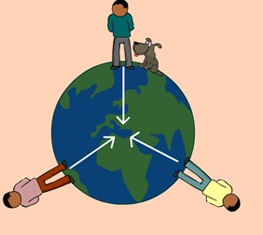

Which of the following statements is false?
Friction can only slow things down
Friction is never useful
Friction can stop things from moving
During the winter, roads may become dangerously icy and slick. So, some city workers spread a mixture of sand on the roads. What is the best explanation for doing this?
Sand decreases the frictional force between car tires and the roads
Sand increases the temperature between car tires and the roads.
Sand decreases the gravitational force of the car on the roads.
Sand increases the frictional force between car tires and the roads
A child rides her bike down a steep hillside. What is the best explanation of how she is able to slow down the speed of the bike?
The brakes of the bike create a magnetic field to slow down the bike.
The rubber of the tires against the pavement reduces the force of friction.
The brakes rub against the tires to increase friction to slow down the bike.
The speed of the bike creates a decreases in the gravitational pull
Two students were playing on a slide at a playground. Student 1 wore shorts and Student 2 wore long pants. Which is the most likely reason Student 2 moved down the slide more easily than Student 1?
more friciton
less friction
less gravity
more gravity
Which of the following are effective ways to reduce friction between objects?
increase the temperature and use a rough surface.
increase the mass and remove wheels.
add wheels and use a smooth surface.
add spikes and increase the pressure.
Students were investigating friction using a variety of activities. They created a data table in their science notebook showing their observations. Which of the following data tables correctly matches their observations and conclusions?


Students were investigating the amount of friction created by different surfaces. They rolled the same tennis ball down a ramp that was 10 cm high. They used a different surface to cover the ramp with each trial. Which data table matches the distance the tennis ball traveled with the correct conclusion about the force of friction between the ball and the surface?



