wayground logo

Free Printable Worksheets

Font size

S
M
L
XL
Worksheets

7th zamora

Total questions: 100

Worksheet time: 1hrs 28mins

Name
Class
Date
1.
A system made up of organisms interacting with one another
a)
biology
b)
abiotic
c)
biotic
d)
ecosystem
2.
The part of Earth where organisms can live.
a)
biotic factors
b)
biosphere
c)
ecology
d)
biology
3.
Organisms that make up the living part of an ecosystem.
a)
abiotic
b)
biotic factors
c)
ecology
d)
ecosystems
4.
Nonliving things found in an ecosystem.
a)
factories
b)
factor trees
c)
biotic factors
d)
abiotic factors
5.
The study of interactions in an ecosystem.
a)
ecology
b)
philosophy
c)
scientology
d)
biology
6.
A group of the same type of organisms living in the same place at the same time.
a)
threatened species
b)
populations
c)
community
d)
limiting factor
7.

All of the populations that live in one area together

a)

limiting factors

b)

populations

c)

community

d)

speed limit

8.
A species that is in danger of becoming extinct.
a)
Threatened species
b)
out of luck
c)
do do birds
d)
endangered species
9.
A species that needs to be protected but is not in danger of becoming extinct.
a)
endangered species
b)
threatened species
c)
sub species
d)
special species
10.
Something that limits the size  of a population.
a)
maxfactor
b)
factor tree
c)
the x factor
d)
limiting factor
11.
Which is a biotic factor?
a)
sunlight
b)
air 
c)
bacteria
d)
all of the above
12.
Deserts, mountains, and rivers are all examples of ________.
a)
vacation spots
b)
tundra
c)
ecosystems
d)
wetlands
14.
The way energy is passed from one organism to another
a)
food chain
b)
energy
c)
extinct
d)
habitat
14.
The way energy is passed from one organism to another
a)
food chain
b)
energy
c)
extinct
d)
habitat
15.
The way energy is passed from one organism to another
a)
food chain
b)
energy
c)
extinct
d)
habitat
16.
The way energy is passed from one organism to another
a)
food chain
b)
energy
c)
extinct
d)
habitat
17.
Which one is NOT an example of a decomposer?
a)
mushroom
b)
leaves
c)
mold
d)
worm
18.
What four things do every organism need for survival?
a)
food, water, dirt, and a hat
b)
protection, water, food, and air
c)
air, sun, dirt, and water
d)
light, electricity, and worms
19.
Examples of a producer
a)
frog
b)
algae
c)
worm
d)
mouse
20.
Example of a consumer
a)
worm
b)
bacteria
c)
mushroom
d)
hawk
21.
Example of a decomposer
a)
fungus
b)
mouse
c)
plants
d)
frogs
22.
Example of a decomposer
a)
fungus
b)
mouse
c)
plants
d)
frogs
23.

What is a spinning funnel cloud which causes much destruction?

a)

blizzard

b)

hurricane

c)

tornado

d)

flood

24.

What is an extensive amount of snow over a short period of time?

a)

blizzard

b)

hurricane

c)

tornado

d)

flood

25.

What catastrophic event is caused by an unusually large amount of water for an area?

a)

blizzard

b)

hurricane

c)

tornado

d)

flood

26.
Which of the following describes large areas of ground that fall or flow on slopes due to gravity?
a)
floods
b)
hurricanes
c)
landslides
d)
wildfires
27.
Which catastrophic event will most likely have the effect of returning an ecosystem to primary succession?
a)
A tornado
b)
A volcanic eruption
c)
A flood
d)
A drought
28.
Where are hurricanes most likely to do the most damage?
a)
Near the coast
b)
In the forest
c)
In a desert
d)
On the North Pole
29.
Where are hurricanes most likely to do the most damage?
a)
Near the coast
b)
In the forest
c)
In a desert
d)
On the North Pole
30.
What catastrophic event would be of greatest risk to a grassland?
a)
hurricane
b)
flood
c)
tsunami
d)
wildfire
31.
What catastrophic event results in destruction along a narrow path?
a)
a volcanic eruption
b)
a tsunami
c)
a hurricane
d)
a tornado
32.
What catastrophic event can be caused by thunderstorms?
a)
a wildfire
b)
a tsunami
c)
a volcanic eruption
d)
a drought
33.
How are tsunamis generated?
a)
generated from earthquakes
b)
generated from tornadoes
c)
generated from crazy people
34.
Another name for a hurricane in the Indian Ocean
a)
Tornado
b)
Tsunami
c)
Typhoon
d)
Blizzard
35.
What is the major cause of weathering and erosion to form canyons?
a)
wind
b)
ice
c)
glaciers
d)
moving water
36.
The process of breaking up rocks on Earth's surface is called...
a)
sediment
b)
erosion
c)
weathering
d)
deposition 
37.
How does freezing water cause the weathering of rocks?  The freezing water—
a)
keeps the rocks in place
b)
makes the rocks last longer
c)
expands in the cracks and breaks rocks
d)
causes rocks to fall in landslides
38.
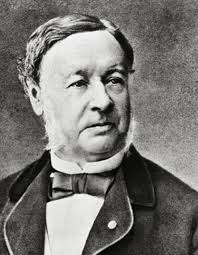
Which of the following scientists contributed to the cell theory?
a)
Rudolf Virchow, Robert Hooke, Anton van Leuwenhoek
b)
Matthais Schleiden, Theodor Schwann, Rudolf Virchow
c)
Robert Hooke, Theodor Schwann, Anton von Leuwenhoek
d)
Theodor Schwann, Matthais Schleiden, Robert HookeOption 4 (optional)
39.
Which of the following scientists concluded that all animals are made of cells?
a)
Rudolf Virchow
b)
Matthais Schleiden
c)
Robert Hooke
d)
Theodor Schwann
40.
Which of the following scientists was the first to observe bacteria?
a)
Anton van Leuwenhoek
b)
Matthais Schleiden
c)
Robert Hooke
d)
Theodor Schwann
41.
Which of the following statements is not part of the cell theory?
a)
Cells are the basic unit of structure and function in all living things.
b)
All cells are produced from other cells.
c)
Only animal cells are composed of cells.
d)
All living things are composed of cells.
42.
The invention of the microscope made it possible for people to discover and learn about
a)
Plants
b)
Skin 
c)
Animals 
d)
Cells
43.
What is one way in which all living things on Earth are alike?
a)
All living things have hair.
b)
All living things are made of cells and come from other cells.
c)
The cells of all living things have chloroplast.
d)
All living things can move. 
44.
Which statement reflects one of the major components of the cell theory?
a)
All living things are multi-cellular.
b)
Organs are the basic unit of structure and function for all living things.
c)
All cells come from previously existing cells.
d)
Every organism has a reproductive system to ensure survival of the species.
45.
What structures distinguish a plant cell from an animal cell?
a)
Plant cells have cell walls and ribosomes.
b)
Plant cells have cell walls and chloroplasts.
c)
Plant cells have chloroplasts and ribosomes.
d)
Plant cells have chloroplasts and mitochondria.
46.
Which organelle is only found in a plant cell? 
a)
nucleus
b)
chloroplast
c)
mitochondria
d)
cell membrane
47.
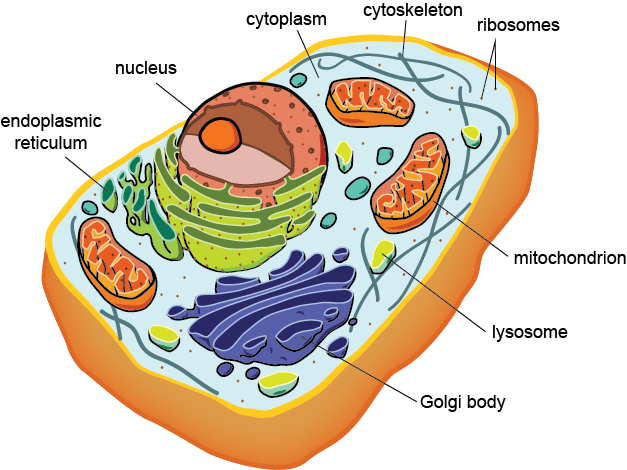
Directs all cell activities through the DNA located there.
a)
Lysosomes
b)
Nucleus
c)
ribosomes
d)
Mitochondria
49.
Which of the following is directly involved in the transportation of materials inside/within the cell?
a)
Endoplasmic Reticulum
b)
Vacuole
c)
Lysosome
d)
Mitochondria
49.
Which of the following is directly involved in the transportation of materials inside/within the cell?
a)
Endoplasmic Reticulum
b)
Vacuole
c)
Lysosome
d)
Mitochondria
50.
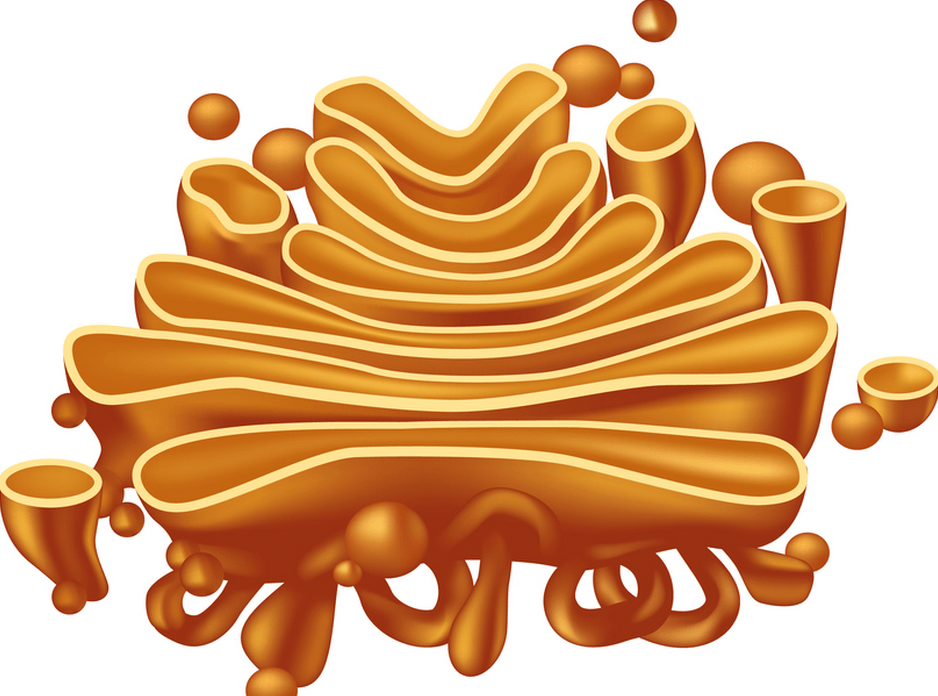
I am a protein packaging and shipping machine! Who am I?
a)
vacuole
b)
ribosome
c)
mitochondrion
d)
golgi apparatus
51.
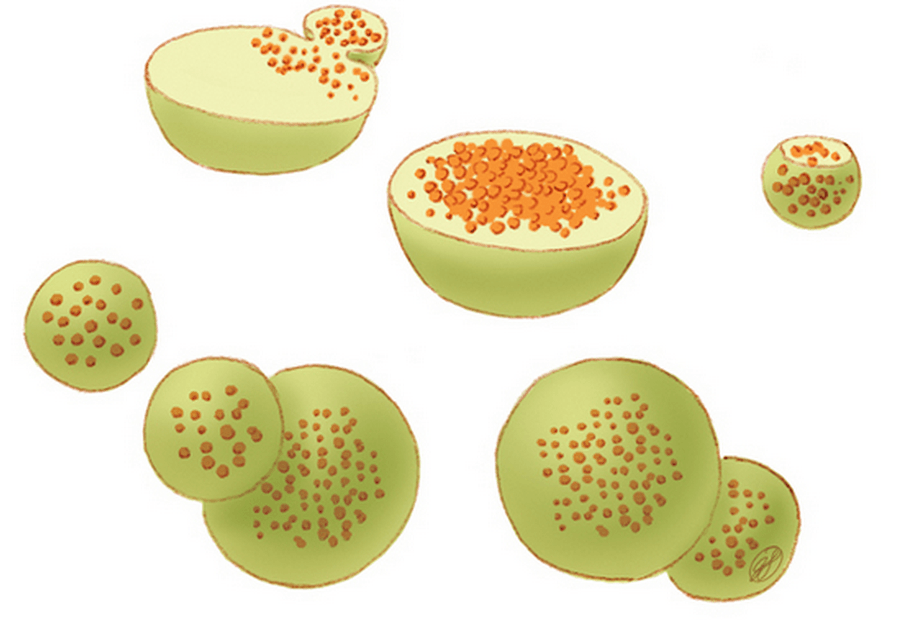
You might think of me as the trash collector, but recycler is maybe more accurate. What am I?
a)
mitochondria
b)
lysosome
c)
vacuole
d)
ribosome
52.
How many alleles (letters) do each person carry for a trait?
a)
1
b)
2
c)
3
d)
4
53.
How many alleles (letters) does a child get from each parent for each trait?
a)
1
b)
2
c)
3
d)
4
54.
In a heterozygous genotype, the ___________ allele takes over in the phenotype.
a)
recessive
b)
dominant
c)
lower case letter
d)
both 
55.
What you see, or the physical appearance.
a)
Genotype
b)
Phenotype
c)
Homozygous
d)
Heterozygous
56.
You use the scientific method all the time to solve everyday problems.
a)
True
b)
False
57.
When making an observation, you must use...
a)
Only Sight
b)
Smell & Touch
c)
ALL 5 Senses
d)
Only Taste
58.
During this step of the scientific method, a scientist would gather background information. 
a)
Hypothesis
b)
Research
c)
Observation
d)
Experiment 
59.
This step of the scientific method is an educated guess or a prediction. 
a)
Hypothesis
b)
Research
c)
Observation
d)
Conclusion
60.
Which is an example of Quantitative Data?
a)
42 grams
b)
Hard
c)
Squishy
d)
Blue
61.
Which one is an example of Qualitative Data?
a)
25 Pounds
b)
30 Seconds 
c)
2 Meters
d)
Soft
62.
The independent variable is what you _______ during an experiment.
a)
change
b)
do not change 
c)
measure
d)
count
63.
The independent variable is what you _______ during an experiment.
a)
change
b)
do not change 
c)
measure
d)
count
64.
The dependent variable in an experiment is what you ________________. 
a)
Change
b)
Measure
65.
This is the group that we will compare our experimental group to. This group stays "normal."
a)
Control Group
b)
Experimental Group
c)
 Normal Group
d)
Weird Group
66.
If you are not sure what to do during a lab activity:
a)
guess
b)
change lab partners
c)
ask a teacher
d)
just sit quietly and do nothing
67.
You should never ______ chemicals in the lab. 
a)
taste
b)
touch
c)
smell
d)
all of the above
68.
Keeping your work area neat and clean is important because:
a)
My teacher is a neat-freak
b)
I won't lose my supplies in the clutter.
c)
It keeps the room from looking messy.
d)
It helps prevent accidents.
69.
I can perform my own experiments with lab materials ___.
a)
I am sure it is safe to do so.
b)
Whenever I want to.
c)
When all of my group is ready.
d)
Never.
70.
What is the CORRECT procedure for students to follow if a chemical is spilled?
a)
Stand back and advise the teacher of the spill.
b)
Run madly out of the room.
c)
Splash large amounts of water onto the spill.
d)
Immediately ask to go to the restroom.
71.
Disrupting other students in the laboratory with horseplay in the lab is:
a)
helpful.
b)
allowed
c)
dangerous.
d)
the quickest way to do a job.
72.
Helping to clean up the lab or classroom is the job of
a)
old students.
b)
transfer students.
c)
each and every student.
d)
only the teacher.
73.
At the end of the lab you see some leftover chemical that looks just like the stuff you were using.  You should:
a)
put the chemical back in the jar it came from.
b)
sweep it into your hand and throw it out.
c)
tell the teacher so you can dispose of it properly.
d)
tell your classmates that your lab partner is really messy.
74.
Which biome is characterized by low temperatures and low amounts of rainfall?
a)
tundra
b)
desert
c)
temperate deciduous forest
d)
tropical rain forest
75.
Which biome covers most of the land mass near the Earth's equator?
a)
tundra
b)
desert
c)
grassland
d)
tropical rainforest
76.
Which biome is found on the mountain above the tree line?
a)
grassland
b)
deciduous forest
c)
tundra
d)
tropical forest
77.
Which biome, because of its climate, has the largest number of species of plants and animals?
a)
tundra
b)
desert
c)
tropical rainforest
d)
pine forest
78.
Which of the following is NOT an example of a biome?
a)
Desert
b)
Marine
c)
Freshwater
d)
Waterpark
79.
The kangaroo rat is able to get all of the water it needs through it's food and therefore, never needs to drink liquid. This animal has adapted to survive in which biome?
a)
Forest
b)
Tundra
c)
Desert
d)
Grassland
80.

This is the coldest biome.

a)

Taiga

b)

Polar

c)

Savanna

d)

Tundra

e)

Temperate Forest

81.

This is the wettest biome.

a)

Taiga

b)

Polar

c)

Savanna

d)

Tropical Rain Forest

e)

Temperate Forest

82.

This is the driest biome.

a)

Taiga

b)

Temperate Grassland

c)

Savanna

d)

Tropical Rain Forest

e)

Desert

83.

This biome has coniferous trees

a)

Taiga

b)

Temperate Grassland

c)

Savanna

d)

Tropical Rain Forest

e)

Desert

84.

This biome has Deciduous trees

a)

Taiga

b)

Temperate Forest

c)

Savanna

d)

Tropical Rain Forest

e)

Desert

85.

This biome has very fertile soil

a)

Taiga

b)

Temperate Forest

c)

Savanna

d)

Tropical Rain Forest

e)

Temperate Grassland

86.
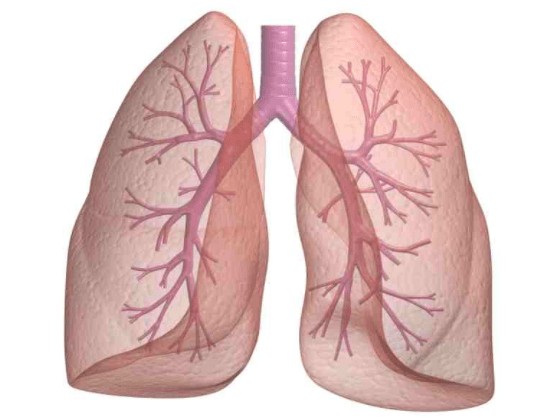
1. Which system are the lungs in?
a)
respiratory
b)
digestive
c)
excretory
d)
muscular
87.
 Which system is the stomach in?
a)
respiratory
b)
digestive
c)
nervous
d)
excretory
88.
 Which system is the esophagus in?
a)
digestive
b)
urinary
c)
integumentary
d)
skeletal
89.
 What is the main function of the respiratory system?
a)
take in oxygen and exhale waste like carbon dioxide
b)
move nutrients throughout the body
c)
take in carbon dioxide and exhale oxygen
90.
Where does digestion start?
a)
stomach
b)
mouth
c)
esophagus
91.
Which systems main function is to allow movement of the body?
a)
muscular
b)
digestive
c)
skeletal
d)
excretory
92.
The smallest units or parts of living things; the body's building blocks.
a)
cells
b)
organs
c)
tissues
d)
system
93.
Your large and small intestines are part of this body system.
a)
nervous
b)
digestive
c)
muscular
d)
skeletal
94.
Your body systems work separately and do not effect each other.
a)
true
b)
false
95.
 Organs are body parts that have specific jobs.  Your body systems are made up of organs.
a)
True
b)
False
96.
Roles, jobs, or purposes.
a)
function
b)
cells
c)
stimulus
d)
microscope
97.
The nutrients in food that supply the human body with energy.
a)
carbohydrates
b)
fats
c)
minerals
d)
proteins
98.
Which system includes the mouth, esophagus, and the small and large intestines?
a)
nervous
b)
excretory
c)
respiratory
d)
digestive
99.
Which system takes food into the body, breaks down food, and absorbs the digested materials?
a)
respiratory
b)
circulatory
c)
digestive
d)
excretory
100.
Which system includes the mouth, esophagus, and the small and large intestines?
a)
nervous
b)
excretory
c)
respiratory
d)
digestive