
 Worksheets
4th Grade Science Benchmark Review
Total questions: 75
Worksheet time: 1hrs 5mins
Name
Class
Date
1.
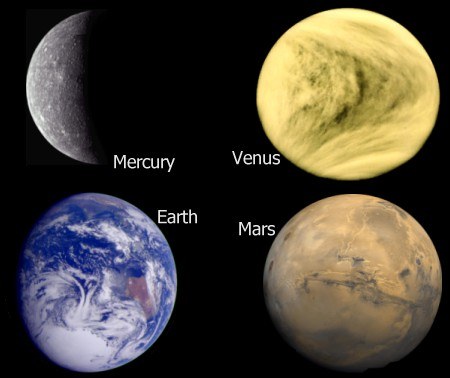
Earth and the other planets closest to the Sun are made mostly of _______
a)
gas
b)
metal
c)
water
d)
rock
2.

The moon is a natural ______ of Earth.
a)
comet
b)
axis
c)
satellite
d)
space probe
3.

Earth's ________ on its axis causes day and night.
a)
rotation
b)
revolution
c)
phase
d)
comet
4.

One full orbit of an object around another object is called a ________.
a)
axis
b)
rotation
c)
revolution
d)
satellite
5.
Which is the largest object in our solar system?
a)
Sun
b)
Jupiter
c)
Earth
d)
Pluto
6.
Which planet is closest to the sun?
a)
Uranus
b)
Mercury
c)
Neptune
d)
Earth
7.
Which outer planets have rings?
a)
Just Saturn
b)
Saturn and Jupiter
c)
Jupiter, Neptune, and Saturn
d)
all 4 of them
8.
The GAS GIANTS or Outer planets are:
a)
Mercury, Earth, Jupiter, Saturn
b)
Saturn, Neptune, Pluto, Mars
c)
Saturn, Jupiter, Uranus, Neptune
d)
Earth, Mars, Saturn, Neptune
9.
What causes day and night?
a)
The earth rotating on its axis
b)
The earth revolving around the sun
c)
The axis' tilting back and forth
d)
The phases of the moon
10.
If the earth didn't rotate on its axis. What natural cycle would this affect?
a)
seasons
b)
tides
c)
day and night
d)
moon phases
11.

What does the Earth orbit around?
a)
axis
b)
sun
c)
orbit
d)
moon
12.
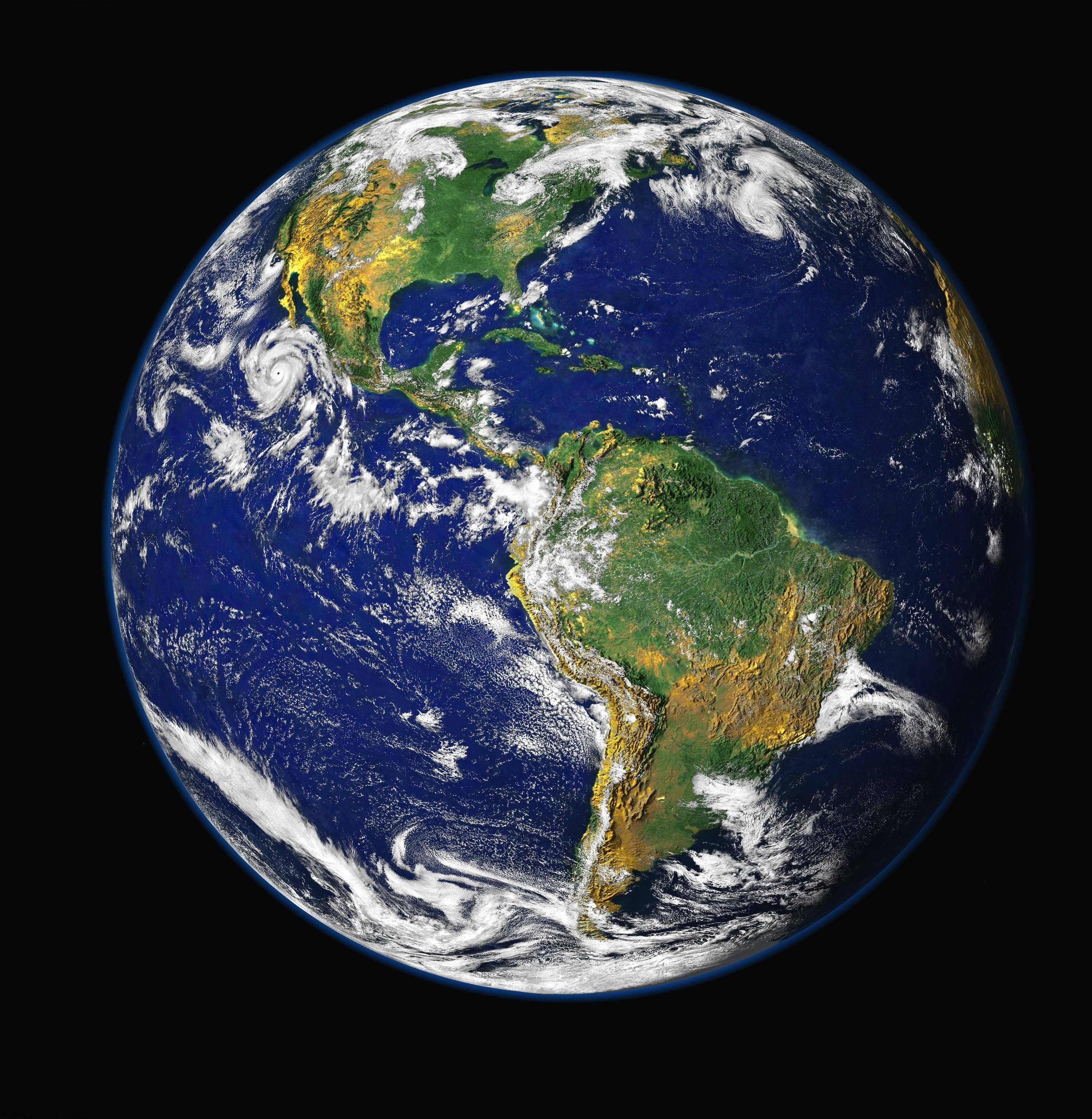
What causes seasons?
a)
rotation
b)
the orbit
c)
the Earth's tilt
d)
day and night
13.
You are getting ready for school. On the other side of the world, students are getting ready for _______.
a)
school
b)
bed
c)
breakfast
d)
lunch
14.

What happens when the area in which you live tilts AWAY from the sun?
a)
It is summer.
b)
It is spring.
c)
It is winter.
d)
It is fall.
15.
Approximately how long does it take for the Earth to revolve around the sun?
a)
24 hours
b)
1 month
c)
365 days
d)
365 years
16.
What happens as Earth rotates?
a)
The sun appears to rise
b)
The sun moves across the sky
c)
The sun appears to set
d)
All of the above
17.
A __________ measures how hot or cold the temperature is.
a)
rain gauge
b)
wind vane
c)
thermometer
d)
hygrometer
18.
The _______ measures how much rain falls in a specific period of time.
a)
thermometer
b)
weather vane
c)
anemometer
d)
rain gauge
19.
A _________ measures the air pressure.
a)
thermometer
b)
hygrometer
c)
thermometer
d)
barometer
20.
When water cools and turns into a liquid it is called.....
a)
condensation
b)
evaporation
c)
transpiration
d)
precipitation
21.
Rain, sleet, hail, and freezing rain are all...
a)
precipitation
b)
condensation
c)
evaporation
d)
run-off
22.
________ is the process which helps clouds form.
a)
condensation
b)
evaporation
c)
precipitation
d)
transpiration
23.

Label A on the diagram is...
a)
run-off
b)
infiltration
c)
evaporation
d)
transpiration
24.

Label B on the diagram is...
a)
run-off
b)
infiltration
c)
evaporation
d)
transpiration
25.

Label C on the diagram is...
a)
run-off
b)
infiltration
c)
evaporation
d)
transpiration
26.

Label D on the diagram is...
a)
condenstation
b)
precipitation
c)
evaporation
d)
transpiration
27.

Label E on the diagram is...
a)
condensation
b)
precipitation
c)
evaporation
d)
transpiration
28.
What is weather?
a)
The temperature in an area.
b)
The climate of an area.
c)
the condition of the outside air at a particular moment
d)
The amount of precipitation in an area.
29.

Name the cloud in the picture.
a)
Cirrus
b)
Stratus
c)
Cumulus
d)
Thundercloud
30.
Which type of cloud form close to the earth in flat layers and are associated with stormy weather.
a)
Cirrus
b)
Stratus
c)
Cumulus
d)
Nimbus
31.
What is a PUSH or PULL of an object?
a)
Motion
b)
Force
c)
Friction
d)
Gravity
32.
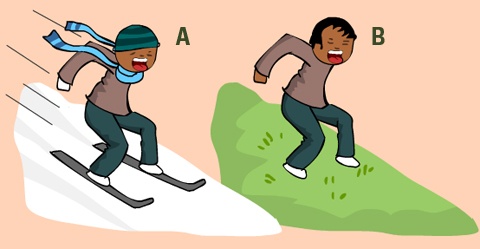
Why is it harder for the boy in Image B to get down the hill?
a)
Motion
b)
Friction
c)
Work
d)
Displacement
33.
Which force produces a change in motion?
a)
unbalanced force
b)
balanced force
c)
gravitational force
d)
frictional force
34.
When you type on the keys of your Chromebook you are using a
a)
pull
b)
push
c)
gravity
d)
friction
35.
Another way that force can cause the change in an object's motion is to...
a)
change its color.
b)
change its pitch.
c)
change its direction.
d)
change its spots.
36.
An inclined plane wrapped around a rod forms this simple machine
a)
lever
b)
pulley
c)
screw
d)
wedge
37.
An axe is an example of a
a)
pulley
b)
inclined plane
c)
screw
d)
wedge
38.
A seesaw is an example of a
a)
wedge
b)
lever
c)
inclined plane
d)
pulley
39.

Stairs
a)
wedge
b)
pulley
c)
inclined plane
d)
wheel and axle
40.
Which is not a type of simple machine?
a)
spring
b)
screw
c)
pulley
d)
wedge
41.
What is an example of an inclined plane?
a)
crane
b)
slide
c)
bike
d)
see-saw
42.
What is an example of a wheel and axle?
a)
ax
b)
light bulb
c)
skateboard ramp
d)
bus tire
43.
What is an example of a pulley?
a)
slide
b)
flag pole
c)
ax
d)
chapstick
44.
A __________ includes all living and non-living things in an environment.
a)
population
b)
niche
c)
abitotic
d)
ecosystem
45.
A producer?
a)
Eats other plants and animals
b)
Makes its own food
c)
Eats dead plants or animals
d)
Makes toys for kids
46.
A consumer?
a)
Makes its own food
b)
Eats dead plants and animals
c)
Eats plants and other animals for energy
d)
Buys toys for kids
47.

An apple tree is a
a)
producer
b)
consumer
c)
decomposer
48.

A hawk is an example of a
a)
consumer
b)
producer
c)
decomposer
49.

A mushroom is a
a)
producer
b)
consumer
c)
decomposer
50.
What is refraction?
a)
when light bounces off an object
b)
when light bends
c)
when light draws an object
51.
How does sound travel?
a)
in only one direction
b)
in waves
c)
it doesn't travel
52.
Pitch is __________________.
a)
how loud or soft a sound is
b)
how high or low a sound is
c)
when sound comes back to you
53.
What happens when light hits a mirror?
a)
it makes a color
b)
it reflects
c)
it makes a rainbow
d)
it passes through
54.
What happens when an object is opaque?
a)
all light is able to pass through
b)
no light is able to pass through
c)
some light is able to pass through
d)
it is black
55.
How does light travel?
a)
in a wavy path
b)
in a straight path
c)
in a zig zag path
56.
Sound is a form of
a)
machine
b)
light
c)
energy
d)
frequency
57.
Which type of object will NOT allow light to pass through?
a)
Opaque
b)
Transparent
c)
Translucent
58.

Blurs light as it passes through
a)
Transparent
b)
Translucent
c)
Opaque
d)
Refraction
59.
Which item is translucent?
a)
clean windows
b)
sunglass lenses
c)
painted walls
d)
dark window shades
60.
Which item reflects light?
a)
mirror
b)
magnifying glass
c)
wax paper
d)
prism
61.
Which tool is used to separate white light into the colors of the visible spectrum?
a)
prism
b)
magnifying glass
c)
microscope
d)
mirror
62.
Sound is caused by....
a)
molecules
b)
vibrations
c)
people
d)
space
63.
The colors that you don't see are _________.
a)
absorbed
b)
diffraction
c)
scattering
d)
reflected
64.
What part of the moon do we see from Earth?
a)
all of it
b)
the same side
c)
none of it
d)
only one quarter
65.
Which moon phase is when you can't see the moon at all?
a)
Waning crescent
b)
Full moon
c)
Waxing gibbous
d)
New moon
66.
The cycle of the moon lasts about a _.
a)
day
b)
year
c)
week
d)
month
67.

What Moon phase is this?
a)
Full Moon
b)
Waxing Gibbous
c)
New Moon
d)
Half Moon
68.

What Moon phase is this?
a)
Waxing Crescent
b)
Waning Gibbous
c)
Waning Crescent
d)
Waxing Gibbous
69.
The moon cycle (lunar cycle) takes approximately _______________ to complete.
a)
14 days
b)
28 days/approximately one month
c)
58 days
d)
1 week
70.

True or False
The Sun is the biggest star in the sky.
The Sun is the biggest star in the sky.
a)
True
b)
False
71.
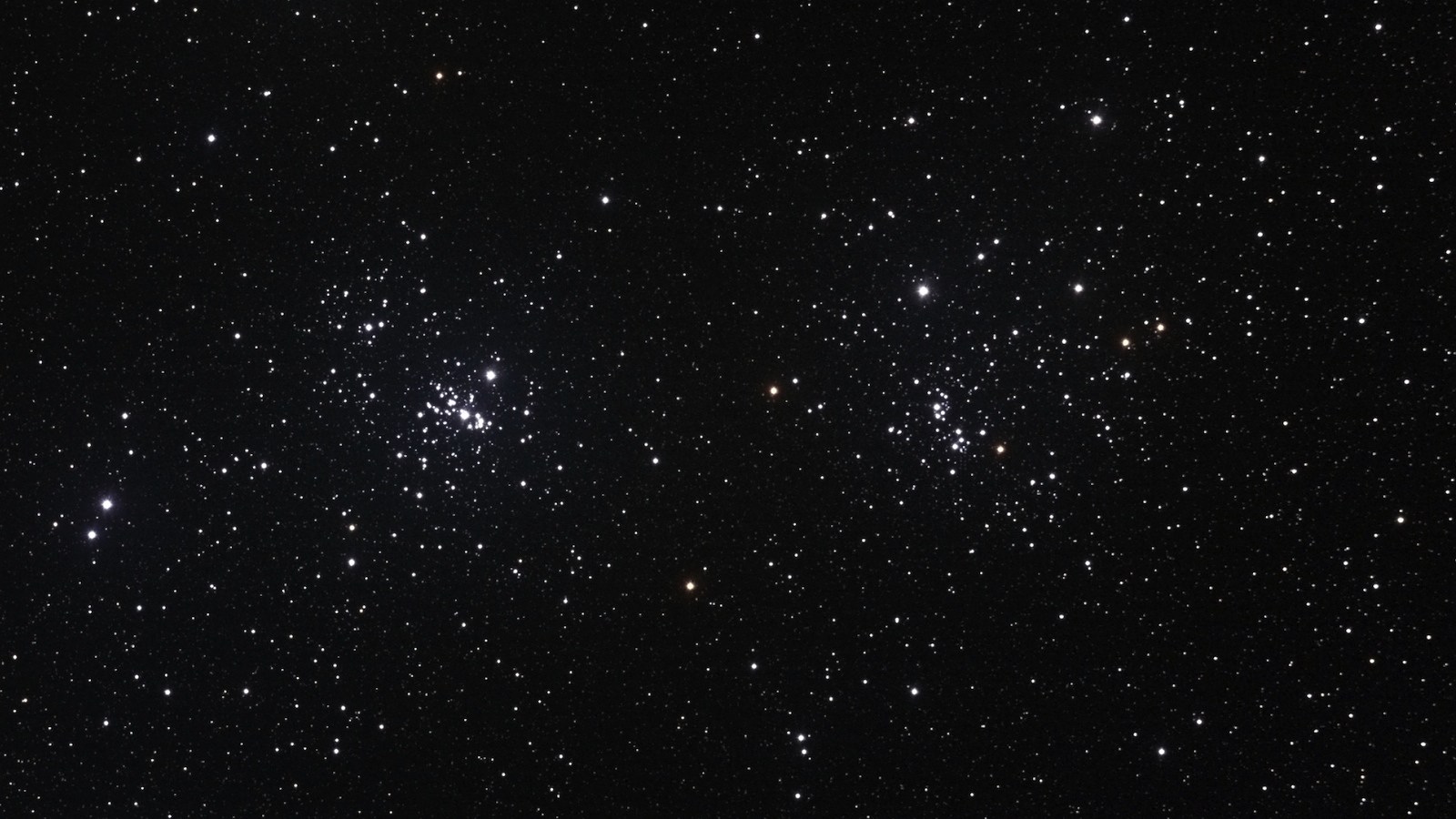
Why do other stars appear so much smaller than the sun?
a)
They are much smaller
b)
They are so far away
c)
They are not as bright
d)
They are dwarf stars
72.

What color of star is the hottest?
a)
Blue
b)
Red
c)
Yellow
d)
Orange
73.
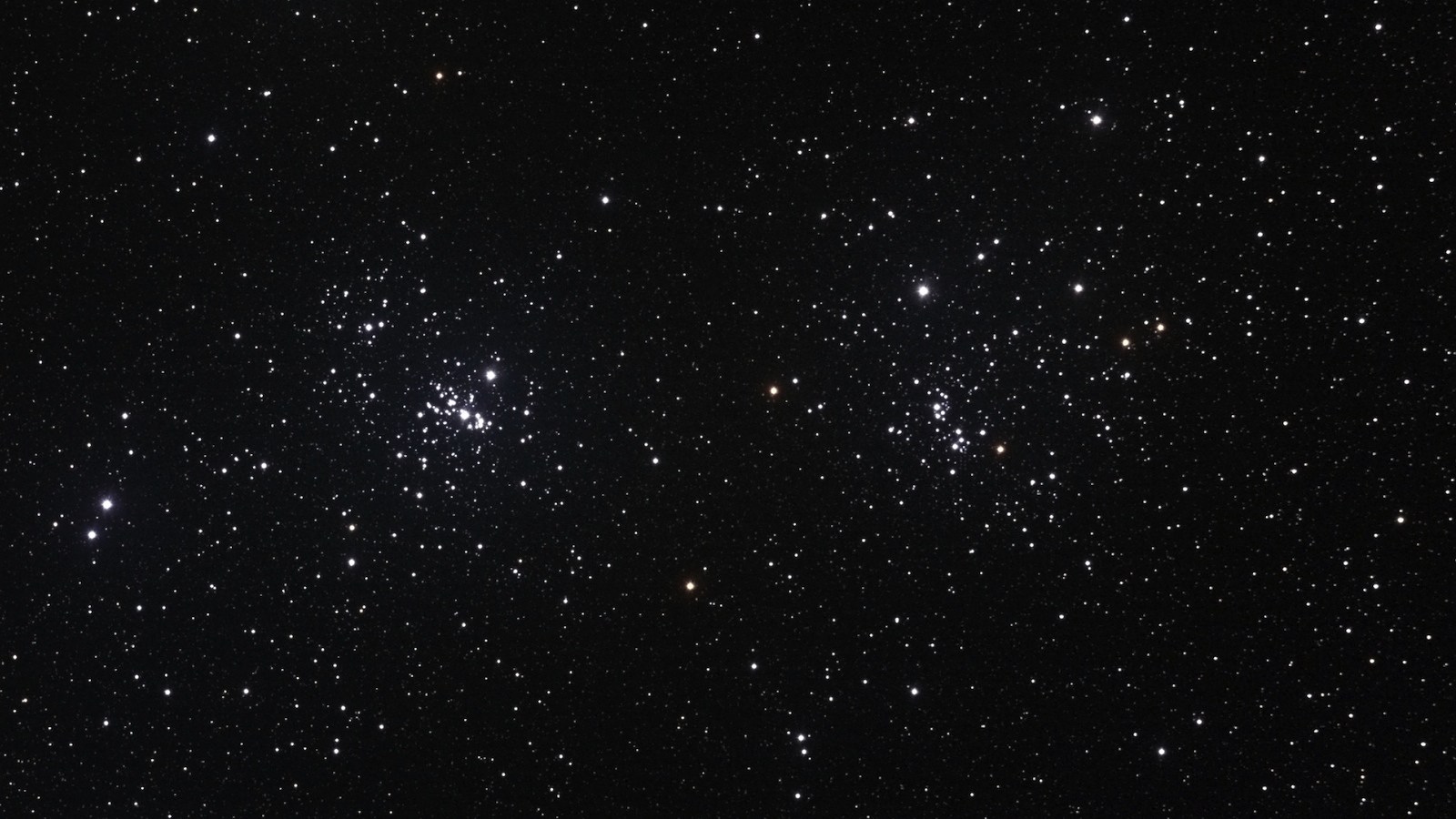
True or False
Stars are really close together in outer space.
Stars are really close together in outer space.
a)
True
b)
False
74.
Which star is closest to Earth?
a)
Betelgeuse
b)
Orion
c)
the sun
d)
Antares
75.
A very bright star can seem to be dimmer because it is
a)
further away
b)
very close
c)
cooler in temperature
d)
sparkling
100 %

