wayground logo

Free Printable Worksheets

NEW

Font size

S
M
L
XL
Worksheets

Earth Science CAST Review

Total questions: 65

Worksheet time: 58mins

Name
Class
Date
1.

Which planets is one of the inner planets?

a)

Jupiter

b)

Saturn

c)

Mercury

d)

Neptune

2.

How many stars are in our solar system?

a)

billions

b)

hundreds

c)

two

d)

one

3.

On which planet can you find water as a solid, liquid and a gas?

a)

Earth

b)

Mars

c)

Venus

4.

Where is the asteroid belt located?

a)

Between Earth and Mars

b)

Between Mars and Jupiter

c)

Between Mercury and Venus

5.

What is the basis from which the solar system formed?

a)

Elliptical irregularity

b)

A giant cloud of dust and gas

c)

orbital rotation

d)

the greenhouse effect

6.

What are the the 3 types of galaxies?

a)

Orbital, heliocentric, geocentric

b)

Irregular, Spiral, Elliptical

7.

Which planet is reddish yellow due to iron oxide on its surface?

a)

Mercury

b)

Venus

c)

Saturn

d)

Mars

8.

What is a light year?

a)

The distance light travels in a year

b)

The distance light travels in a second

9.

What are meteors?

a)

Small pieces of rock that have entered earth's atmosphere

b)

small pieces of rock that hit Earth's surface

c)

Small pieces of rock in outer space

10.

The Milky Way is a _____________________ galaxy.

a)

Elliptical

b)

Spiral

c)

Nebula

d)

Irregular

11.

What is the Big Bang Theory?

a)

the origin of comets

b)

a huge explosion that formed the universe

c)

the asteroid belt

12.

What is an AU?

a)

A measure of distance from Earth to the Sun

b)

a measure of the Milky Way Galaxy

13.
ABOUT how old is the Earth?
a)
4 million years
b)
40 million years
c)
400 million years
d)
4 billion years
14.
Which layer is the OLDEST?
a)
A
b)
B
c)
C
d)
D
15.
What happens between DIVERGENT faults?
a)
Plates move towards one another
b)
Plates move away from each other
c)
Plates slide past each other
16.
The boundary where two plates push into each other
a)
Convergent Boundary
b)
Divergent Boundary
c)
Transform Boundary
17.
Which rock layer in the diagram seems to be the oldest?
a)
F
b)
E
c)
B
d)
A
18.
A place where two plates slip past each other, moving in opposite directions, is   known as a 
a)
Transform
b)
Divergent
c)
Convergent
19.
The Geologic Time Scale is a record of what?
a)
old geologists
b)
sweet geology music
c)
the known history of rocks and fossils
d)
a list of every living thing ever
20.
Which is the most recent era of time- the one that we are currently in?
a)
Mesozoic 
b)
Paleozoic 
c)
Cenozoic 
d)
Precambrian 
21.
Paleozoic, Mesozoic & Cenozoic are all
a)
Epochs
b)
Eras
c)
Periods
d)
Eons
22.
Name the 4 time frames in order from oldest to youngest.
a)
Precambrian Time, Paleozoic Era, Mesozoic Era, Cenozoic Era
b)
Mesozoic Era, Precambrian time, Cenozoic Era, Paleozoic Era
c)
Paleozoic Era, Mesozoic Era, Precambrian Time, Cenozoic
23.
The time span that lasted the longest was the...
a)
Precambrian
b)
Paleozoic
c)
Mesozoic
d)
Cenozoic
24.
The Era when humans first appeared was...
a)
Cenozoic
b)
Mesozoic
c)
Paleozoic
d)
Precambrian
25.
During which era did the earliest dinosaurs appear?
a)
Cenozoic
b)
Paleozoic
c)
Mesozoic
d)
Precambrian
26.
Plants and animals first reached land during the 
a)
Mesozoic Era
b)
Cenozoic Era
c)
Paleozoic Era
d)
Precambrian
27.
What type of rock do fossils form in?
a)
Igneous
b)
Sedimentary
c)
Metamorphic
d)
Classic
28.
The Law of __________ tells us younger rocks are on top.
a)
Uniform-itarianism
b)
Congruity
c)
Positronics
d)
Superposition
29.
What is the water cycle?
a)
the 3 forms of water
b)
the movement of water on, above, or below the surface of the Earth
c)
when water melts
d)
when clouds form
30.
What is the energy source for the water cycle?
a)
the sun
b)
the earth
c)
water
d)
the moon
31.
What part of the water cycle does this picture show?
a)
condensation
b)
precipitation
c)
evaporation
32.
Which of these is an example of precipitation?
a)
snow
b)
air
c)
clouds
d)
vapor
33.
Which is the opposite of condensation?
a)
runoff
b)
evaporation
c)
precipitation
d)
transpiration
34.
what does this tool measure?
a)
wind direction
b)
wind speed
c)
air temperature
d)
humidity
35.
The water cycle has no start or end
a)
true
b)
false
36.
The first step in the water cycle 
a)
evaporation
b)
condensation 
c)
precipitation
d)
there is no first step 
37.
What does this symbol on a weather map indicate? 
a)
High pressure system
b)
Low pressure system
c)
Cold front
d)
Warm front
38.
What does this symbol indicate on a weather map? 
a)
High pressure system
b)
Low pressure system
c)
Cold front
d)
Warm front
39.
Which weather tool measures air pressure?
a)
thermometer
b)
barometer
c)
anemometer
d)
psychrometer
40.
This weather tool measures wind speed and direction
a)
thermometer
b)
barometer
c)
anemometer
d)
psychrometer
41.
Which weather tool measures temperature?
a)
thermometer
b)
barometer
c)
psychrometer
d)
anememeter
42.
Hot air (RISES / FALLS) __________.
a)
RISES
b)
FALLS
43.
Cold air (RISES/ FALLS)  _________.
a)
RISES
b)
FALLS
44.
What does this symbol on a weather map indicate? 
a)
High pressure system
b)
Low pressure system
c)
Cold front
d)
Warm front
45.
A _____ is a large, swirling, low-pressure system that forms over the Atlantic Ocean.
a)
blizzard
b)
cold front
c)
tornado 
d)
hurricane
46.
A violently rotating column of air called a _____ when it comes in contact with the ground.
a)
hurrican
b)
tornado
c)
trade wind
d)
local wind
47.
 What is the reference point used to measure elevation?
a)
lake level
b)
sea level
c)
zero
d)
elevation
48.
What causes winds to form on Earth?
a)
solar energy
b)
ocean currents
c)
elevation differences
d)
uneven heating of the Earth by the sun
49.
What are the surface features of an area called?
a)
latitude
b)
longitude
c)
topography
d)
elevation
50.
What is the measure of distance in degrees north and south from the equator?
a)
latitude
b)
longitude
c)
elevation
d)
topography
51.
What is the height of an area above sea level?
a)
elevation
b)
topography
c)
latitude
d)
longitude
52.
What is the weather conditions in an area over a long period of time?
a)
climate
b)
temperature
c)
elevation
d)
precipitation
53.
Which type of rock results from melting and cooling of magma?
a)
Igneous
b)
Metamorphic
c)
Sedimentary
d)
Extrusive
54.
Which type of rock forms from extreme heat and pressure?
a)
Igneous
b)
Sedimentary
c)
Organic
d)
Metamorphic
55.
A metamorphic rock changes into an igneous rock by what two processes?
a)
Melting and cooling
b)
Extreme heat and pressure
c)
Compaction and cementation
d)
Weathering and erosion
56.
Wind, water, and ice breaking down rock is called
a)
Erosion
b)
Deposition
c)
Compaction
d)
Weathering
57.
What is the MAIN way rocks are classified?
a)
Their color and shapes
b)
How they form
c)
Mineral bands
d)
Where they form
58.
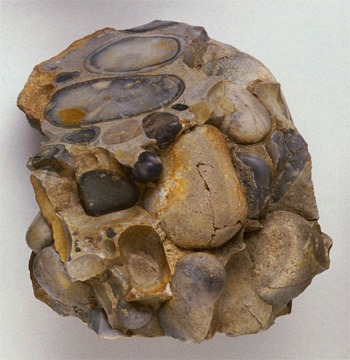
This rock was formed by smaller pieces of rock that settled at the bottom of a lake millions of years ago. What type of rock is this?
a)
Sedimentary
b)
Igneous
c)
Metamorphic
59.
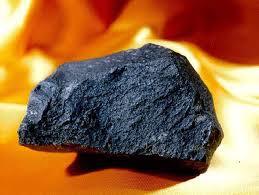
This rock was found near the mouth of a volcano. What type of rock is this?
a)
Sedimentary
b)
Igneous
c)
Metamorphic
60.
What are the 3 major types of rocks?
a)
Igneous, Metamorphic, Sedimentary
b)
Metamorphic, Igneous, Cementation
c)
Brown, Red, Gray
d)
Streak, Hardness, Breakage
61.
The process by which metamorphic rocks are formed...
a)
heat and pressure
b)
erosion and deposition
c)
melting and cooling
62.
An igneous rock can become ______.
a)
metamorphic
b)
sedimentary
c)
igneous
d)
all of these
63.
A metamorphic rock can become ______.
a)
igneous
b)
metamorphic
c)
sedimentary
d)
all of these
64.
This rock cooled on the outside of a volcano and contained air bubbles when it was forming. What type of rock is this?
a)
Sedimentary
b)
Igneous
c)
Metamorphic
65.
What is the most hardest rock
a)
Kevvon
b)
Chris
c)
Juan
d)
diamond