wayground logo

Free Printable Worksheets

NEW

Font size

S
M
L
XL
Worksheets

HBS Unit 3 Power

Total questions: 80

Worksheet time: 52mins

Name
Class
Date
1.
Bile is made by which digestive organ?
a)
Gallbladder
b)
Stomach
c)
Rectum
d)
Liver
2.
Which digestive organ makes digestive juices to help the small intestine absorb nutrients?
a)
Liver
b)
Gallbladder
c)
Pancreas
d)
Esophagus
3.
As waste moves through the digestive system, the ______ absorbs water before storing waste in the rectum.
a)
Small intestine
b)
Stomach
c)
Esophagus
d)
Large intestine
4.
Gastric juices in the stomach digest food into a thick liquid.  This is...
a)
Mechanical digestion
b)
Chemical digestion
5.
Which one of the following is NOT a substance typically reabsorbed by the tubules under normal healthy conditions?
a)
urea
b)
water
c)
glucose
d)
amino acids
6.
Urine is carried from the kidneys to the bladder by two thin tubes called:
a)
Ureters
b)
Tubulars
c)
Capillaries
d)
Urinary Tract 
7.
Functional unit of the kidney
a)
Renal hilum
b)
nephron 
c)
Renal medulla
d)
Renal pelvis 
8.
What is the correct order of the steps of function within the nephron? 
a)
Secretion, Reabsorption, Filtration 
b)
Filtration, Secretion, Reabsorption 
c)
Filtration, Reabsorption, Secretion 
d)
Secretion, Filtration, Reabsorption
9.
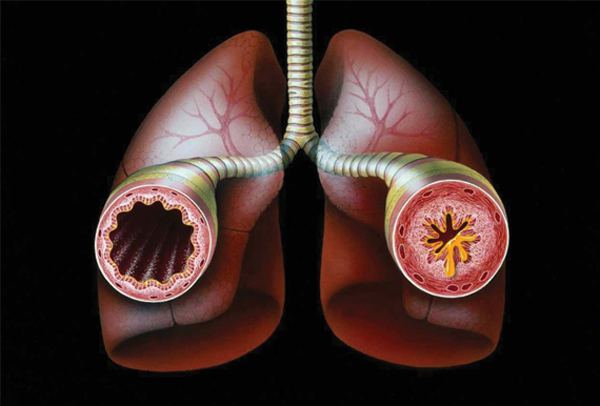
A disorder of the lungs called ____ causes the bronchi to become restricted (get smaller) so air can't get to the lungs.
a)
asthma 
b)
cold
c)
influenza 
d)
bronchitis 
10.
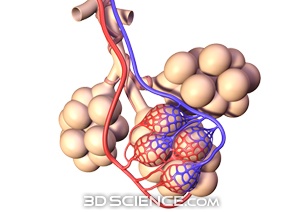
The air sacs that are covered with capillaries where gas exchange takes place
a)
bronchi
b)
lungs
c)
oxygen
d)
alveoli
11.
Which of the following is true?
a)
Oxygen diffuses along the concentration gradient from the alveoli into the capillaries
b)
Oxygen diffuses against the concentration gradient from the alveoli into the capillaries
c)
Oxygen diffuses along a concentration gradient from the capillaries to the alveoli
d)
Oxygen diffuses against the concentration gradient from the capillaries to the alveoli
12.
What is tidal volume?
a)
The volume of air inspired and expired during a normal breath at rest
b)
The volume of air inspired and expired during exercise
c)
The extra volume of air you could inspire if you wanted to
d)
The total volume of air you could possibly inspire and expire during a maximum breath in and out
13.
What is hemoglobin?
a)
A protein that carries oxygen
b)
A protein found in red blood cells
c)
A protein that gives blood its red color
d)
All of the above
14.

Carbohydrate Digestion begins in the:

a)

oral cavity

b)

stomach

c)

duodenum

d)

jejunum

15.

Which of the following is the correct sequence of air movement during inhalation?

1. Bronchioles 3. Trachea

2. Alveoli 4. Bronchi

a)

3,2,4,1

b)

4,3,1,2

c)

3,4,1,2

d)

1,3,4,2

16.

Which of the following is the correct sequence of urine movement in the urinary system?

a)

Kidney, urethra, bladder, ureter

b)

Urethra, kidney, bladder, ureter

c)

Kidney, ureter, bladder, urethra

d)

Urethra, kidney, ureter, bladder

17.

What is needed to release the energy from an ATP molecule?

a)

glucose

b)

water

c)

oxygen

d)

carbon dioxide

18.

Which of the following urine tests determines the ketone content of the urine?

a)

microscopic

b)

chemical

c)

macroscopic

19.

The amount of air remaining in the lungs after maximum exhalation is called

a)

vital capacity

b)

residual volume

c)

tidal volume

d)

minute volume

20.

Urine formation occurs in the nephron and requires 3 steps. Which sequence is correct?

a)

Filtration, reabsorption, secretion

b)

Reabsorption, secretion, filtration

c)

Secretion, reabsorption, filtration

d)

Filtration, secretion, reabsorption

21.

The sum of all chemical activity in an organism is

a)

BMR

b)

metabolism

c)

homeostasis

d)

BMI

22.

The volume of air breathed in and out without conscience effort is called

a)

vital capacity

b)

residual volume

c)

tidal volume

d)

minute volume

23.

1. Alcohol:


a. Stimulates the release of ADH

b. Inhibits the release of ADH

c. Acts like a diuretic

a)

A

b)

B

c)

C

d)

both B and C

24.

Decreased concentration of enzymes will cause the reaction to

a)

slow down

b)

speed up

c)

stay the same

d)

not occur

25.

Primary function is to produce the semi-fluid paste called chyme and start breakdown of proteins.

a)

esophagus

b)

stomach

c)

small intestine

d)

large intestine

26.
 Which of the following is NOT necessary for survival?
a)
food
b)
oxygen
c)
vitamins
d)
water
27.
Which of these necessary components is broken down to provide energy?
a)
food
b)
oxygen
c)
vitamins
d)
water
28.
What system is responsible for the breakdown of macromolecules to monomers for absorption?
a)
respiratory
b)
cardiovascular
c)
digestive
d)
urinary
29.
What system is responsible for balancing the body tissue fluid levels?
a)
respiratory
b)
cardiovascular
c)
digestive
d)
urinary
30.
The maintenance of a stable internal environment despite changing external environment
a)
macrostasis
b)
metabolism
c)
homeotaxis
d)
homeostasis
31.
What is produced by the digestive system & its associated organs to cause chemical breakdowns?  
a)
hormones
b)
precursors
c)
enzymes
d)
mucus
32.
Carbohydrate digestion begins in the
a)
oral cavity
b)
stomach
c)
duodenum
d)
jejunum
33.
Lipid digestion begins after emulsification in the
a)
oral cavity 
b)
stomach
c)
duodenum
d)
jejunum
34.
Protein digestion begins in the
a)
oral cavity
b)
stomach
c)
duodenum
d)
jejunum
35.
The measure of body fat that is determined by a ratio of body weight to the square of height is
a)
BMR
b)
BMI
c)
BMW
d)
BMV
36.
 What is the primary energy molecule used for reactions in the body?
a)
ADP
b)
GTP
c)
AMP
d)
ATP
37.
What kind of bonds attach the last two phosphates to AMP?
a)
high energy disulfide bonds
b)
high energy hydrogen bonds
c)
high energy peptide bonds
d)
high energy covalent bonds
38.
The complete breakdown of glucose to get energy in the cell is by 
a)
aerobic respiration
b)
anaerobic respiration
c)
respiratory therapy
d)
spirometer
39.
Since every cell has a limited supply of ATP, they drive cellular activity efficiently by
a)
recycling
b)
having a constant supply delivered
c)
using alternative energy sources
40.
Moving air into the lungs requires
a)
raising the air pressure in the lungs above atmosph pressure
b)
lowing the air pressure in the lungs below atmosph pressure
c)
opening the air passageways
d)
moving the epiglottis
41.
Which of the following is the correct sequence of air movement during 
a)
trachea, alveoli, bronchi, bronchioles
b)
bronchi, trachea, bronchioles, alveoli
c)
trachea, bronchi, bronchioles, alveoli
d)
bronchioles, trachea, bronchi, alveoli
42.
What lung structure is responsible for the exchange of gasses with blood?
a)
bronchi
b)
lobes of lung
c)
alveoli
d)
trachea
43.
 What is the tool that is commonly used to measure lung capacity?
a)
spirometer
b)
oxygen mask
c)
iron lung
d)
sphygmomanometer
44.
Minute volume equals tidal volume times
a)
vital capacity
b)
residual volume
c)
breaths per minute
d)
breaths per minute minus residual volume
45.
The volume of air breathed in & out without conscious effort is called
a)
vital capacity
b)
residual volume
c)
tidal volume
d)
minute volume
46.
Which of the following is NOT a respiratory condition?
a)
asthma
b)
pneumonia
c)
bronchitis
d)
anorexia
47.
The amount of air remaining in the lungs after maximum exhalation is called
a)
vital capacity
b)
residual volume
c)
tidal volume
d)
minute volume
48.
Which of the following is NOT a function of the urinary system?
a)
filter blood/form urine to remove wastes
b)
regulate volume/composition of blood
c)
regulate body tissue fluid levels
d)
regulate heart rate
49.
What process involves moving substances from the blood capillaries to the renal tubules?
a)
reabsorption
b)
secretion
c)
filtration
d)
absorption
50.
What process involves moving substances from the renal tubules to the blood capillaries?
a)
reabsorption
b)
secretion
c)
filtration
d)
absorption
51.
What process involves moving substance from the blood capillaries to Bowman’s capsule?
a)
reabsorption
b)
secretion
c)
filtration
d)
absorption
52.
Synthetic, energy-requiring reactions whereby small molecules are built up into larger ones.
a)
Catabolism
b)
Metabolism
c)
Anabolism
d)
Canabolism
53.
A soft mass of chewed food.
a)
Boolus
b)
Bolus
c)
Bowlus
d)
Bolous
54.
The amount of heat energy required to raise the temperature of 1 g of water by 1 degree C. 
a)
Calorie
b)
calorie
c)
kilocalorie
d)
kalorie
55.
Chemical reactions that break down complex organic compounds into simple ones, with the net release of energy.
a)
Catabolism
b)
Anabolism
c)
Metabolism
d)
Canabolism
56.
The process of making food absorb-able by mechanically and enzymatic-ally breaking it down into simpler chemical compounds in the alimentary canal.
a)
Digestion
b)
Metabolism
c)
Anabolism
d)
Catabolism
57.
A protein serving as a catalyst, a chemical agent that changes the rate of reaction without being consumed by the reaction.
a)
Energy Molecule
b)
Enzyme
c)
Synthesist
d)
Accelorator
58.
The totality of an organism's chemical reactions, consisting of catabolic and anabolic pathways.
a)
Digestion
b)
Excretion
c)
Cellular Respiration
d)
Metabolism
59.
The largest internal organ in the vertebrate body; performs diverse functions such as producing bile, preparing nitrogenous wastes for disposal, and detoxifying poisonous chemicals in the blood.
a)
Stomach
b)
Skin
c)
Lungs
d)
Liver
60.
Successive muscular contractions along the wall of a hollow muscular structure.
a)
Peralysis
b)
Periostasis
c)
Peristalsis
d)
Peristylus
61.
A salivary gland enzyme that hydrolyzes starch.
a)
Alpha amylase
b)
Salivary amylase
c)
Lipase
d)
Salivary Tryptase
62.
A substance acted upon by an enzyme.
a)
Amylase
b)
Substrate
c)
Accelerator
d)
Lipase
63.
Terminal air sacs that constitute the gas exchange surface of the lungs.
a)
Brachiae
b)
Alveoli
c)
Brachioles
d)
Bronchi
64.
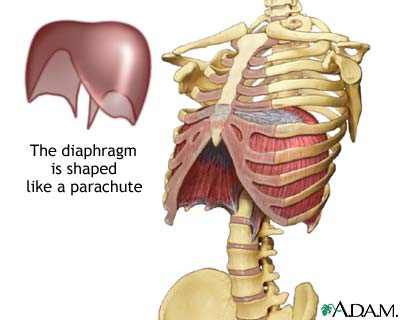
A sheet of muscle that forms the bottom wall of the thoracic cavity in mammals; active in ventilating the lungs.
a)
Cardiac Notch
b)
Pulmonary Vein
c)
Diaphragm
d)
Pulmonary Muscle
65.
An instrument for measuring the air entering and leaving the lungs.
a)
Lung Volume Meter
b)
Air Flow Meter
c)
Spirometer
d)
Aerometer
66.
Hormone-producing glands located superior to the kidneys; each consists of a medulla and a cortex.
a)
Pituitary Glands
b)
Thyroid Glands
c)
Hypothalmus 
d)
Adrenal glands
67.
A mineralcortocoid produced by the adrenal cortex that promotes sodium and water reabsorption by the kidneys and potassium excretion in urine.
a)
Hypothyroid
b)
Testosterone
c)
Hypothalamus 
d)
Aldosterone
68.
Hormone produced by the neurosecretory cells in the hypothalamus that stimulates water reabsorption from kidney tubule cells into the blood and vasoconstriction of arterioles.
a)
Estrogen
b)
Cortisol
c)
Antidiuretic Hormone 
d)
Insulin
69.
Identify Letter A
a)
Adrenal Gland
b)
Renal Artery
c)
Renal Vein
d)
Renal Pelvis
70.
Identify Letter B
a)
Adrenal Gland
b)
Renal Artery
c)
Renal Vein
d)
Renal Pelvis
71.
What does blood transport?
a)
Oxygen 
b)
All of the answers provided are transported in blood
c)
wastes
d)
nutrients
72.
What is function of the dome-shaped diaphragm?
a)
This is where gas exchange happens.
b)
Air passes through the diaphragm on the way to the lungs.
c)
It attaches to the lungs to help in breathing.
d)
It is under the lungs and keeps them from falling down to your stomach.
73.
When you breathe, your lungs take in ___ and remove ___. 
a)
air/oxygen
b)
oxygen/carbon dioxide 
c)
carbon dioxide/waste 
d)
waste/air 
74.
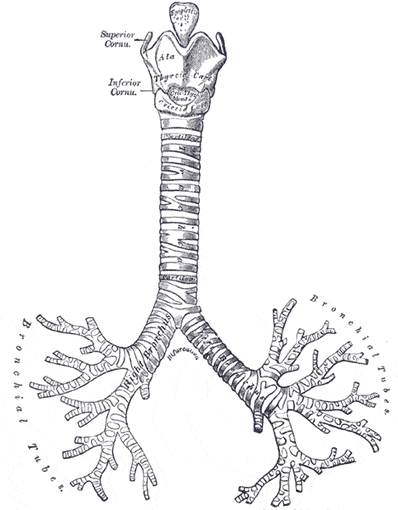
The two main branches from the trachea (one to each lung)
a)
bronchi
b)
alveoli
c)
capillaries
d)
bronchioles
75.
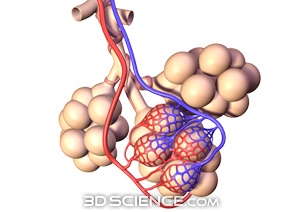
The air sacs that are covered with capillaries where gas exchange takes place
a)
bronchi
b)
lungs
c)
oxygen
d)
alveoli
76.
What is the main function of the respiratory system?
a)
to provide oxygen and remove carbon dioxide from the body
b)
to bring oxygen to the body
c)
to break down food and absorb nutrients
d)
to remove oxygen from the body and deliver carbon dioxide
77.
Within the lungs, the exchange of oxygen and carbon dioxide occurs between the ___ and the capillaries. 
a)
trachea 
b)
bronchi 
c)
alveoli
d)
diaphragm
78.
Cellular Respiration's goal is to
a)
make water
b)
make ATP
c)
make glucose
d)
make  oxygen
79.
In which portion of the nephron are substances like drug metabolites and waste secreted into filtrate? 
a)
Bowman's capsule 
b)
Proximal convoluted tubule 
c)
Loop of Henle 
d)
Distal convoluted tubule 
80.
In the collecting duct, what is reabsorbed? 
a)
Ions like Na+ and Cl-
b)
Nutrients like glucose and amino acids 
c)
Substances like drug metabolites and waste 
d)
Water